A Light in the Window
A few words before we begin.
I suppose I should begin by telling you that I have always been a little afraid of the dark.
Not the darkness itself, exactly.
I have loved the night for as long as I can remember. I have loved the way the moon finds its way
through the trees, the way the ocean changes its voice after sunset, the peculiar intimacy of a
house when everyone else has gone to sleep.
But I have never particularly liked being left alone in it.
There is a difference, you know.
Between darkness and abandonment.
Between solitude and being forgotten.
Between choosing to close your eyes and discovering that no one is coming back to turn on the
light.
I learned some of those differences very young.
And I learned others much later than I would have liked.
For much of my childhood, I was a boy who felt things rather deeply.
I noticed everything.
The slight change in someone's voice. The silence after a door closed. The particular weight of a
room when someone was angry, even when they hadn't said a word.
I could sense a storm long before anyone else acknowledged the clouds.
And somewhere along the way, I began to mistake that ability for responsibility.
If I could feel the storm coming, perhaps I could stop it.
If I could anticipate someone's anger, perhaps I could soften it.
If I could become quiet enough, useful enough, good enough, perhaps there would be a place for
me when the weather cleared.
Children are extraordinarily creative when it comes to finding ways to survive.
Some become invisible.
Some become entertaining.
Some become impossibly good.
And some become very, very good at taking care of everyone else.
I became a little of all four.
But mostly, I became a keeper of things.
Secrets. Feelings. Silences.
The things people couldn't say.
The things they said and wished they hadn't.
The things that had nowhere else to go.
I carried them as though they were fragile little animals someone had placed in my hands.
And I was terrified of dropping one.
Years later, I became a clinician.
There is probably something rather predictable about that.
The little boy who could feel everyone else's weather grew into a man who spent his days sitting
with people in their storms.
For fifteen years, I listened.
To grief. To terror. To shame. To stories people had never told another human being.
I witnessed the extraordinary things people do to survive what should never have happened to
them.
And I watched, again and again, as people arrived believing that some essential part of them had
been damaged beyond repair.
They would apologize for crying.
For being angry.
For not knowing what to say.
For feeling too much.
Sometimes they apologized simply for taking up space.
And I would find myself wishing I could introduce them to the children they once were.
Not to make them relive everything.
But to show them how hard those children had worked to bring them here.
How much courage had been mistaken for weakness.
How much protection had been mistaken for dysfunction.
How many things they had learned to call broken were, in fact, evidence of having survived.
I believed that for them.
Entirely.
It took me rather longer to believe it for myself.
You will find a great deal of that contradiction in these pages.
I should probably warn you.
I am a man who has spent much of his life teaching people how to come home to themselves while
occasionally wandering rather far from my own front door.
I have loved people I could not save.
I have grieved people who were still alive.
I have spent nights waiting for a phone to ring, mornings wondering whether hope was courage or
foolishness, and entire seasons trying to understand why the things I knew intellectually had not
yet found their way into my body.
I have been brave.
I have been frightened.
Sometimes within the same breath.
And I have discovered that healing is rarely the elegant procession toward enlightenment that we
imagine it will be.
Sometimes it looks like setting a boundary.
Sometimes it looks like opening a door.
Sometimes it looks like leaving.
Sometimes it looks like staying.
Sometimes it looks like a grown man sitting in his car because, for reasons he cannot entirely
explain, it is the only place his nervous system has agreed to feel safe.
And sometimes it looks like allowing someone to make you a cup of coffee.
Even when you have spent a lifetime insisting that you could make it yourself.
Why These Stories
I did not begin writing these essays because I had figured everything out.
Quite the opposite.
I began writing because there were things inside me that had waited a very long time to be heard.
And because, somewhere in the middle of trying to understand them, I began to suspect that I was
not the only person carrying them.
Perhaps you know something about that.
Perhaps you have spent years being the strong one.
The understanding one.
The one who makes allowances.
The one who remembers birthdays, notices changes in people's voices, checks that everyone has
made it home, and knows precisely how to make a room feel safe.
Perhaps you have become so skilled at anticipating what other people need that you sometimes
struggle to recognize the sound of your own wanting.
Perhaps you have been called sensitive as though it were an accusation.
Perhaps you have been told to move on from something your body is still trying to understand.
Perhaps you have loved someone through an impossible season.
Or lost someone.
Or lost yourself.
Perhaps you have done everything you were supposed to do and still found yourself awake at three
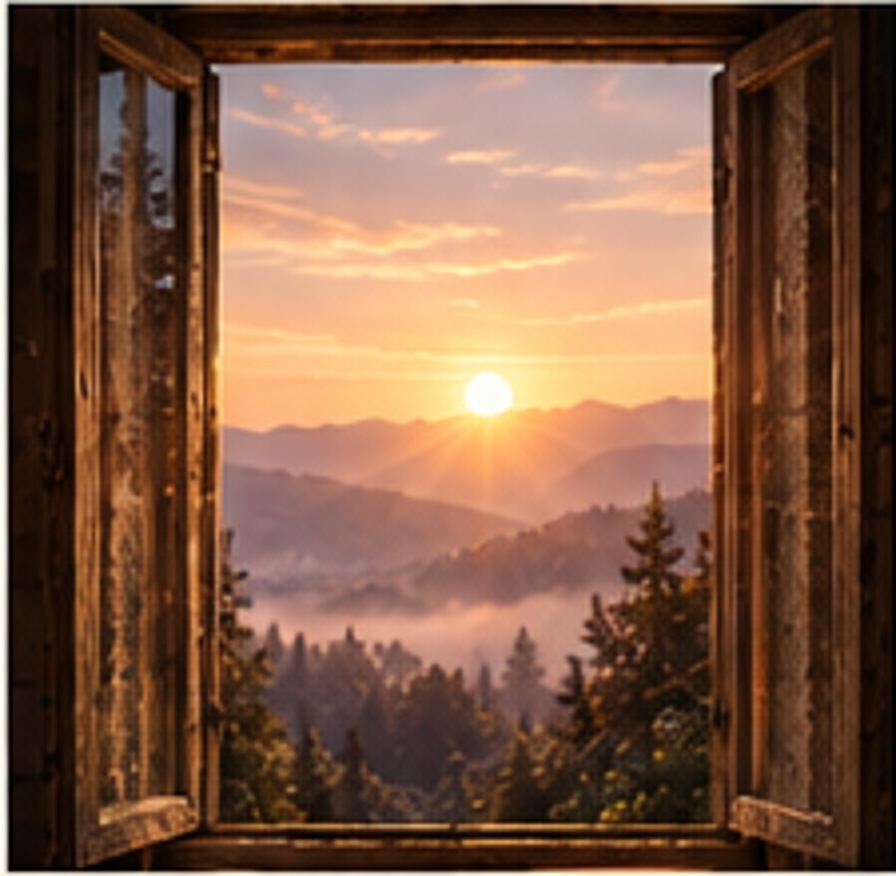
in the morning, wondering why the little child inside you hasn't stopped waiting at the window.
I don't know.
I don't know who you are, where you have been, what you have survived, or what brought you here.
But I know something about waiting at windows.
And I know something about leaving lights on.
There is something I want you to understand before we go any further.
This is not a map out of the darkness.
I wish I could offer you one.
After years of studying human behavior, grief, trauma, attachment, and the extraordinary
architecture of survival, I would love to tell you that there is a particular sequence of steps that will
lead you safely from the things that hurt toward the things that heal.
But people are not machines.
And hearts are not puzzles.
There is no universal arrangement of the pieces that will make everything fit.
Some griefs do not end.
Some questions are never answered.
Some people never apologize.
And some wounds become part of the landscape of our lives without ever disappearing entirely.
I do not believe that makes us failures.
I believe it makes us human.
What I can offer you is company.
A few stories.
Some things I have learned.
Some things I am still learning.
And perhaps, on certain pages, a sentence that feels like someone has finally put their hand on the
shoulder of a younger version of you and said:
I know.
I know why you did that.
I know how hard you were trying.
You can rest for a moment.
I hope there will be laughter here, too.
Goodness, I hope so.
Because for all the darkness I have known, I have also known absurdity and wonder and
extraordinary beauty.
I have stood beneath ancient trees and felt very small in the loveliest possible way.
I have watched my children discover something ordinary and transform it into magic.
I have cried at music.
I have fallen in love with the sound of someone's laughter.
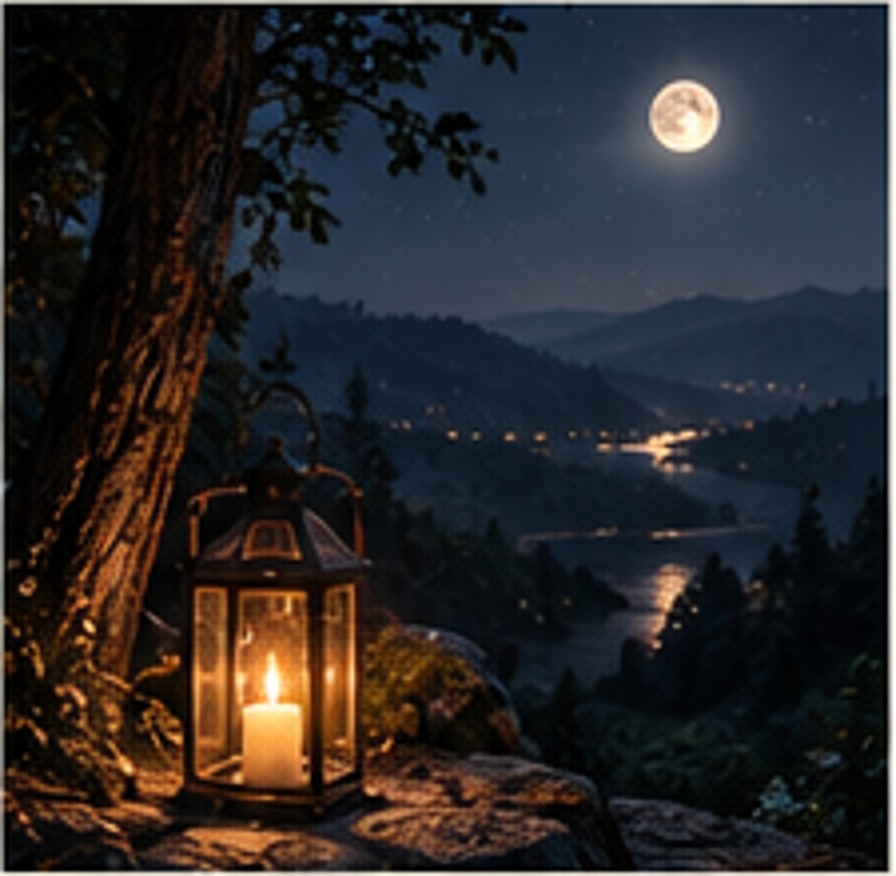
I have learned that a candle can make an enormous difference to a room.
And I have discovered that the human heart, despite everything we ask it to endure, remains
astonishingly willing to open.
Again.
And again.
And again.
How to Read

Throughout these essays, you may find a question waiting for you.
Sometimes at the end of a story.
Sometimes in the middle of a sentence.
And sometimes in the quiet that follows.
You do not have to answer.
You may sit with a question for an afternoon, or carry it with you for years.
You may discover that an answer changes as you do.
And you may decide that some questions are too tender to approach just yet.
That's all right.
You don't have to open every door simply because you have been given a key.
This is not an examination of how far you've come.
It is simply an invitation to notice where you are.
And if an essay brings you somewhere difficult, please remember that you are allowed to step away.
To get a glass of water.
To go outside.
To call someone you love.
To come back tomorrow.
Or not.
There is no prize for enduring more than you need to.
And there is no requirement to turn your suffering into something beautiful before it has been
properly witnessed.
Sometimes it is enough to say:
That hurt.
And let those two words be true.
A Note on Vulnerability
I have spent a great deal of my life trying to understand what it means to be a safe place for
another human being.
For a long time, I thought it meant knowing what to say.
Knowing how to help.
Knowing how to keep the worst things from happening.
But the older I become, the more I suspect that safety has less to do with having all the answers
than with the quiet assurance that someone will remain beside us while we look for them.
Someone who does not need us to be less complicated.
Less frightened.
Less tender.
Less ourselves.
Someone who can sit in the dark without insisting that we turn it into daylight.
Someone who understands that sometimes the light we need is not a sunrise.
Sometimes it is a porch lamp.
A candle.
A familiar voice coming from another room.
A hand reaching toward us.
A small, steady reminder that we have not been forgotten.
That was what I needed as a child.
I suspect it is what I have been trying to offer other people ever since.
And perhaps, if I am being particularly truthful, it is what I am finally learning to offer myself.
The Light We Leave On
So, before we begin, I want to tell you something.
You do not have to be healed to be welcome here.
You do not have to forgive anyone.
You do not have to find meaning in what happened.
You do not have to be grateful for the things that taught you how to survive.
You do not have to arrive with a brave face, a coherent story, or an explanation for why you are still
hurting.
You can come as you are.
With your unfinished grief.
Your unreasonable hope.
Your complicated love.
Your nervous laughter.
Your tenderness.
Your anger.
Your questions.
Your beautiful, exhausted heart.
There is room for all of it.
And if, somewhere in these pages, you recognize a part of yourself that you thought you had lost, I
hope you will be very gentle with it.
Perhaps you will find the child who used to believe in magic.
Perhaps you will find the person who loved without calculating the cost.
Perhaps you will find the one who knew how to rest before the world taught them that rest had to
be earned.
Perhaps you will find someone you haven't seen in years.
And perhaps, when you do, you will discover that they have been waiting for you.
Not angrily.
Not impatiently.
Just waiting.
The way a house waits for someone to come home.
With its windows glowing softly against the evening.
Its door unlocked.
And a light left burning in the room where you used to sit.
I cannot promise you that everything will be all right.
I would never insult your experience by pretending to know that.
But I can promise you that, for as long as you are here, you do not have to pretend that everything
already is.
The door is open.
Take off your shoes, if you'd like.
Put down whatever you've been carrying.
There's no hurry.
I've made room for you.
And I left the light on.
Christopher
The Light We Leave On
There’s Room for You Here.
The essays are waiting — stories for the messy, beautiful, human in all of us.
Explore the Essays →