Come What May
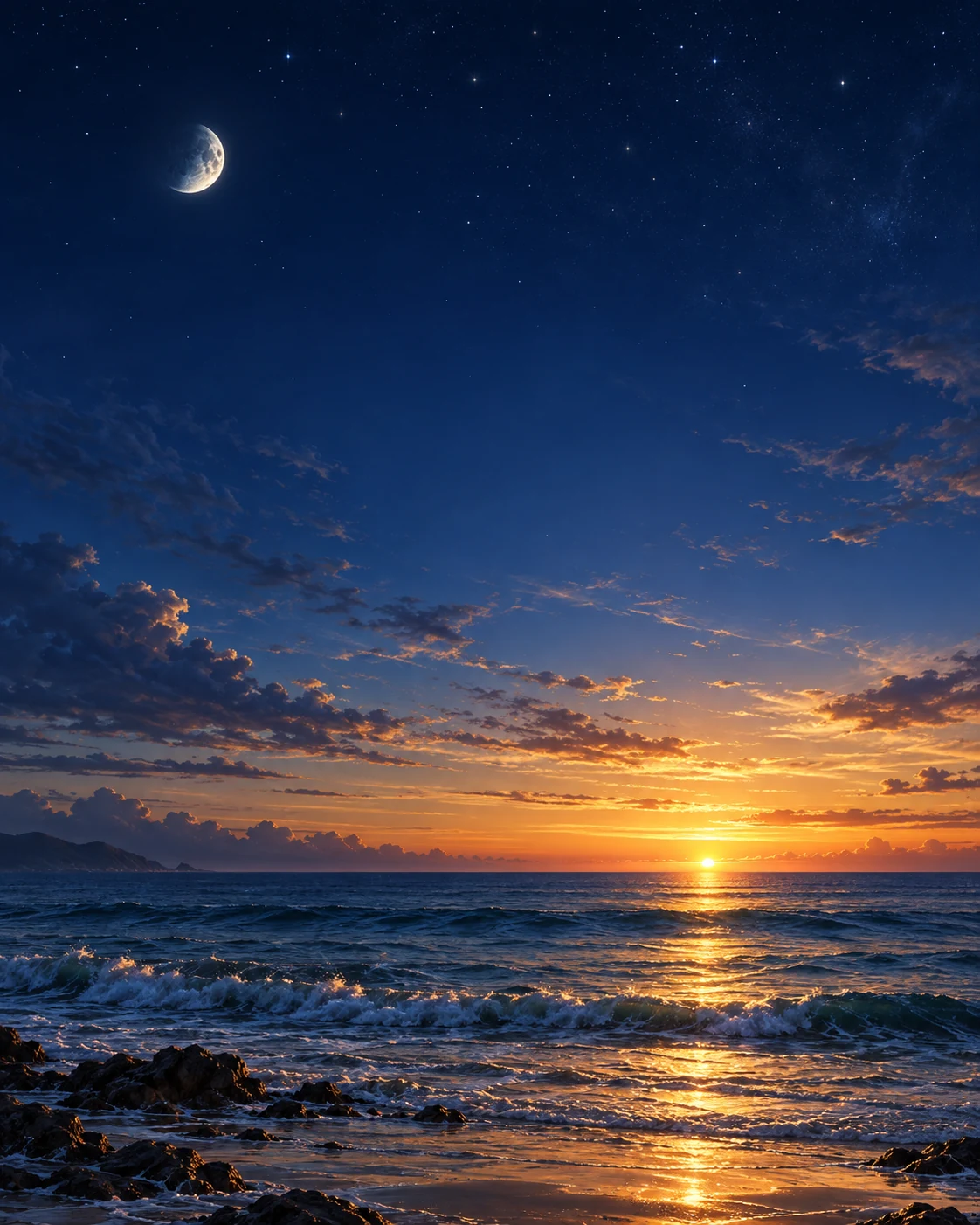
There was a time when the moon believed
the sun had to be visible
for there to be light.
He would wait for morning,
search the horizon,
and feel frightened when clouds came
and the sky went quiet.
But the moon eventually learned something
about the sun.
It does not disappear
simply because the world turns.
There are nights when they cannot see each other.
There are storms that cover the sky.
There are distances neither of them chose.
There are hours when one must go silent
and trust that the other understands why.
Still—
the moon remembers.
He remembers the warmth on his face.
He remembers every sunrise.
He remembers what the sun told him
before the darkness came.
And so he practices remembering.
At first, he isn’t very good at it.
The clouds move in
and he forgets everything he knows.
He mistakes absence for disappearance.
Silence for leaving.
Night for something permanent.
So he begins again.
He remembers.
Not the whole sky at once.
Just one small thing.
The particular gold of morning.
The way the ocean changed when the light touched it.
The warmth that remained on the stones
long after sunset.
He discovers that remembering
is a little like believing.
Neither requires you to pretend
the night isn’t dark.
You only have to remember
that darkness has never been proof
that morning has ceased to exist.
So the moon makes himself a ritual.
When the night becomes too quiet,
he goes to the edge of the sea.
He lets the waves count his breaths.
One coming in.
One going out.
He watches the stars appear
one by one
and imagines that perhaps they are tiny holes
someone has poked through the darkness
so he won’t forget what is behind it.
Sometimes he cries.
The ocean doesn’t mind.
It has always understood
that there are some things too large
for a body to hold.
And sometimes the moon whispers
all the things he would have said
if the sun were there to hear them.
Nothing important.
Everything important.
A funny thing that happened.
A song he heard.
Something beautiful he saw
and instinctively turned to share.
He tells the empty horizon anyway.
Then he carries those little stories home.
He keeps them carefully.
Not because he knows when morning will come.
But because he likes imagining
that someday the sun might ask,
What did I miss?
And the moon will have so much to tell him.
There will be difficult nights.
On some of them,
the moon will be certain
he cannot do this anymore.
He will look at the enormous sky
and wonder how something so beautiful
can contain so much distance.
But then a wave will reach his feet.
Or a familiar song will begin.
Or somewhere, impossibly,
a flower will open in the dark.
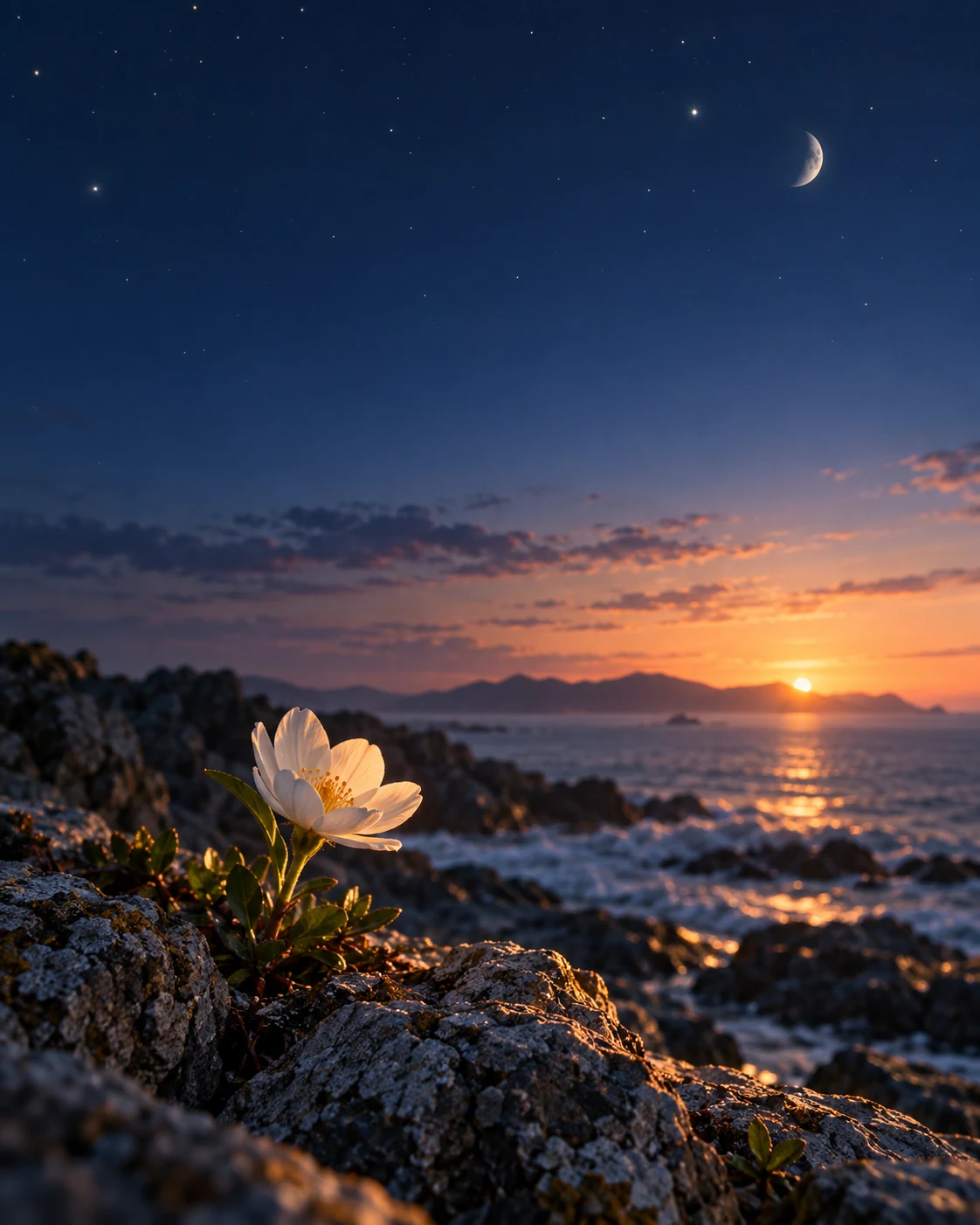
And he will remember again.
The sun is not gone.
The world has simply turned.
So the moon learns to eat
even when morning tastes different.
He learns to sleep
without waiting for the horizon to change.
He learns to laugh
without feeling that laughter is a betrayal.
He keeps living.
Not because he loves the sun less.
Because he loves the sun enough
to keep something beautiful alive
for its return.
And perhaps this is what the moon
had misunderstood all along.
He had thought love meant
always being able to find each other
in the sky.
But some kinds of love
are learned in the eclipse.
When you cannot reach.
When you cannot see.
When all you have
is what you know.
So he practices knowing.
The sun is warm.
The sun is real.
The sun has touched this world.
And somewhere beneath all that darkness,
the moon still carries its light.
There are countless stars, of course.
The moon has always loved the stars.
But stars are stars.
There is only one sun.
He knows its warmth
even with his eyes closed.
He would know it
on the other side of the world.
And perhaps, somewhere beyond the clouds,
the sun knows something too:
there are many lights in the night,
but only one moon
making its way across the dark.
They do not belong only to morning.
They do not belong only to night.
They belong to the same sky.
One carrying light into darkness.
One carrying darkness toward the light.
Always turning.
Sometimes finding each other.
Sometimes hidden from view.
But never outside
the same great circle.
Come what may.
The clouds may come.
The seasons may change.
The whole world may turn.
And the sun and moon
will turn with it.
So when the sky becomes very dark,
the moon will go down to the water,
put his feet at the edge of the sea,
and remember:
one sun.
one moon.
one sky holding them both.
And then he will practice remembering
until morning.
You are my sunshine, my only sunshine...