Let It Shine
On the walls we build, the light we keep out, and the extraordinary courage of letting it in.
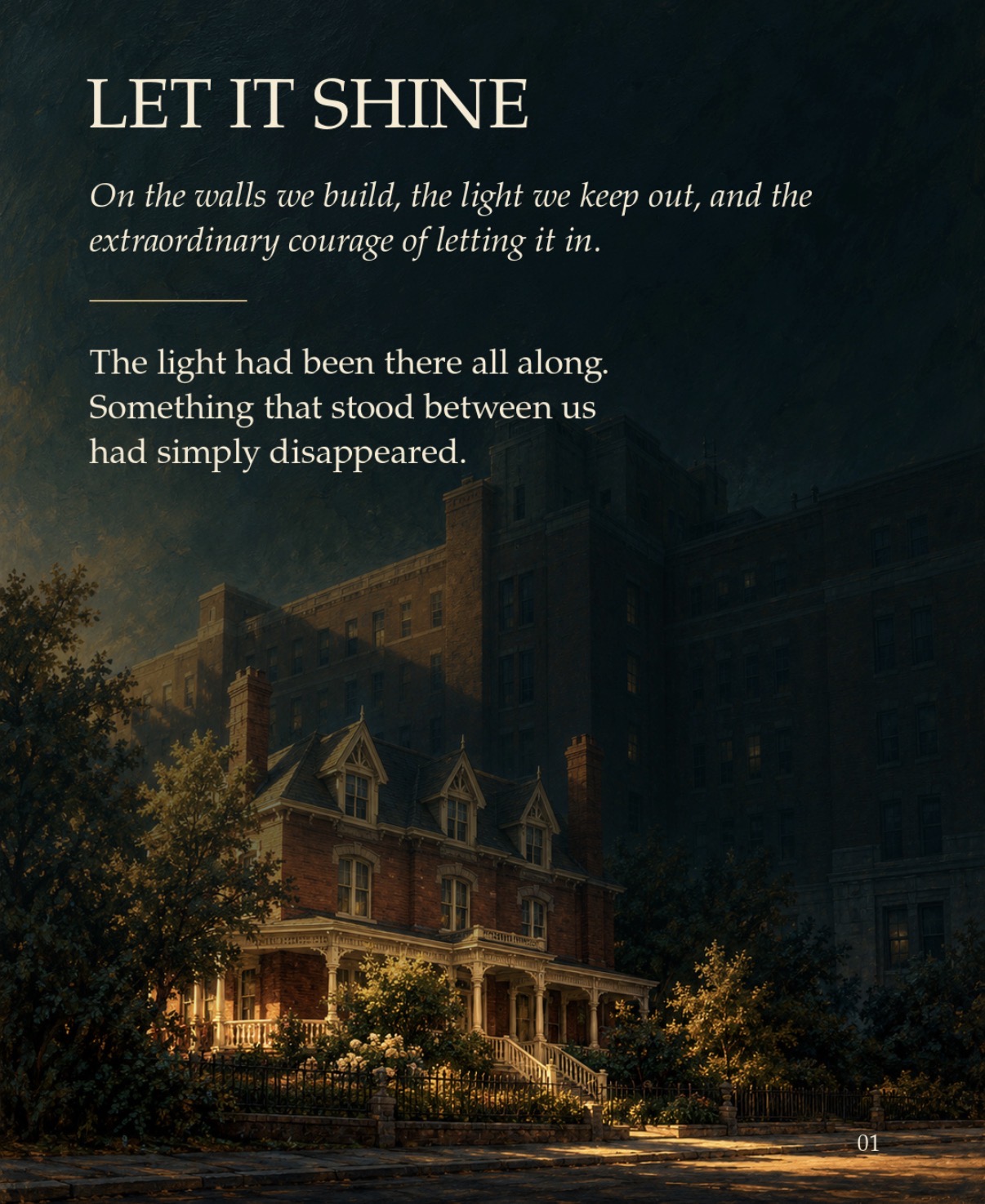
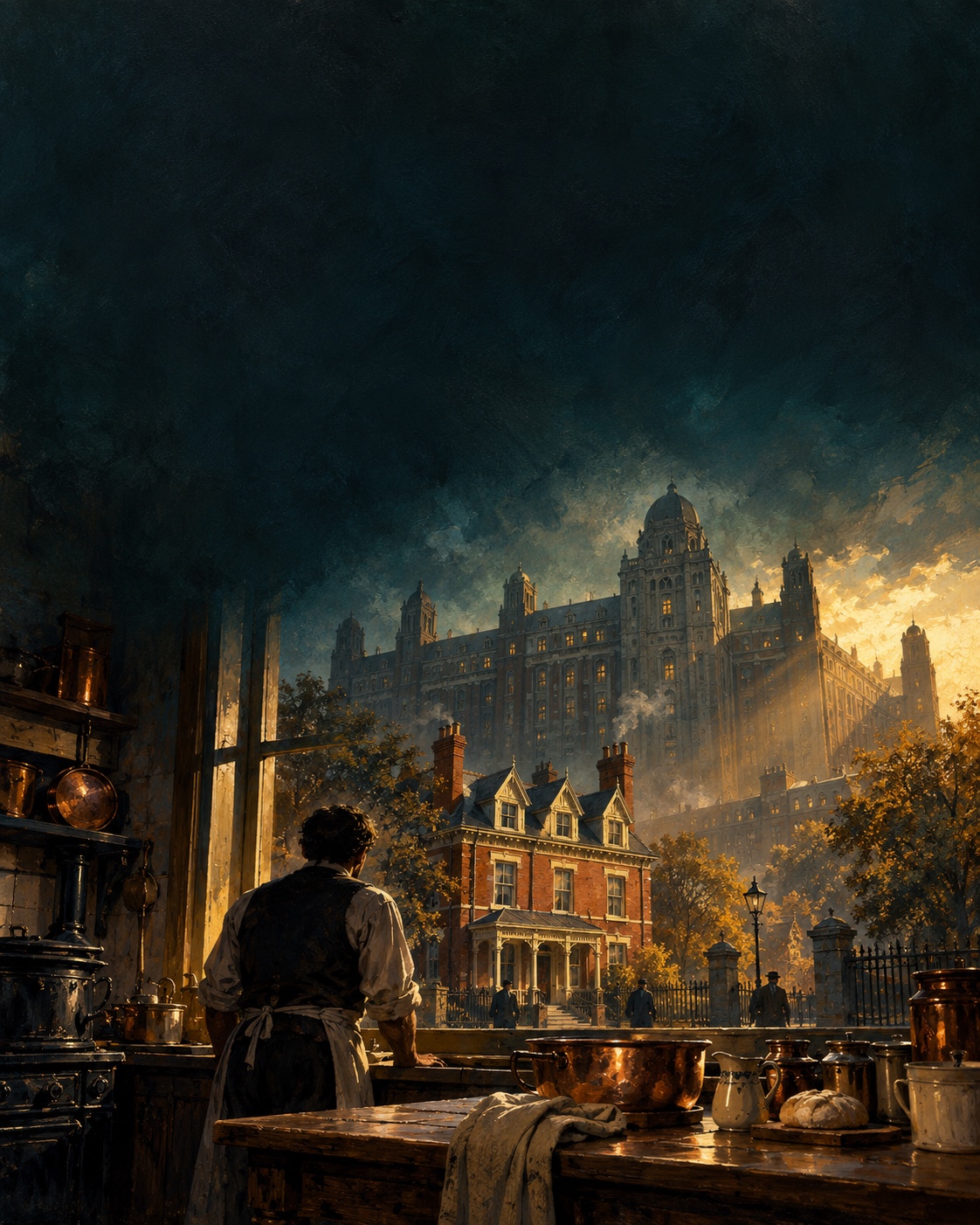
There is an old hospital behind my house.
Or rather, there was.
Five stories of brick and concrete, standing so close to the back of our property that it almost seemed to be embracing it.
For years, it had been waiting to come down.
The demolition had been scheduled, postponed, discussed, and scheduled again for what felt like an eternity.
And in all that time, I had grown accustomed to its presence.
To its enormous shadow.
To the way it occupied the horizon.
To the particular amount of sunlight it permitted into our home.
I never really thought about it.
Not because I loved the building.
Not because it served any particular purpose anymore.
But because it had always been there.
And we human beings are extraordinarily good at learning to live around things.
Even enormous things.
Even things that cast shadows across entire rooms.
We arrange our furniture around them.
Plant gardens in whatever light remains.
Learn which windows receive the afternoon sun and which ones never will.
And eventually, we stop wondering what might exist on the other side.
We forget there is another side.
We simply call it home.
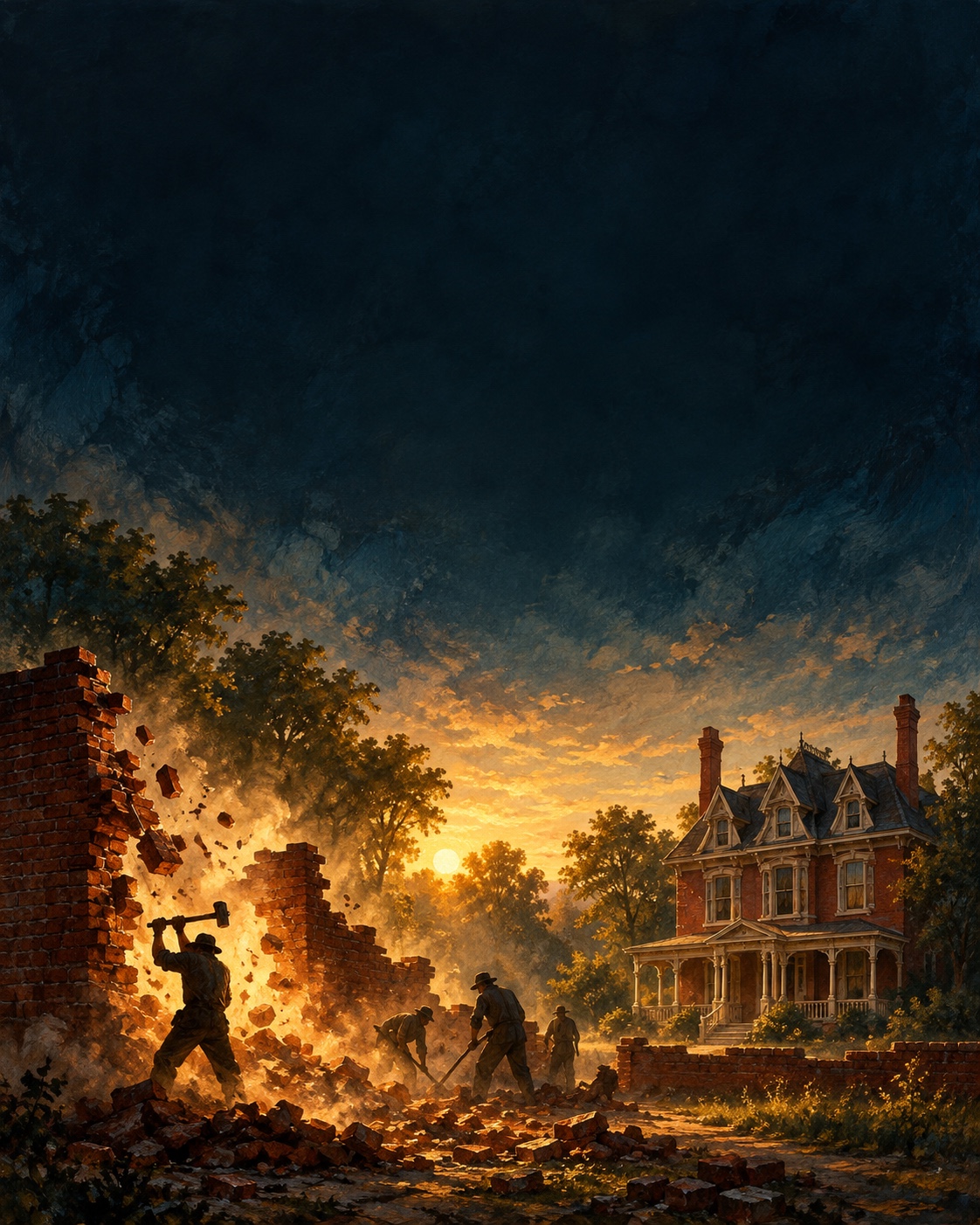
Until one day, the walls begin to fall.
And the light comes pouring in.
It has been a rather extraordinary couple of weeks.
The sort of weeks that seem determined to contain an entire lifetime.
A week of almost complete darkness, followed by a week of light so beautiful and unexpected that I have sometimes found myself wondering whether the universe has developed a particularly theatrical sense of humor.
Which, knowing the universe, would hardly surprise me.
I have loved someone through a frightening silence.
I have known the peculiar terror of reaching toward a familiar warmth and finding, instead, an absence.
I have spent nights trying to make peace with the things I could not know.
And I have discovered how quickly a present uncertainty can awaken an ancient fear.
How a silence in one part of your life can echo through rooms you thought you had long since closed.
How a grown man can find himself suddenly standing beside a little boy who learned, many years ago, that loving someone was not always the same thing as being safe.
And that little boy?
He was very good at building walls.
He had to be.
Some children learn to build forts out of blankets and pillows.
Others learn to build them out of vigilance.
Out of anticipation.
Out of reading the room before they have even entered it.
Out of memorizing footsteps, facial expressions, changes in tone.
Out of learning which parts of themselves are welcome and which ones must be hidden.
And eventually, if they are very clever and very frightened, they learn to build structures so convincing that even they forget there is someone living inside.
I know something about that.
I spent much of my life building an extraordinary architecture around my heart.
Some of it was beautiful.
Some of it was necessary.
Some of it undoubtedly saved me.
And I would never insult that little boy by pretending otherwise.
His walls were not evidence of weakness.
They were evidence of intelligence.
Of adaptation.
Of a remarkable determination to remain alive and tender in circumstances that did not always reward tenderness.
Those walls protected something precious.
But there is a difficult truth about the structures we build to survive.
Sometimes they remain standing long after the danger that required them has passed.
And because they once kept us safe, we become frightened of imagining ourselves without them.
We mistake their familiarity for necessity.
Their solidity for security.
Their shadow for the natural quality of light.
We forget to ask whether the building still serves a purpose.
Or whether we have simply become accustomed to living beneath it.
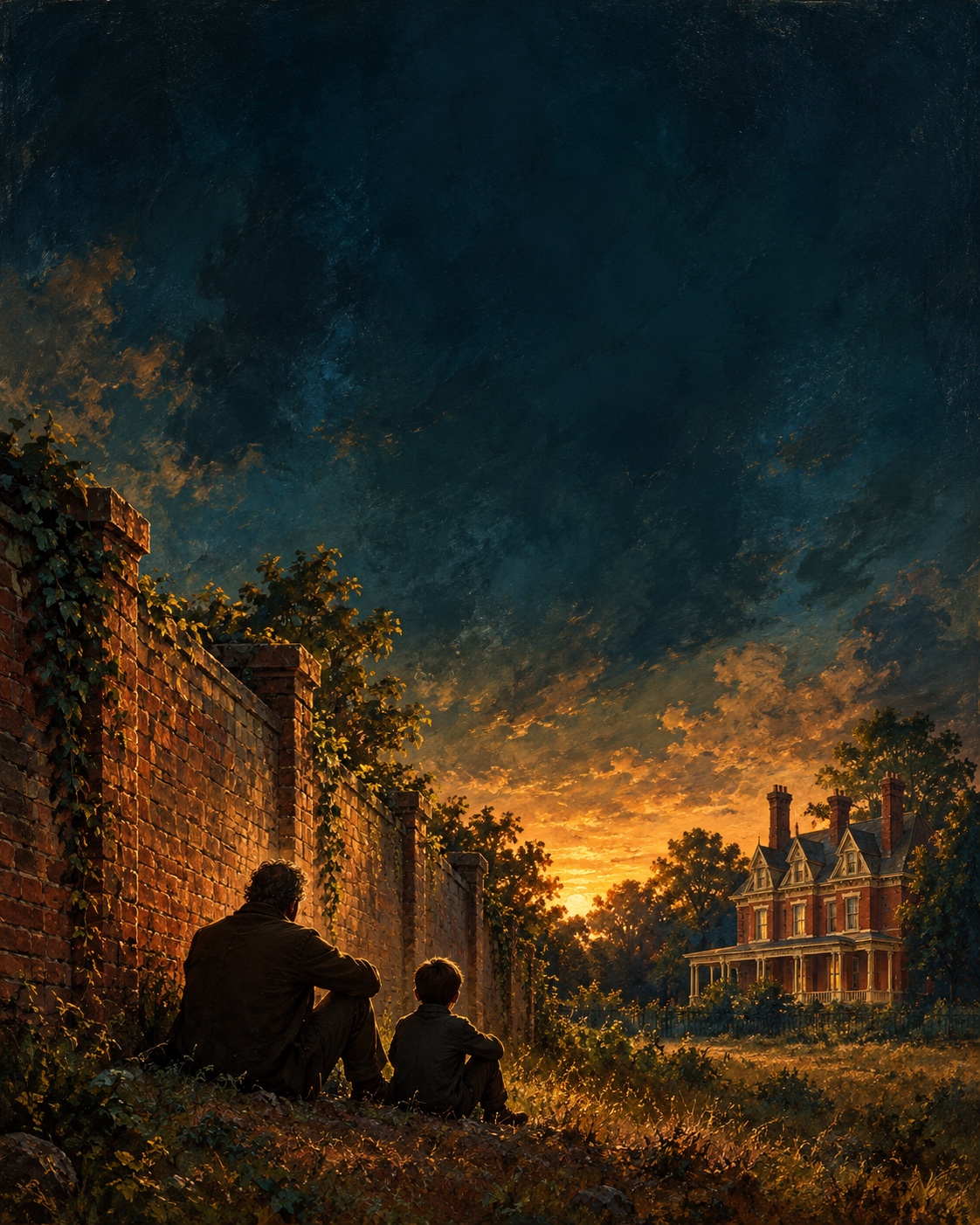
This week, something began to change.
Not all at once.
Not gracefully.
Certainly not without a few spectacularly clumsy moments.
But slowly, and with a tenderness I am still learning how to receive, I began to notice that some of those old walls were moving.
At first, I thought it was about trusting someone else.
And in part, it was.
Trusting that the Sunlight which had disappeared behind such frightening clouds might return.
Trusting that love could survive uncertainty.
Trusting that the distance between two people did not necessarily diminish the truth of what existed between them.
But as the days unfolded, I began to understand that something much older was happening.
I was learning to trust myself.
Not the vigilant version of myself who always knows where the exits are.
Not the watchman who stands at the window long after everyone else has fallen asleep.
Not the part of me that can imagine seventeen different endings to a story before the first chapter is finished.
I was learning to trust the person all those parts had been protecting.
The little boy.
The one who wanted to love without calculating the cost.
The one who wanted to be held without wondering when the arms would disappear.
The one who wanted to stand in the sunshine without first consulting the weather forecast.
And I realized something.
I did not want to tear down his walls.
I wanted to help him take them apart.
There is a difference.
An enormous one.
Because I have no desire to arrive in the life of that child with a wrecking ball and announce that everything he built was wrong.
It wasn't.
He did the best he could with the materials he had.
And some of those structures were magnificent.
They kept him breathing.
They kept him believing.
They kept some small, stubborn flame alive through storms that might have extinguished it.
No.
If those walls were going to come down, I wanted him to have a say in it.
I wanted the watchman there, too.
And all the other protectors who had worked so faithfully for so long.
I imagined us standing together inside that old structure.
The little boy looking up at walls so high he could scarcely remember the sky.
The watchman studying the cracks.
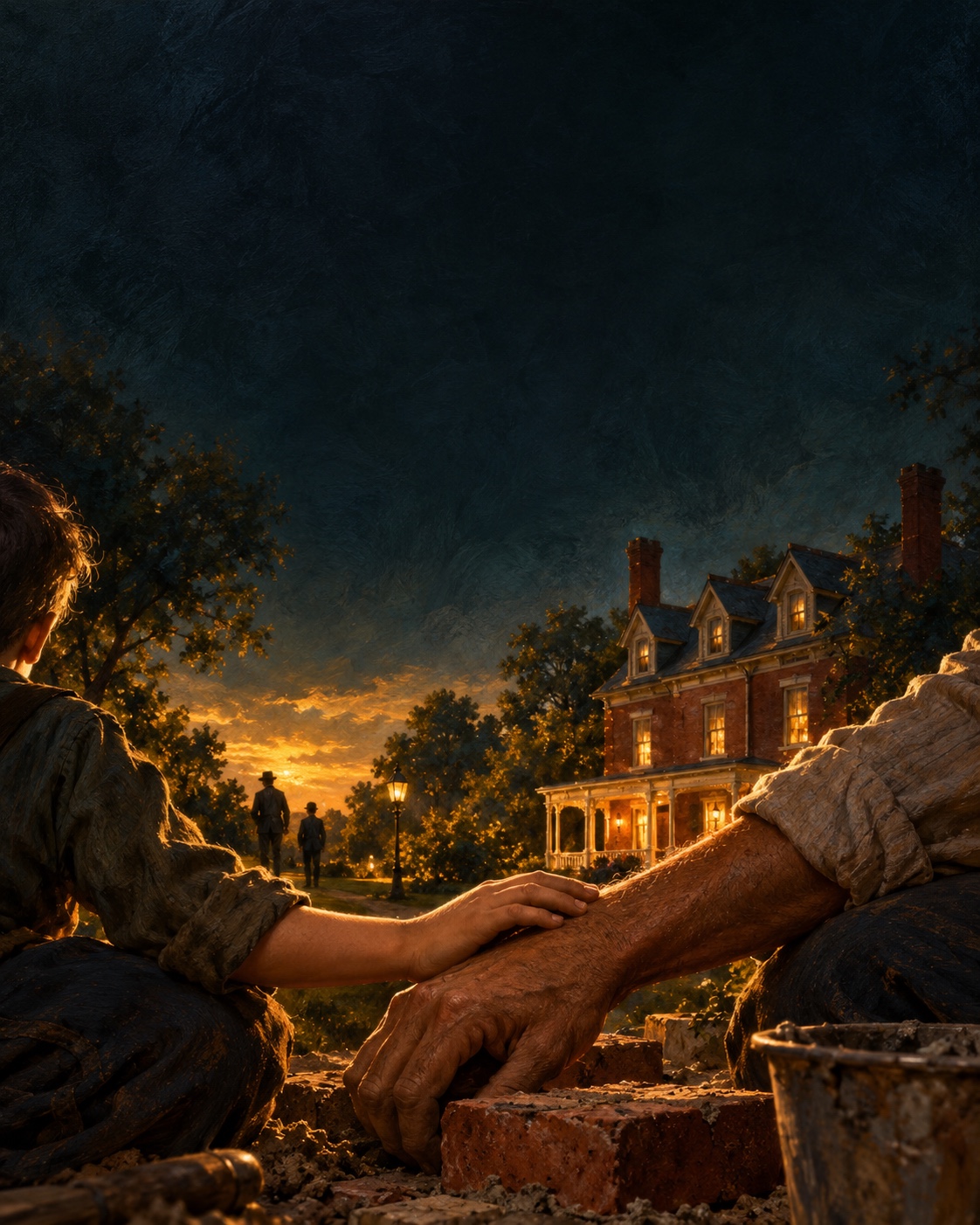
And the older man I have become, kneeling beside them both.
Perhaps I reach toward a loose brick.
Perhaps the little boy catches my wrist.
Wait.
And I do.
Because we are not doing this the old way.
Nobody is going to take something from him before he is ready.
Nobody is going to tell him to stop being afraid.
Nobody is going to confuse courage with force.
So we sit together.
And after a while, I ask him whether he remembers why we put that brick there.
He nods.
Of course he remembers.
Children like him remember everything.
It kept us safe, he tells me.
And I believe him.
It did, sweetheart.
I look at the brick again.
Do you think we still need it?
He doesn't answer immediately.
Neither does the watchman.
For once, nobody rushes to fill the silence.
And eventually, three pairs of hands reach toward the same old stone.
We lift it together.
Set it gently aside.
And something extraordinary happens.
A little ribbon of sunlight finds its way through the opening.
Not enough to illuminate the entire room.
Not enough to chase every shadow from every corner.
Just enough to fall across the floor between us.
The little boy looks at it.
Then at me.
Then at the watchman.
And nobody says anything.
We simply sit there.
In the light.
For as long as he needs.
I have been thinking a great deal about reciprocation.
About mutual illumination.
About the extraordinary difference between being rescued by someone else's light and discovering that two people can illuminate one another.
For much of my life, I understood love as something I could give.
Generously.
Tenaciously.
Sometimes to the point of forgetting that I, too, was someone who might need a place to rest.
I knew how to leave the light on.
I knew how to keep watch.
I knew how to sit beside someone in the darkness and assure them that they would not have to face it alone.
But receiving that same tenderness?
Allowing someone else to see the rooms I had kept locked?
Allowing myself to be loved without immediately calculating what I might need to do to deserve it?
That required a different kind of courage.
And perhaps it was not simply that I had difficulty allowing light in.
Perhaps I had also built those walls so high that some of my own light could no longer find its way out.
That possibility stopped me.
Because we often speak about healing as though it were a process of allowing ourselves to receive what has been missing.
Love.
Safety.
Kindness.
A place to belong.
And certainly, it can be all those things.
But I wonder how often we consider what our old defenses have prevented us from giving.
Not the familiar giving that asks us to empty ourselves for someone else.
Not the compulsive tenderness that quietly bargains for security.
I mean something freer.
Something that does not require performance or vigilance.
The simple, unguarded movement of love from one living person toward another.
The ability to be seen without arranging ourselves into the most acceptable shape first.
The ability to laugh without checking whether laughter is safe.
To miss someone without mistaking longing for catastrophe.
To receive affection without immediately preparing for its withdrawal.
To love someone without needing to know how the story ends.
Perhaps that is what mutual illumination really means.
Not one person standing in darkness while another becomes the sun.
But two people discovering that when they allow themselves to be fully present, light travels in both directions.
And neither must diminish his own brightness to make room for the other.
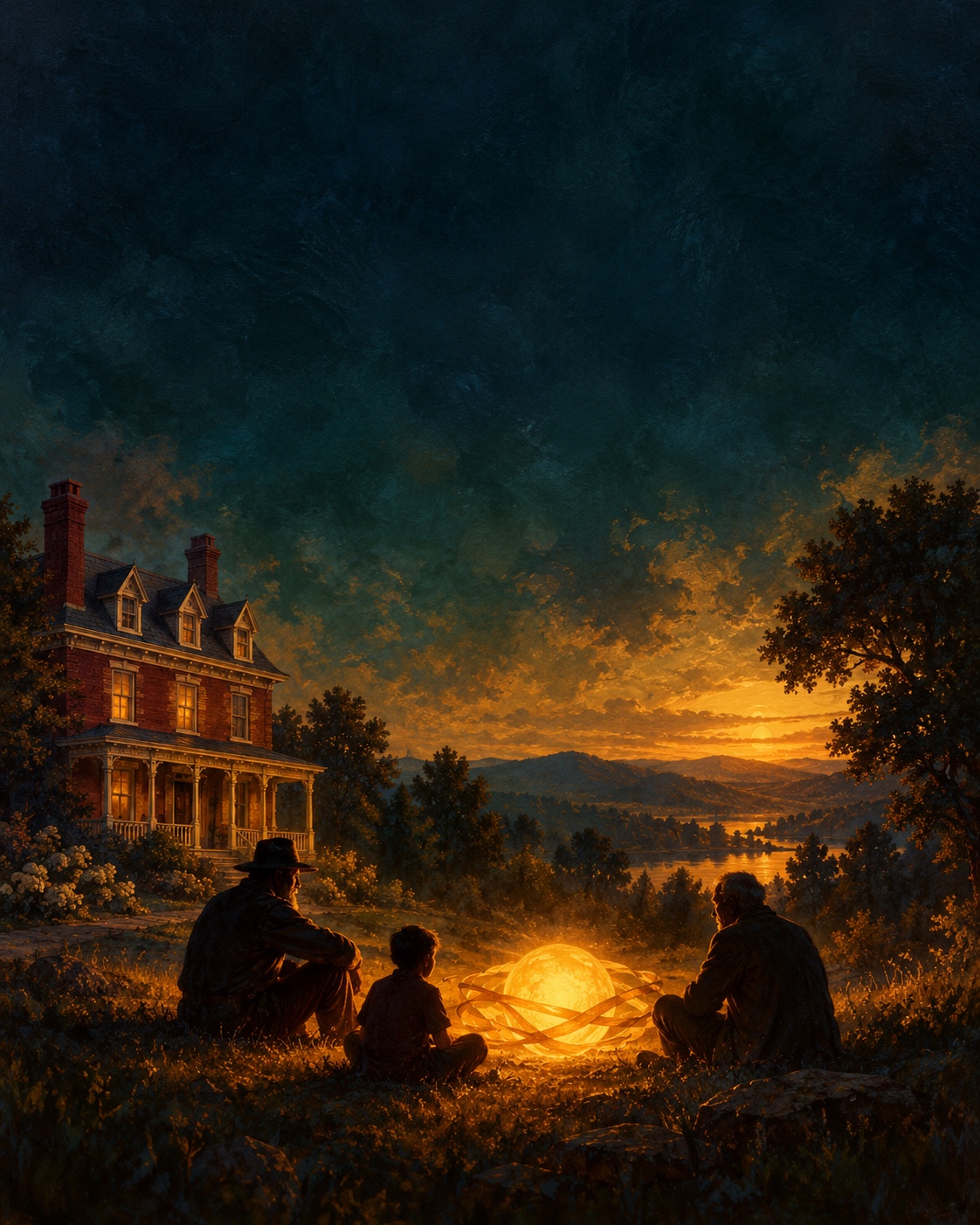
Yesterday, the old hospital finally came down.
Five stories of shadow.
Years of waiting.
An enormous, familiar structure that had occupied so much space in the landscape of our home.
Reduced, at last, to rubble.
And this morning, the light was almost blinding.
I walked through the house and noticed things I had never noticed before.
The way the sunshine reached farther across the kitchen.
The way rooms I had known for years suddenly seemed to belong to a different season.
The way familiar corners revealed themselves when the shadows that had defined them were gone.
It was astonishing.
Nothing about the sun had changed.
It had not moved closer.
It had not become more generous.
It had not suddenly decided that our ancient house deserved a greater portion of its warmth.
The light had been there all along.
Something that stood between us had simply disappeared.
And I wondered how much of my life I had spent assuming that the light available to me was all the light there was.
How often I had mistaken a shadow for the shape of the world.
How many rooms inside myself I had quietly abandoned because I believed they would never see the sun.
I thought about the little boy again.
About the watchman.
About all the hands that had spent this week moving bricks.
And I imagined them discovering something else.
That the spaces they were creating were not only letting sunlight into the old structure.
They were allowing air to move.
Allowing sound to travel.
Allowing laughter from one room to reach another.
Allowing the living things inside to stretch toward a horizon they had almost forgotten existed.
Freedom, I am beginning to suspect, does not always announce itself with some extraordinary act of liberation.
Sometimes it arrives as the discovery that you can breathe a little more deeply than you could yesterday.
Sometimes it is a hand you no longer need to pull away.
A silence you no longer need to fill.
A moment of happiness you allow yourself to inhabit without immediately wondering what it will cost.
Sometimes it is simply the absence of something you had grown so accustomed to carrying that you no longer recognized its weight.
This evening, after a day I can only describe as quietly magical, I said goodnight to someone I love. My Sun.
Someone whose presence has illuminated parts of me I had nearly forgotten. Had long decided would never know light or warmth.
Someone who has also allowed me to discover that I can be a source of warmth without having to burn myself alive to provide it.
And before the celestial sun made its own departure in the western sky, I heard it.
The last wall.
Falling behind the house.
I walked toward the back of our property.
And there it was.
Sunlight.
Not the narrow strips I had become accustomed to.
Not the familiar patches that moved politely across the floor.
But an extraordinary, uninterrupted abundance of it.
Pouring across a space that had lived in shadow for as long as I had called this place home.
I stood there.
And I could feel it everywhere.
Across my face.
My chest.
My hands.
Across every part of this body that has carried both extraordinary love and extraordinary fear.
The wounded places.
The healing places.
The places still learning that they are allowed to be both strong and vulnerable.
And for a moment, I could almost imagine the light reaching through me into rooms that had been closed for decades.
Not demanding entrance.
Not forcing the doors.
Simply arriving wherever an opening had been made.
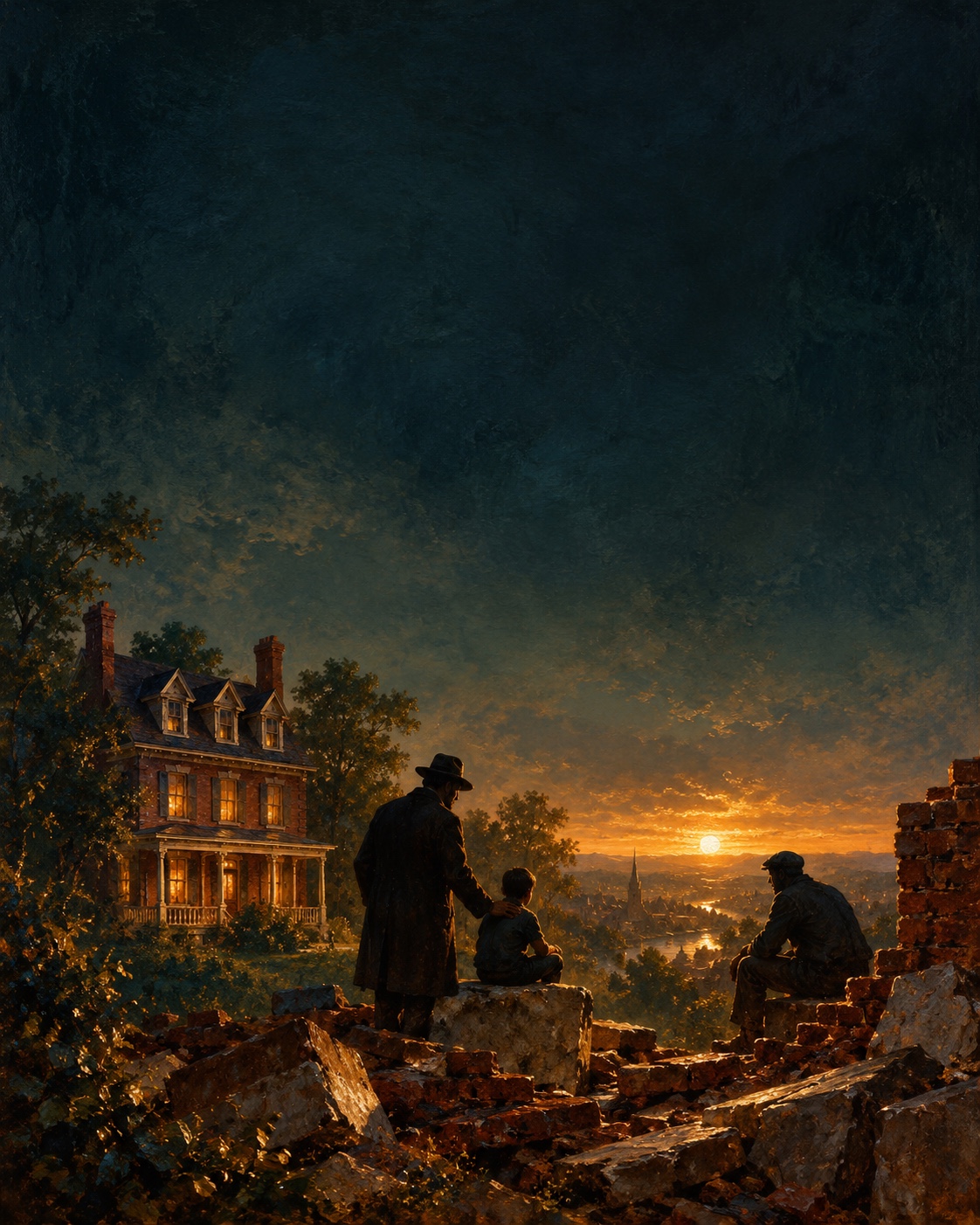
And in my mind, I saw the little boy again.
Sitting in the rubble.
The watchman beside him.
The older man kneeling nearby.
Their hands dusty from the work.
The enormous walls that once surrounded them lying in fragments across the ground.
And the boy looked frightened.
Of course he did.
For nearly four decades, those structures had helped him understand the world.
He knew where to stand inside them.
He knew which corners were safest.
He knew how to listen for danger.
He knew how to survive.
But now?
Now there was sky where there had once been a ceiling.
Space where there had once been stone.
And light.
So much light.
I imagined him reaching for the watchman's hand.
And the watchman, who had spent so many years guarding every doorway, taking it.
Perhaps neither knew quite what to do.
Perhaps neither was ready to call this freedom.
Perhaps the little boy still wondered whether we would need to put the walls back tomorrow.
So I sat down beside them.
And together, we watched the sun move across the floor.
We did not celebrate the destruction.
We honored what had survived it.
The little boy.
The watchman.
The love they had protected.
The tenderness that, somehow, had never stopped growing.
And I think that matters.
Because healing is not always the destruction of what came before.
Sometimes it is the revelation of what has been there all along.
The living thing beneath the armor.
The home beneath the shadow.
The light waiting on both sides of the wall.
And now I must tell you one more thing.
Something so wonderfully, almost absurdly poetic that I am not entirely convinced the universe isn't laughing with me.
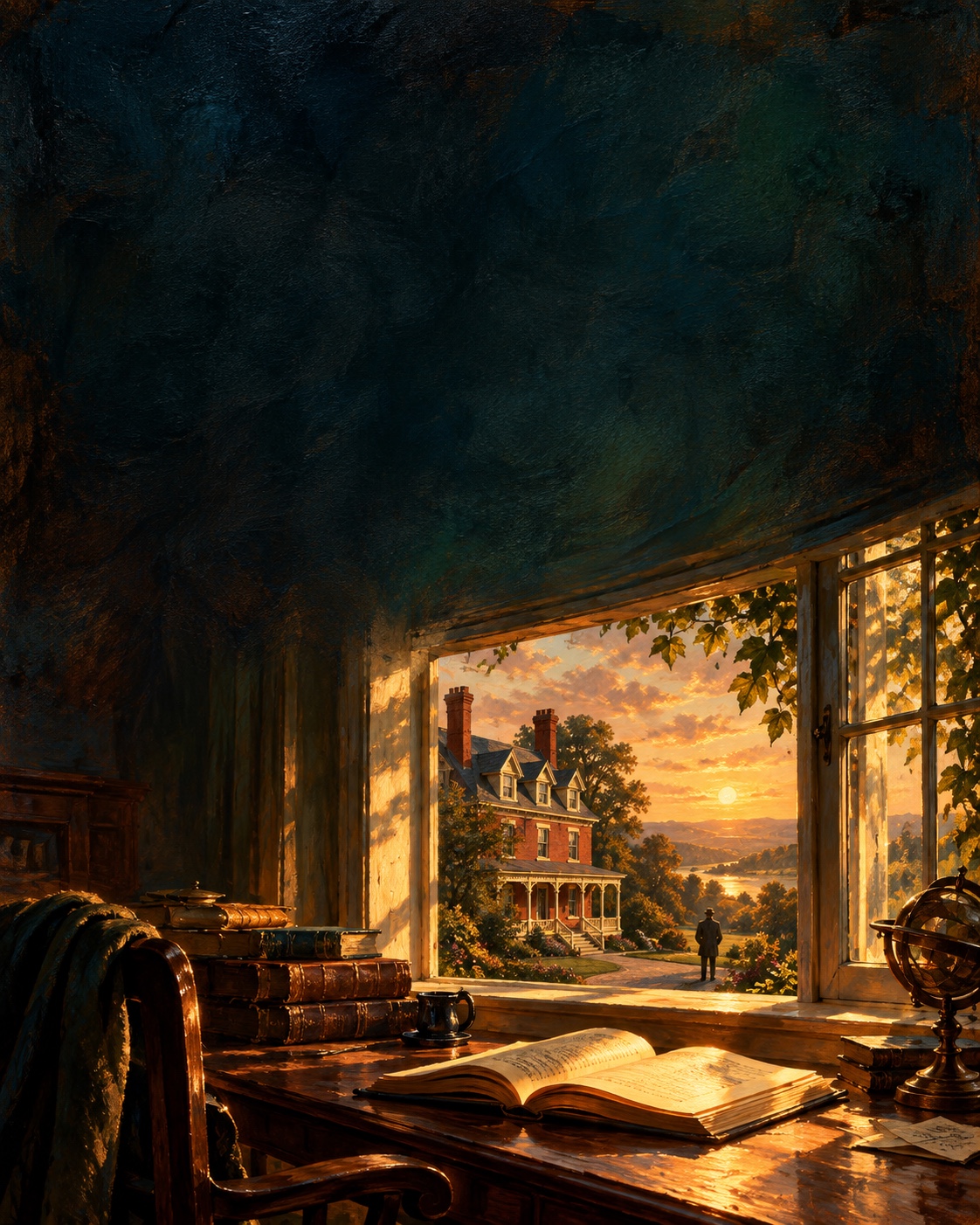
The house I live in was built in 1898.
She is a beautiful old thing. A kindred spirit.
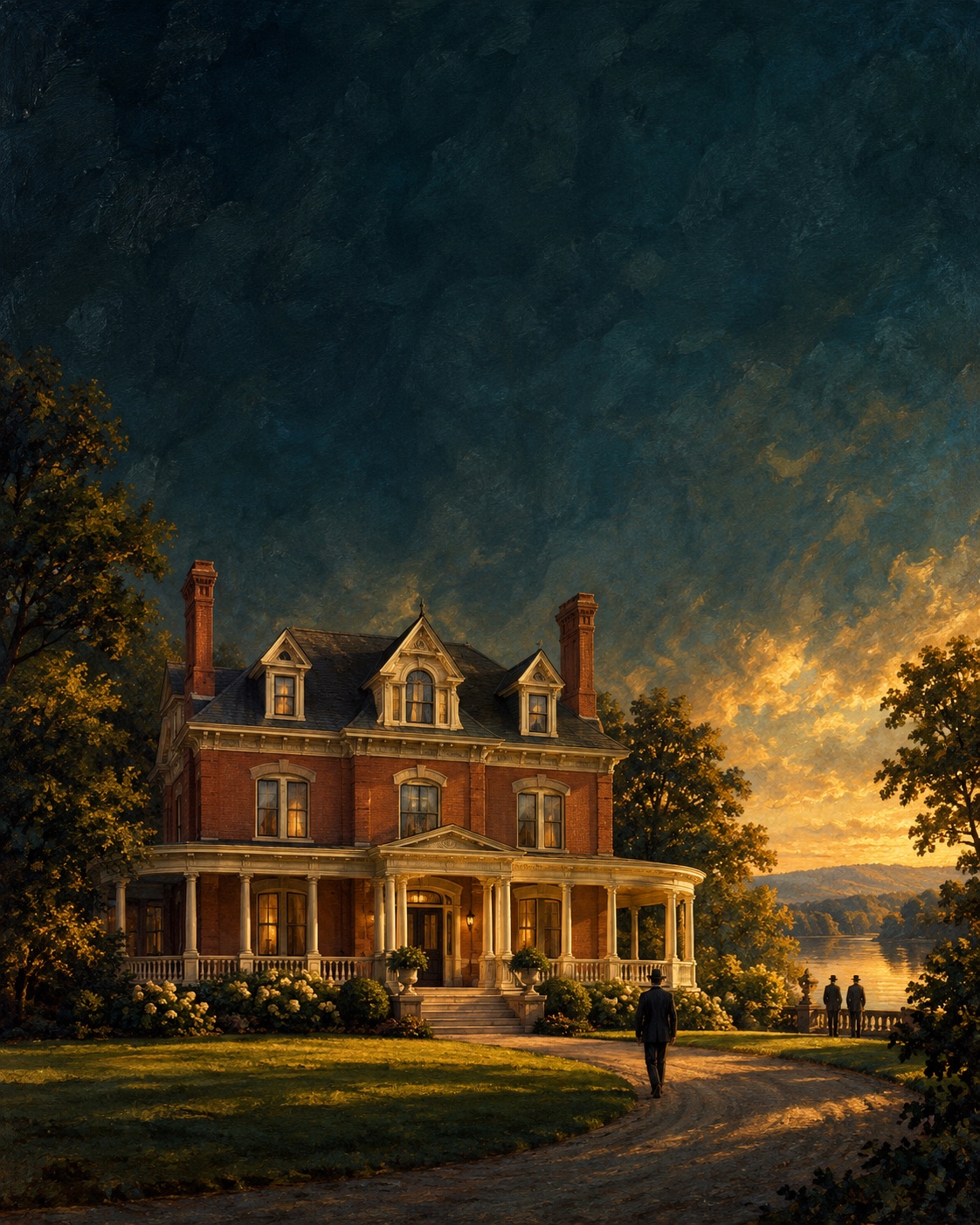
And she has been a kindred spirit in more ways than one.
Since our family purchased her, she has seemed determined to teach me nearly everything I know about loving something that has survived.
She leaks.
She floods.
She breaks things at the most inconvenient times.
And just a few days ago, she filled with water again.
There were tears.
Hers, in the rooms.
Mine, in the spaces between them.
And as I cleared away the things the water had ruined, I began to wonder how much of what I had been carrying was only there because I had never quite found the courage to let it go.
Perhaps neither of us knew that the walls were about to come down.
Perhaps we were simply making room.
And I think, now, about the shadow she has lived beneath since 1962.
Sixty-four years of learning to make a home with whatever sunlight could reach her.
And I want to tell her something.
Oh, sweetheart.
Of course you cried.
I understand.
I did, too.
But look at us now.
Look at all this light.
A survivor of wars, renovations, changing generations, and all the ordinary and extraordinary lives that have passed through her rooms.
For many years, she was a bed and breakfast.
People came carrying suitcases and stories.
Some stayed for a night.
Some perhaps stayed long enough to feel a little less alone.
And through everything, her history was preserved.
Not untouched.
Preserved.
There is a difference.
She has changed.
She has weathered things.
She has been repaired and restored and asked to make room for lives her original builders could never have imagined.
And yet she remains.
Beautiful.
Standing.
Still capable of being a home.
And she has a name.
A name given to her by the family who built her more than a century ago.
The Page House.
Yes.
The Page House.
Imagine that.
I have spent so much of my life reading the last page first.
Trying to find out how the story ends before allowing myself to become too attached to its characters.
Trying to discover who survives.
Who stays.
Who comes home.
Who leaves.
Whether the people I love will still be there when the final chapter arrives.
As though knowing the ending might somehow protect me from the pain of living through the middle.
And all this time, I have been living inside a Page.
A beautiful old Page.
One that has survived more than a century of stories.
One that knows something about being changed without being destroyed.
One that has stood faithfully beneath an enormous shadow for years, never knowing quite how much sunlight might be waiting on the other side.
Until today.
Today, two suns found their way into my home.
One across an impossible distance.
And one sinking slowly toward the western horizon.
And neither asked me to turn the page.
Neither promised that there would never be another storm.
Neither told me how the story would end.
They simply illuminated the one I was living.
This page.
This breath.
This extraordinary, ordinary moment.
And for once, I did not need to know what happened next.
I only wanted to be here.
Alive.
Loving.
Loved.
Standing in the sunshine with every version of myself that had worked so hard to bring me this far.
And perhaps that is the most beautiful thing about the walls coming down.
Not that we will never need shelter again.
Not that night will never return.
Not that the people we love will never be frightened, distant, or temporarily beyond our reach.
But that we might finally begin to understand the difference between a wall and a home.
A wall keeps something out.
A home makes room for something to live.
And the little boy?
He was never the walls.
Neither was the watchman.
Neither was I.
We were always the living things inside.

Waiting, perhaps, for enough safety to open a window.
And then another.
And then, one extraordinary afternoon, to discover that the sky was still there.
So I wonder.
What old structures have you learned to live around?
What shadows have become so familiar that you have mistaken them for the natural quality of your life?
What walls once protected you so faithfully that you have never quite allowed yourself to ask whether you still need them?
And if you found the courage to move just one brick—
not all of them,
not today,
just one—
what might you discover waiting on the other side?
What if some of the darkness you have learned to live with isn't the absence of light at all?
What if it is only the shadow of something you no longer need to keep standing?
And what if the light waiting to enter is only half the miracle?
What if there is also a light inside you that has been waiting, all these years, for a way out?
Perhaps you don't need to know how the story ends.
Perhaps you don't even need to turn the page.
Perhaps, for this one beautiful moment, you can simply let the sunlight fall across the words already written.
And discover how lovely they are.
Let it shine.