NOT EVERYTHING THAT HURTS IS BROKEN
On the courage of witnessing, the mercy of the elements, and learning to choose what home looks
like.
I learned something about healing long before I understood how to explain it.
Not everything that hurts is broken.
And not everything that is broken is asking to be fixed.
Sometimes a person is simply asking whether you can bear to sit beside them while they tell
you where it hurts.
Whether you will look away.
Whether the things they have spent their lives hiding will finally become too much for
someone else to hold.
Whether, after everything they have told you, you will still see a human being.
I spent many years sitting across from people who had learned to expect something different.
People whose pain had been examined, categorized, measured, explained.
People who had been told what was wrong with them so many times that they had begun
introducing themselves by the names of their wounds.
People who had learned that the price of being helped was allowing someone else to decide
what needed changing.
And certainly, there are times when intervention matters.
When treatment matters.
When the body and mind need more than companionship to find their way toward safety.
But I began to notice something.
Sometimes, before a person could imagine changing anything, they needed to discover that
they could be seen without being corrected.
That someone could hear the unbearable thing and remain.
That the story they were ashamed to tell might not make them less lovable.
And sometimes, after someone had entrusted me with a piece of themselves they had never
spoken aloud, I would find myself saying something quite simple.
Your words are very beautiful.
Your heart is very big.
Not because what happened to them was beautiful.
Not because their suffering needed to become meaningful.
But because I wanted them to know that I had heard something beyond the wound.
I had heard them.
And I wasn't going anywhere.
In my early twenties, I fell in love with a story.
Not a love story, exactly.
Although perhaps all the stories that have mattered most to me have been love stories in
disguise.
It was about a creature called Story, who emerged from the water and entered a world that
had forgotten how to believe in things it could not explain.
She was strange.
Tender.
Otherworldly.
She did not belong to the ordinary rules of the world around her.
And yet, somehow, her presence helped other people begin to recognize something
extraordinary within themselves.
Not because she handed them a set of instructions.
Not because she informed them who they were supposed to become.
But because, in encountering her, something inside them began to remember.
I was a young queer man then.
Still learning what it meant to inhabit a life that did not always fit the shapes other people had
prepared for it.
Still learning how to carry a sensitivity that could feel, at times, almost unbearable.
I could walk into a room and sense what had not been spoken.
I could sit beside someone's grief without needing to escape it.
I could hear the places where a person's voice changed when they approached something they
were afraid to say.
And I understood, even then, that these things were not necessarily problems.
Sometimes they were gifts.
But gifts can become heavy when we do not yet understand how to put them down.
My friends saw something of me in Story.
And for one of those rare, wonderful moments, I believed them.
I felt seen.
Not diagnosed.
Not explained.
Not reduced to the ways I was different.
Seen.
There is a particular kind of relief in that.
The relief of discovering that what makes you difficult to categorize might also be something
beautiful.
And I think there was something else I recognized in her.
She helped people discover things about themselves without demanding that they become
someone else.
She did not need to make the wounded ordinary.
She did not need to explain away their differences.
Sometimes her presence was enough to awaken something that had been waiting to be
recognized.
I understood that.
Or perhaps I wanted to.
Because even then, I was trying to offer something similar.
A place where people could bring the parts of themselves they had learned to hide.
And discover that those parts did not have to disappear before they could be loved.
There was something else I learned in childhood.
A small word.
One syllable.
When.
I remember being taught in church that God would never give us more than we could handle.
The explanation was almost charming in its simplicity.
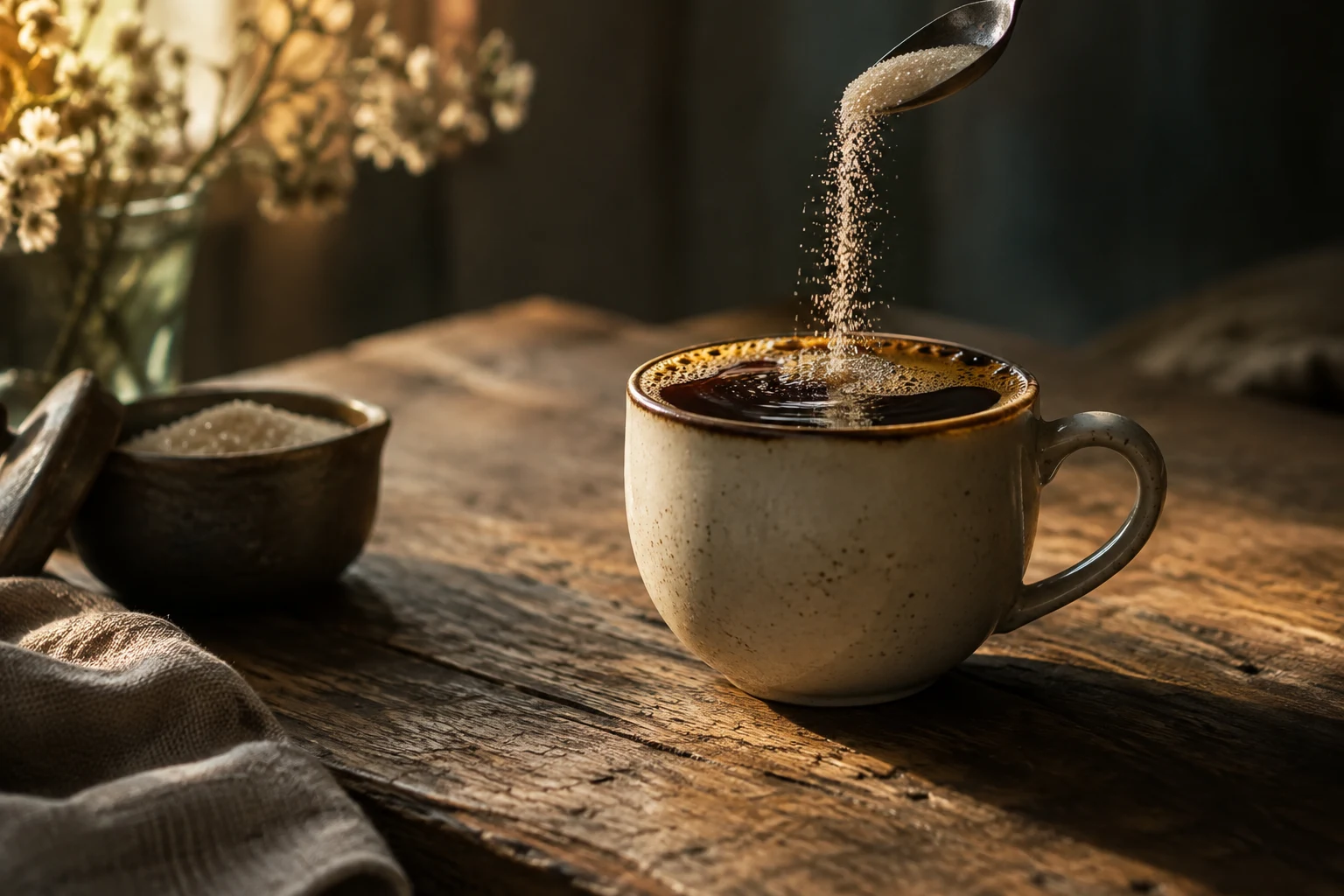
Imagine someone pouring sugar into your coffee.
They keep pouring until you tell them to stop.
All you have to do is say when.
And for a child, there was something comforting about that idea.
That suffering might have a limit.
That mercy could be requested.
That somewhere, someone was listening for the moment when the cup became too full.
And so I learned to say when.
I said it in the ways children often speak when words are not enough.
With tears.
With silence.
With the small, frightened body that hid beneath a bed.
With the desperate hope that being good enough might persuade someone to stop.
I said it when the people who were supposed to protect me became the very people from
whom I needed protection.
I said it when the world became too loud.
When the demands became too heavy.
When the darkness seemed to have no edges.
And I waited.
Because that was the part of the story nobody had explained.
Saying when did not necessarily mean the pouring would stop.
Sometimes the person holding the sugar had no intention of listening.
Sometimes they were the very person making the cup overflow.
And sometimes they simply walked away, leaving me to wonder whether I had failed to make
myself understood.
But the little boy kept believing.
And I love him for that.
I love the beautiful, stubborn hope that survived inside him.
The part that continued expecting mercy even when mercy had been withheld.
He was not foolish.
He was not weak.
He was a child.
And children should be able to believe that when they say enough, someone will listen.
Years later, I attended an intensive training devoted to understanding trauma.
By then, I had spent years learning how to sit with the most difficult parts of another person's
story.
I knew what it meant to witness.
To remain.
To resist the impulse to turn someone's pain into a problem that needed solving before it could
be heard.
And for once, I was going to be on the other side.
We were asked to share something called a trauma egg.
A way of tracing the experiences that had shaped us, beginning in childhood.
I had prepared myself to speak.
Perhaps not without fear.
But with the hope that this room, of all rooms, might know how to listen.
I began.
And before I had even reached five years old, I was stopped.
Too much.
There was more than the room could hold.
And so I stopped.
Of course I did.
One is glad to be of service.
Even there.
Even then.
I knew how to become the person who made everyone else comfortable.
I knew how to fold my own story back into its little box.
A couple of clinicians offered to meet with me later, privately, so I could continue and process
what had been interrupted.
I wanted to believe them.
But that meeting never happened.
What came instead were late-night knocks at my hotel room from clinicians whose intentions
were not the care I had been promised.
And I recognized something terribly familiar. When.
Even here, among people who spoke the language of trauma and healing, I was being asked to
navigate other people's wants while my own need for care remained unanswered.
I do not tell this story because I believe everyone in that room acted maliciously.
Some may have been overwhelmed.
Some may have intended kindness.
But good intentions do not erase the consequences of failing to care for someone who has
entrusted you with their vulnerability.
And the little boy inside me learned something painfully familiar once again.
That his story could become too much for other people.
That the people promising to help might not remain.
That even when he asked for care, he might find himself managing the needs and intentions of
others.
I think about that young clinician now.
How carefully he had prepared.
How much courage it took to begin.
How quickly he accommodated the room.
And I wish someone had told him what I know now.
You were not too much.
What you carried was more than that particular room could hold.
And those are not the same thing.
And there was another day.
Another room.
Another moment when I discovered that being extraordinarily good at surviving something
did not mean I had emerged from it unharmed.
I was a young clinician when a patient held me against a wall by my neck and threatened to
kill me.
I remember the fear.
And I remember how quickly the familiar parts of me went to work.
The watchman.
The problem solver.
The boy who had learned to study another person's anger and search for the small doorway
through which he might reach them.
I could not fight him with my body.
Or at least, in that moment, I did not believe I could.
He was a patient.
I was a clinician.
And I understood that my best chance of reaching the door might be through something I had
spent my entire life learning how to use.
My words.
So I spoke.
I made myself human to him.
I told him about my life.
About why I still chose to live.
About why I still believed there was something worth offering the world.
I offered him pieces of myself in the hope that he might recognize the human being standing
before him.
And eventually, he cried.
He released me.
I reached the door.
I called for help.
And when it was over, everyone seemed to recognize how well I had handled it.
How strong I was.
How capable.
How remarkable that I could remain compassionate in such circumstances.
But I did not need to be remarkable that day.
I needed to be held. When.
I needed someone to look beyond the skillful response and see the frightened young man
whose body had just been pressed against a wall.
I needed someone to understand that the watchman could save my life and still be shaking
afterward.
There were already so many things happening in my life.
A relationship that had betrayed my trust. When.
A mother who was dying. When.
A beloved dog with cancer. When.
And beneath all of it, a young man trying to remain useful while his own world was coming
apart.
My cup was not merely full.
The walls I had spent a lifetime building were shaking.
Every cell in my body seemed to be shaking with them.
And for one brief moment, sitting before someone who should have known better, I allowed
myself to cry.
Perhaps some part of me believed that this time, surely, someone would notice.
Surely, this was enough.
Surely, I had finally reached the moment when someone else would put down the cup.
Instead, I was met with impatience.
An eye roll.
An irritated sound.
An instruction to collect myself and return to the work that still needed doing.
And so I did.
Of course I did.
One is glad to be of service.
I think about that young man now.
And I wish I could enter that room.
Not to tell him how brave he was.
Not to praise his composure.
Not to ask him how he managed.
I would simply sit beside him.
And if he wanted to be held, I would hold him.
I would tell him that he could cry.
That he could shake.
That he did not need to make anything beautiful out of what had happened.
And that being capable of carrying something did not mean he should have been made to
carry it alone.
Because sometimes the terrible cost of becoming extraordinarily good at surviving is that
people begin to mistake your survival for evidence that you were never really in danger.
And sometimes the praise becomes another kind of abandonment.
You're so strong.
You're so capable.
I don't know how you do it.
All the while, nobody asking whether you should have had to.
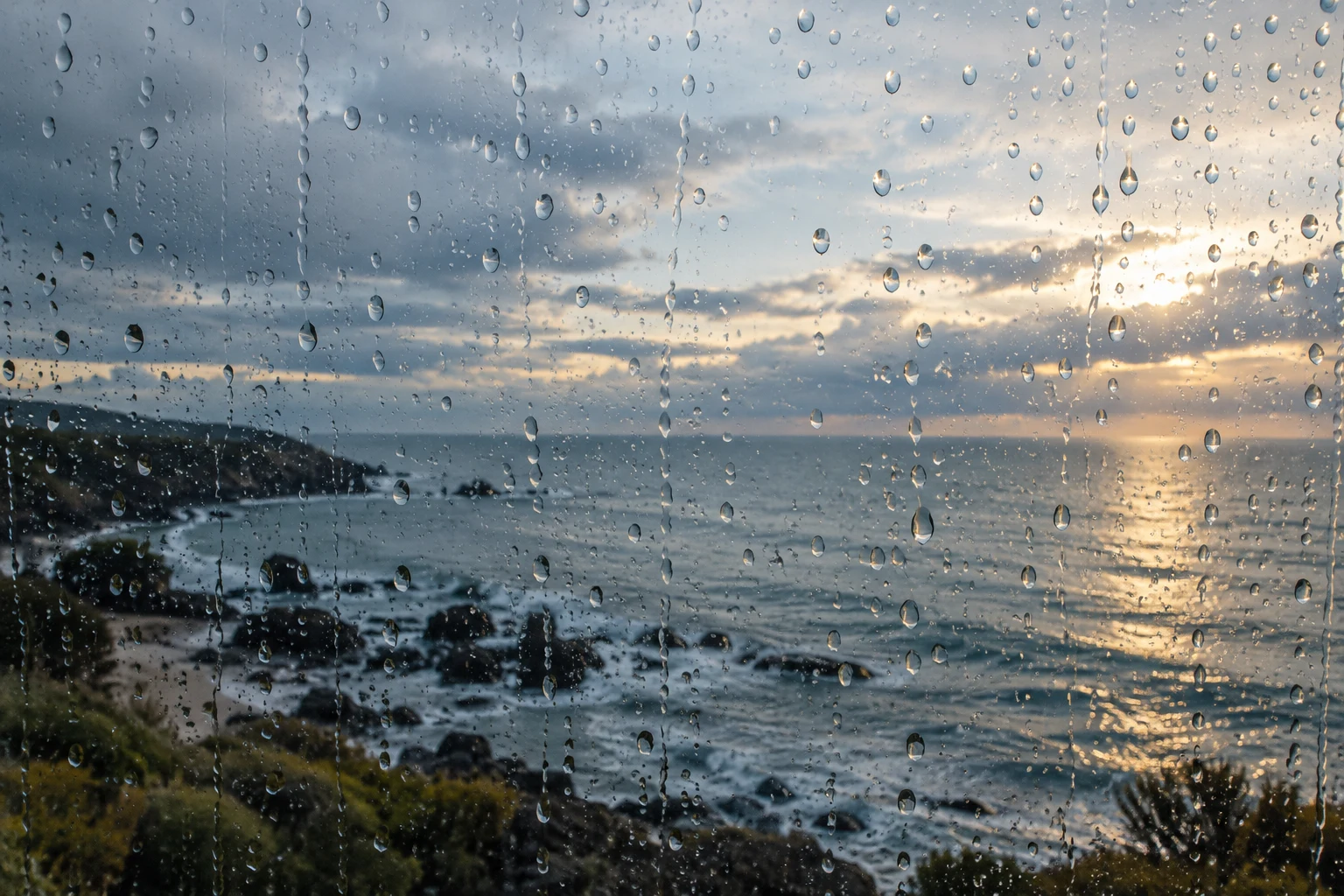
There was a moment in the film Lady in the Water that I carried with me for years.
When Story grew weak, she returned to water.
She sat beneath the shower.
And something about that image went straight through me.
I understood it without needing anyone to explain.
Because I knew what it felt like to become depleted.
To give and give until the boundaries of myself became difficult to find.
To feel, as Tolkien once wrote, like butter scraped over too much bread.
To have offered so much of my light to other people that I could scarcely remember what it felt
like to be illuminated from within.
And so, when I began to fade, I found my way back to the elements.
I stood in the rain.
Sometimes I let it fall over my face until I could no longer distinguish it from tears.
Sometimes I simply closed my eyes and listened.
Rain has never asked me to explain why I am crying.
It has never required me to be cheerful before it will touch my skin.
It arrives.
And I am allowed to arrive with it.
I stood beneath the stars.
Looking into a darkness so enormous that, strangely, I felt less alone.
There is something comforting about being very small beneath a sky that has held so many
lives.
Something about remembering that the universe can contain darkness without ceasing to
contain light.
I stood in the waves of the sea.
Letting the water approach me.
Withdraw.
Return.
Again and again.
As though the ocean were demonstrating something my nervous system had spent a lifetime
trying to understand.
You can leave and come back.
You can move away without disappearing.
You can change shape without ceasing to be yourself.
I stood at the edges of mountains and leaned into the wind.
And for a little while, I did not have to be the one holding everything up.
The wind held me.
Or perhaps I simply remembered that I had a body capable of leaning.
Of trusting.
Of yielding without falling.

And I stood beside trees.
Oh, those trees.
My mighty sequoia mothers.
Some of them had been alive longer than the countries whose borders now surrounded them.
They had endured fires.
Droughts.
Winters.
Lightning.
Centuries of weather.
And still they stood.
I would place my palms against their bark.
Sometimes I would wrap my arms around them, knowing full well that I could never come
close to embracing their entirety.
But that was never the point.
I wasn't trying to hold the tree.
I was allowing myself to be near something that did not need me to hold it together.
Something strong enough to receive my tenderness without becoming another responsibility.
And perhaps, for a little while, I could stop being responsible for everyone else's survival.
I could simply be a living thing beside another living thing.
Breathing.
And there was something else.
I never had to say when.
Not to the rain.
Not to the sea.
Not to the wind.
Not to the trees.
I did not have to convince them that I had suffered enough to deserve rest.
I did not have to prove that I was exhausted.
I did not have to make myself useful before I could be welcomed.
I could arrive exactly as I was.
And for a little while, that was enough.
I think now about the little match girl.
How much of her brief, terrible story is about a child trying to create warmth in a world that
keeps taking it away.
And I think about all the people who learn to become matches for others.
The children who discover that making someone else smile can make the room safer.
The young people who become extraordinarily skilled at sensing another person's sadness.
The adults who spend their lives offering comfort, reassurance, warmth, and light.
Sometimes long before anyone has asked whether they themselves are cold.
I recognize that pattern.
I lived inside it for a long time.
And I do not regret the tenderness.
I do not regret the people I loved.
I do not regret the moments when I sat beside someone in darkness and helped them discover
they were not alone.
But I have begun to understand something about the difference between generosity and
disappearance.
A candle cannot nourish a room if it is never allowed to remain a candle.
And love was never supposed to require us to burn ourselves completely away.
Perhaps that was what the rain understood.
What the ocean understood.
What the sequoias had been teaching me all along.
That I could give without vanishing.
That I could stand beside suffering without becoming responsible for ending all of it.
That I could be present without making myself the price of someone else's peace.
And that sometimes the most loving thing I could do was return to the places where I
remembered how to receive.
For a long time, I believed the word when was a boundary.
I thought saying it was enough.
That if I could simply communicate my limits clearly enough, kindly enough, carefully enough,
another person would understand.
And perhaps sometimes they would.
But I had not understood that I was placing the power to honor that boundary entirely in
someone else's hands.
Sometimes in the hands of people who had already shown me they were not willing to protect
it.
I had been given a map.
But the directions were terribly misleading.
The roads were marked obedience.
The mountains were marked shame.
The places where love was promised were often the places where I was asked to abandon
myself.
And nobody had told the little boy that a map could be rewritten.
That he could choose another road.
That he could decide where home was.
That he could even decide what the treasure meant.
I want to be very careful here.
Because the little boy tried.
Oh, how he tried.
He tried to protect himself with every resource available to him.
He tried to speak.
He tried to hide.
He tried to understand.
He tried to become good enough, quiet enough, useful enough, small enough.
And sometimes there was no safe way to leave.
No trustworthy adult to turn toward.
No power to change what was happening.
He deserved protection that he was not given.
And I will never place the responsibility for that failure upon him.
But I can offer him something different now.
I can tell him that the map he inherited was not the only map that existed.
That the people who taught him where the roads led did not have the authority to decide
where his life must go.
That the treasure was never simply being chosen, praised, rescued, or needed.
Perhaps the treasure was the freedom to belong to himself.
I think of Dorothy.
How she traveled so far trying to find her way home.
How she learned courage, tenderness, and friendship along the way.
How the power to return was something she had carried without yet understanding how to
use.
I do not imagine the little boy could simply have clicked his heels and escaped what happened
to him.
He was a child.
He needed protection.
He needed someone to teach him that his voice mattered.
But the man he became can look at the old map differently.
He can put down the cup.
He can leave the table when leaving is possible.
He can ask for help.
He can choose whom to trust.
He can say when, and then take whatever steps are within his power to protect the boundary
he has named.
And perhaps most beautifully, he can decide that he was never thirsty for what they were
offering in the first place.
There is a particular loneliness that can come with being the person other people trust with
their darkness.
It is an extraordinary privilege.
And sometimes an extraordinary weight.
People may come to believe that because you can witness their suffering, you must somehow
be less vulnerable to suffering yourself.
That because you can help them find language for their grief, yours must be easier to carry.
That because you can remain steady beside their pain, you must not need someone to sit
beside your own.
But the witness has a body.
The witness has memories.
The witness can become tired.
The witness can be afraid.
And the person who knows how to make a room feel safe may still go home wondering where
he is supposed to put all the things he has absorbed.
For a long time, I think I answered that question with water.
With wind.
With the ocean.
With trees.
Not because people were incapable of loving me.
But because the natural world offered something I had not always known how to ask for from
another human being.
Presence without expectation.
Contact without interrogation.
A place where I could arrive without first becoming useful.
And perhaps that was its own form of witnessing.
The tree did not need to know my history.
The ocean did not need me to justify my sadness.
The rain did not ask whether I had made enough progress.
They simply allowed me to be there.
And, for a little while, that was enough.
I have spent much of my life thinking about the difference between witnessing and watching.
The watchman is always looking ahead.
Searching for danger.
Reading the smallest changes in someone's face.
Listening for the moment when affection might turn into rejection.
Preparing for the earthquake before the earth has begun to move.
I know him well.
He has protected me through things I would never wish upon another human being.
And I love him for trying.
But the witness does something different.
The witness does not need to predict what comes next.
The witness can remain with what is happening now.
Can look at someone who is frightened and say:
I see you.
Can look at someone who is grieving and say:
You do not have to make this beautiful.
Can look at someone who has spent years believing they are broken and say:
There is nothing about your pain that makes you unworthy of tenderness.
And lately, I have begun to wonder whether these two parts of me have been learning to sit
beside one another.
The watchman still notices danger.
But he no longer has to turn every uncertainty into an emergency.
The witness still offers compassion.
But he is beginning to remember that compassion belongs to him, too.
And perhaps, after all these years, I am learning how to become a place where both of them
can rest.
Something has been changing in my life recently.
Not all at once.
And certainly not without difficult moments.
But I have begun noticing the difference between the old instinct to protect myself by
anticipating every possible disappointment and the quieter experience of trusting myself to
respond to whatever comes.
I have begun putting my writing into the world.
Something I had avoided for years.
Not because I had nothing to say.
But because being seen can feel terribly dangerous when you have spent much of your life
learning what happens when people misunderstand you.
I sent the writing.
I shared the stories.
And sometimes the responses were beautiful.
Sometimes they were unexpectedly small.
Sometimes they were silence.
And I felt the familiar impulse to retreat.
To gather everything back into my arms.
To close the curtains.
To make the house quiet again.
But something was different.
I could feel the old alarm without mistaking it for an instruction.
I could notice disappointment without allowing it to become a verdict.
And I could continue.
Then a stranger encountered something I had written about the watchman and the witness.
She left two words.
Got me.
I sat with that for a while.
Because somewhere, on the other side of a screen, a person had recognized something of
herself in a story I had once been afraid to tell.
I didn't know which part had reached her.
I didn't need to know.
For one brief moment, something I had carried privately had become a place of recognition for
another human being.
Not a solution.
Not a cure.
A meeting.
And I thought about the young man who once identified so deeply with a creature called Story.
The one who believed that people could help one another discover their own light without
dictating what that light was supposed to look like.
The one who created a little place on the internet called InspireBreath.
The one who stood in the rain when he was exhausted.
The one who hugged trees because he needed to be held by something that did not need
anything from him.
And I wondered what he would think of all this.
I think he might recognize me.
Not because I have become exactly who he imagined.
But because, after everything, I am still trying to offer the same thing.
A place where someone can bring what hurts.
And discover that they do not have to become someone else before they are allowed to belong.
And perhaps the most unexpected part of this season of my life has been discovering what it
feels like when another human being begins offering me some of that same spaciousness.
The freedom to be tender without having to justify it.
To long for someone without turning longing into danger.
To be frightened without believing that fear must determine what happens next.
To love without disappearing into the work of keeping someone else safe.
To be playful.
Uncertain.
Occasionally ridiculous.
To miss someone three hours after saying goodnight and simply allow that to mean I miss him.
Not that something is wrong.
Not that an earthquake is coming.
Not that love has become something I must anticipate losing.
Just that I love.
And that I am human.
There are moments when the old watchman still reaches for his familiar tools.
He scans.
He measures.
He tries to make the unknown predictable.
But lately, another part of me has been able to place a gentle hand on his shoulder.
I see what you're doing.
Thank you for trying to protect us.
But we can wait.
We can breathe.
We can allow this moment to be what it is.
And something in me begins to hum.
Not the frantic repetition of reassurance.
Not a desperate attempt to convince myself that everything will be fine.
A quieter knowing.
That I can love deeply without losing myself.
That I can receive tenderness without first having to earn it.
That I can be present without becoming responsible for controlling every possible outcome.
And that sometimes, after a lifetime of trying to be the safe place for everyone else, I am
allowed to discover what it feels like to be safe with someone, too.
Not because another person has become responsible for my entire world.
But because love, at its healthiest, can make room for two whole human beings.
Both capable of giving.
Both capable of receiving.
Both allowed to rest.
And then, one day, the man I love told me he wanted to make the coffee.
Such an ordinary thing.
A cup.
A kitchen.
A morning.
The quiet domestic choreography of two people who have spent so long loving one another
across extraordinary distances.
He was imagining a morning together.
Breakfast.
The simple pleasure of doing something for someone he loves.
And when he told me he wanted to make my coffee, something inside me moved.
Because I realized how long it had been since the image of someone else holding my cup felt
like a promise rather than a warning.
I thought about the little boy.
The one who kept saying when.
The one who believed that if he could just find the right words, someone would finally stop.
I thought about the young clinician.
The one who became so skilled at caring for other people that the world sometimes forgot he
needed care himself.
And I thought about all the years I had spent learning how to protect my own tenderness.
All the years I had spent watching what other people might put into my cup.
Anticipating.
Measuring.
Preparing.
Learning how to smile when something became difficult to swallow.
And somewhere along the way, learning that it was often safer to hold the cup myself.
But now I was imagining a different morning.
Sunlight through a window.
Two cups on a table.
Someone I love moving quietly through a kitchen.
And me, doing absolutely nothing to earn the gesture.
No problem to solve.
No room to read.
No danger to anticipate.
No demonstration of strength.
Just someone who wants to make me coffee.
And me, allowing him.
There is something almost unbearably tender about that.
Because I know now that trust does not mean surrendering my voice.
I can say when.
I can say no.
I can say this hurts.
I can ask for something different.
And I can take care of myself when a boundary is not respected.
But I can also say yes.
I can allow someone to be kind to me.
I can believe that another person's tenderness does not always arrive with a hidden cost.
I can discover that I am allowed to enjoy being cared for.
And perhaps most beautifully, I can learn to trust another person without requiring myself to
become smaller in the process.
I suspect his coffee may be terrible.
Perhaps bitter.
Perhaps too strong.
Perhaps nothing like the coffee I would have made for myself.
But I imagine tasting it.
Looking at him.
Smiling.
And knowing that if it is terrible, I can tell him.
We can laugh.
We can make another.
Because this time, the cup is not a test of how much I can endure.
It is an offering.
And I am free to receive it.
I think about the little boy now.
And I wish I could show him that kitchen.
I wish I could tell him that one day, someone might offer him something without asking him to
pay for it with pieces of himself.
That he will learn the difference between being needed and being nourished.
That he will learn to trust his own voice.
That he will not always have to be the one who keeps watch.
And that home can become something he helps create.
Not by waiting for someone else to stop pouring.
But by choosing who sits beside him at the table.
By knowing he can leave when he needs to.
And by discovering that sometimes, when someone reaches for his cup, it is simply because
they want to fill it with something warm.
I don't believe every wound heals simply because someone witnesses it.
Some wounds need medicine.
Some need protection.
Some need justice.
Some need years of careful, patient work.
And some leave marks that will remain with us for the rest of our lives.
But I have seen what happens when someone discovers that their suffering does not disqualify
them from love.
When a person who has spent years being treated as a collection of symptoms is encountered
as a whole human being.
When the little boy who has been trying so hard to make himself useful finally hears someone
say:
You can rest.
You don't have to give me anything.
You can just be here.
And I think about Story returning to the water.
How she did not have to explain her weakness.
How the water did not ask her to earn its embrace.
How it simply surrounded her.
And I think about my sequoia mothers.
Their enormous trunks.
Their ancient roots.
The way I would lean my small human body against them and feel, for a moment, that I
belonged to something older than my grief.
Something larger than my fear.
Something that had survived so many storms without ever becoming ashamed of its scars.
Perhaps that is what I have been trying to offer other people.
And perhaps it is what I am finally learning to offer myself.
Not the promise that nothing will hurt.
Not the assurance that everything can be repaired.
But a place where pain does not have to disguise itself before it can be held.
Where tenderness is not something we earn by becoming easier to love.
Where a person can be frightened, unfinished, uncertain, exhausted, and still worthy of being
met with wonder.
And where the light does not exist to expose everything that is wrong.
Sometimes it exists simply so we can see what has been here all along.
A human being.
Still breathing.
Still trying.
Still beautiful in ways no diagnosis could ever fully describe.
And maybe, after all these years, I am finally learning what the little boy was never taught.
That I do not have to wait for someone else to tell me when I have had enough.
That I can recognize my own limits.
That I can choose what I carry.
That I can choose whom I invite into my life.
That I can draw another map.
And that home does not have to be the place where I learned to survive.
Home can become the place where I am allowed to live.
So perhaps the next time you encounter someone who is hurting, you might ask yourself:
Am I trying to change what I am seeing because it frightens me?
Or can I remain long enough to understand what is asking to be witnessed?
And perhaps, when the hurting person is you, you might ask something even gentler.
What if I did not have to become better before I was allowed to be held?
What if the thing I have been calling broken has been asking for tenderness all along?
What if I have spent so long waiting for someone to say enough that I have forgotten I am
allowed to say it myself?
Because not everything that hurts is broken.
And not everything that is broken needs to be hidden.
Sometimes we need the rain.
Sometimes we need the ocean.
Sometimes we need to lean against a tree that has been standing for a thousand years.
Sometimes we need another human being to look into the places we have spent our lives
protecting and say:
Your words are very beautiful.
Your heart is very big.
You can stay.
There is room for all of you here.
And sometimes, after years of waiting for permission to be ourselves, we discover that we can
offer those words to ourselves, too.
I think about the little boy now.
The one who kept saying when.
The one who believed that someone, somewhere, would eventually hear him.
I imagine unfolding a map beside him.
Not the old one.
Not the one marked with all the roads that led back to fear.
A new one.
With oceans.
Mountains.
Forests.
Places where the light comes through the trees.
Places where he can rest.
And I imagine telling him that he can help me draw it.
That he can choose where the roads go.
That he can decide which places are worth visiting.
And that the treasure at the end does not have to be whatever someone else has told him to
find.
Perhaps the treasure is simply this.
A home.
Not one we have to earn.
Not one we have to protect by making ourselves smaller.
Not one where we must keep watch through the night to deserve another morning.
A home where the door can open without surrendering our safety.
Where love is welcome, but never required to justify our existence.
Where the watchman can rest.
Where the witness can be witnessed.
Where the little boy can finally put down his cup.
And where, when someone asks how much room there is for all the things we have carried, we
can look around at the life we are still creating and say:
There is room.
There has always been room.
And this time, sweetheart, we get to decide what home looks like.

I imagine that home sometimes.
Not a castle.
Not a grand destination at the end of some impossible journey.
A kitchen.
Morning light.
Two cups sitting side by side.
One with a sun.
One with a moon.
And somewhere nearby, the man I love, insisting that he will make the coffee.
I think about the little boy who once believed someone else had to decide when the cup was
full.
And I think about the man who now knows he can say when.
Who can say no.
Who can leave.
Who can stay.
Who can trust himself.
And who can also say yes.
Yes to tenderness.
Yes to being witnessed.
Yes to allowing someone to care for him.
Yes to the possibility that home is not always the place where our story began.
Sometimes it is the place where we are finally allowed to arrive.
And perhaps, after everything, that is the most extraordinary thing of all.
The little boy does not have to stand guard at the table.
He does not have to watch what someone is pouring.
He does not have to make himself useful before breakfast.
He can simply sit.
He can breathe.
He can let the morning happen.
And if the coffee is bitter, we can laugh.
We can make another.
We can tell the truth.
We can remain.
Because this time, the cup is not a test.
It is an offering.
And my Sun wants to make the coffee.
I think I'll let him.