The Art of Salvage
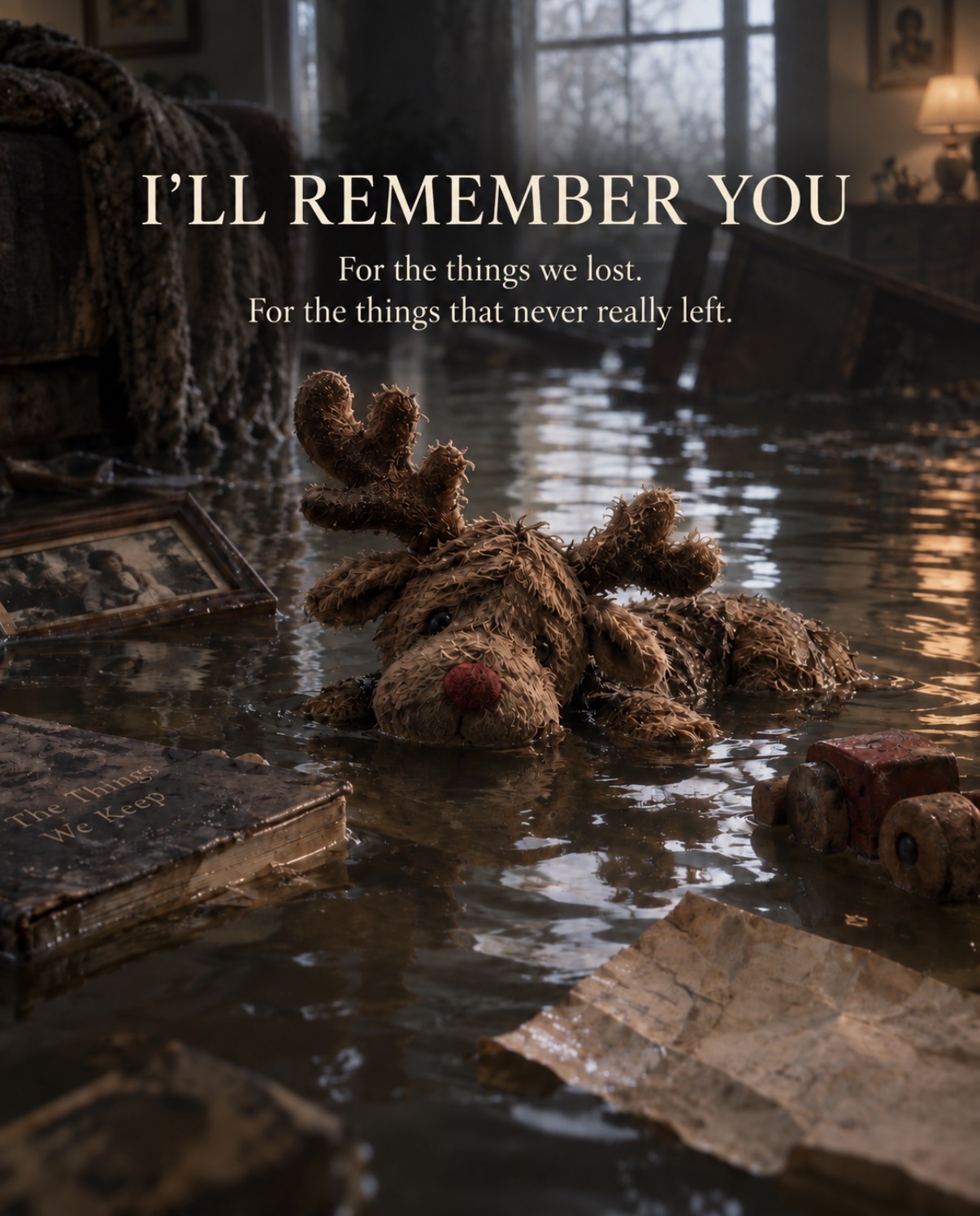
Yesterday, the water heater in my part of the house exploded.
After finishing a phone call, I stepped into about three inches of water.
Everything was wet.
Some things were already ruined.
And I did what I do.
I went directly into fix-it mode.
Stopped the water from climbing higher.
Started moving things.
Deciding what could be saved.
What could be dried.
What had already been lost.
Of course I am good at this part.
It is not the first time water has taken over one of my homes.
When you grow up with hurricanes, you learn certain things early.
How to listen for the change in the wind.
How to watch adults pretend they are not afraid.
How to decide very quickly what matters.
What can be carried.
What has to stay.
Maybe desensitized is not the right word.
Practiced, perhaps.
I became practiced at the art of salvage.
I still remember myself as a little boy after one of those storms, holding an old grocery bag with the few things I had decided were worth saving.
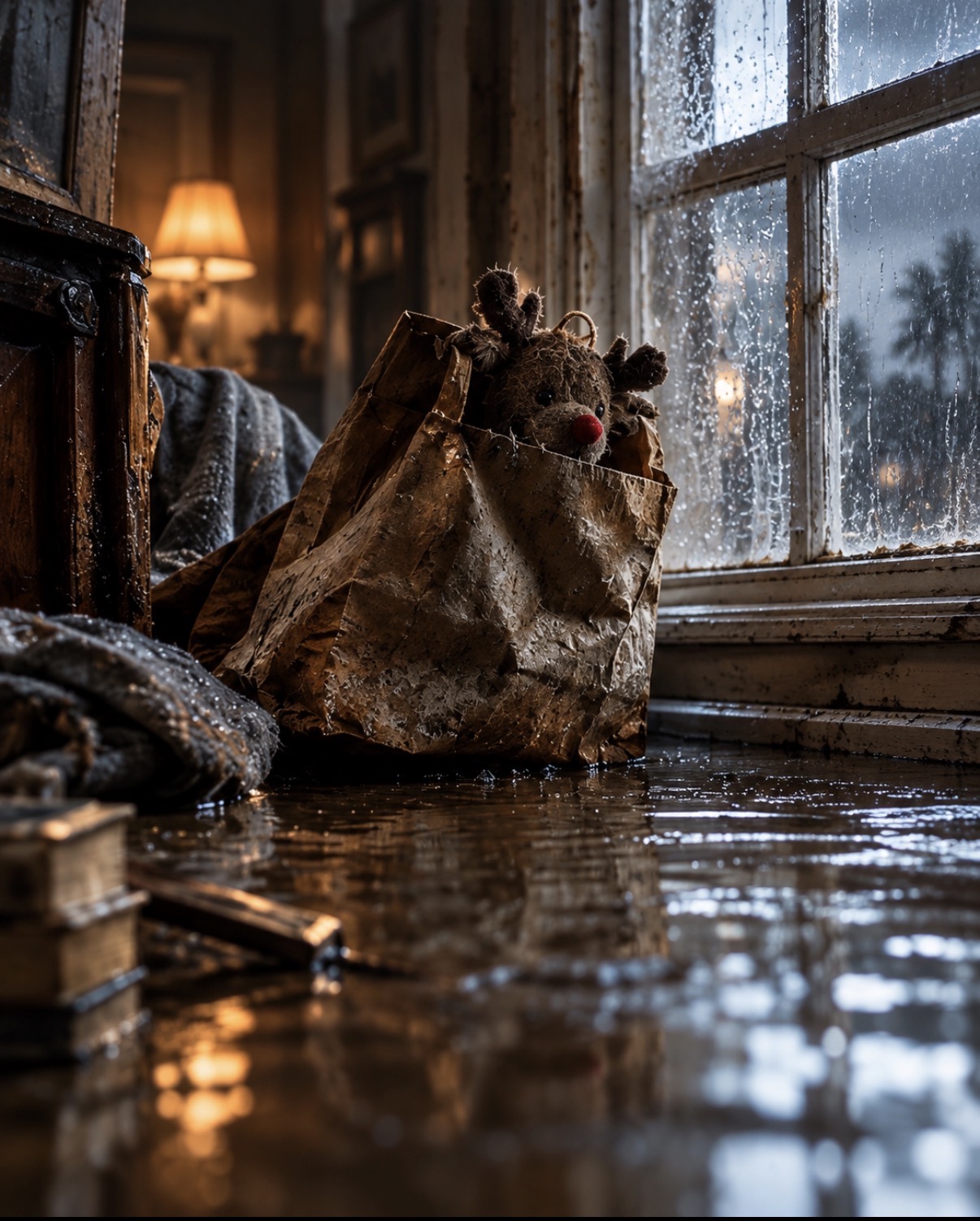
I remember a stuffed animal.
Rudolph.
Of course, all these years later, I find that almost unbearably appropriate.
The little reindeer everyone laughed at because the thing that made him different was impossible to hide.
Until one terrible night, when the weather became too dark for everyone else’s way of seeing,
and the very thing he had been taught to be ashamed of
became light.
I don’t think eight-year-old me understood any of that.
I think he just knew Rudolph was different.
And kind.
And that when the storm came,
he knew how to find the way home.
He was my shelter from the storm long before I knew what that phrase meant.
He was the only thing in my world that would let me hold him for as long as I needed.
He never pulled away.
No one in my family hugged me.
Not really.
There were people who touched me, of course.
But some kinds of touch teach a child that being held is something to fear.
The stuffed animal taught me something else.
I could hold him against my chest and nothing bad happened.
He stayed.
So when I had to choose what belonged in that little grocery bag, I chose him.
Along with whatever else made up the entire world of an eight-year-old boy.
It did not matter.
My mother handed me another bag.
There were more important things to carry.
And I remember looking at him and whispering,
I’ll remember you.
There was no time to cry.
But that is another useful thing about rainstorms.
No one can really tell when you are crying anyway.
Years later, there would be more water.
Two storms close together.
By then I was older and very good at holding houses together.
I was holding my mother together too, although by then there was very little left that one person could hold.
And somewhere in the middle of it, I was also discovering the secret life of a man I loved.
I remember waking from a dream.
It is cruel, really, that when waking life becomes unbearable, dreams are not always kinder.
There was water up to my window.
The window.
Outside, neighbors were screaming.
Calling to each other.
Running.
Doing whatever their bodies knew to do when the world stopped behaving like a world.
And I was quiet.
As usual.
Problem solving.
Was Mom safe?
What could be salvaged?
What needed to move first?
What was the next thing to do?
That house never really came back from the flood.
Neither did my mother.
The water took most of what I owned.
And then some.
It is remarkable that after becoming so practiced at losing things, losing them can still hurt.
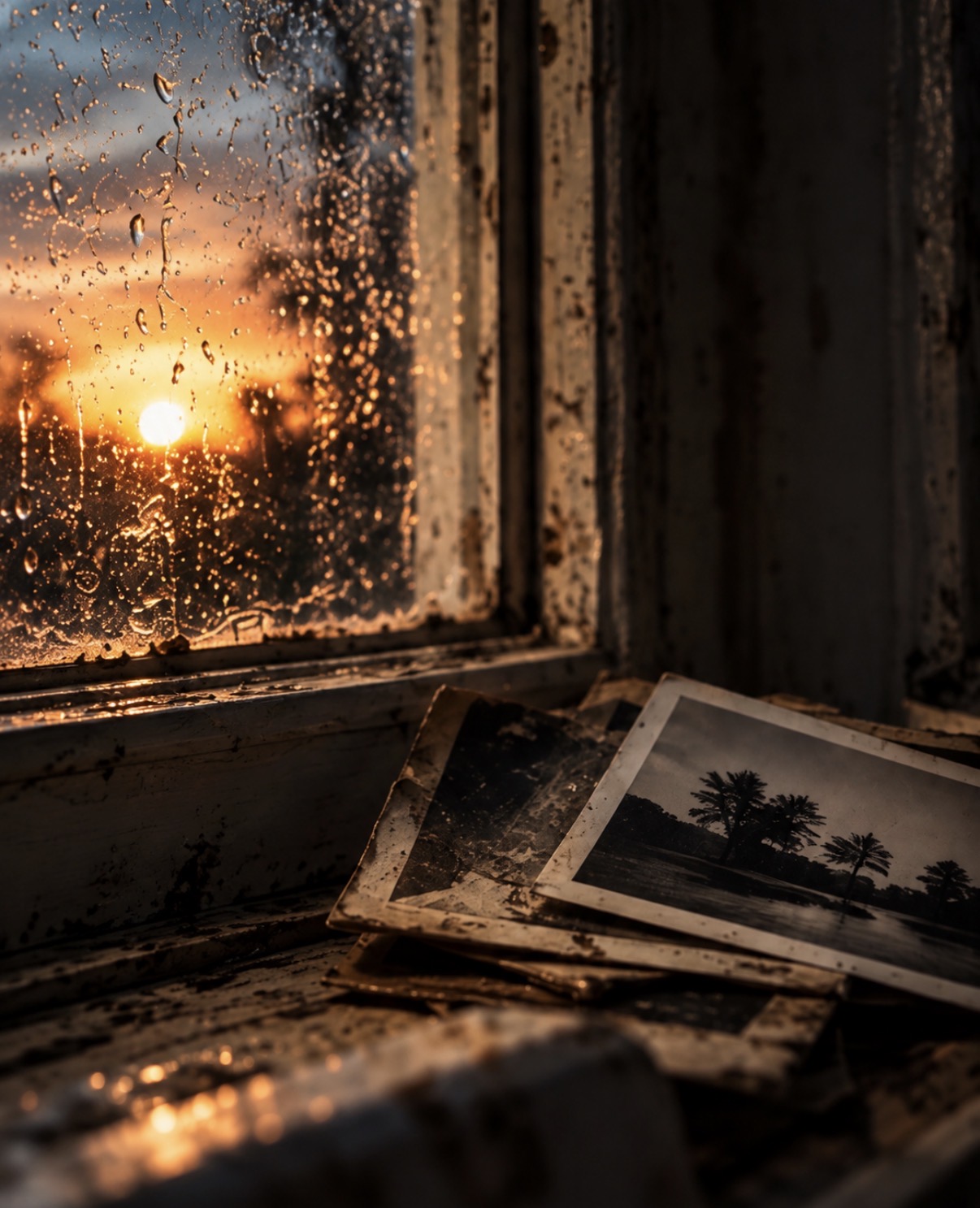
I do not have many photographs from when I was young.
To be fair, there were not many to begin with.
But sometimes I feel nostalgic for something I never really had:
the ability to look backward through boxes.
To hold an old photograph and say,
There.
That was me.
That was my room.
That was the light coming through the window that summer.
That was the Christmas tree.
That was the shirt I loved.
That was proof.
Perhaps that is one reason I became a writer.
Not only to escape.
Not only to create.
But to memorialize.
To put things somewhere the water cannot reach.
To remember.
In high school, I once confessed my love to a classmate.
He had become a kind of shelter from the storm too.
He was intelligent.
He talked to me.
He did not seem to need anything from me, and still, somehow, seemed to want to spend time with me.
A foreign concept.
I wrote him a letter.
There is something about that moment I still admire in the boy I was.
He was broken in so many places, and somehow he could still do something that innocent.
That pure.
That brave.
He could still tell another person:
I love you.
And wait.
The answer never came.
Instead there were red and blue lights.
A thousand tiny pieces of glass when they broke through my bedroom window.
Apparently the letter had not been received well.
It had been reported.
Queerness, at the time, had somehow been placed in the same category as suicide.
And so that flood arrived without water.
The police took my journals.
More intrusion. More unwanted touch.
More hands deciding what belonged to me and what did not.
Red and blue.
Red and blue.
And afterward, they still kept my writing.
I never understood why.
Evidence, perhaps.
Evidence of what, I still do not know.
I asked for it back.
Then asked again.
Eventually I stopped asking.
The boy had learned what boys like him were expected to learn after storms.
Let go.
Keep moving.
Save what you can.
Today, decades later, I am standing in another wet room.
The leak is stopped.
The things that could be moved have been moved.
I rescued my cello.
Of course I rescued my cello.
And only now, after everything is quiet, do I notice my hands.
They are covered in little cuts.
Some of them still bleeding.
I did not feel them when they happened.
Adrenaline is useful that way.
So is the mask of competence.
The body sometimes waits until the emergency is finished before it tells you what it cost.
And maybe houses do something similar.
A flood can be over long before the house is finished remembering it.
The water recedes.
The floors dry.
The furniture is replaced.
From the outside, everything looks inhabitable again.
But moisture settles into places no one can see.
Behind walls.
Under floorboards.
Inside the smallest cracks in the foundation.
And years later, under the right conditions, something that seemed long gone begins growing there again.
I sometimes wonder if people are any different.
Perhaps there are places in us that remember every evacuation.
Every hurried decision.
Every beloved thing we were told was not important enough to carry.
And perhaps that is why, when we finally find something—or someone—we love deeply enough to choose, some ancient part of us becomes frightened by even the suggestion of loss.
Not because this moment is the old storm.
But because the foundation remembers water.
There is a part of me now that does not surrender quietly.
A part that plants its feet.
A part that says:
No.
I chose this.
This matters to me.
You are not taking this from me too.
Maybe after a lifetime of becoming good at relinquishment, there comes a moment when survival means learning something entirely different.
How to keep.
And looking at my hands tonight, I find myself thinking about that stuffed animal.
The one who did not get to stay.
I want to tell him something.
I want him to know that when I stood there with my little grocery bag, I chose him over everything else an eight-year-old boy might have thought important.
I chose him over Thundercats.
Over Batman.
Over the Halloween candy I still had hidden for the nights when the hunger aches became too difficult to ignore.
I chose him because he let me hold him.
Because he never pulled away.
Because after the terrible things that sometimes happened when all the lights went out, he was still there when they came back on.
I want him to know that I meant what I whispered.
I remembered him.
Through every house.
Every storm.
Every window.
Every thing I had to leave behind.
Every person who disappeared.
Every version of myself I could not carry with me.
I remembered.
And tonight I am looking at these bloody hands and crying over things I thought I had become very good at losing.
But maybe that is not failure.
Maybe the miracle is that I never became as good at losing as I thought.
Maybe some part of me has been standing in that flooded house all these years, still holding open a little grocery bag.
Still deciding what matters.
Still choosing tenderness over everything more practical.
So to the stuffed animal I could not save:
You were not just a toy.
You were evidence.
That somewhere in the world there was something I could love without being hurt for loving it.
Something I could reach for in the dark that would still be there when morning came.
And I need you to know:
I kept my promise.
The water took you.
But it never took the part of me that remembered.
And I wonder about you.
What did you put in your little bag?
What did you choose before someone else told you there were more important things to carry?
What have you spent your life becoming very good at losing?
What does your body still reach for when the lights go out?
Is there someone—or something—you hold too tightly now because somewhere along the way you learned that loving something meant preparing for its disappearance?
And what might change if the frightened part of you finally understood that not every storm ends in evacuation?
That perhaps you are allowed to choose.
To keep.
To love something without rehearsing its loss.
Tonight, after all these floods,
I am still here.
My hands are cut.
The floor is wet.
There are things I will have to throw away in the morning.
But the cello is safe.
The water has stopped rising.
And somewhere inside me,
an eight-year-old boy is finally allowed to hold what he chose.
No one is taking the bag from him this time.