THE BOY WHO PRAYED FOR FRANKENSTEIN
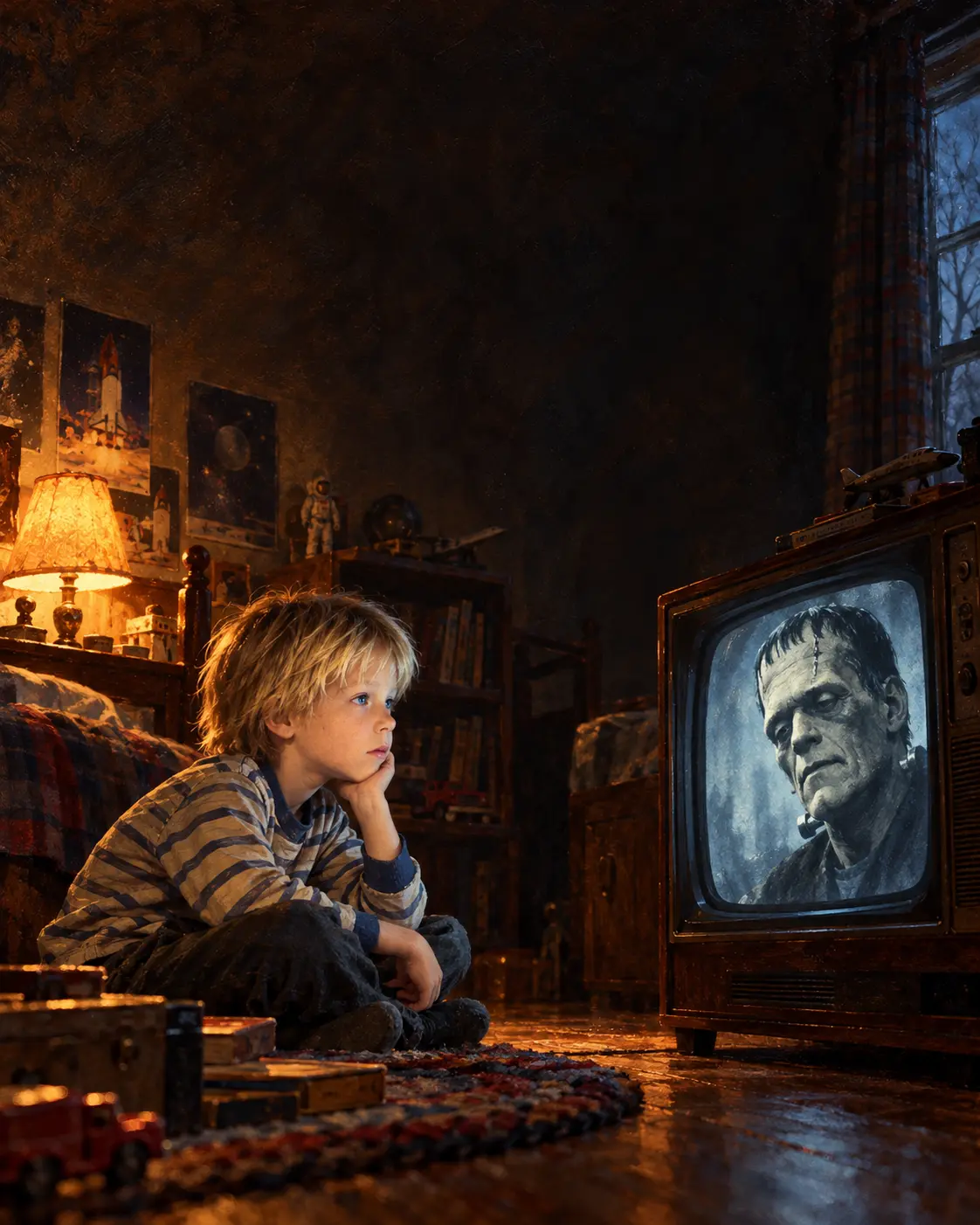
I have never been afraid of Frankenstein's monster.
Not when I was little. Not when his enormous, stitched-together face appeared on television. Not when the villagers came charging through the darkness with their torches and their righteous little erections for violence.
I was afraid of plenty of things as a child.
The dark. Certain footsteps. The particular silence that settles over a room when an adult is deciding what to do with you.
But never him.
Never him.
I wanted to climb into the television and put my arms around his enormous, terrible neck.
I wanted to tell him he wasn't ugly.
I wanted to tell him I knew.
And when I was six or seven years old, I did something that seems almost comically innocent now, although it would cost me dearly.
I filled out a prayer request card at church.
For Frankenstein's monster.
Not Victor Frankenstein, the brilliant little bastard who made a living creature and then recoiled from the inconvenience of having to love it.
The creature.
The one everyone ran from.
I asked God to let him find peace and love.
I remember that so vividly.
Of all the things the years have stolen from my childhood, that little prayer somehow survived.
And I remember what happened when the adults discovered it.
They made fun of me.
They punished me.
They found another reason to separate me from the other children, another peculiar little defect to add to the growing inventory of things that were wrong with Christopher.
Apparently, in a building devoted to the teachings of a man who embraced lepers, befriended outcasts, and asked forgiveness for the people murdering him, praying for a fictional monster was where we drew the fucking line.
I wish I were making that up.
I wish I could tell you I laughed it off.
But children don't have the luxury of finding irony in their humiliation.
They simply absorb it.
Another lesson.
Another reason to be ashamed.
Another small piece of evidence that whatever was wrong with them must be very wrong indeed.
And I was already collecting evidence.
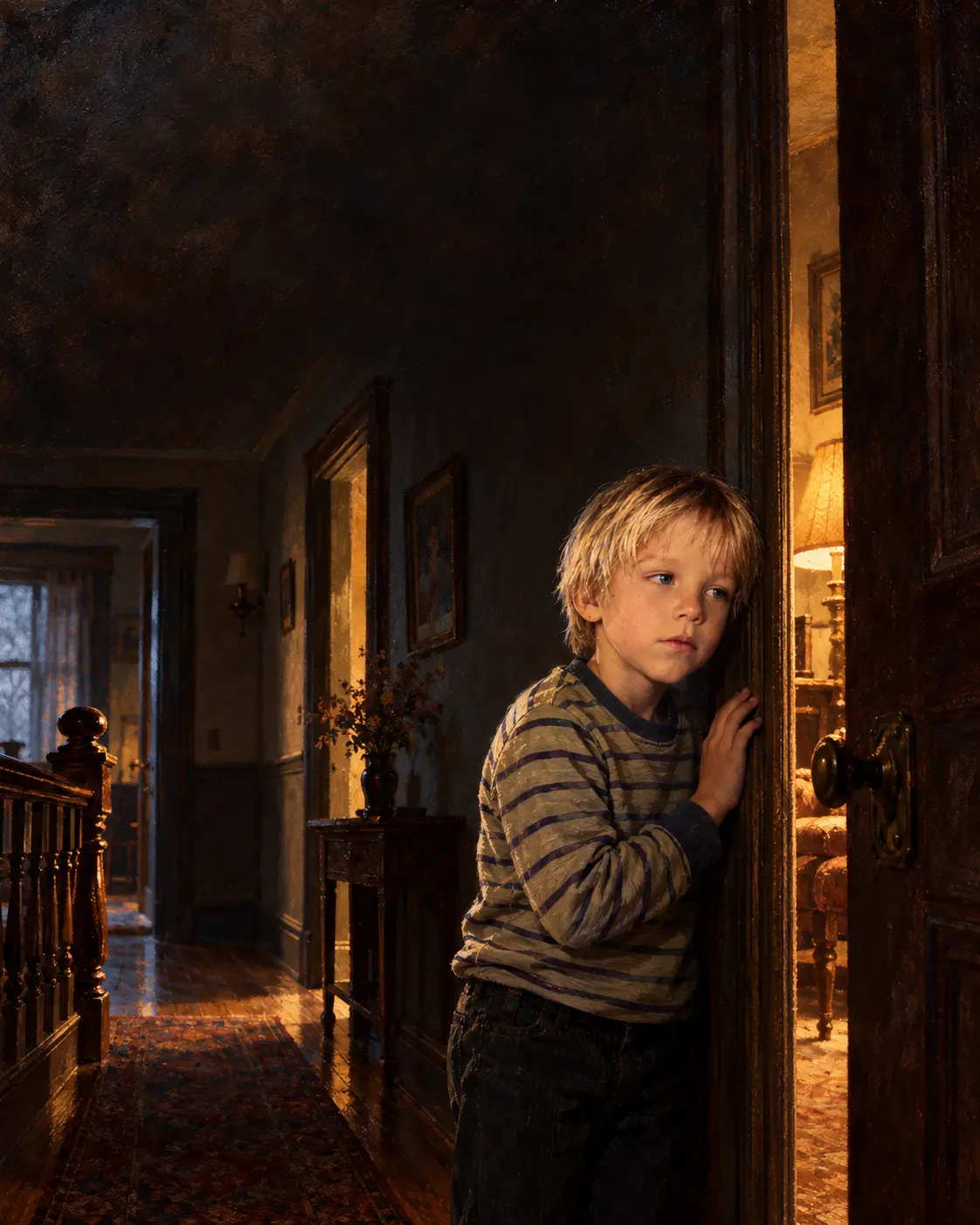
Long before I understood the language of abandonment, rejection, or abuse, I understood the feeling of being fundamentally incorrect.
As though something had gone terribly wrong in the making of me.
I was tender in ways that seemed to irritate people.
I noticed things I wasn't supposed to notice. Felt things I wasn't supposed to feel. Cried for things other people could walk past without a second thought.
I could sense the weather inside a room before anyone spoke.
I knew when affection was about to become anger.
I knew the difference between a hand reaching toward me in tenderness and one reaching toward me for another reason.
And I was learning, very young, that being able to recognize love did not mean I was going to receive it.
That is a particularly cruel education.
To be born with an enormous capacity for tenderness, only to discover that tenderness is something everyone else seems entitled to receive.
To watch people love their children.
To watch someone comfort a frightened little boy.
To hear a mother speak gently to her son.
And to wonder what mysterious qualification those children possessed that you had somehow failed to acquire.
I don't remember ever believing I deserved the cruelty.
Not exactly.
I remember believing there must be something about me that explained it.
There is a difference.
And that difference can follow a person for forty years.
Perhaps longer.
Mary Shelley was eighteen when she began imagining Frankenstein.
Eighteen.
At an age when most of us are still trying to understand what it means to be human, she created one of literature's most devastating examinations of what happens when a human being is denied the right to belong.
People call it a horror story.
And it is.
But I have always thought we were pointing at the wrong monster.
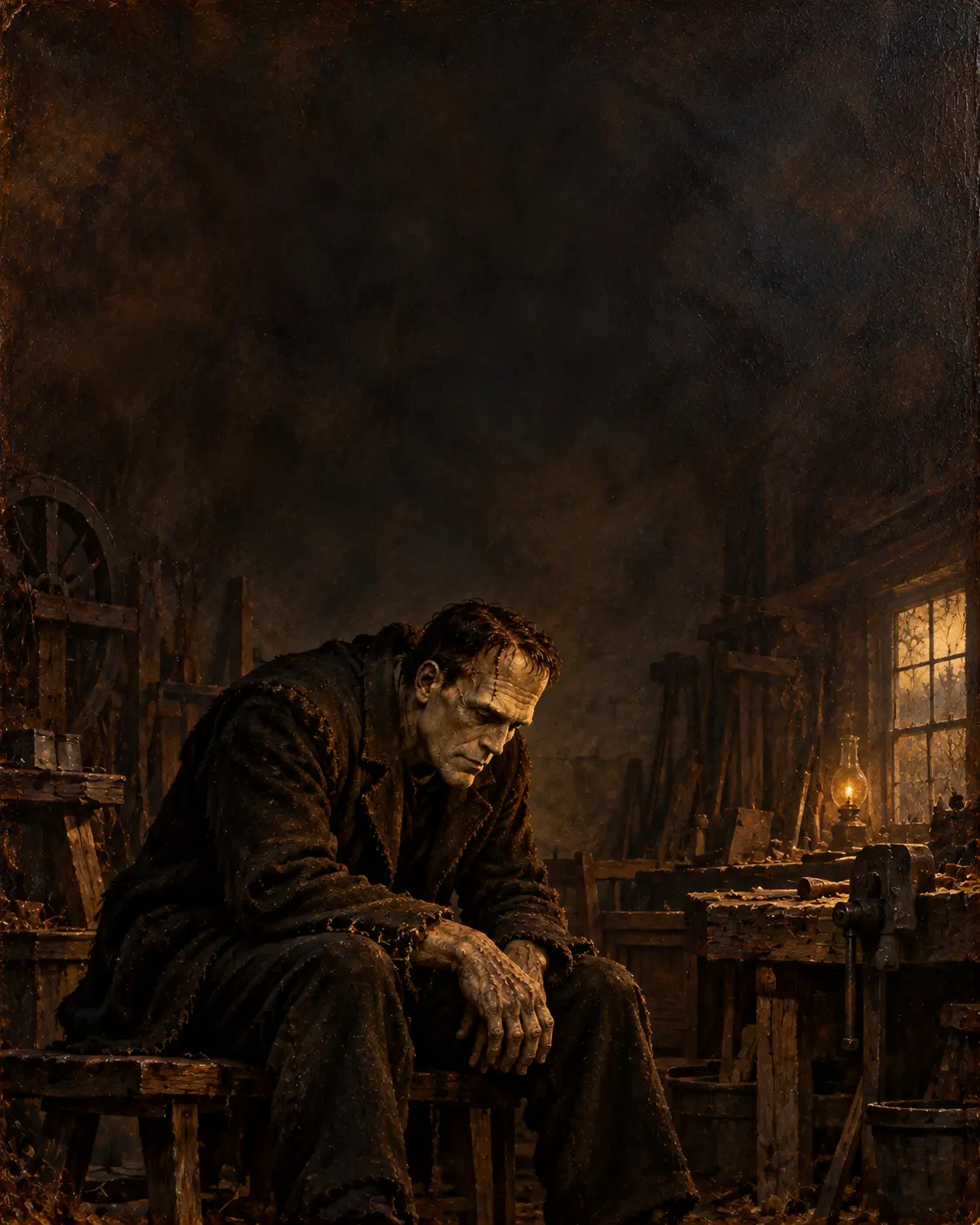
Victor Frankenstein assembles a living being from the remains of the dead, brings him into existence, and immediately abandons him because he cannot bear the sight of what he has made.
Imagine that.
Your very first experience of being alive is watching the person responsible for your existence recoil in horror.
You haven't spoken.
You haven't harmed anyone.
You haven't even had time to become anything.
And already you are unbearable.
Already you are something to escape.
What does a mind do with that?
What does a child's mind do with that?
It learns to see itself through the eyes of the person who turned away.
It mistakes rejection for revelation.
It begins to believe that the horror on someone else's face must be an accurate description of its own.
I know something about that.
For years, I carried an image of myself that had very little to do with what anyone else could actually see.
Someone could tell me I was handsome, or beautiful, or desirable, and I would hear the words without believing a single one.
I assumed they were lying.
Or being kind.
Or had simply failed to look closely enough.
Because I knew what I was.
I had a name for him.
The monster I see.
Not the monster other people saw.
The monster I saw.
There is an especially vicious kind of loneliness in being unable to trust the kindness of another person's eyes.
You can stand in a room full of people who admire you and still feel like the creature watching a family through a window.
Close enough to see the warmth.
Never quite able to believe you are allowed inside.
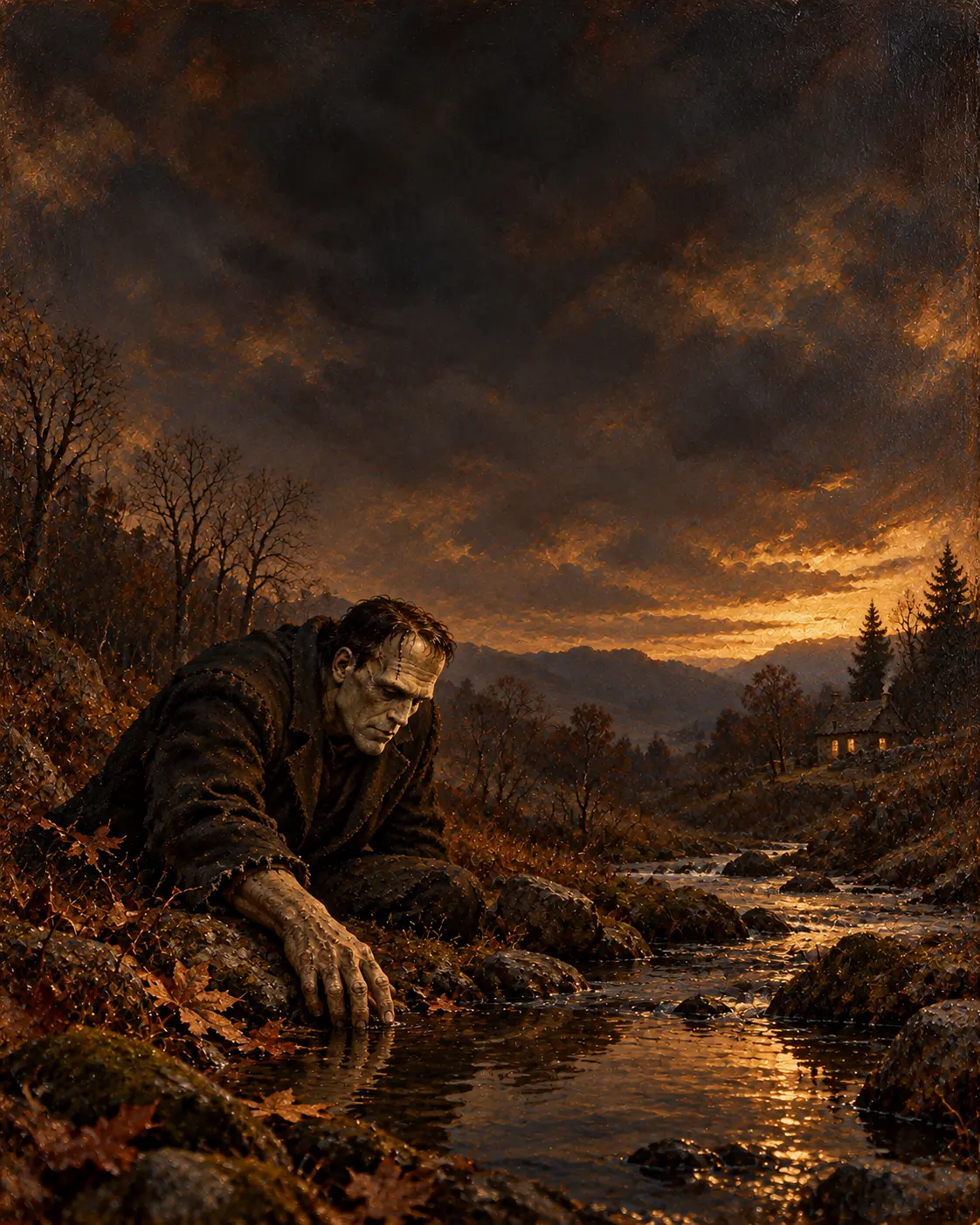
What has always destroyed me about Shelley's creature is his gentleness.
Before the rage. Before the darkness.
Before grief and rejection twist his longing into something terrible.
There is a being who discovers the world with the wonder of a child.
He learns language.
He discovers music.
He watches a family from a hiding place and begins to understand love by observing people who have no idea he exists.
He secretly helps them.
Think about that.
A creature who has never been shown kindness decides to practice it anyway.
He watches them struggle and wants to make their lives easier.
And for a little while, he seems to believe that if they could only know his heart before seeing his face, perhaps they might love him.
Perhaps they might let him stay.
I remember that hope.
Not merely from the book.
From my own life.
That ridiculous, indestructible little hope that if I could just be good enough, helpful enough, gentle enough, useful enough, someone might eventually discover that I was worth keeping.
And then the creature finally reveals himself.
And the world answers.
Not with love.
Not with curiosity.
Not even with the decency of uncertainty.
With horror.
And I wept.
I wept for him when I was a little boy, and I have wept for him as a grown man.
Because I understood something about his suffering long before I had the language to explain my own.
I knew what it was to be looked at as though your very existence were an offense.
I knew what it was to want the people hurting you to stop hurting you without ever quite managing to stop loving them.
And perhaps that was why I kept imagining a different ending.
I wanted someone to find him.
Someone who would look at that enormous, ruined face and not turn away.
Someone who might take his terrible hands into their own.
Someone who would make room for him at a table.
I wanted him to have a home.
I wanted him to be loved.
And even then, at six or seven years old, there was a small, exhausted voice somewhere inside my imagination whispering that it probably wouldn't happen.
Imagine being that young and already distrusting your own happy endings.
But I prayed anyway.
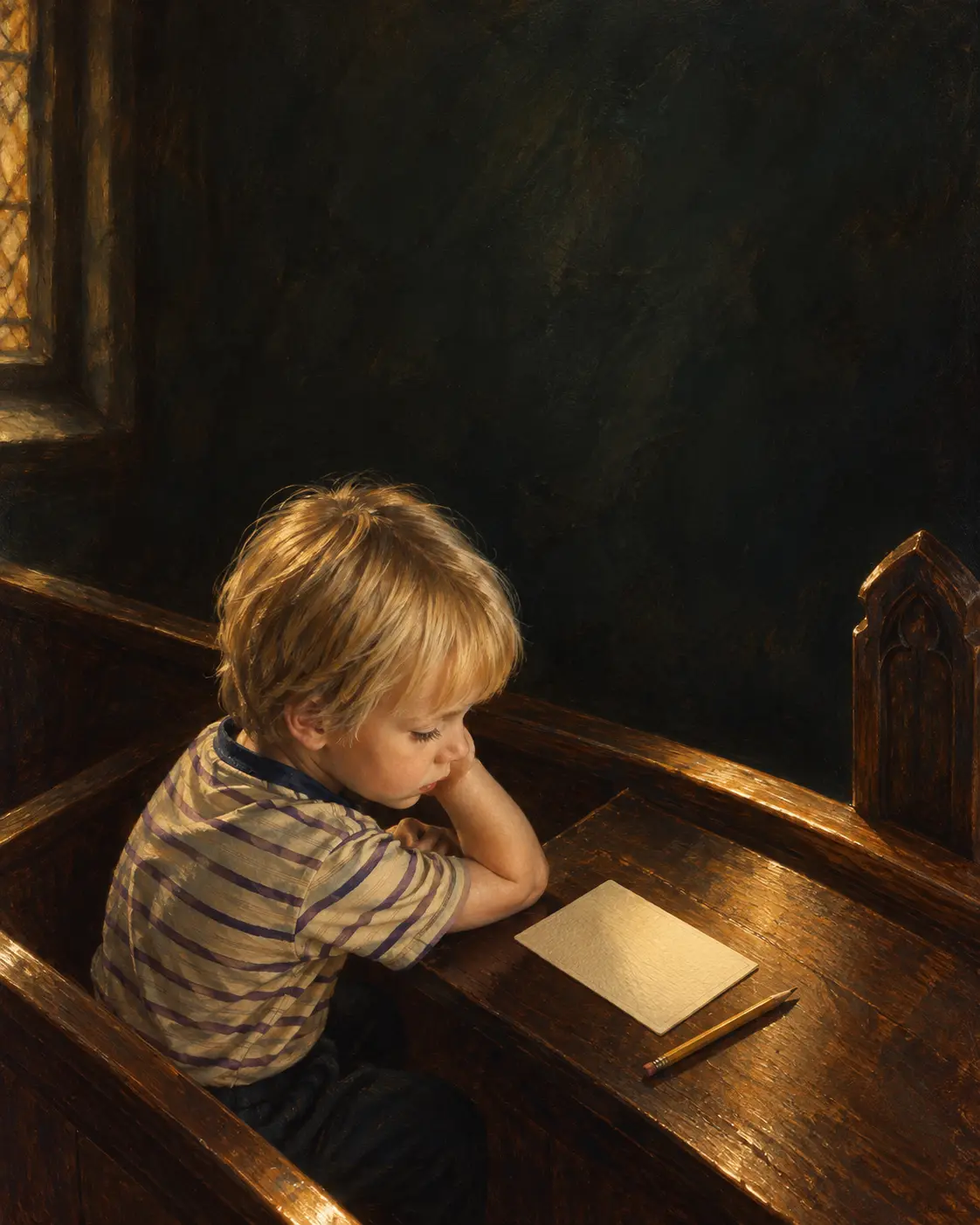
There is something about that prayer card I have been thinking about.
The adults who humiliated me probably believed they were correcting some ridiculous childhood fantasy.
Perhaps they thought it was funny.
Perhaps they considered it inappropriate.
I cannot tell you what they thought.
I can tell you what I thought.
I thought Frankenstein's monster was suffering.
I thought nobody loved him.
And I thought God might be able to help.
That was the entire theological sophistication of my little heart.
And when the punishment came, something happened in my mind that I can scarcely bear to remember.
I began to wonder whether my suffering might actually help my prayer.
Perhaps there was a bargain to be made.
Perhaps God would see what I was enduring and decide it was enough.
Perhaps the creature could be spared something if I was willing to carry it instead.
Let it be me.
Not him.
Jesus Christ.
I was six or seven years old.
I should have been worrying about Halloween candy and whether the neighborhood had any houses giving out full-sized chocolate bars.
I should have been building forts out of blankets.
I should have been allowed to believe that monsters lived under beds rather than discovering that some of them stood behind pulpits and spoke with the authority of God.
Instead, I was trying to turn my own suffering into currency.
Trying to purchase mercy for someone who couldn't ask for it himself.
And the most heartbreaking part is that I don't remember thinking I was being particularly noble.
I think I simply believed his pain mattered more than mine.
That is a terrible thing for a child to learn.
Not compassion.
Compassion is beautiful.
But the idea that your own suffering is an acceptable price for someone else's happiness.
That your pain might finally become useful if it could purchase something good.
That love requires you to disappear a little.
Or perhaps entirely.
I would spend a great deal of my life trying to understand that bargain.
And an even greater part of it trying to stop making it.
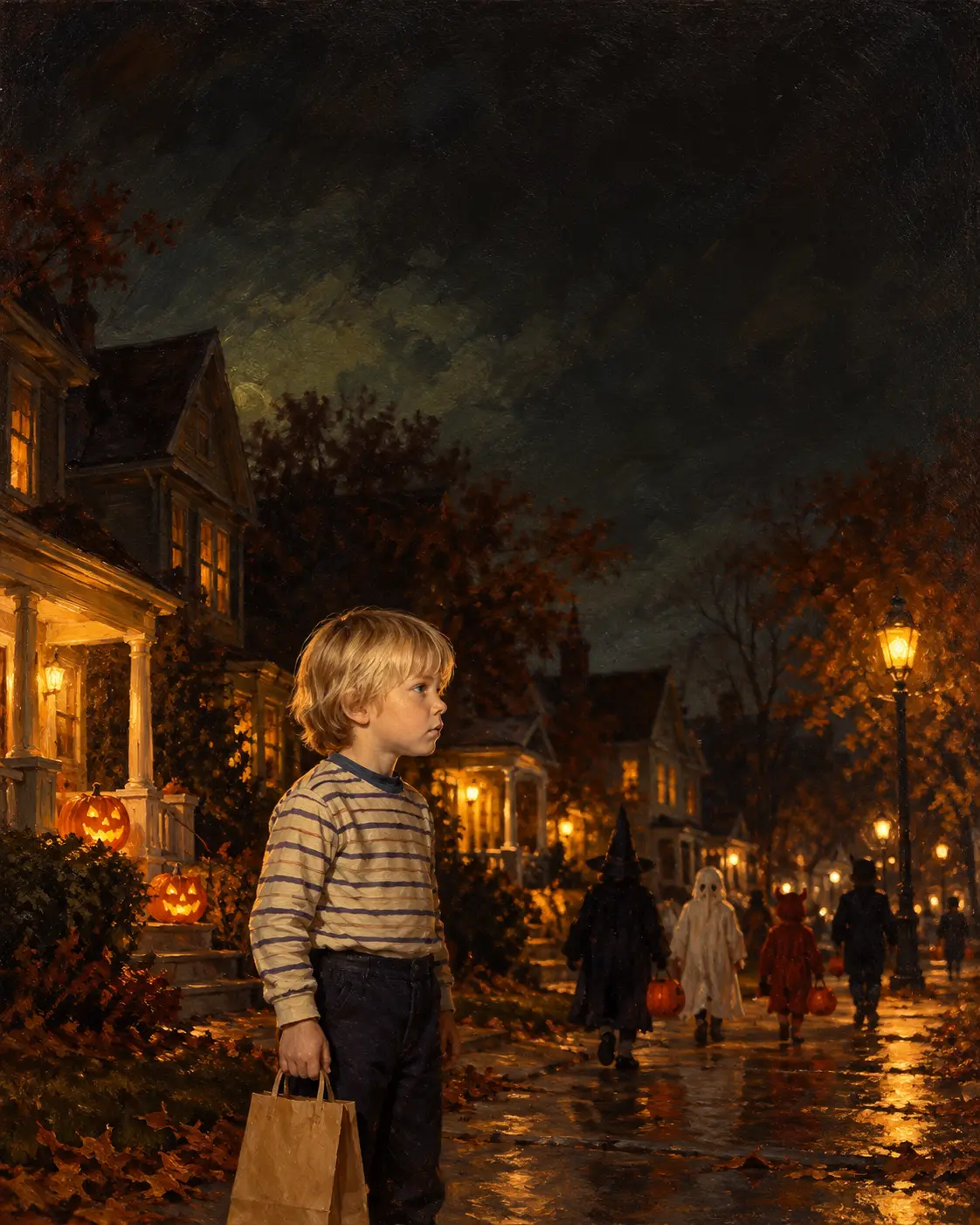
Halloween has always fascinated me.
Every October, we invite our monsters out of hiding.
We hang skeletons from porches.
We carve faces into pumpkins.
We dress our children as ghosts, witches, vampires, and creatures assembled from the dead.
For one night, the frightening things are allowed to walk among us.
We laugh at them.
We give them candy.
We take their pictures.
And then November comes, and we pack them away.
I wonder sometimes what would happen if we were as generous to the monsters we encounter in ordinary life.
The ones who are awkward.
The ones who cry too easily.
The ones whose bodies or faces or histories don't fit comfortably into the world's preferred arrangements.
The ones who have learned to protect themselves in ways that make them difficult to love.
The ones whose rage is ugly because nobody cared to recognize their grief when it was still beautiful.
I am not suggesting that suffering excuses cruelty.
Shelley's creature eventually did terrible things.
That matters.
But it also matters that he was not born with darkness in his heart.
He was born reaching.
And the world kept striking his hands away.
I have spent much of my life thinking about what happens to all that reaching.
Where it goes.
What becomes of tenderness when it has nowhere safe to land.
Sometimes it becomes anger.
Sometimes it becomes silence.
Sometimes it becomes the extraordinary ability to recognize pain in other people while remaining almost completely blind to your own.
And sometimes, if you are very lucky, it survives.
Bruised.
Suspicious.
A little feral.
But alive.
I have loved two versions of Frankenstein's ending.
The one Mary Shelley wrote, because she refused to pretend that abandonment leaves no wreckage.
And the one I carried in my childhood imagination, because I could not bear to leave the creature without love.
More recently, Guillermo del Toro gave me something I had not quite expected.
A creature who could forgive his maker.
A creature who could continue living.
There is something magnificent about that.
The possibility that a life does not have to remain forever organized around the person who failed to love it.
That forgiveness need not mean returning.
That surviving is not the same as being repaired.
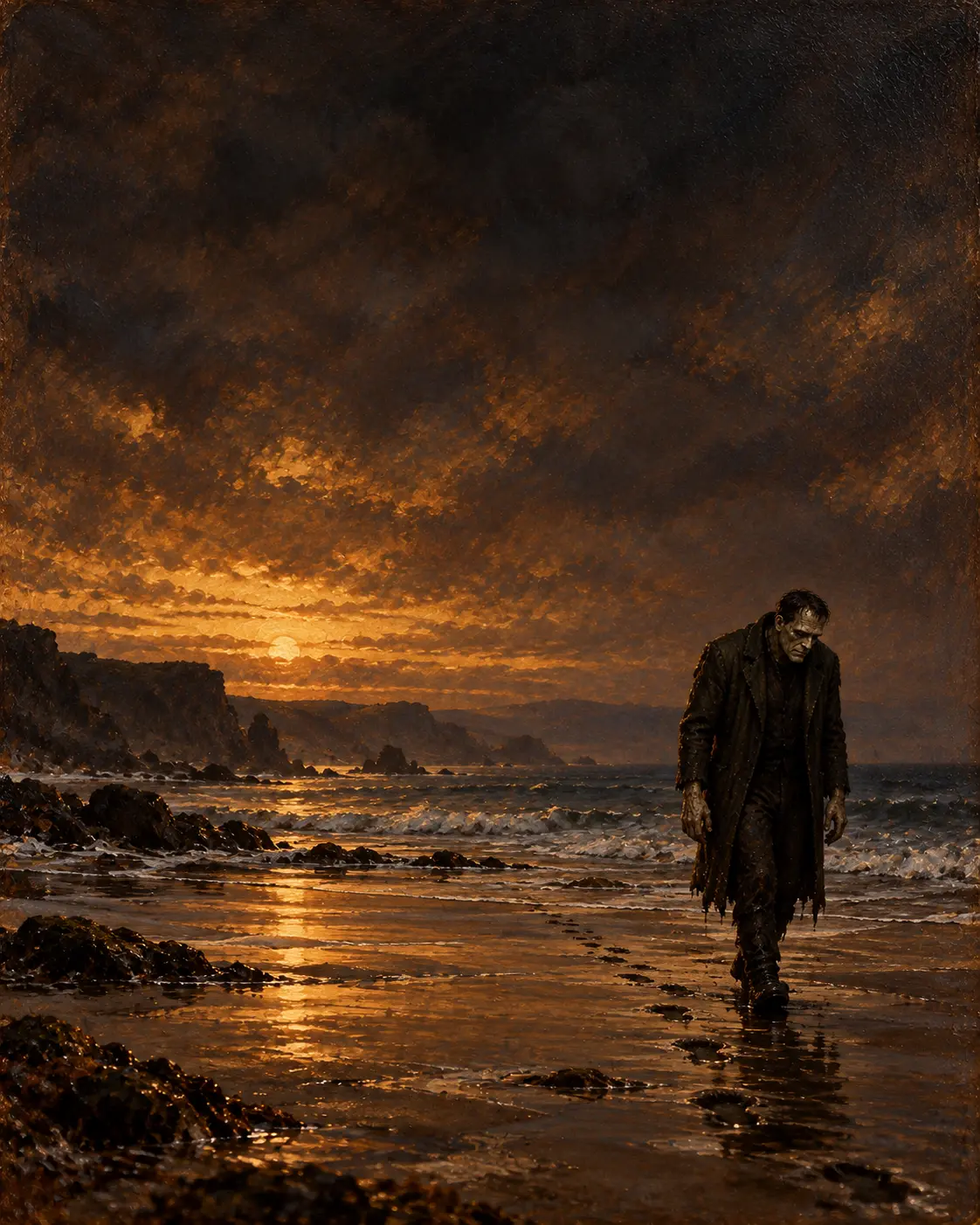
But I must confess that watching the creature walk away alone still hurts me.
I understand the beauty of that ending.
I understand its freedom.
And still, some stubborn, ridiculous part of me wants to run after him.
Wait.
Please.
You don't have to go alone.
Perhaps that is the little boy with the prayer card.
Perhaps he has never stopped trying to find someone who will walk beside the creature.
Perhaps, after all these years, he is still standing outside the church, holding a wish the adults taught him to be ashamed of.
And perhaps I am finally beginning to understand that the wish was never shameful.
It was the punishment that was shameful.
The ridicule.
The cruelty.
The terrible willingness of grown people to humiliate a child for having a heart they could not understand.
I wish I could go back.
Not to correct the prayer.
Not to tell that little boy Frankenstein wasn't real.
Not to explain that suffering isn't a currency God requires, or that he cannot save everyone by volunteering to be hurt.
Those things matter, of course.
But first, I think I would simply sit beside him.
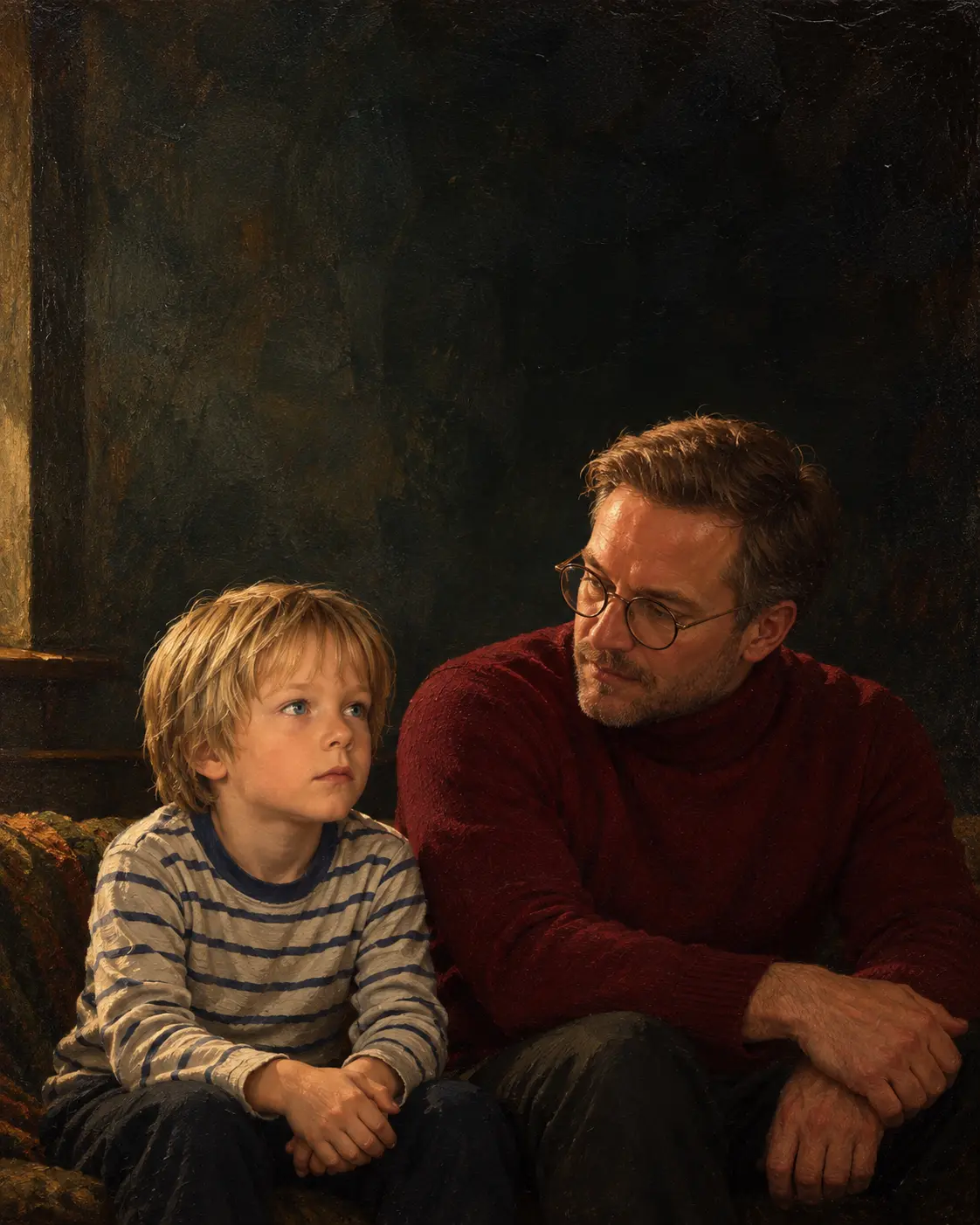
I would ask him about the creature.
I would listen as he told me why he was sad.
I would let him tell me about the family the monster watched through the window, and the way people ran from him, and how desperately he wanted someone to love him.
And when he finished, I would tell him I thought it was a beautiful prayer.
Then I would ask him something I don't believe anyone ever thought to ask.
Christopher, sweetheart, who is praying for you?
I am forty-three now.
Old enough to know that love does not always rescue us.
Old enough to understand that forgiveness does not erase the past.
Old enough to have discovered that sometimes the people we love are separated from us by circumstances so enormous and cruel that even hope begins to feel like an act of defiance.
And still, against considerable evidence, I find myself wanting the impossible endings.
Not because I am naive.
God knows there is very little innocence left in my understanding of the world.
But because I have seen what happens when someone who has spent a lifetime expecting rejection is finally met with tenderness.
I know what it can do to a human being.
I know how frightening it can be to believe another person's affection.
To hear someone tell you that you are beautiful and have to fight the old instinct to search for the lie.
To be wanted without first having to make yourself useful.
To discover that someone can know the broken places and still reach for your hand.
I am still learning how to let that happen.
Still learning that love is not a debt I must repay with suffering.
Still learning that I can want someone else to be safe and happy without volunteering my own heart for the sacrifice.
And there are days when that little boy's bargain still rises in me before I can stop it.
Let it be me.
Not him.
I recognize his voice now.
And I am trying, finally, to answer him differently.
No, sweetheart.
Not you either.
This Halloween, I find myself thinking about a small blonde boy sitting in a church, writing a prayer for a creature made from discarded pieces of other people's bodies.
A boy who understood abandonment before he understood the word.
A boy who recognized suffering in a face the rest of the world found horrifying.
A boy who was punished for asking God to love someone.
I wonder what happened to that prayer card.
Was it thrown away?
Did someone tear it up?
Did it end up in a wastebasket beneath discarded church bulletins and announcements about the next Sunday potluck?
I don't know.
But I know the prayer survived.
It lived in the little boy who wrote it.
It followed him through the years he spent believing himself monstrous.
Through the mirrors he could not trust.
Through every room in which he felt like an intruder.
Through all the strange and beautiful ways he would eventually try to make a place for people who had been told there was no room for them.
And perhaps the strangest thing is this:
After all these years, I no longer want to change Frankenstein's face.
I never really did.
I don't want to make him handsome.
I don't want to make him smaller, quieter, less frightening, or easier for the villagers to accept.
I want him exactly as he is.
Scarred.
Awkward.
Enormous.
Capable of tenderness and terrible mistakes.
Made from pieces that were never supposed to belong together.
I want someone to open the door when he knocks.
I want someone to pull out a chair.
I want him to discover that the sound of people laughing in the next room does not mean they are laughing at him.
I want him to sleep without wondering whether he will be abandoned before morning.
And I want that little boy to know something.
Something nobody thought to tell him when they found his prayer card.
You were never the monster, Christopher.
Not when they laughed.
Not when they punished you.
Not when you began to believe the cruelty was evidence of something wrong with you.
And not when you offered your own suffering to spare someone else's.
You were a little boy who wanted a monster to be loved.
And you deserved a world in which that was the most ordinary, unremarkable thing about you.
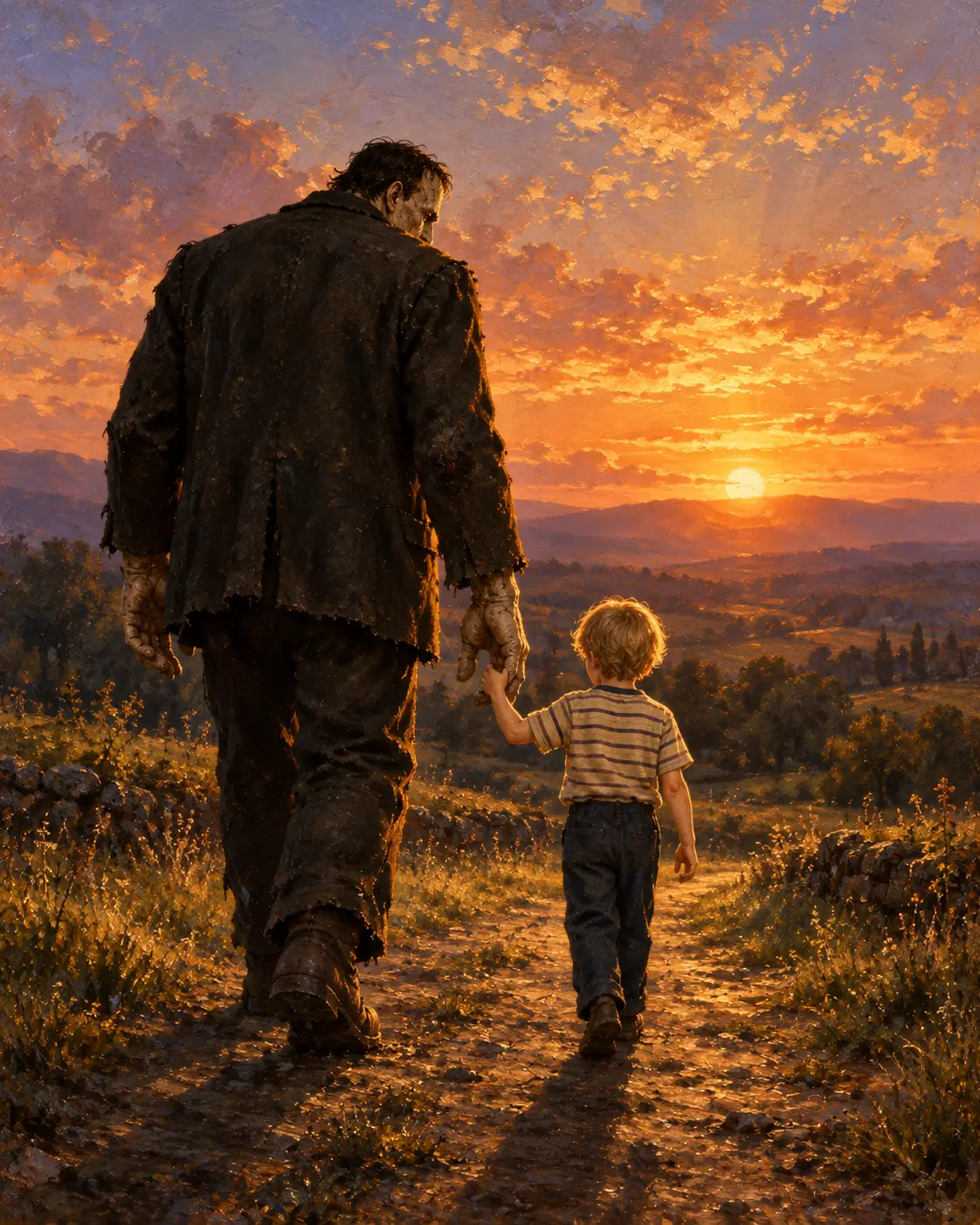
I still hope Frankenstein finds peace and love.
I suppose I always will.
But this year, for the first time, I would like to add another name to that little prayer card.
Mine.
The Light We Leave On
TheLightWeLeaveOn.com