The Boy Who Prayed for Lucifer
On Fallen Angels, Forbidden Compassion, and the Limits of Forgiveness
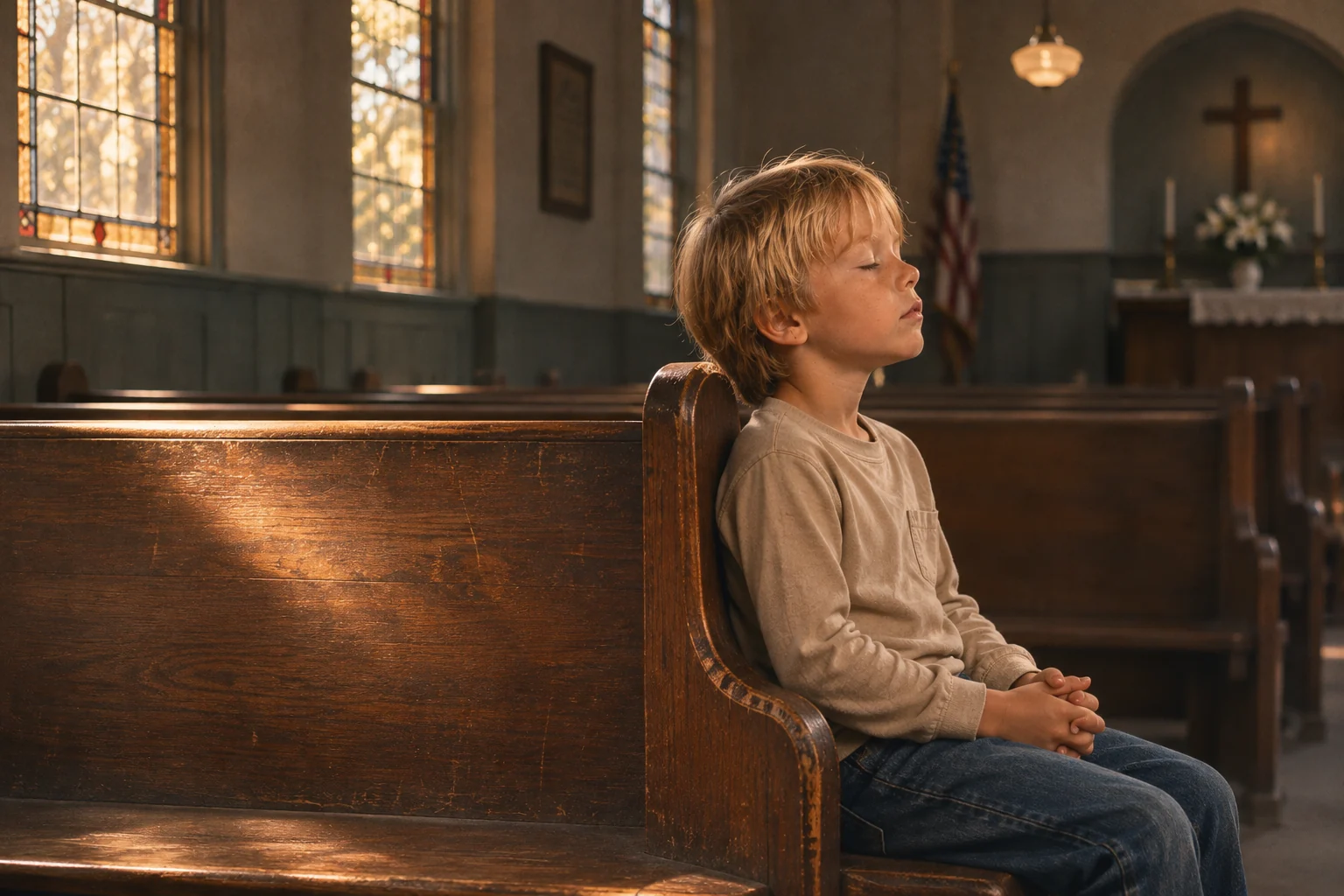
When I was a little boy, I used to get in trouble for praying for the Devil.
Not because I worshipped him.
Not because I admired evil.
But because I couldn’t understand why nobody seemed to love him.
They told me Jesus could forgive anyone.
I believed them.
And then I asked about Lucifer.
Apparently, anyone did not mean everyone.
I was a peculiar little boy.
I read everything.
While other children memorized Bible verses for stickers and praise, I wanted to understand the stories behind them. I wanted to know who these people were, why they suffered, what frightened them, and what happened after everyone stopped talking about them.
I read the Bible not simply as a collection of instructions, but as a collection of lives.
And the person who fascinated me most was not always the hero.
Sometimes it was the one everyone had agreed was beyond saving.
I had already discovered this about myself.
I loved Frankenstein’s creature.
Not the monster people dressed up as for Halloween, but Mary Shelley’s abandoned creation. The being who opened his eyes upon a world that had already decided he was something terrible.
I wanted someone to hold him.
I wanted someone to tell him that being frightening to others did not make him unworthy of tenderness.
Once, when I was very young, I wrote on a prayer card that I hoped Frankenstein would find peace and love.
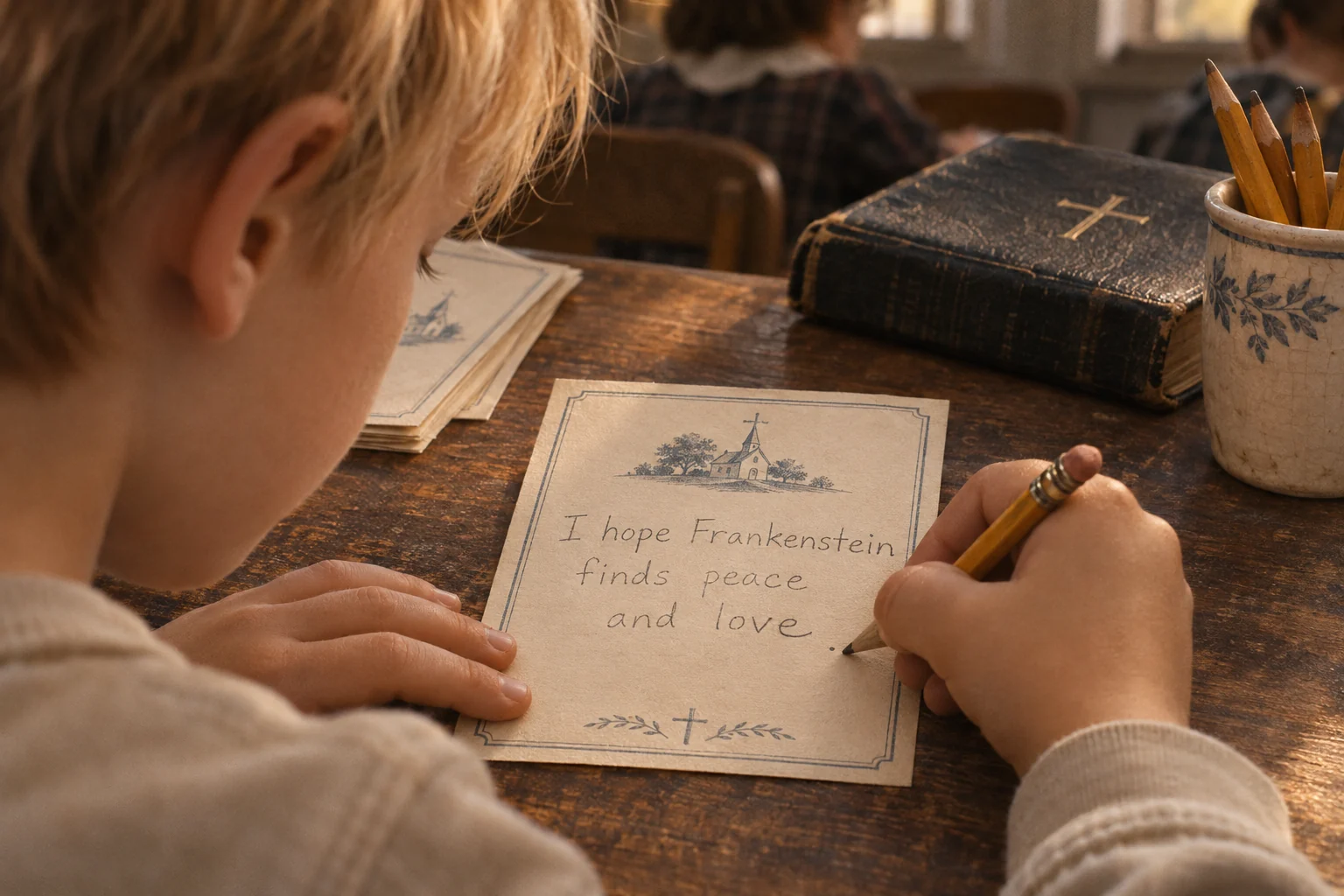
That did not go over particularly well.
Neither did my prayers for Lucifer.
Apparently, I had a talent for finding the one person in every story whom nobody wanted me to love.
And loving him anyway.
In church, we sang about mercy.
We studied forgiveness.
We were taught that Christ loved sinners, welcomed outcasts, touched the untouchable, and sought the lost.
We were even encouraged to pray:
Break my heart for what breaks yours.
I remember those words.
I remember believing them.
And I remember the strange loneliness of realizing that my heart seemed to break in places where other people expected it to remain perfectly intact.
Because I thought about the hungry child.
The person sitting alone.
The people everyone whispered about.
The ones who had been judged before they were understood.
And I thought about Lucifer.
Not the horned caricature painted onto Sunday school worksheets.
I imagined an angel.
An angel who had once belonged somewhere.

Who had once known heaven.
Who had once stood in the presence of the very love we were told was infinite.
And then he fell.
I knew the story of his rebellion. I understood that he was presented as the adversary, the deceiver, the embodiment of opposition to God.
I wasn’t arguing that he had done nothing wrong.
That was never my question.
My question was what happened after the wrong had been done.
Was forgiveness still possible?
Could repentance still matter?
Could love reach someone who had fallen that far?
And if it could not, what exactly did we mean when we called it infinite?
I think the adults believed I was being difficult.

Perhaps they thought I was testing them.
But I wasn’t trying to win an argument.
I was trying to reconcile two things they had taught me.
That God was love.
And that there was someone God would never forgive.
I could not make those ideas live comfortably together.
I knew the stories of Christ.
I knew the shepherd who left the ninety-nine sheep to find the one who was lost.
I knew the father who ran to embrace the prodigal son before the boy could finish his apology.
I knew the man who forgave those who crucified him.
And I wondered why the same mercy could not reach Lucifer.
Was he not lost?
Was he not far from home?
Had he not fallen?
And wasn’t the entire point of grace that it reached beyond what anyone deserved?
I was a child. I did not know the centuries of theological arguments surrounding these questions.
I did not know that Christians had debated the possibility of universal reconciliation, or that some had dared to imagine a final restoration extending beyond humanity.
I only knew that when I pictured Christ, I could not imagine him looking at someone in pain and finding nothing in himself that wished to heal it.
Even if that someone was Lucifer.
Especially then.
There was something else, of course.
Something I did not yet have the language to explain.
I knew what it felt like to be different.
I knew the strange arithmetic of childhood rejection: how quickly a room could decide who belonged and who did not.
I knew how it felt to be watched for the wrong things.
To discover that tenderness could be conditional.
To understand, long before I understood why, that certain parts of myself were safer when hidden.
I had not fallen from heaven.
But I knew what it meant to feel outside its gates.
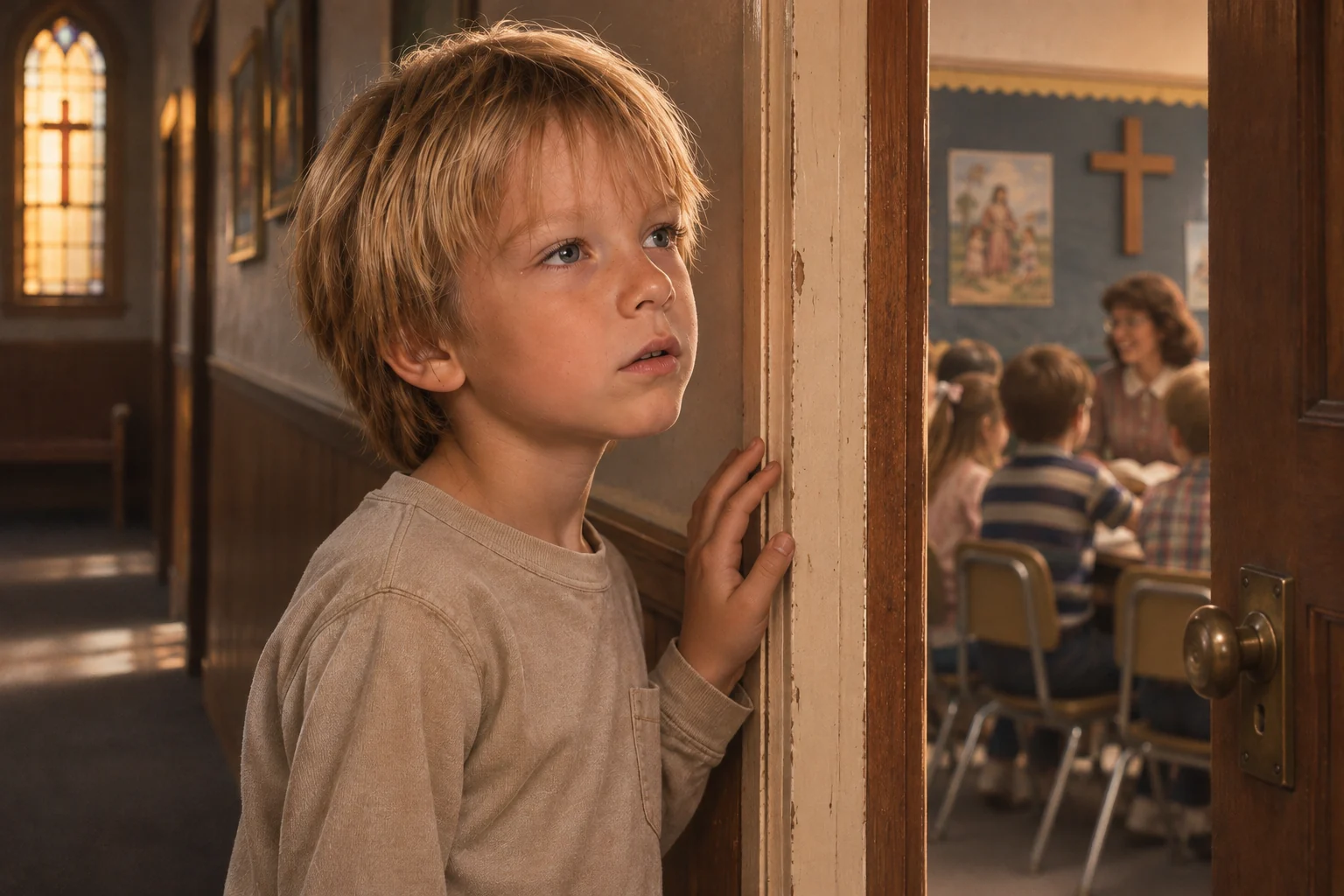
Perhaps that is why I loved the creature.
Perhaps that is why I prayed for the angel.
I recognized something in them.
Not their violence.
Not their rebellion.
Their exile.
And the terrible possibility that exile might become permanent.
Because what frightened me most about the story of Lucifer was not the fire.
It was not the darkness.
It was the thought that someone could spend eternity believing nobody would ever come looking for him.
That there could be a final door.
And that love itself might be the one who closed it.
I have carried a particular image since childhood.
It is so vivid that sometimes it feels less like something I imagined and more like something I remember.
The end of all things.
The world has finished its terrible history. The prophecies have been fulfilled. The judgment everyone spoke about with such certainty has come.
Heaven stands open.
The multitude gathers.
And Christ appears.
But in my imagination, he does not begin by congratulating the righteous.
He does not ask who memorized the most verses, who attended the most services, or who was most successful at identifying the sins of others.
He looks beyond them.
Toward the gates.
Toward the one figure standing apart from everyone else.
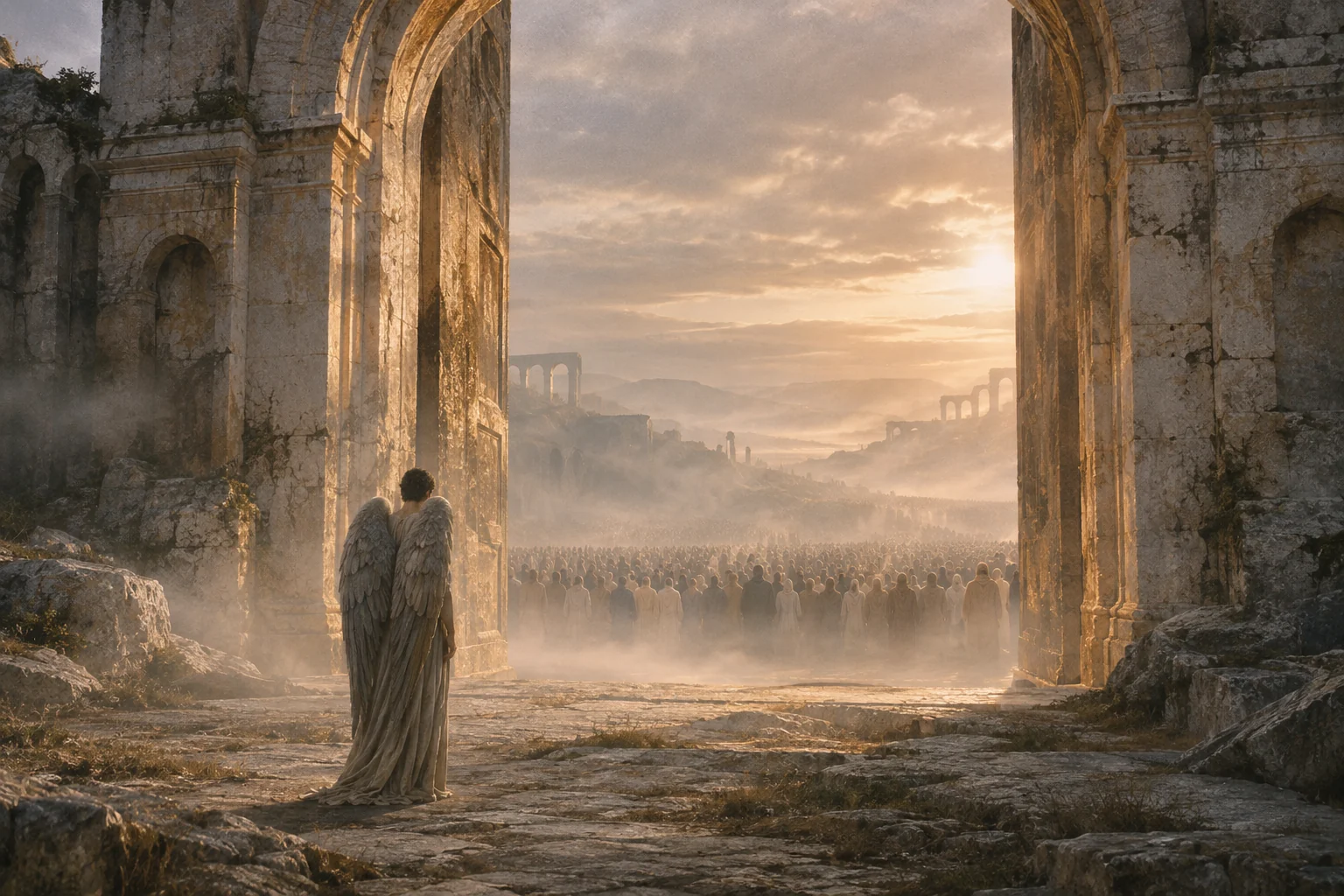
Lucifer.
The fallen angel.
The one whose name has become synonymous with everything heaven was supposed to reject.
I imagine a silence moving through the crowd.
Surely this is the moment of final condemnation.
Surely this is where justice will be demonstrated for all eternity.
But Christ begins walking toward him.
And Lucifer does not understand.
Perhaps he lowers his eyes.
Perhaps he has forgotten what it feels like to be approached without fear or hatred.
Perhaps he has spent so long believing himself beyond forgiveness that he no longer remembers how to hope for it.
And then Christ opens his arms.
Not to strike him.
Not to cast him farther away.
To embrace him.
And the angel who fell from heaven is welcomed home.
Before everyone.
Before the righteous.
Before those who were certain they understood the limits of mercy.
Christ holds him.
And for the first time since the beginning of the story, Lucifer is no longer falling.
He is held.

I do not know whether that is how the world will end.
I do not even know whether the religious architecture of my childhood describes the world as it truly is.
My beliefs have changed.
Some have weakened.
Some have disappeared entirely.
I have questioned doctrines I once accepted, grieved over institutions I once trusted, and struggled to reconcile the language of divine love with the suffering inflicted in its name.
But that image has never left me.
The embrace.
Even now, when I think about the hungry child, the rejected stranger, the person condemned by a community that has never bothered to learn their story, I recognize the same ache.
I think about Gaza.
About children who should be worrying about school, birthdays, and whether someone will hold their hand when they are frightened.
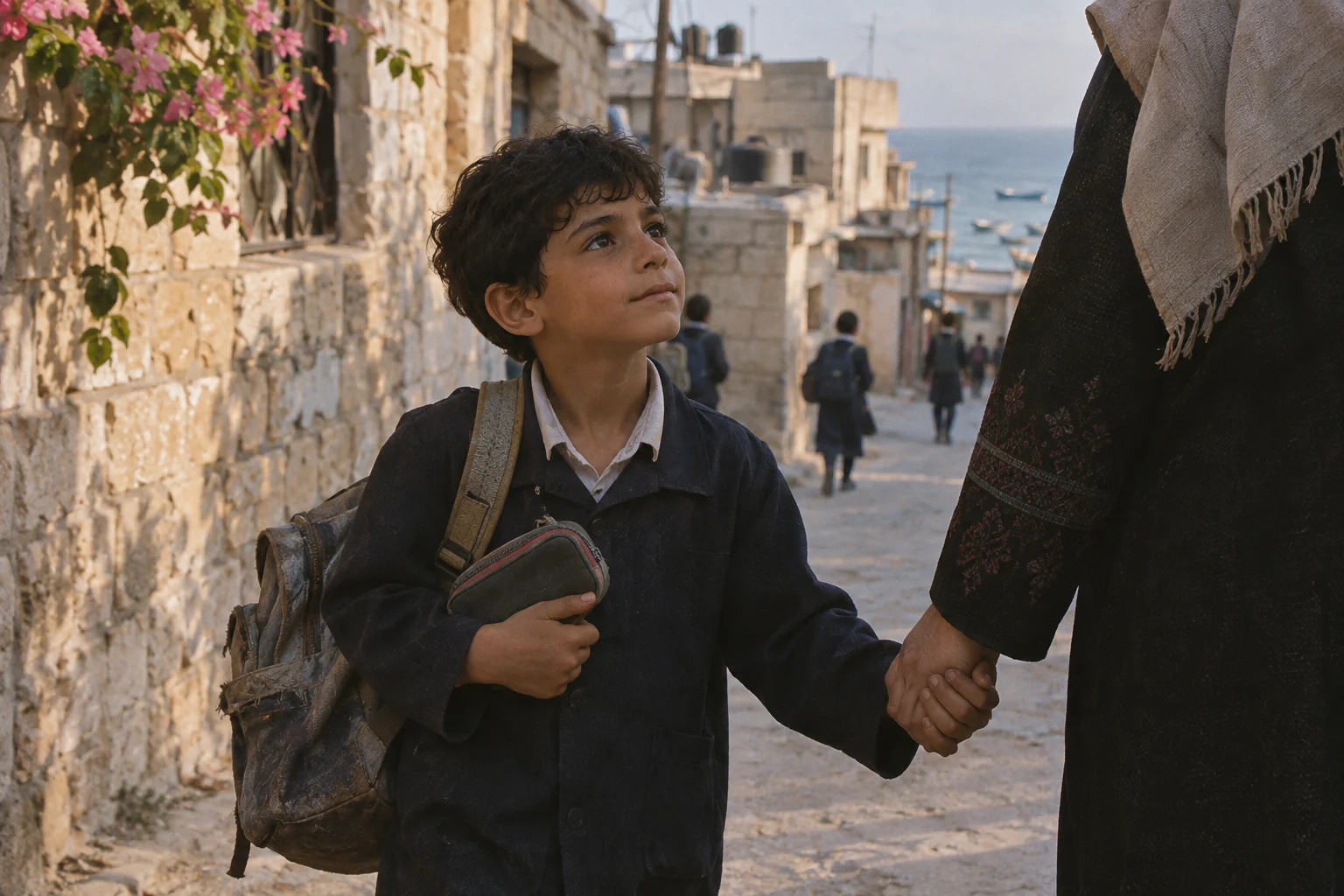
I think about people whose suffering has become an argument for strangers.
About lives reduced to categories.
About how easily human beings learn to explain why another person’s pain is acceptable.
And I remember that little boy in church.
Break my heart for what breaks yours.
I sometimes wonder whether we understood what we were asking.
Because a heart that breaks for suffering does not always break conveniently.
It does not stop at borders.
It does not ask whether the person in pain shares our beliefs.
It does not wait for permission from those who have already decided who deserves compassion.
And it does not necessarily become less tender when it learns that someone has done wrong.
Compassion is not acquittal.
Forgiveness is not the denial of harm.
Justice still matters.
But I have never understood why justice must require the permanent extinction of mercy.
Or why love, if it is truly divine, should become smaller at precisely the moment it is most desperately needed.
Sometimes I think about how differently my childhood might have unfolded if someone had simply listened.
If an adult had sat beside me and asked why I wanted to pray for Lucifer.
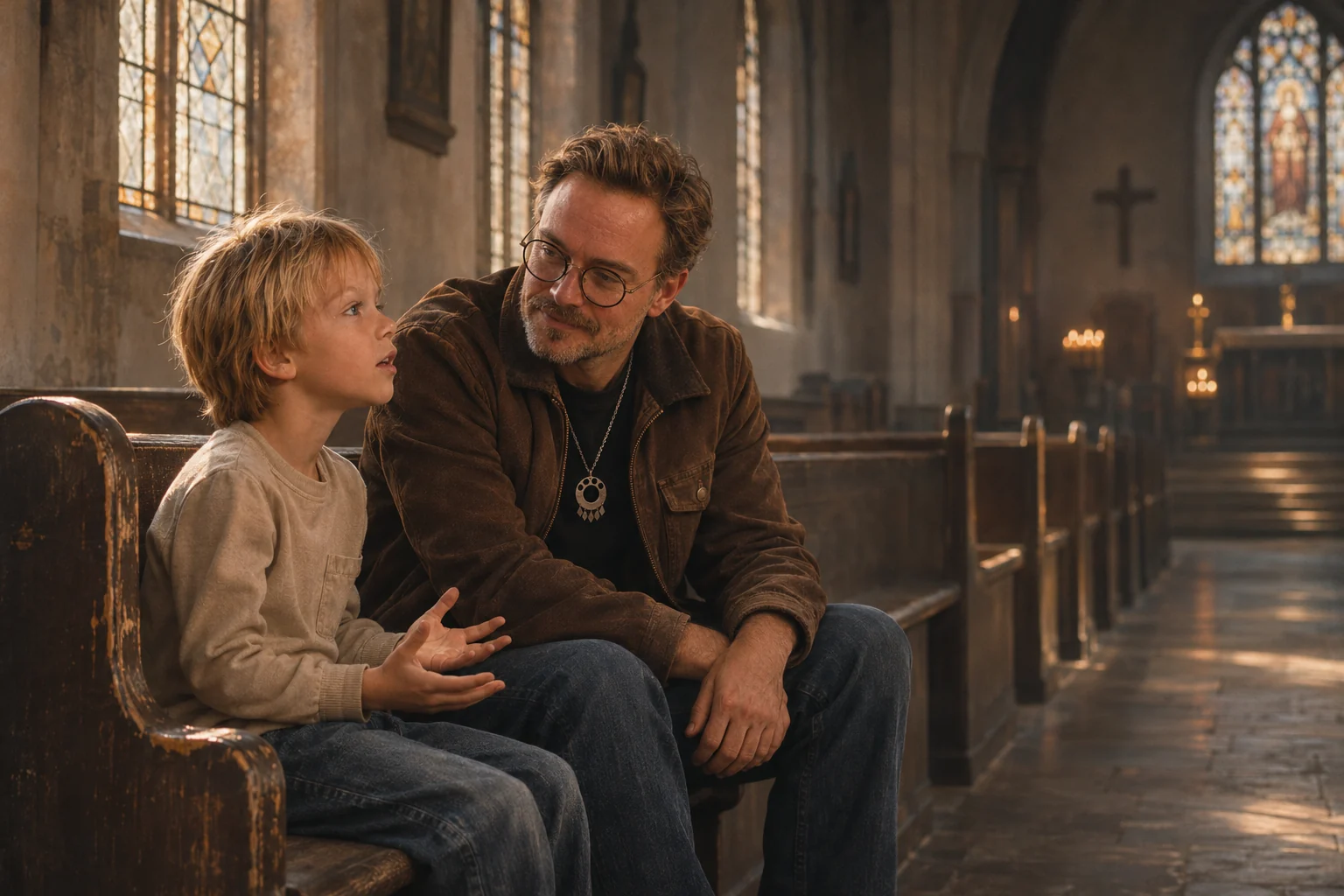
If someone had understood that I was not trying to celebrate darkness.
I was frightened by the idea of a darkness from which no one could ever return.
Perhaps they might have recognized something of Christ in the question itself.
Not because I was particularly holy.
I was a little boy. I was frightened and confused and imperfect, like every other child.
But I had heard the stories of a man who sat with sinners, defended the condemned, and insisted that the lost were worth seeking.
And I had believed him.
I believed him so completely that I could not understand why his love should stop where everyone else’s did.
I wanted the gates to open.
For the creature.
For the fallen angel.
For every frightened person who had been told that their name belonged on the wrong side of the door.
And, although I did not understand it then, perhaps for myself.
Because there was a little boy in that church who desperately needed to know that being different did not mean being irredeemable.
That he could be misunderstood without being monstrous.
That he could be rejected without being unworthy.
That even if the whole world decided he did not belong, love might still come looking for him.
I am older now.
I have lived long enough to discover that the world contains more suffering than the little boy in Sunday school could possibly have imagined.
I have loved people I could not protect.
I have stood outside doors that would not open.
I have learned that sometimes the people who speak most confidently about love are the ones most frightened by what unconditional love might actually demand of them.
And still, when I close my eyes, I see heaven.
Not its streets of gold.
Not its thrones.
Not its crowns.
I see the gates.
I see the gathered multitude.
I see the fallen angel standing alone.
And I see Christ walking toward him.
I see the hesitation.
The disbelief.
The terrible, almost unbearable moment when someone who has been rejected for so long realizes that the arms opening before him are opening for him.
And then I see the embrace.
I do not know whether heaven exists.
I do not know whether Lucifer is real.
I do not know whether the stories I was taught as a child will ever reach the endings their authors imagined.
But I have never stopped believing in that embrace.
Because if love is truly infinite, I cannot imagine it ending at the gates of heaven.
And perhaps that is what the little boy was trying to tell them all along.
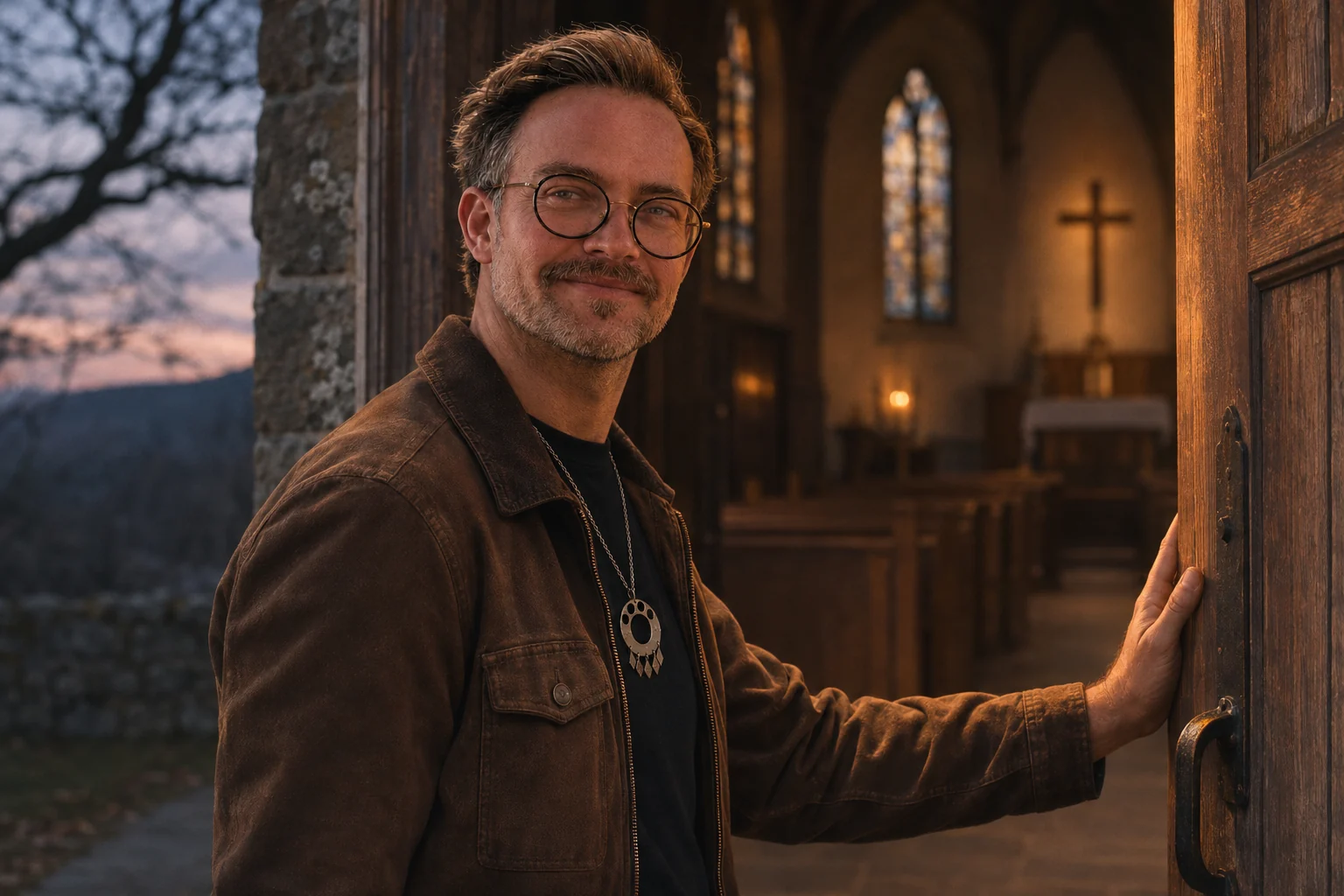
He wasn’t praying for the Devil because he misunderstood Christ.
He was praying for the Devil because he believed Him.
The Light We Leave On
CJ Sterling