The Light We Leave OnWriting by CJ Sterling

The Hole in My Heart

The Hole in My Heart
The Light We Leave On
There is a hole in my heart.
It is exactly the shape of Gaza.
I don't know when it first appeared.
Perhaps it has always been there.
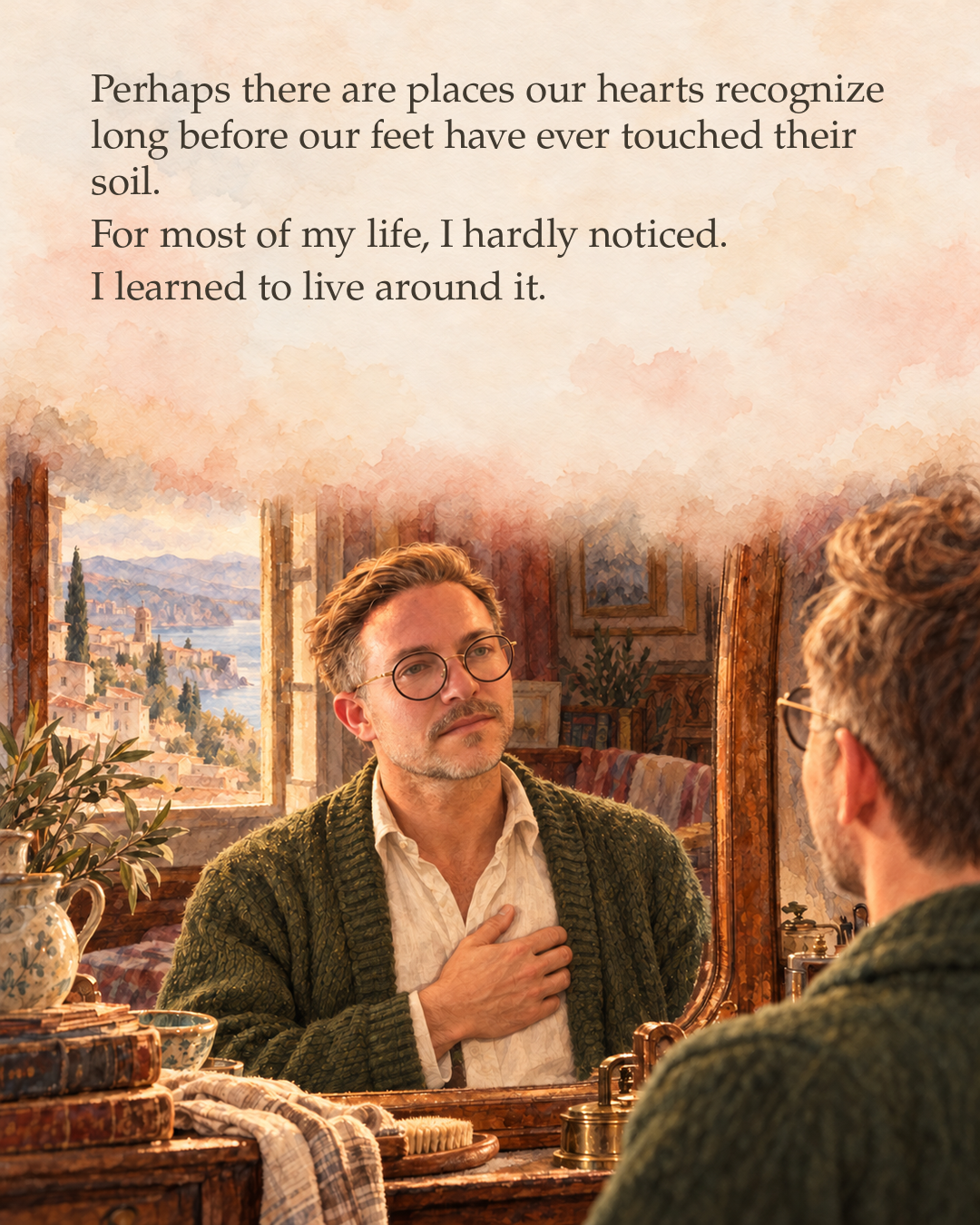
Perhaps there are places our hearts recognize long before our feet have ever touched their soil.
For most of my life, I hardly noticed.
I learned to live around it.
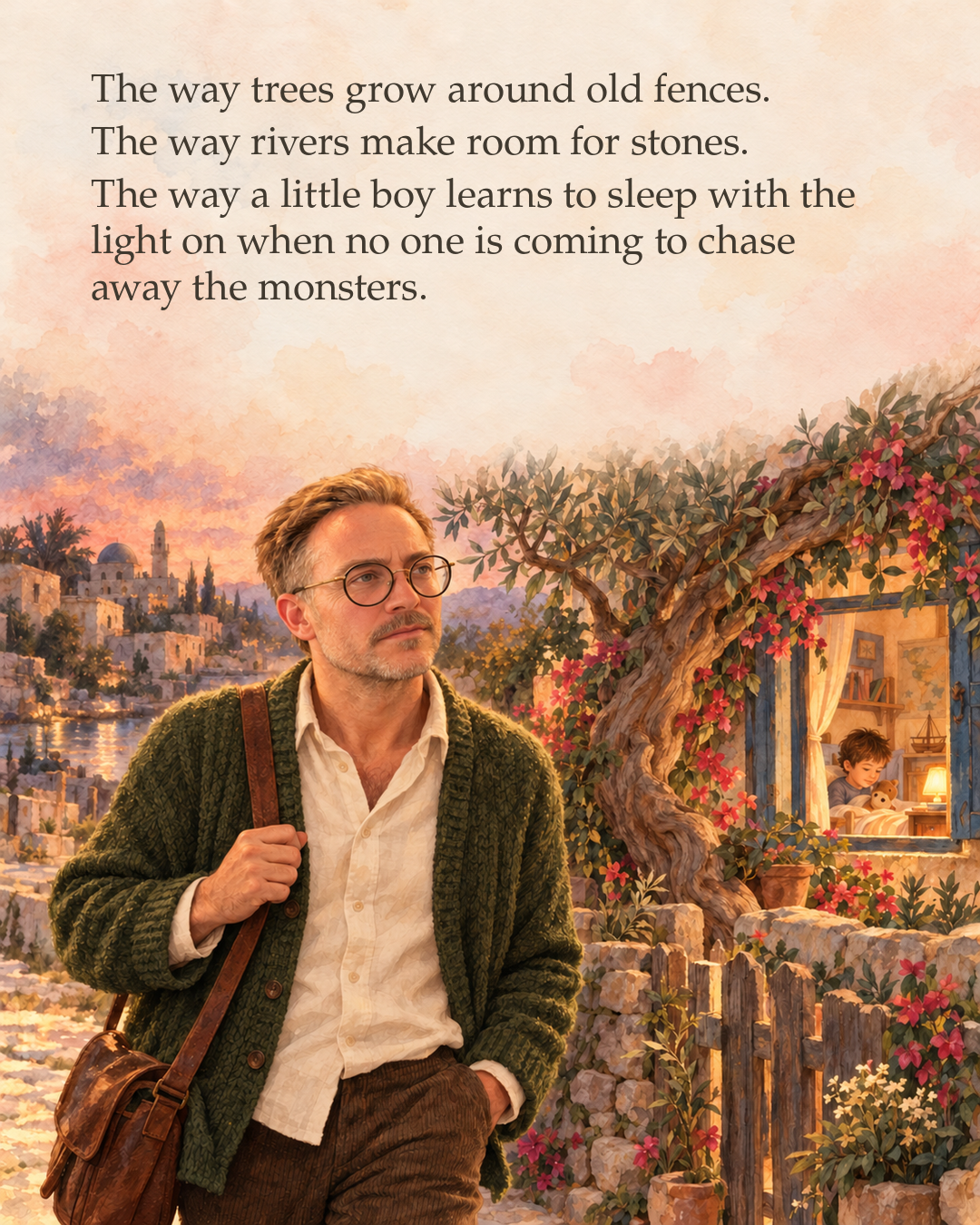
The way trees grow around old fences.
The way rivers make room for stones.
The way a little boy learns to sleep with the light on when no one is coming to chase away the monsters.
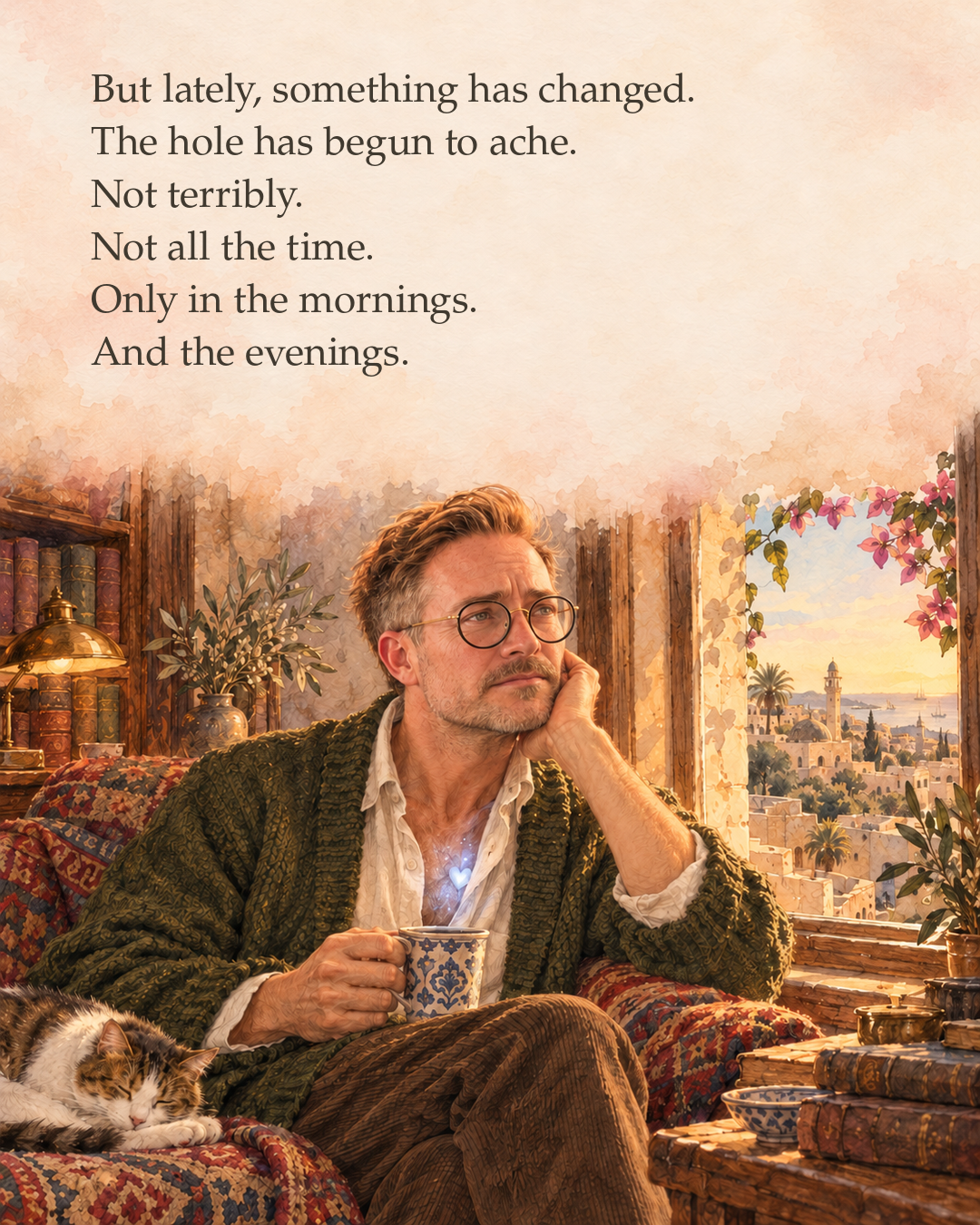
But lately, something has changed.
The hole has begun to ache.
Not terribly.
Not all the time.
Only in the mornings.
And the evenings.
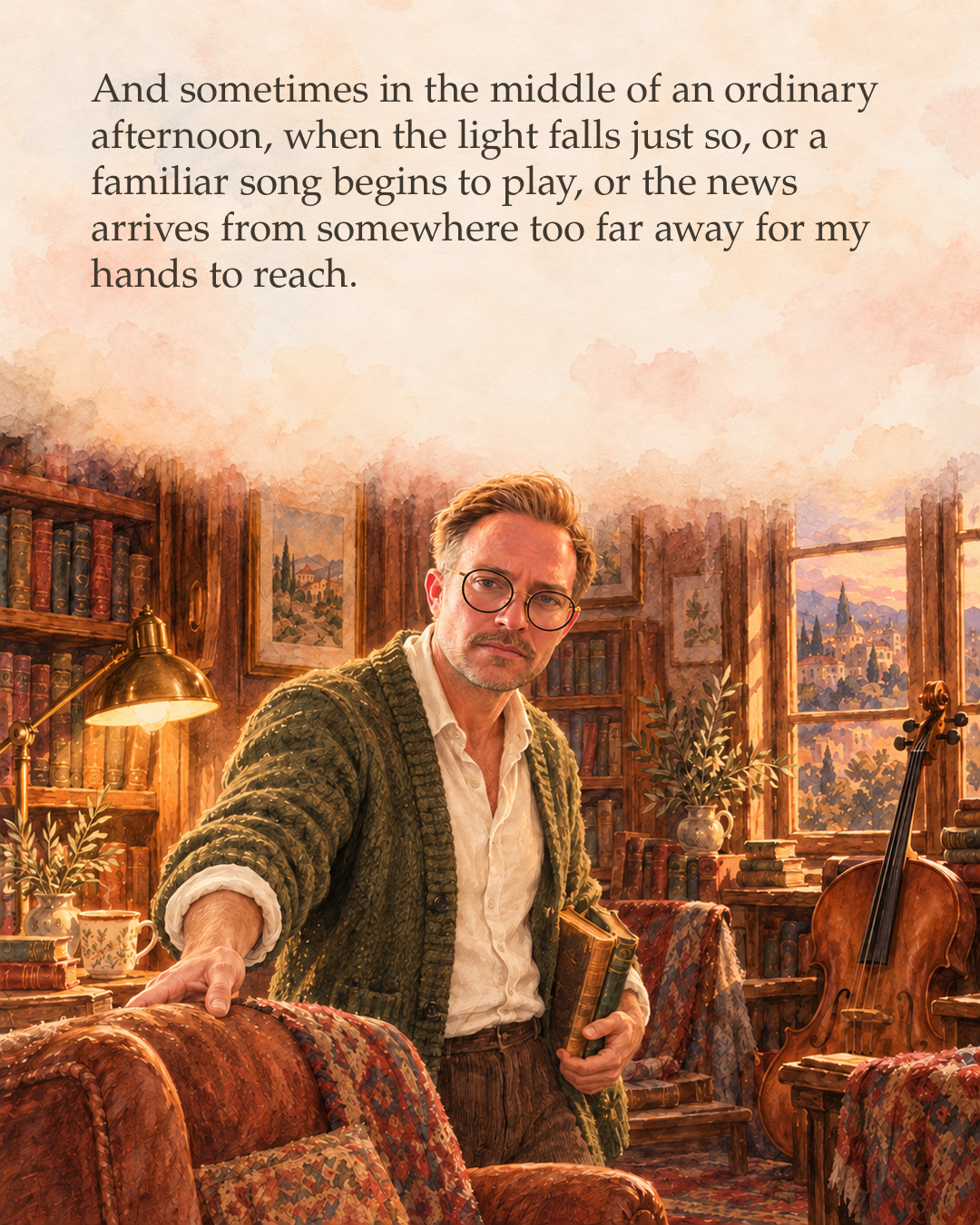
And sometimes in the middle of an ordinary afternoon, when the light falls just so, or a familiar song begins to play, or the news arrives from somewhere too far away for my hands to reach.
Which is to say,
rather often.
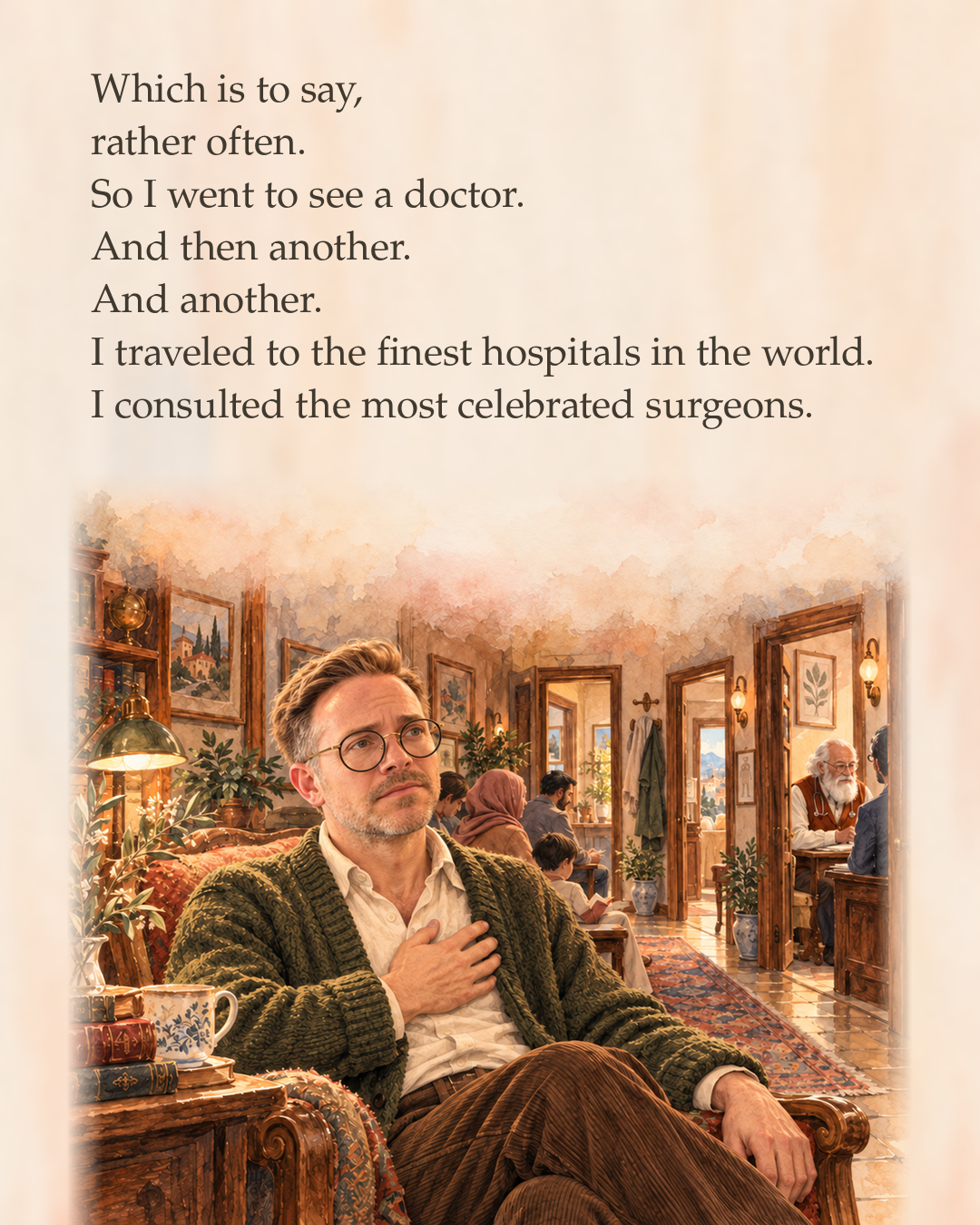
So I went to see a doctor.
And then another.
And another.
I traveled to the finest hospitals in the world.
I consulted the most celebrated surgeons.
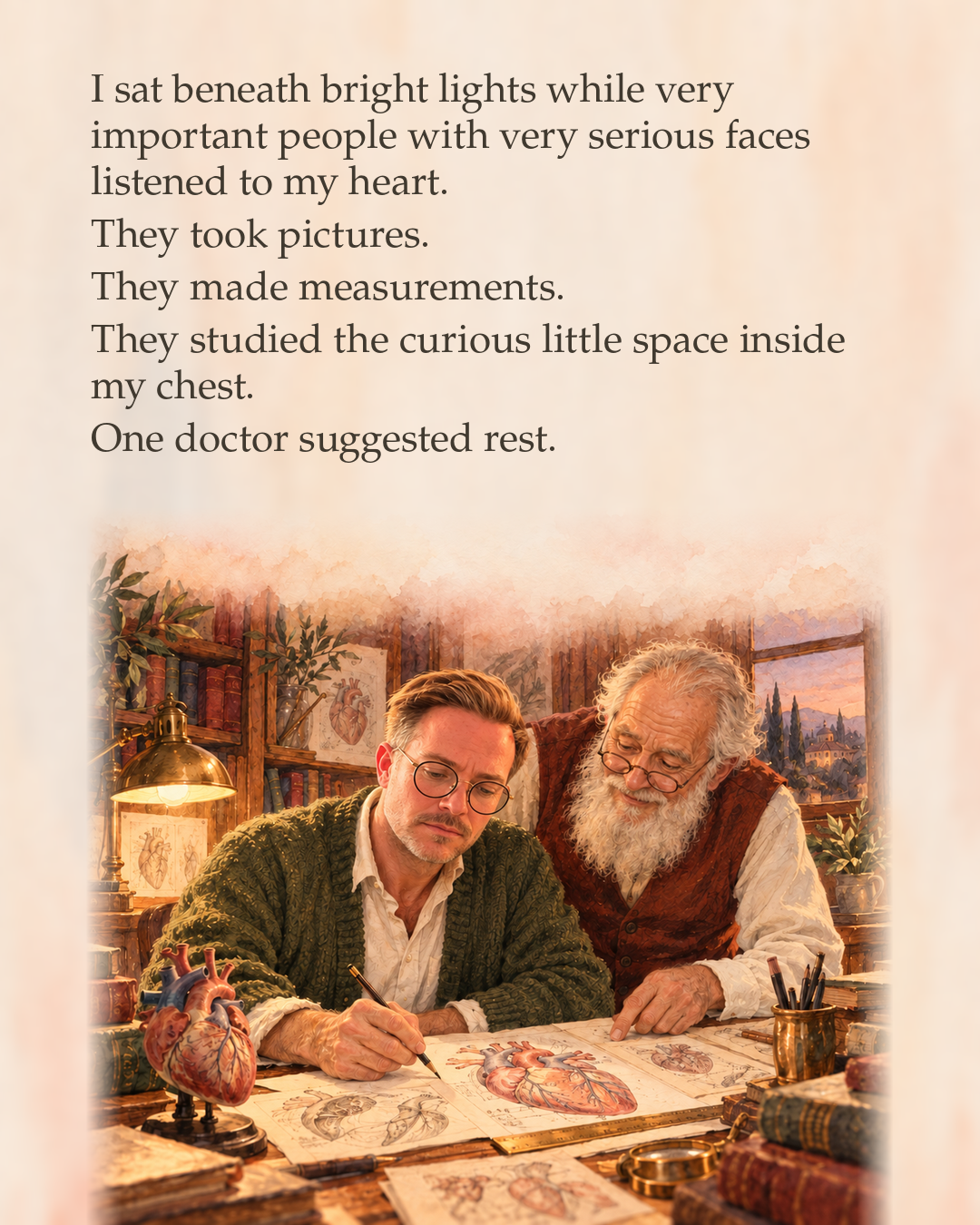
I sat beneath bright lights while very important people with very serious faces listened to my heart.
They took pictures.
They made measurements.
They studied the curious little space inside my chest.
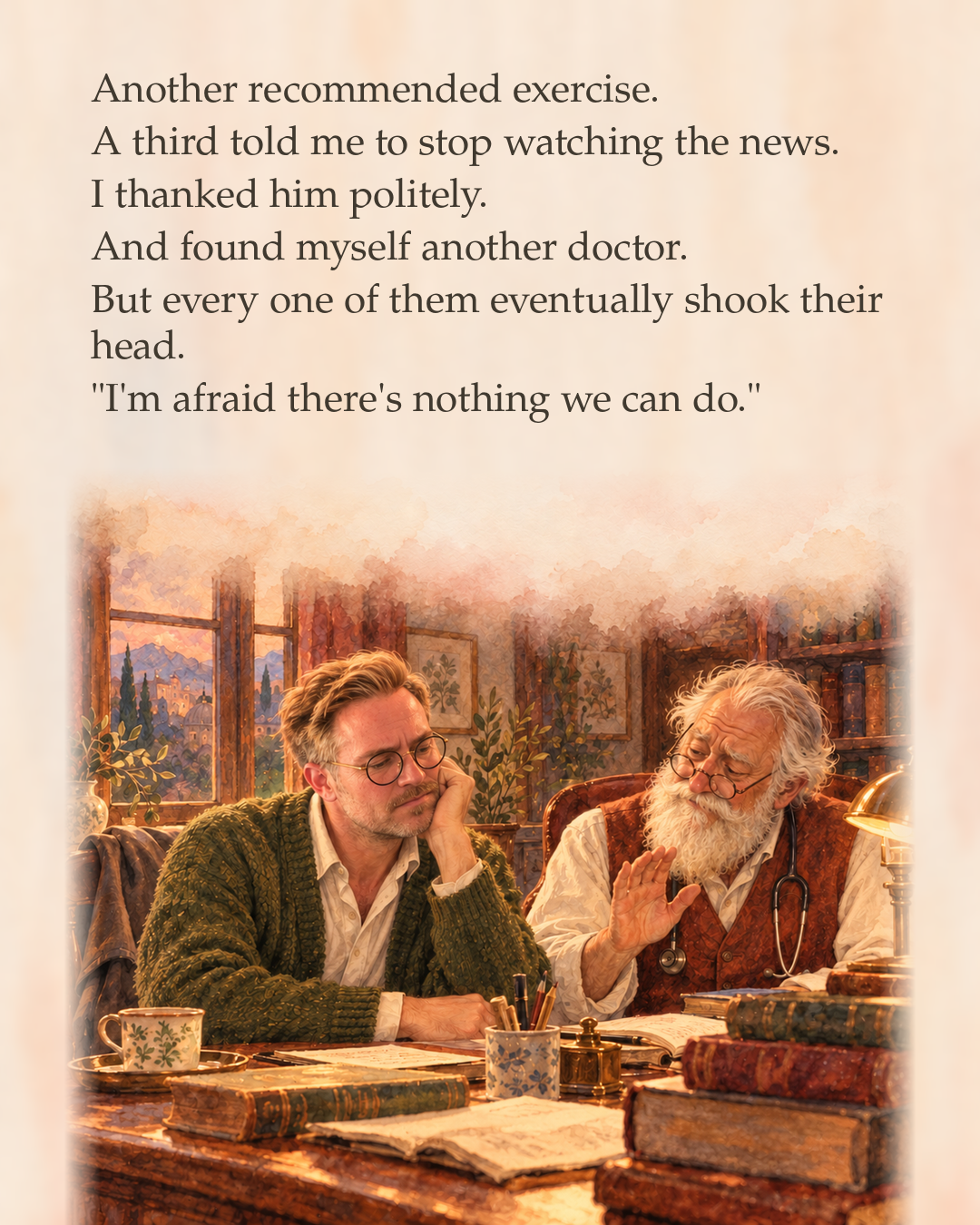
One doctor suggested rest.
Another recommended exercise.
A third told me to stop watching the news.
I thanked him politely.
And found myself another doctor.
But every one of them eventually shook their head.
"I'm afraid there's nothing we can do."
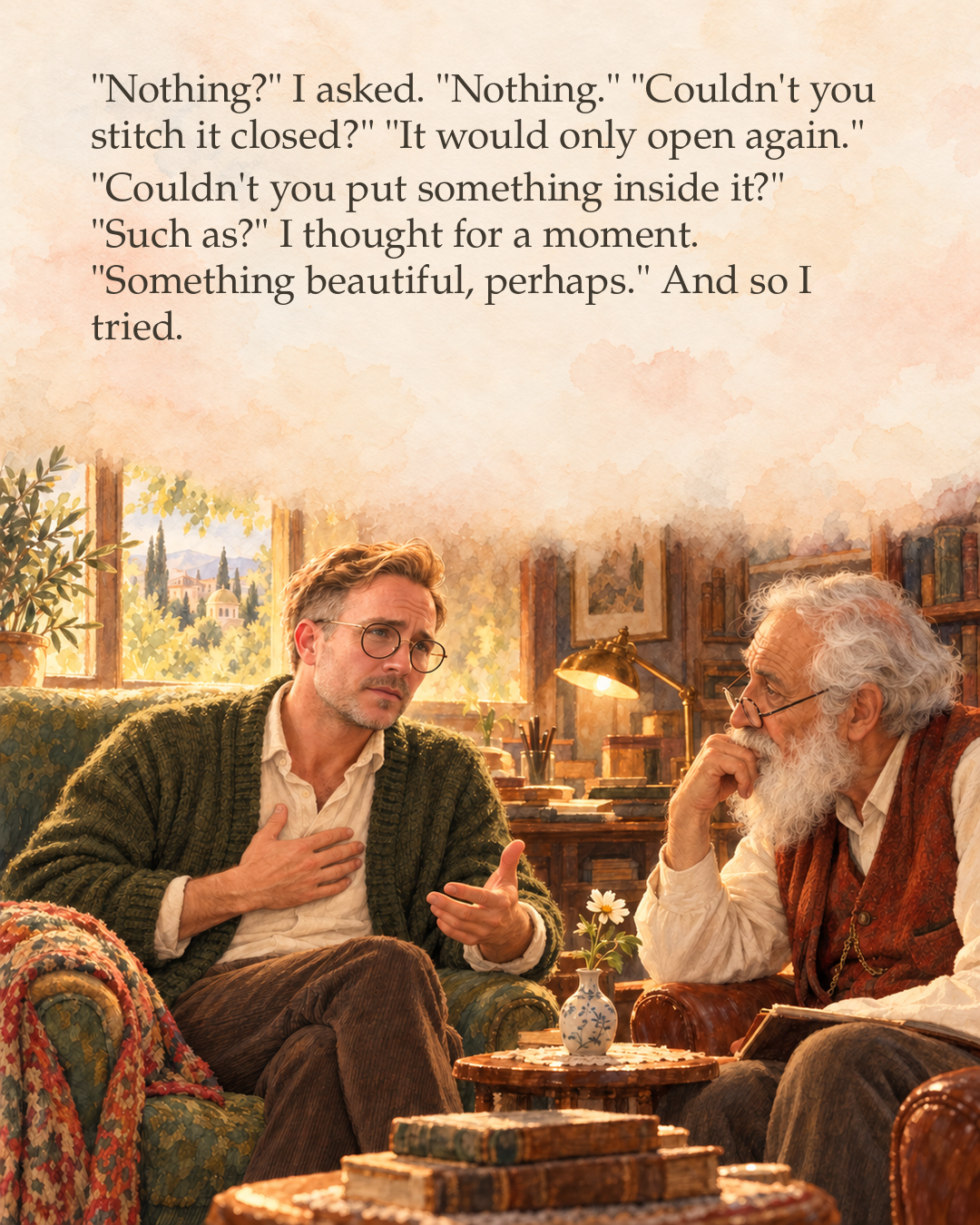
"Nothing?" I asked.
"Nothing."
"Couldn't you stitch it closed?"
"It would only open again."
"Couldn't you put something inside it?"
"Such as?"
I thought for a moment.
"Something beautiful, perhaps."
And so I tried.
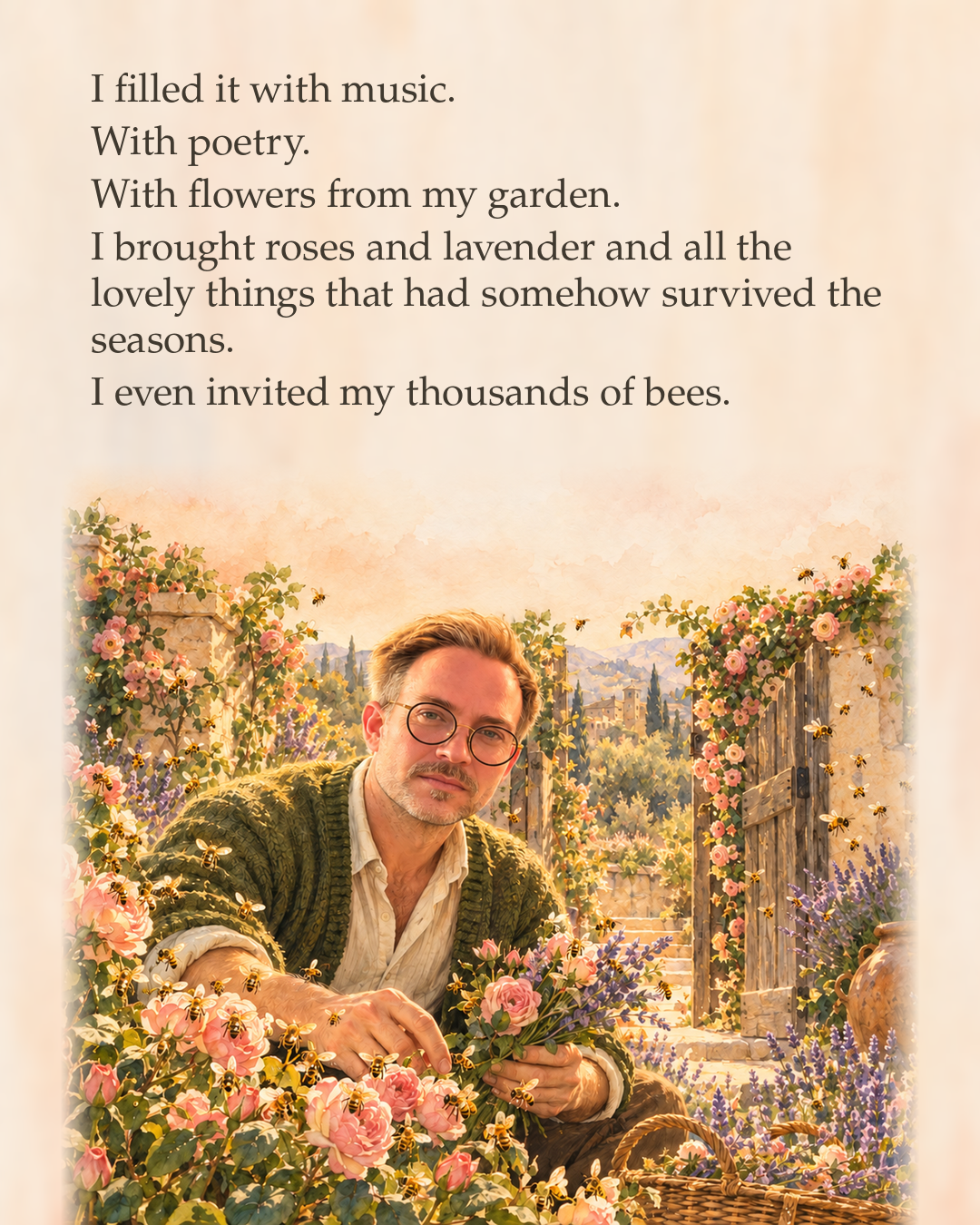
I filled it with music.
With poetry.
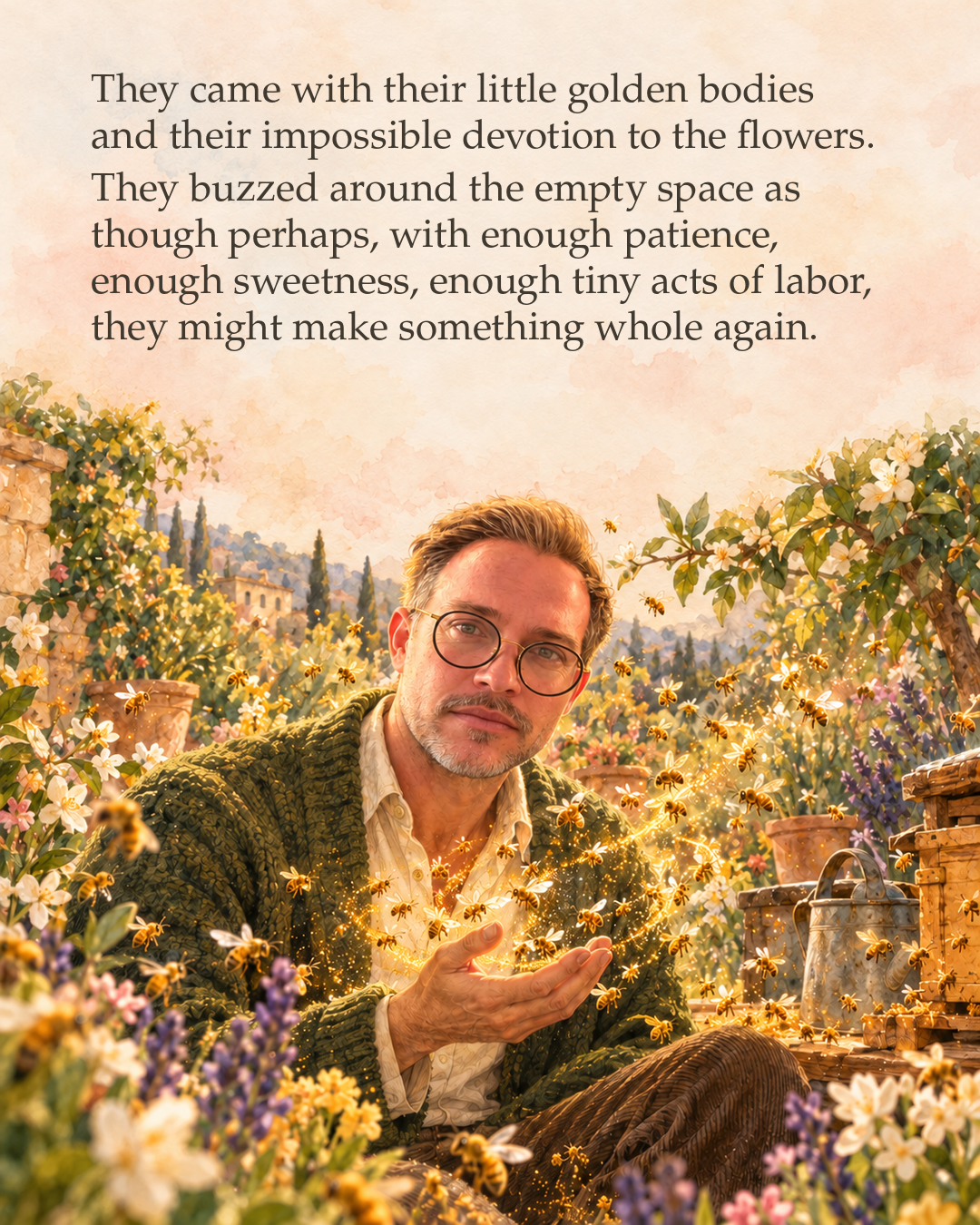
With flowers from my garden.
I brought roses and lavender and all the lovely things that had somehow survived the seasons.
I even invited my thousands of bees.
They came with their little golden bodies and their impossible devotion to the flowers.
They buzzed around the empty space as though perhaps, with enough patience, enough sweetness, enough tiny acts of labor, they might make something whole again.
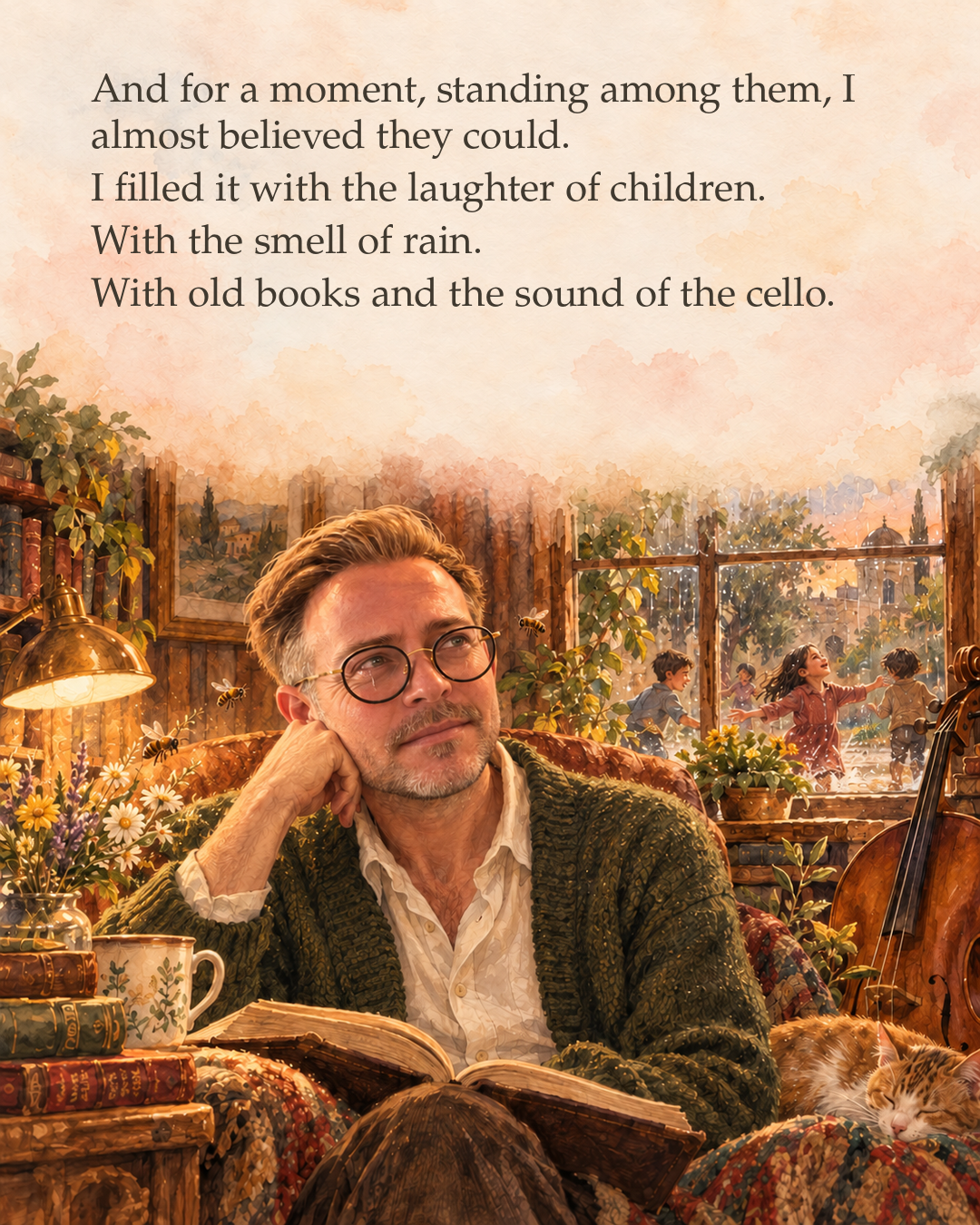
And for a moment, standing among them, I almost believed they could.
I filled it with the laughter of children.
With the smell of rain.
With old books and the sound of the cello.
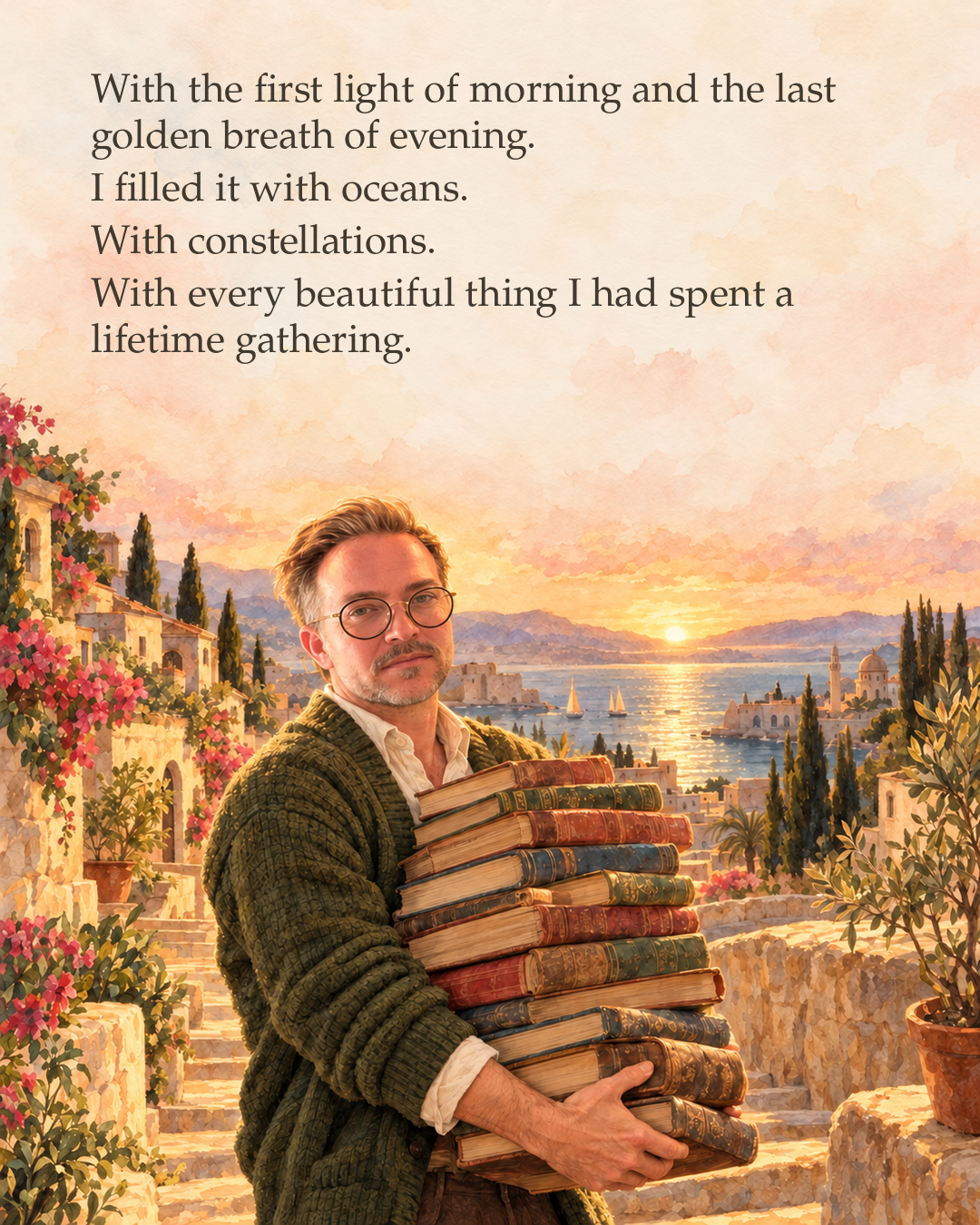
With the first light of morning and the last golden breath of evening.
I filled it with oceans.
With constellations.
With every beautiful thing I had spent a lifetime gathering.
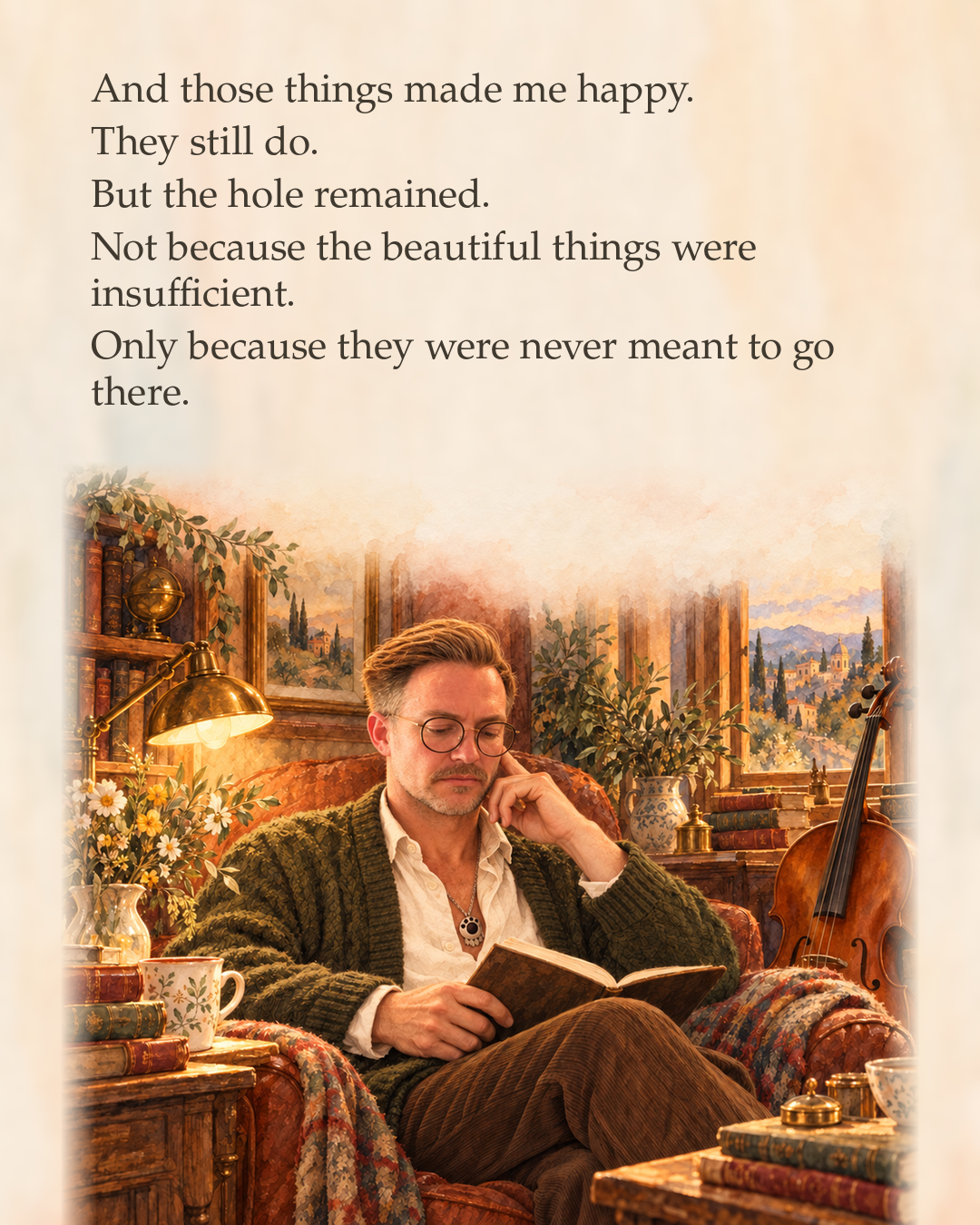
And those things made me happy.
They still do.
But the hole remained.
Not because the beautiful things were insufficient.
Only because they were never meant to go there.
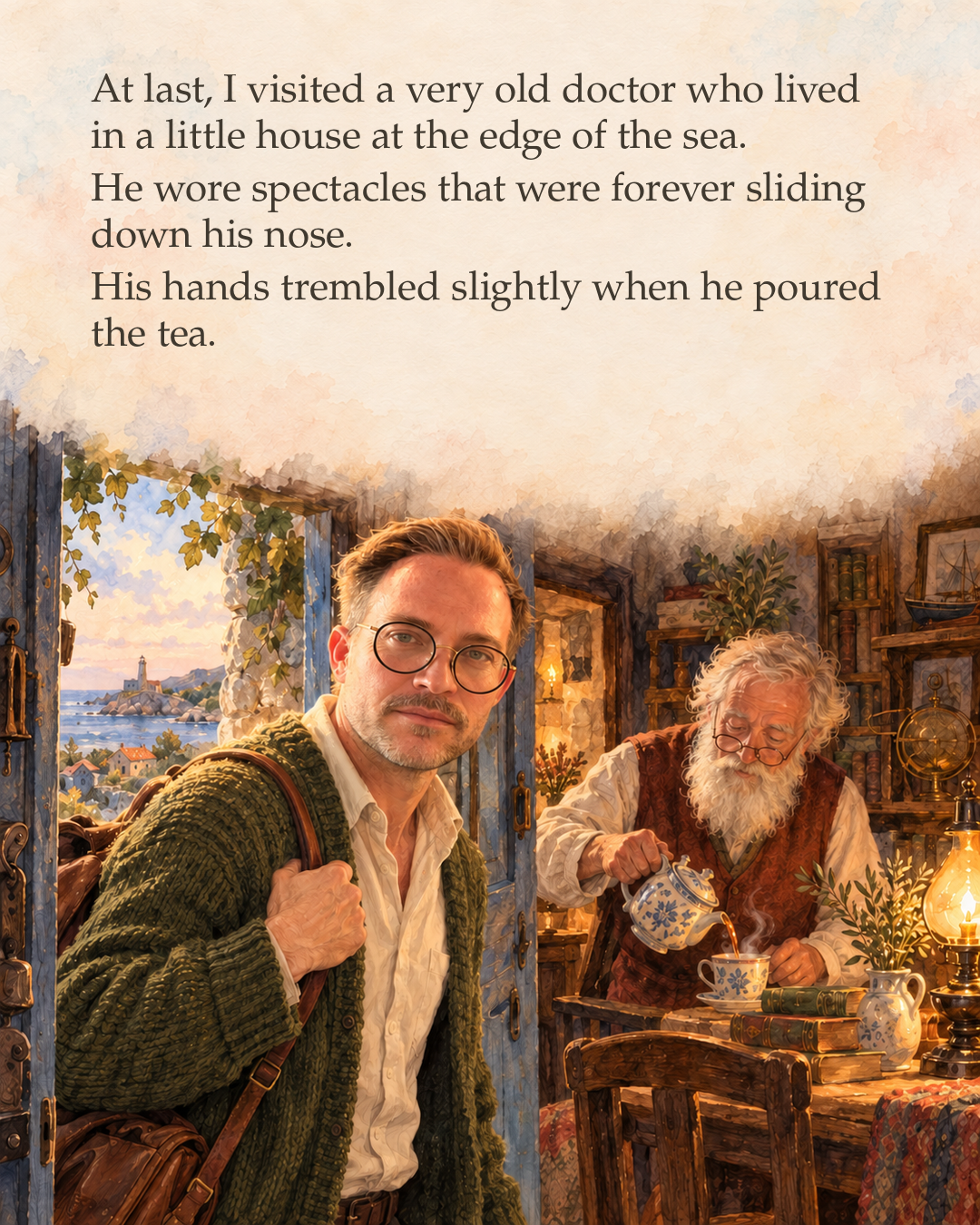
At last, I visited a very old doctor who lived in a little house at the edge of the sea.
He wore spectacles that were forever sliding down his nose.
His hands trembled slightly when he poured the tea.
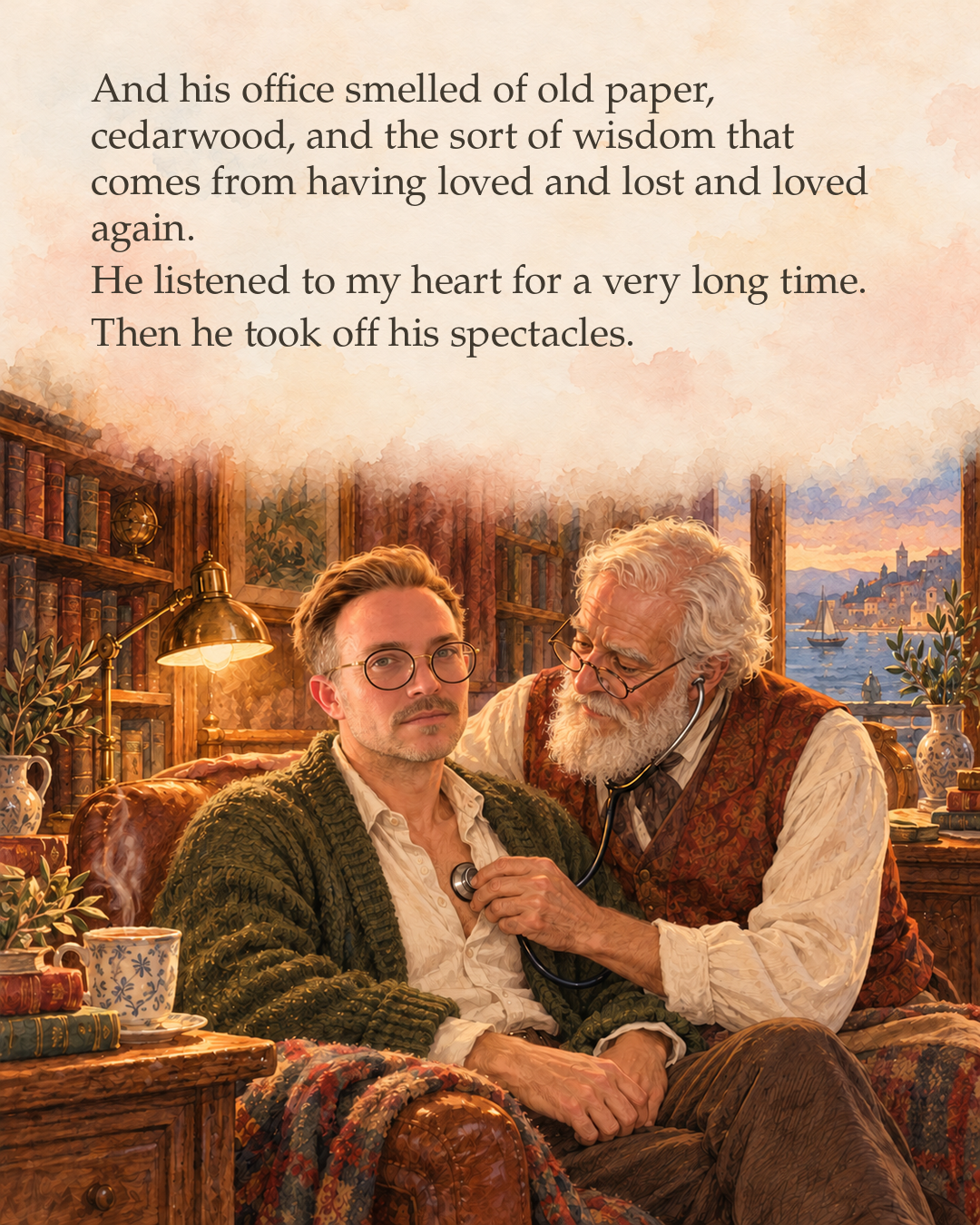
And his office smelled of old paper, cedarwood, and the sort of wisdom that comes from having loved and lost and loved again.
He listened to my heart for a very long time.
Then he took off his spectacles.
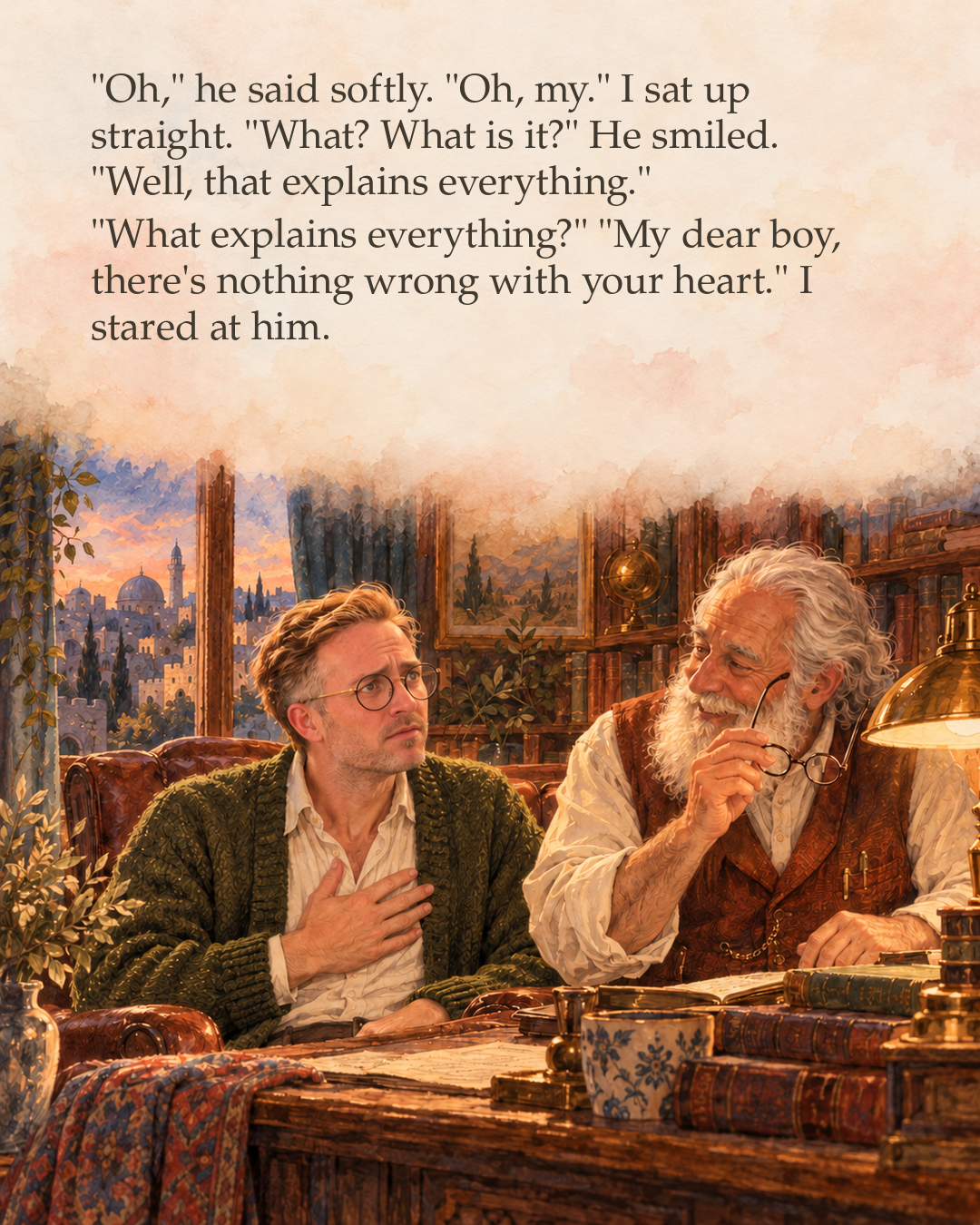
"Oh," he said softly.
"Oh, my."
I sat up straight.
"What? What is it?"
He smiled.
"Well, that explains everything."
"What explains everything?"
"My dear boy, there's nothing wrong with your heart."
I stared at him.
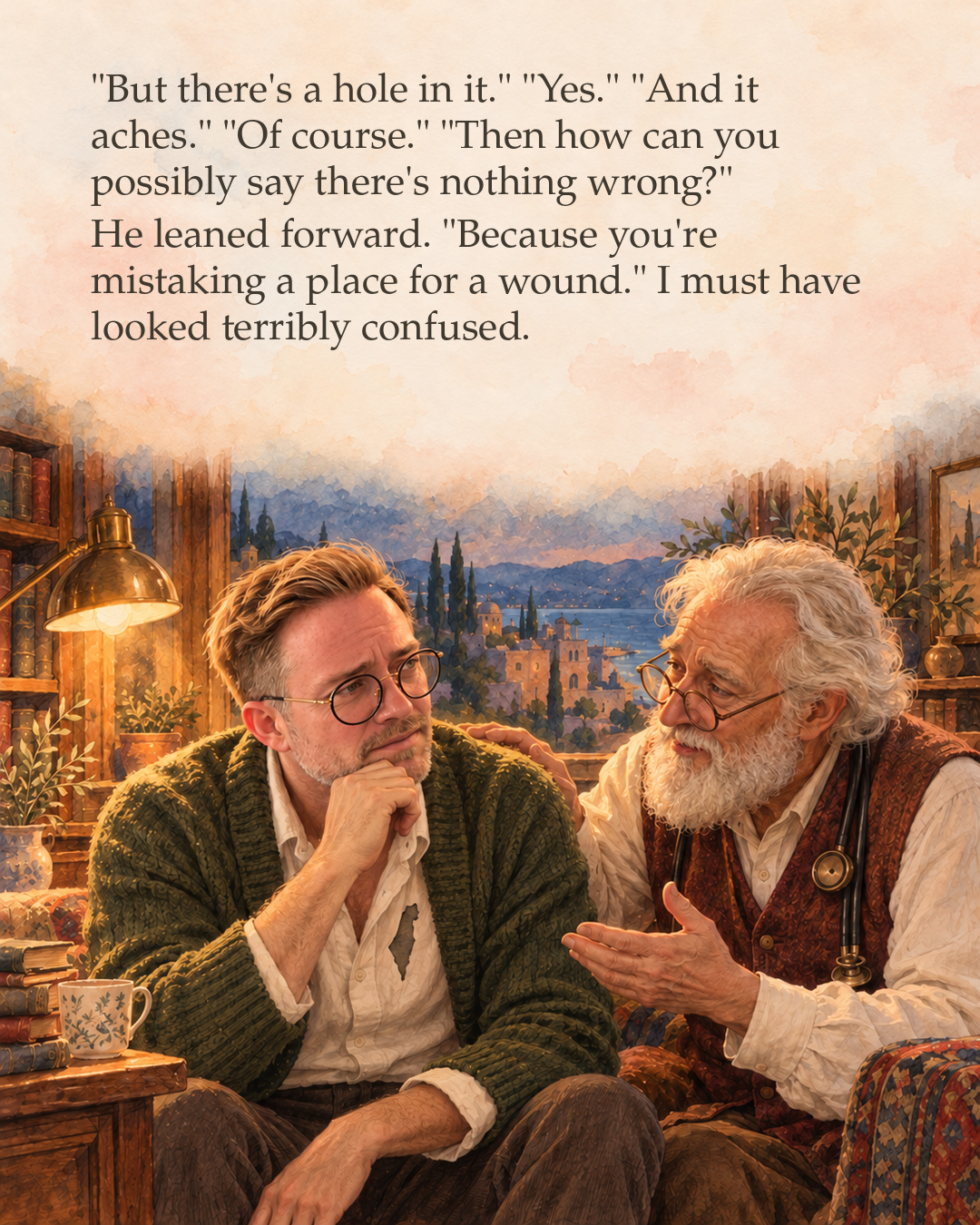
"But there's a hole in it."
"Yes."
"And it aches."
"Of course."
"Then how can you possibly say there's nothing wrong?"
He leaned forward.
"Because you're mistaking a place for a wound."
I must have looked terribly confused.
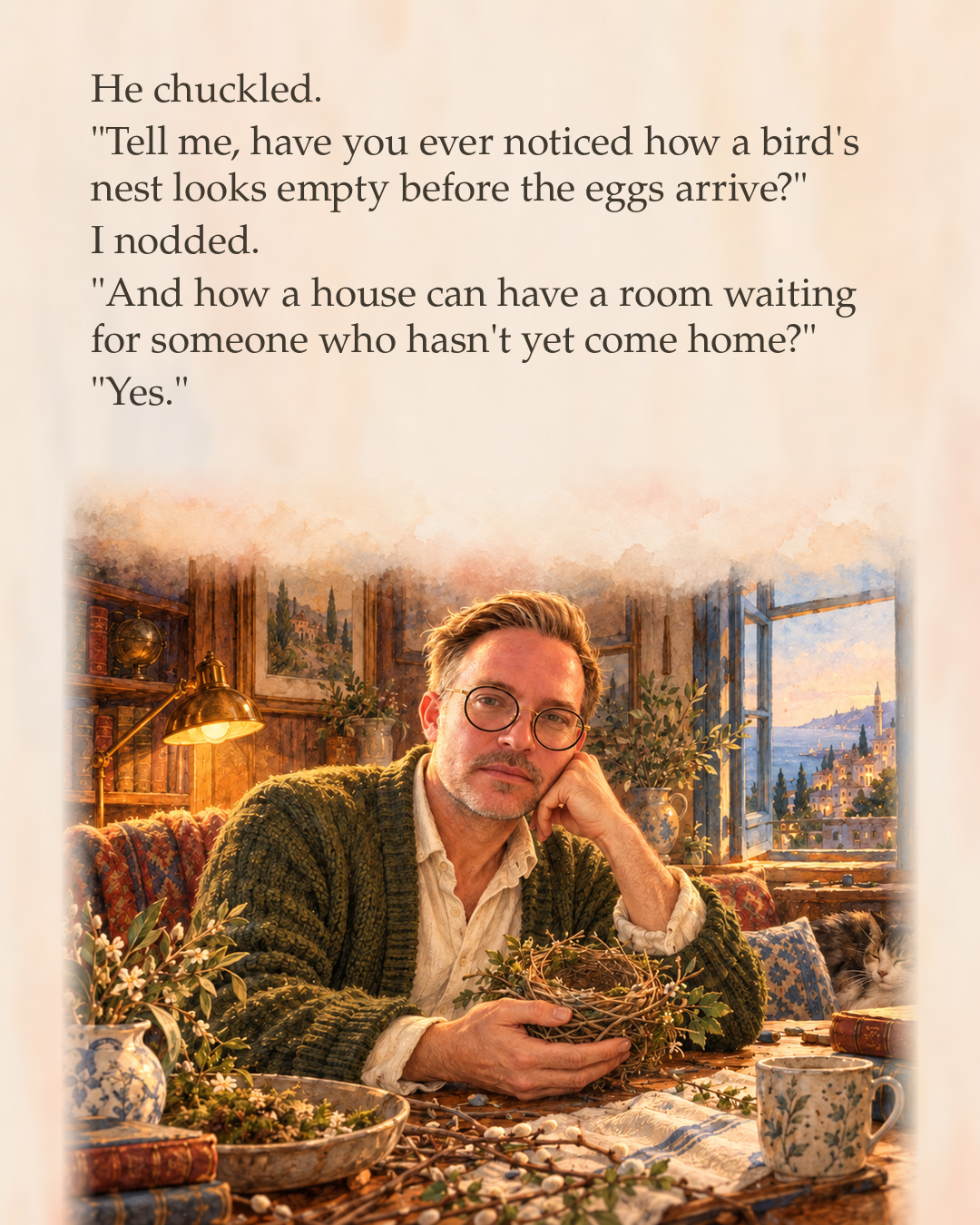
He chuckled.
"Tell me, have you ever noticed how a bird's nest looks empty before the eggs arrive?"
I nodded.
"And how a house can have a room waiting for someone who hasn't yet come home?"
"Yes."
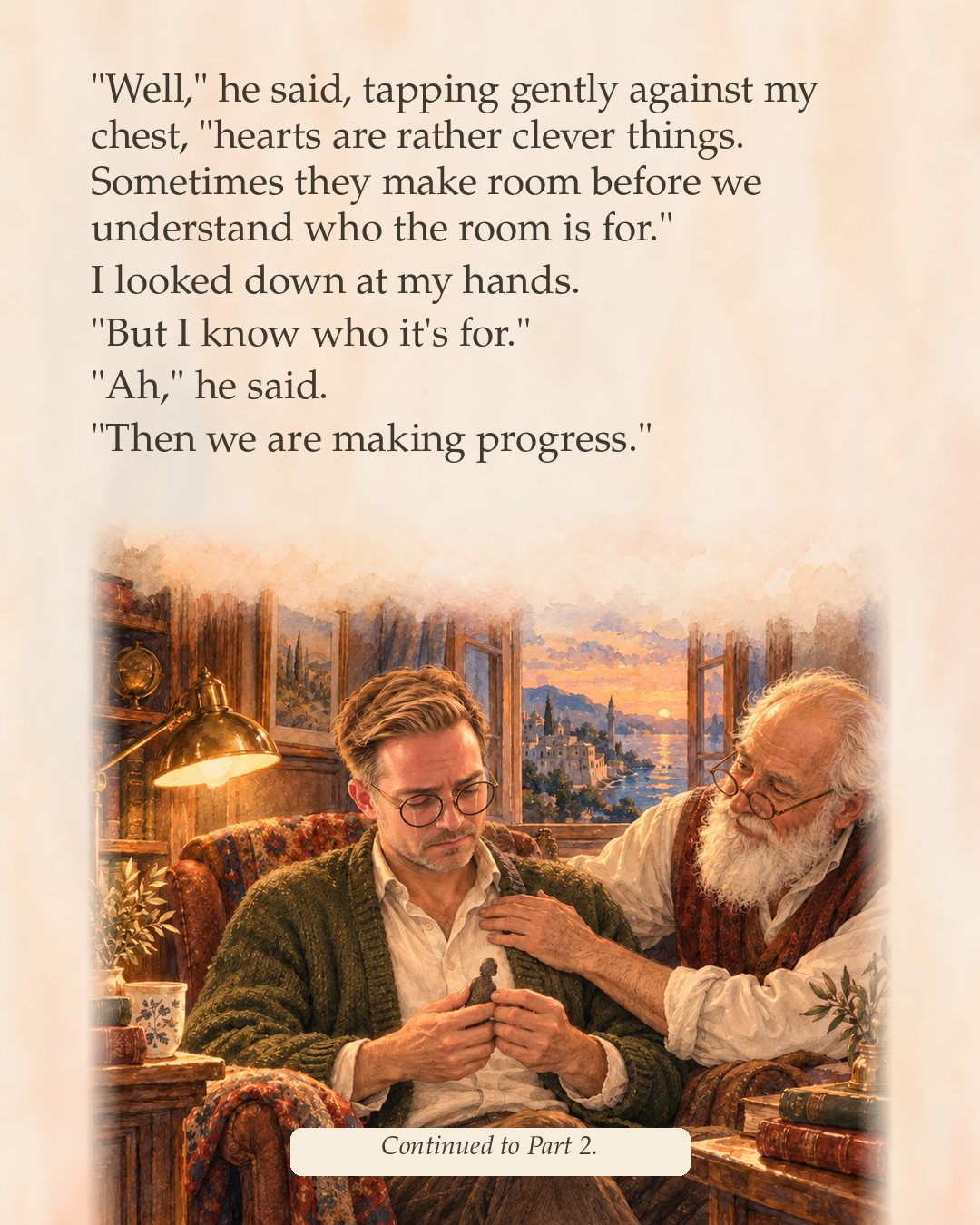
"Well," he said, tapping gently against my chest, "hearts are rather clever things. Sometimes they make room before we understand who the room is for."
I looked down at my hands.
"But I know who it's for."
"Ah," he said.
"Then we are making progress."
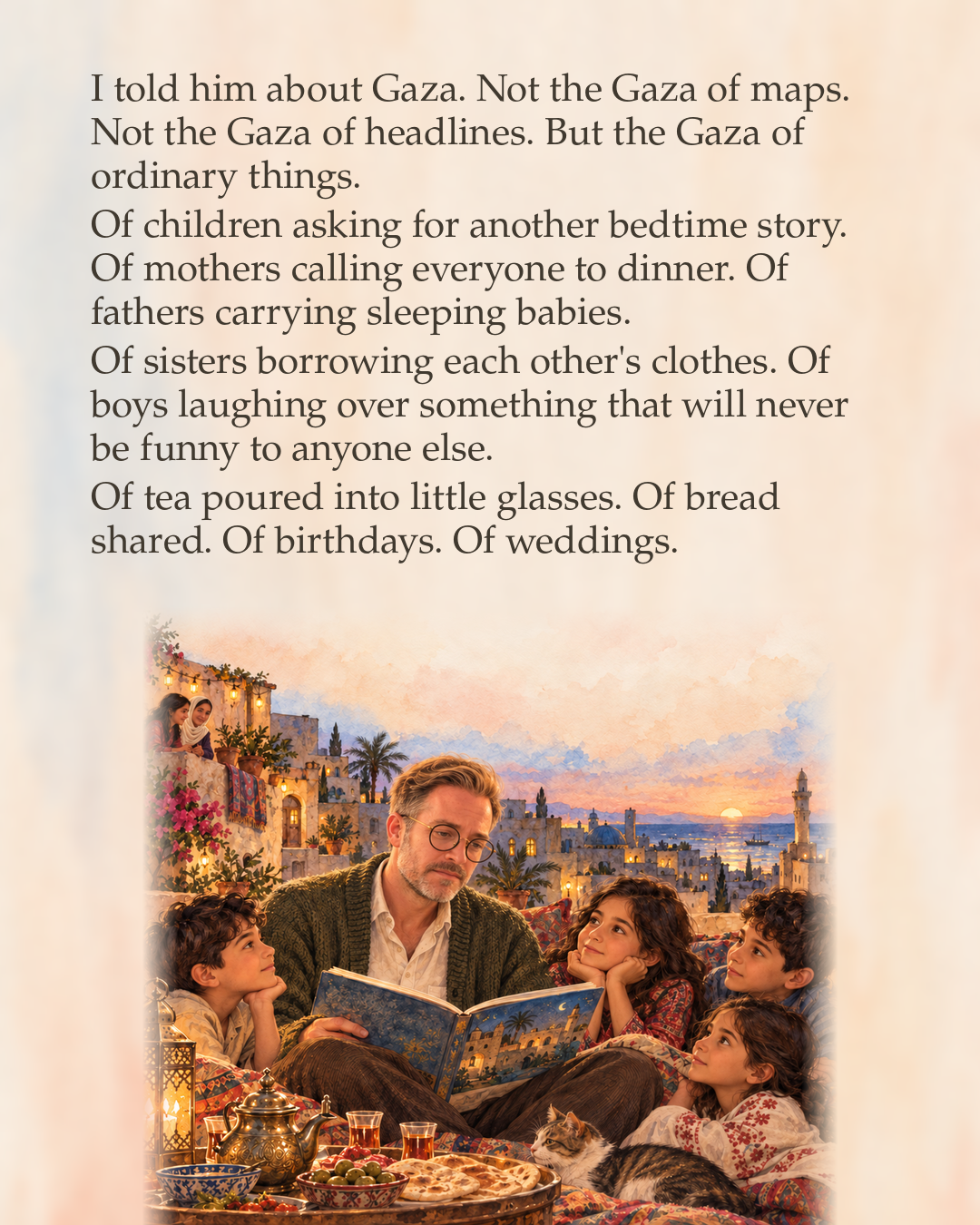
I told him about Gaza.
Not the Gaza of maps.
Not the Gaza of headlines.
But the Gaza of ordinary things.
Of children asking for another bedtime story.
Of mothers calling everyone to dinner.
Of fathers carrying sleeping babies.
Of sisters borrowing each other's clothes.
Of boys laughing over something that will never be funny to anyone else.
Of tea poured into little glasses.
Of bread shared.
Of birthdays.
Of weddings.
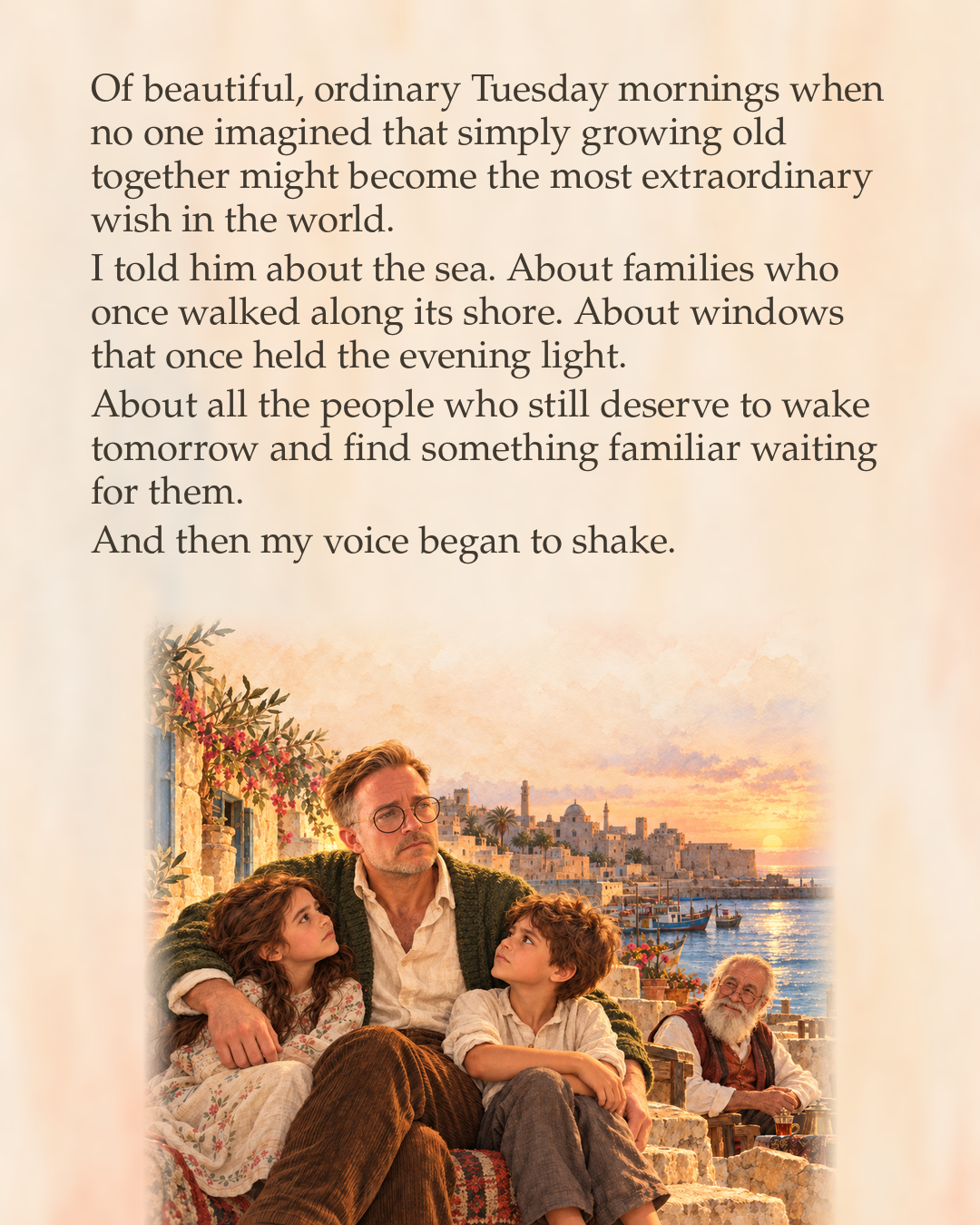
Of beautiful, ordinary Tuesday mornings when no one imagined that simply growing old together might become the most extraordinary wish in the world.
I told him about the sea.
About families who once walked along its shore.
About windows that once held the evening light.
About all the people who still deserve to wake tomorrow and find something familiar waiting for them.
And then my voice began to shake.
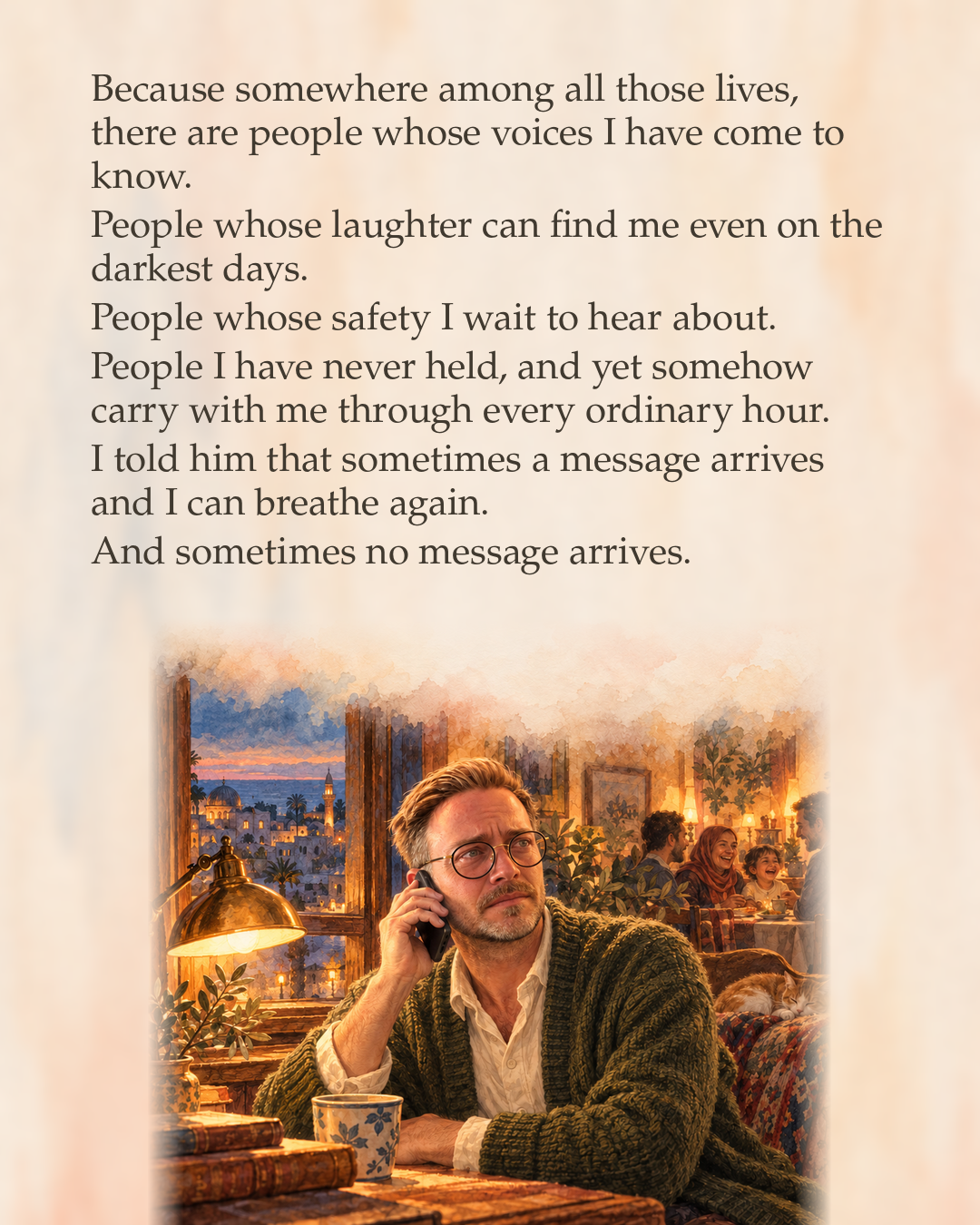
Because somewhere among all those lives, there are people whose voices I have come to know.
People whose laughter can find me even on the darkest days.
People whose safety I wait to hear about.
People I have never held, and yet somehow carry with me through every ordinary hour.
I told him that sometimes a message arrives and I can breathe again.
And sometimes no message arrives.
And the whole world seems to hold its breath with me.
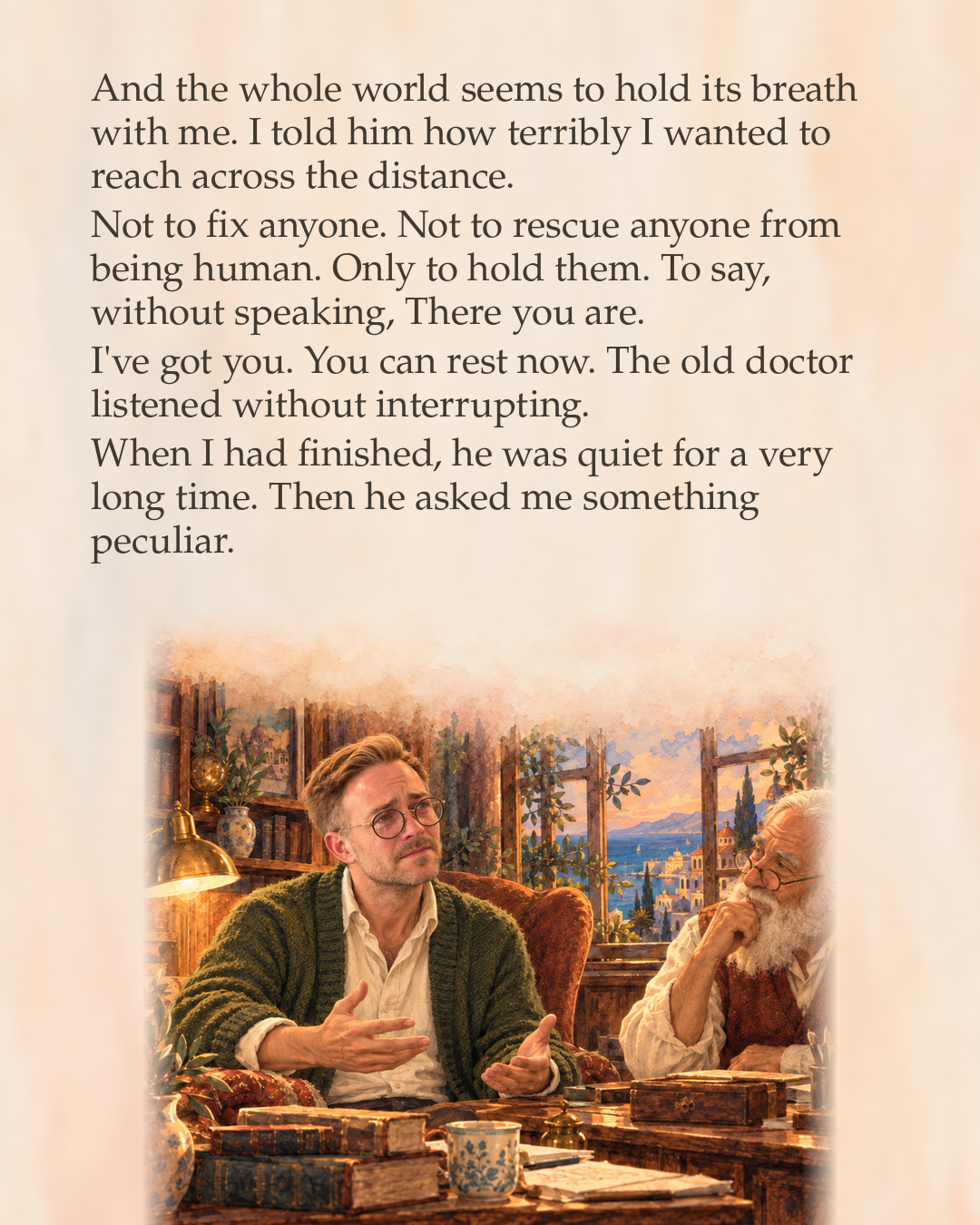
I told him how terribly I wanted to reach across the distance.
Not to fix anyone.
Not to rescue anyone from being human.
Only to hold them.
To say, without speaking,
There you are.
I've got you.
You can rest now.
The old doctor listened without interrupting.
When I had finished, he was quiet for a very long time.
Then he asked me something peculiar.
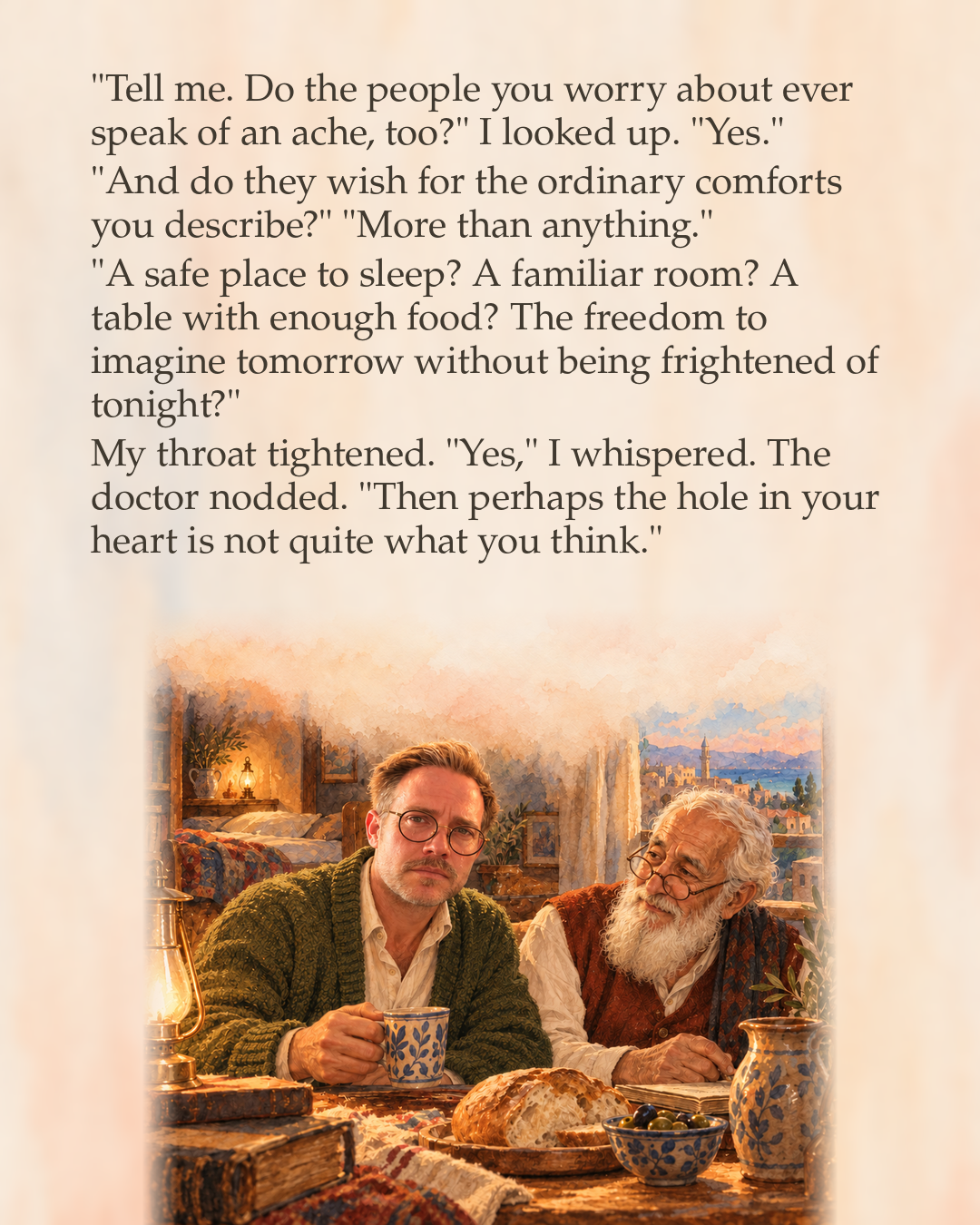
"Tell me. Do the people you worry about ever speak of an ache, too?"
I looked up.
"Yes."
"And do they wish for the ordinary comforts you describe?"
"More than anything."
"A safe place to sleep? A familiar room? A table with enough food? The freedom to imagine tomorrow without being frightened of tonight?"
My throat tightened.
"Yes," I whispered.
The doctor nodded.
"Then perhaps the hole in your heart is not quite what you think."
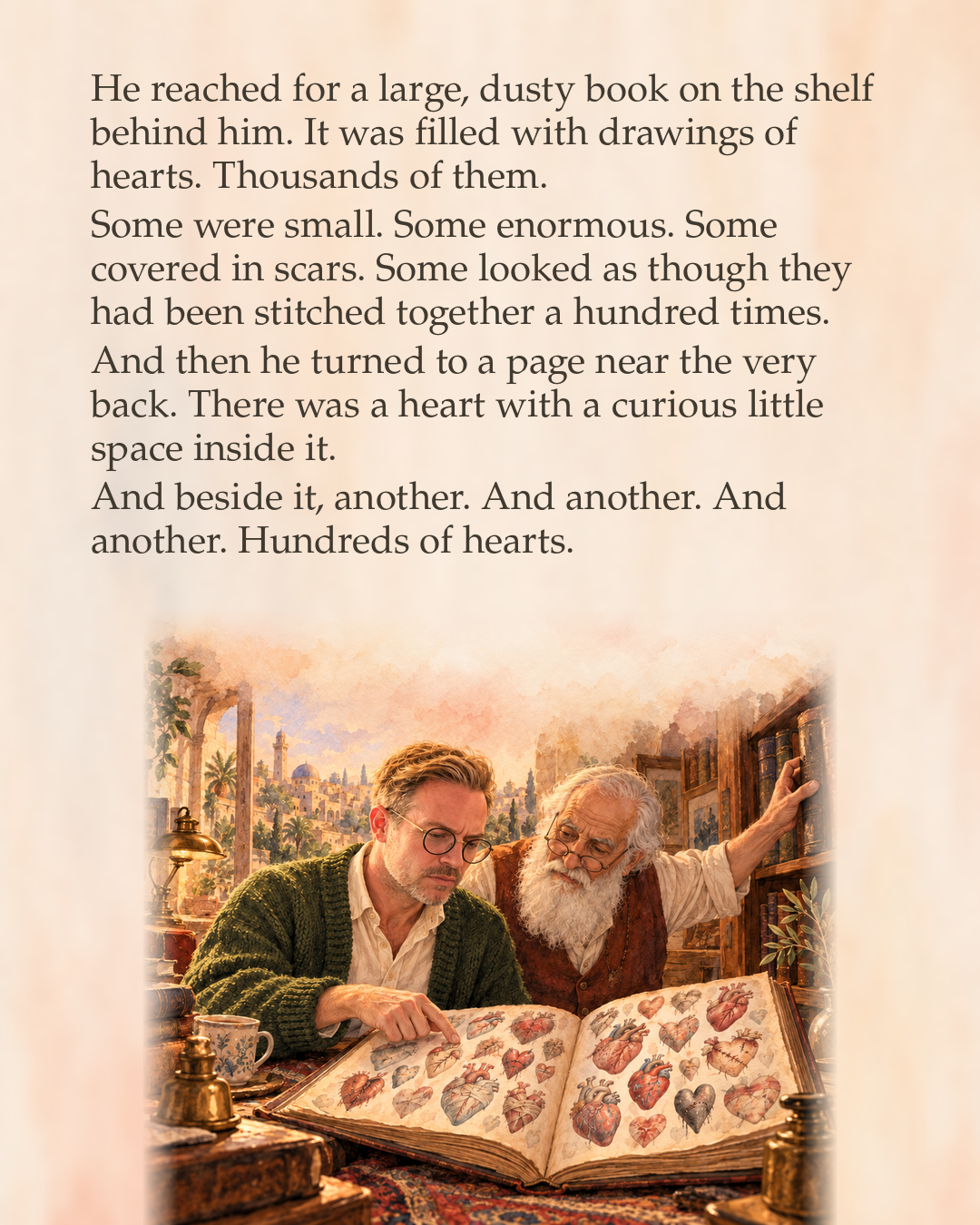
He reached for a large, dusty book on the shelf behind him.
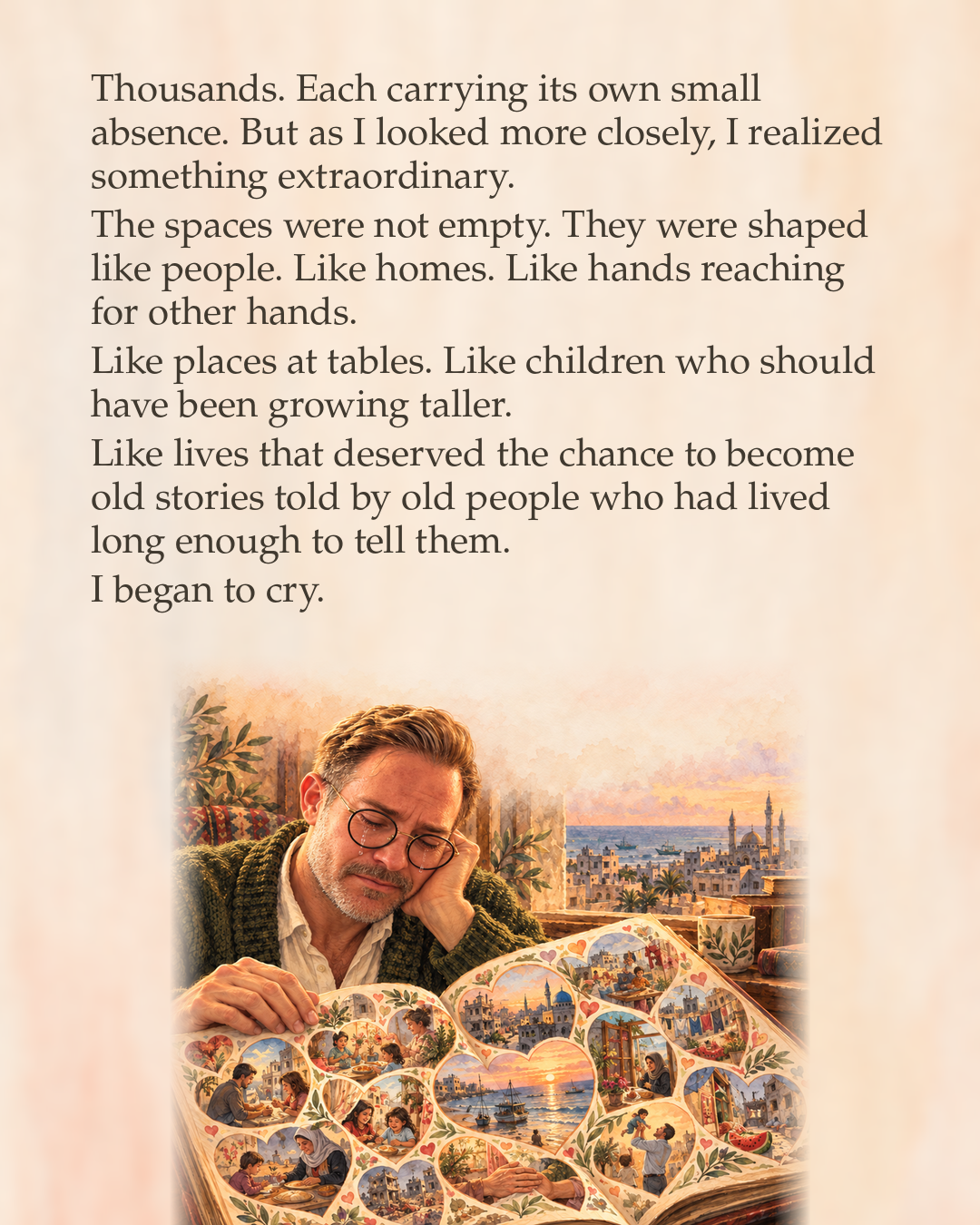
It was filled with drawings of hearts.
Thousands of them.
Some were small.
Some enormous.
Some covered in scars.
Some looked as though they had been stitched together a hundred times.
And then he turned to a page near the very back.
There was a heart with a curious little space inside it.
And beside it, another.
And another.
And another.
Hundreds of hearts.
Thousands.
Each carrying its own small absence.
But as I looked more closely, I realized something extraordinary.
The spaces were not empty.
They were shaped like people.
Like homes.
Like hands reaching for other hands.
Like places at tables.
Like children who should have been growing taller.
Like lives that deserved the chance to become old stories told by old people who had lived long enough to tell them.
I began to cry.
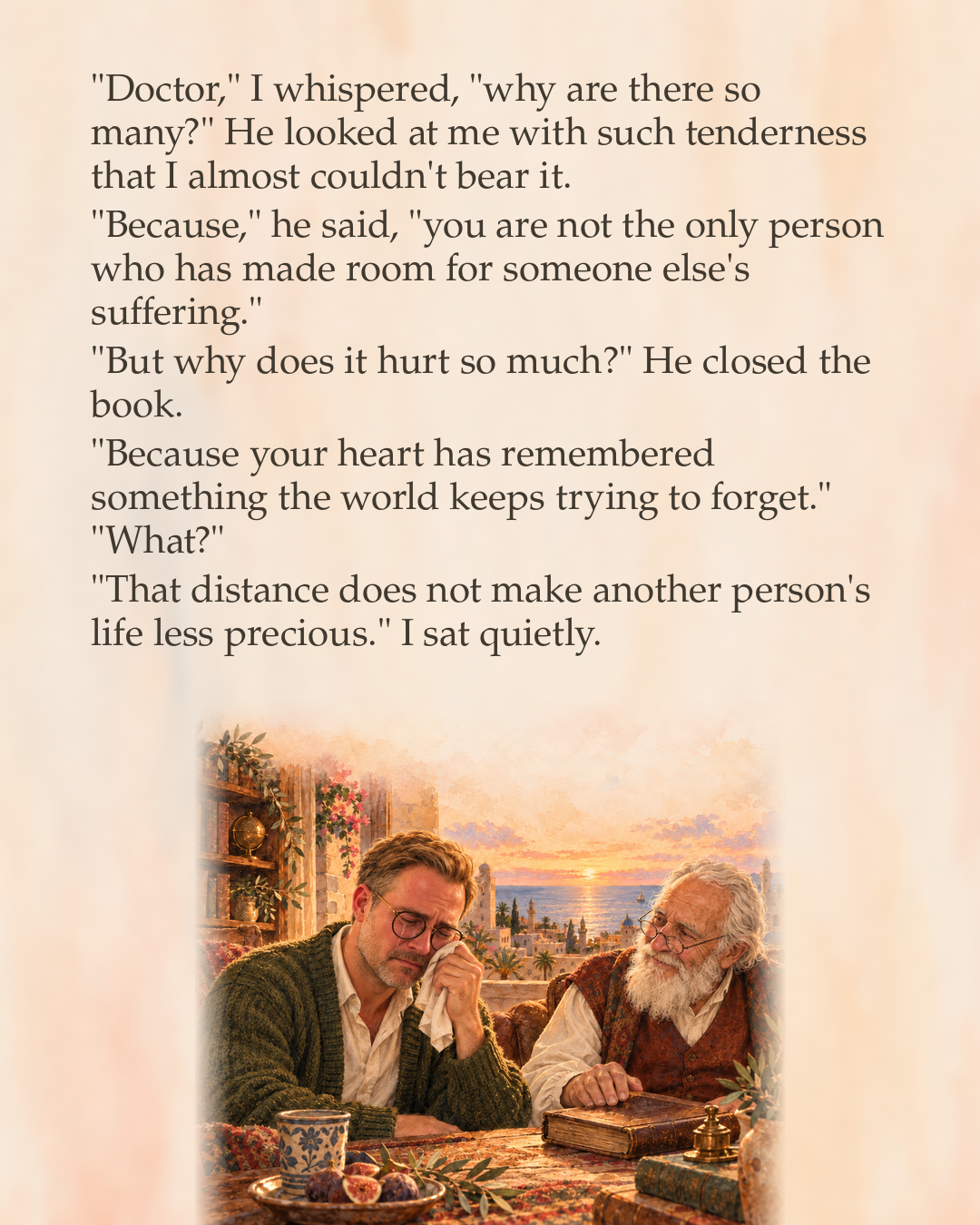
"Doctor," I whispered, "why are there so many?"
He looked at me with such tenderness that I almost couldn't bear it.
"Because," he said, "you are not the only person who has made room for someone else's suffering."
"But why does it hurt so much?"
He closed the book.
"Because your heart has remembered something the world keeps trying to forget."
"What?"
"That distance does not make another person's life less precious."
I sat quietly.
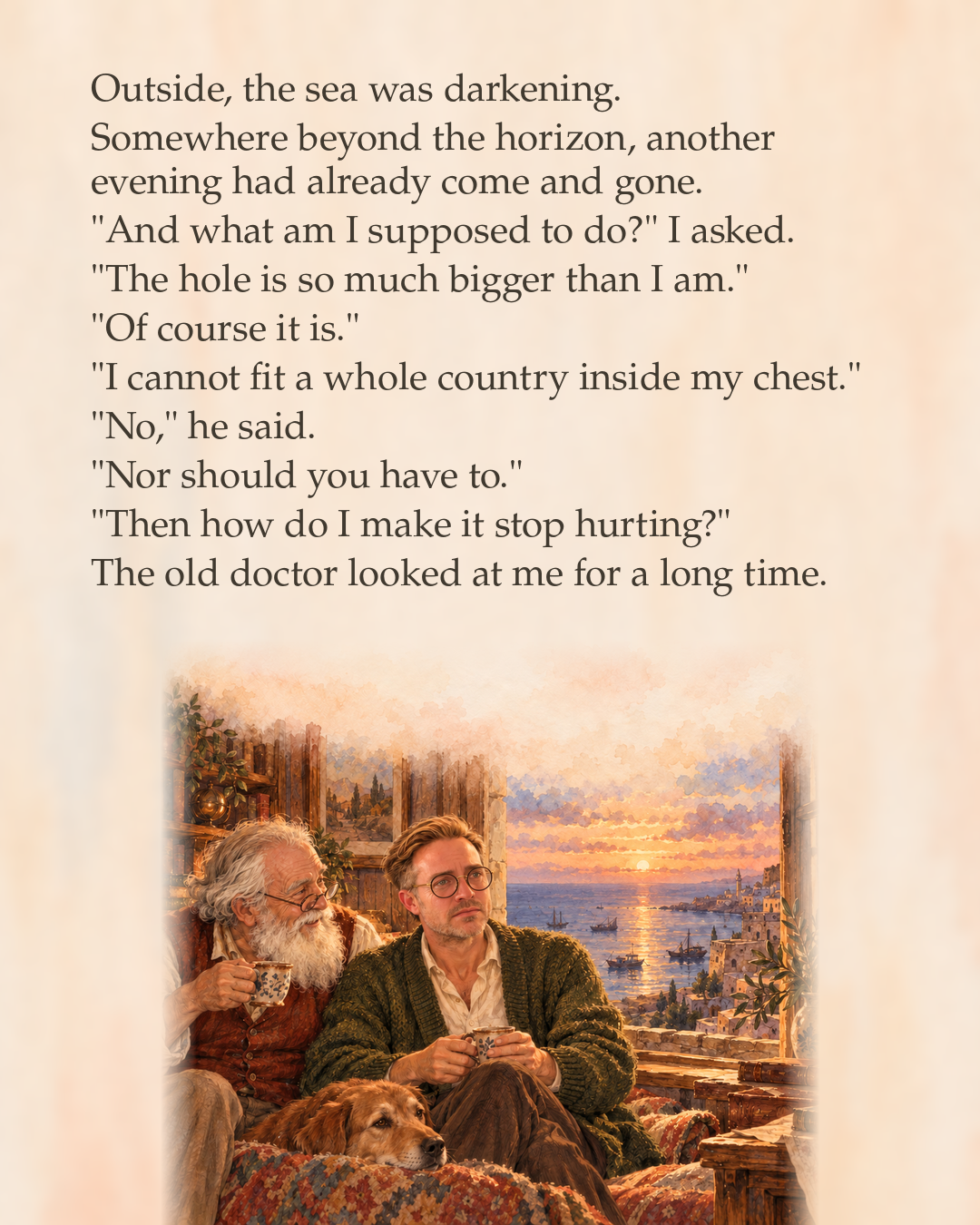
Outside, the sea was darkening.
Somewhere beyond the horizon, another evening had already come and gone.
"And what am I supposed to do?" I asked.
"The hole is so much bigger than I am."
"Of course it is."
"I cannot fit a whole country inside my chest."
"No," he said.
"Nor should you have to."
"Then how do I make it stop hurting?"
The old doctor looked at me for a long time.
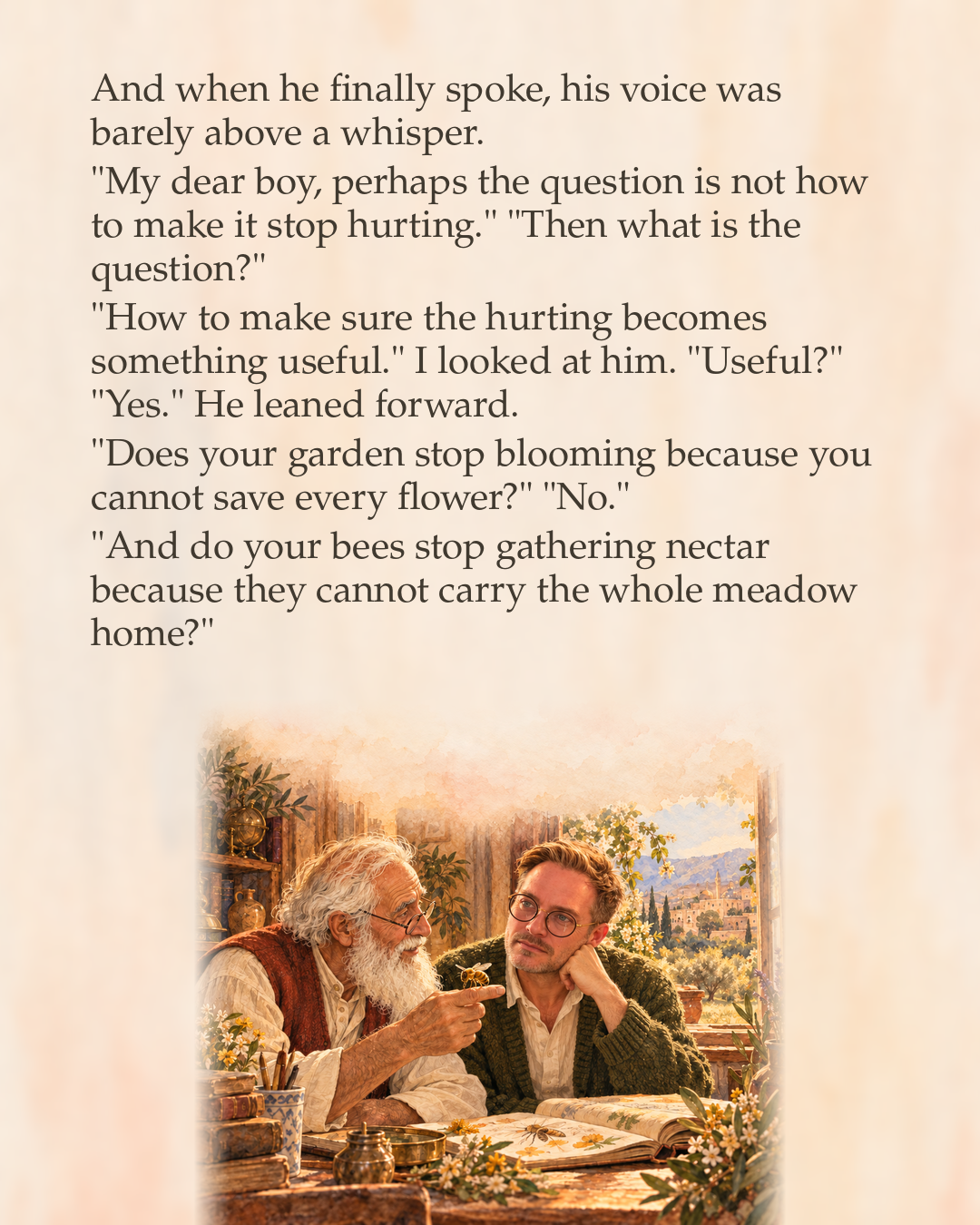
And when he finally spoke, his voice was barely above a whisper.
"My dear boy, perhaps the question is not how to make it stop hurting."
"Then what is the question?"
"How to make sure the hurting becomes something useful."
I looked at him.
"Useful?"
"Yes."
He leaned forward.
"Does your garden stop blooming because you cannot save every flower?"
"No."
"And do your bees stop gathering nectar because they cannot carry the whole meadow home?"
I shook my head.
"No."
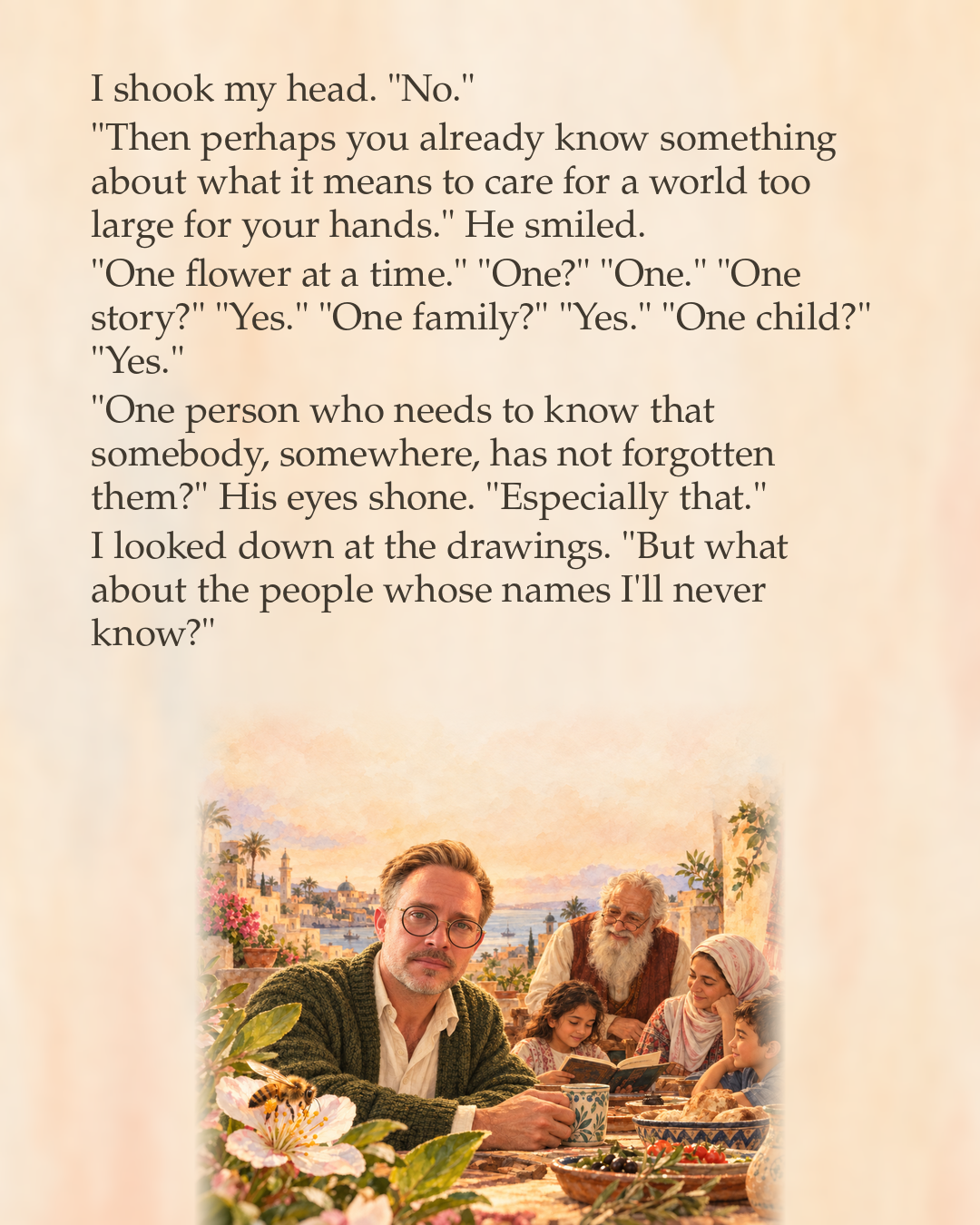
"Then perhaps you already know something about what it means to care for a world too large for your hands."
He smiled.
"One flower at a time."
"One?"
"One."
"One story?"
"Yes."
"One family?"
"Yes."
"One child?"
"Yes."
"One person who needs to know that somebody, somewhere, has not forgotten them?"
His eyes shone.
"Especially that."
I looked down at the drawings.
"But what about the people whose names I'll never know?"
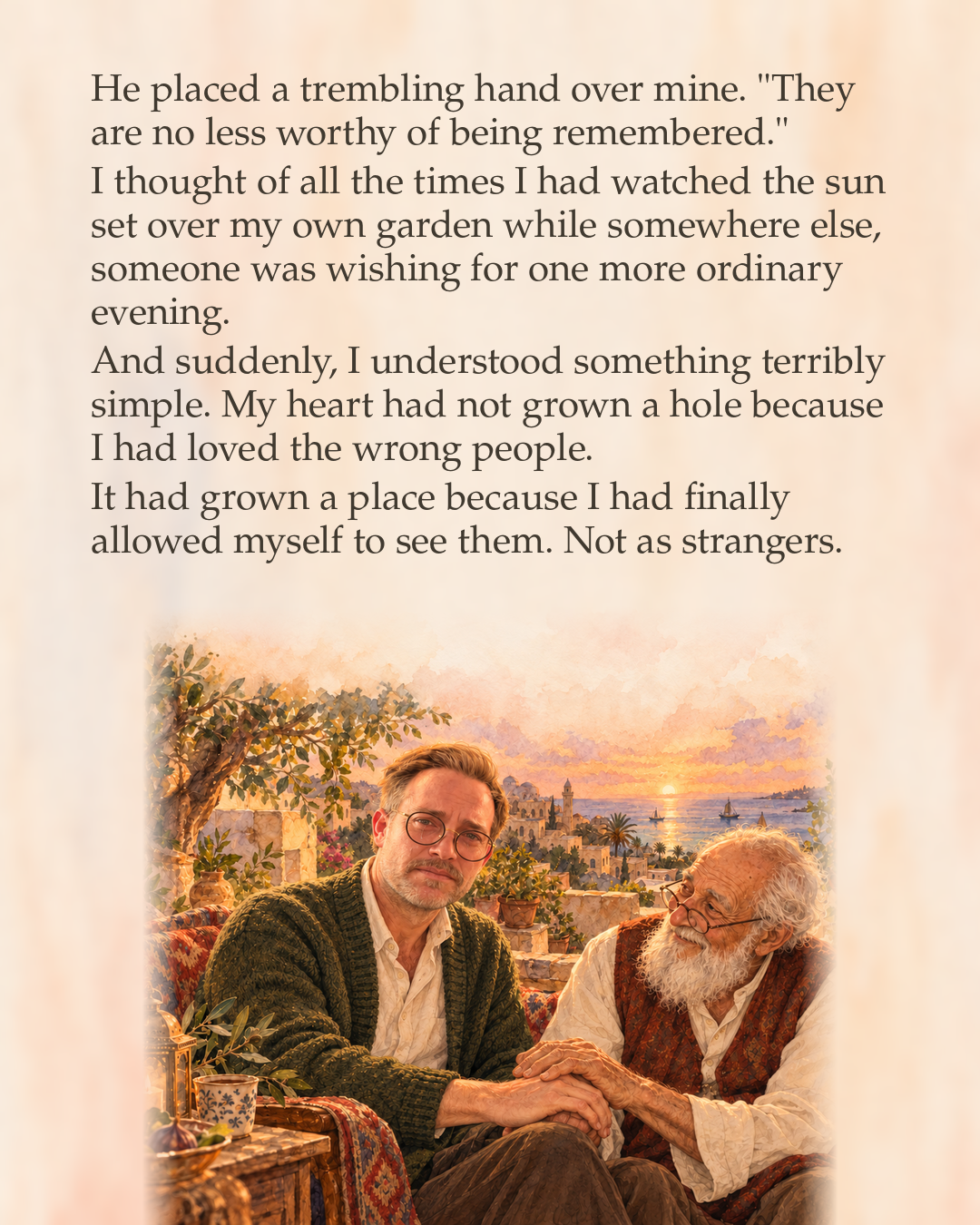
He placed a trembling hand over mine.
"They are no less worthy of being remembered."
I thought of all the times I had watched the sun set over my own garden while somewhere else, someone was wishing for one more ordinary evening.
And suddenly, I understood something terribly simple.
My heart had not grown a hole because I had loved the wrong people.
It had grown a place because I had finally allowed myself to see them.
Not as strangers.
Not as numbers.
Not as stories that belonged to someone else's world.
But as human beings.
As people whose lives mattered just as much as the lives unfolding around my own dinner table.
I began to cry again.
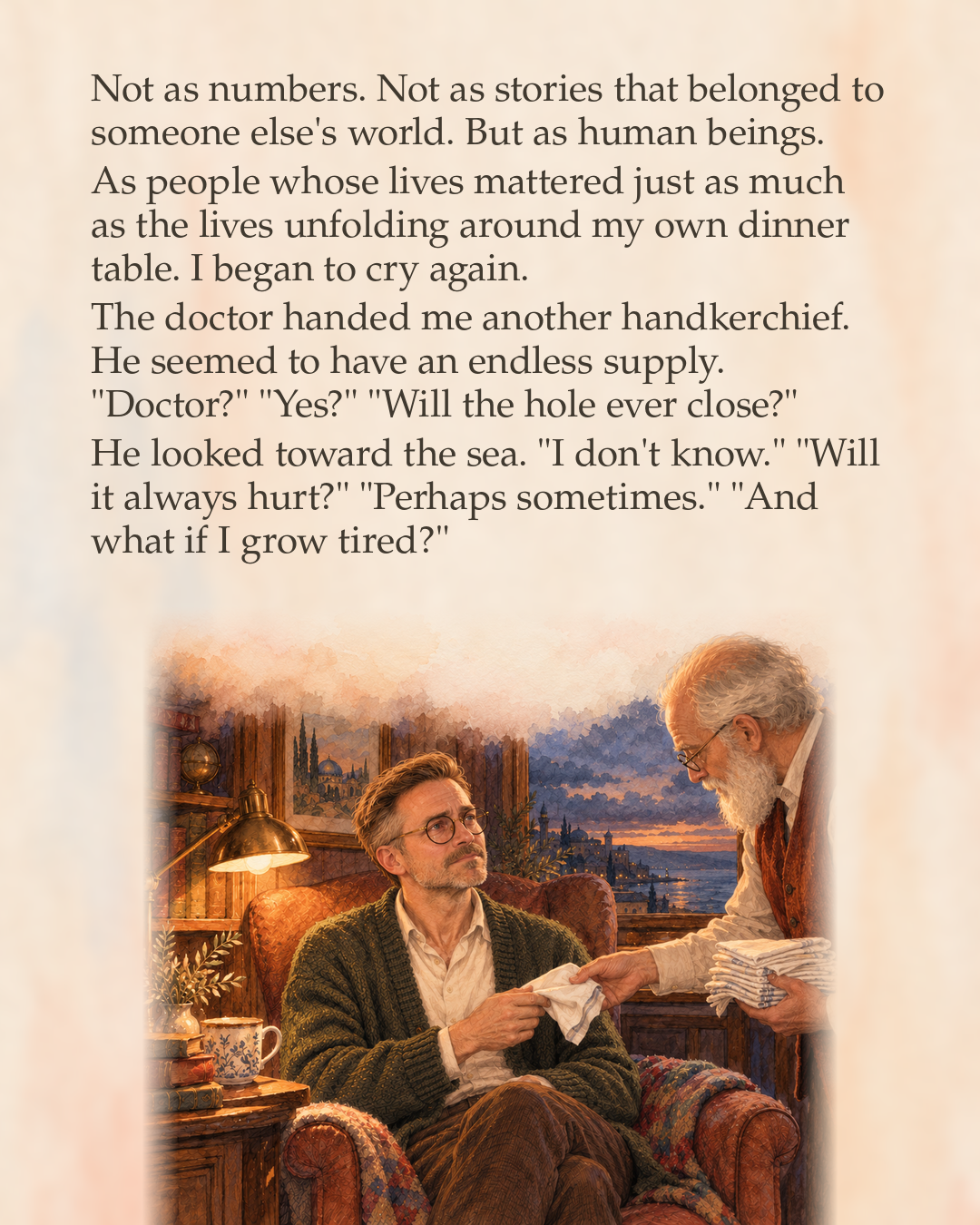
The doctor handed me another handkerchief.
He seemed to have an endless supply.
"Doctor?"
"Yes?"
"Will the hole ever close?"
He looked toward the sea.
"I don't know."
"Will it always hurt?"
"Perhaps sometimes."
"And what if I grow tired?"
"Then rest."
"And what if I cannot do enough?"
"You never could do everything."
"Then what can I do?"
He smiled.
"Whatever love puts within your reach."
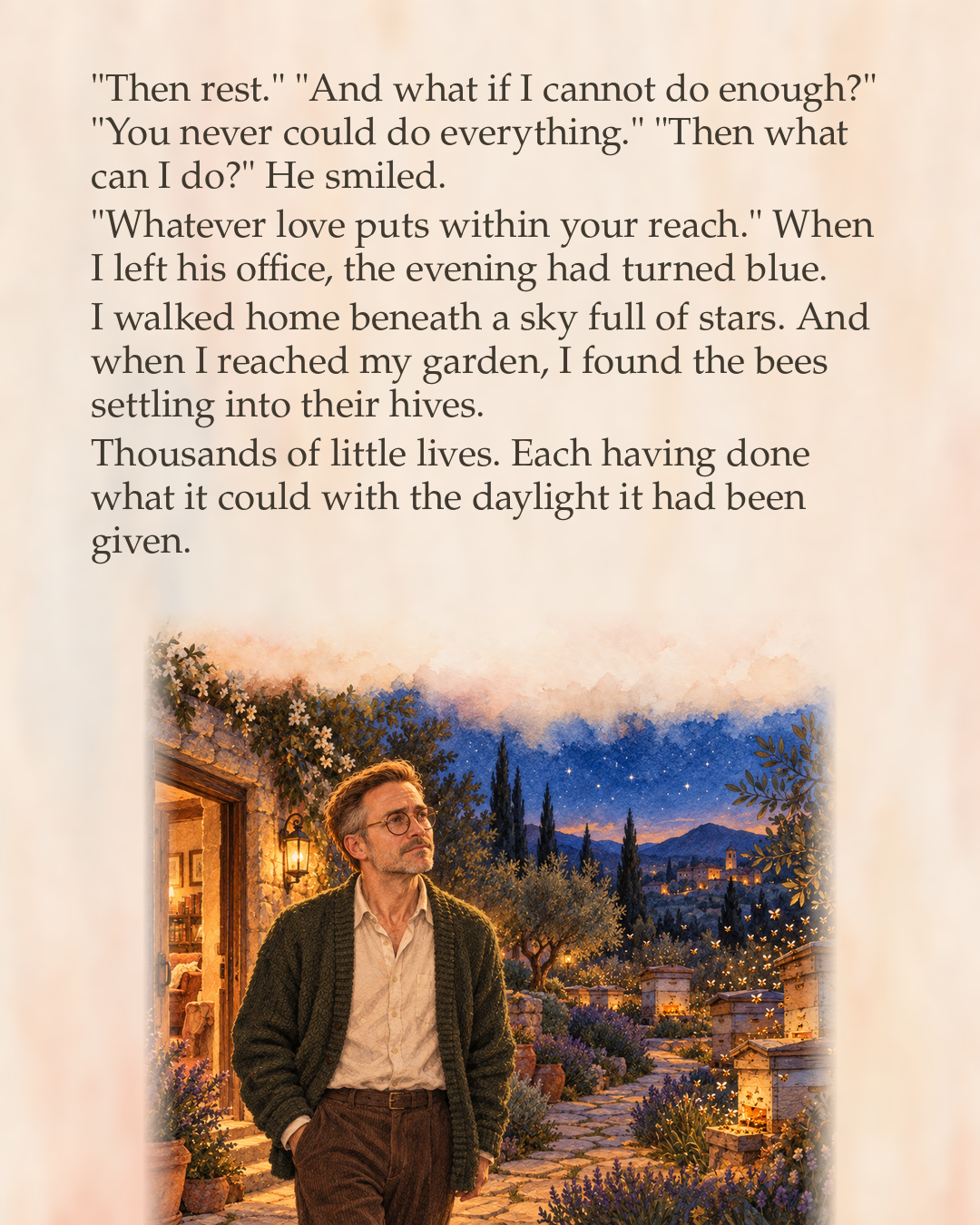
When I left his office, the evening had turned blue.
I walked home beneath a sky full of stars.
And when I reached my garden, I found the bees settling into their hives.
Thousands of little lives.
Each having done what it could with the daylight it had been given.
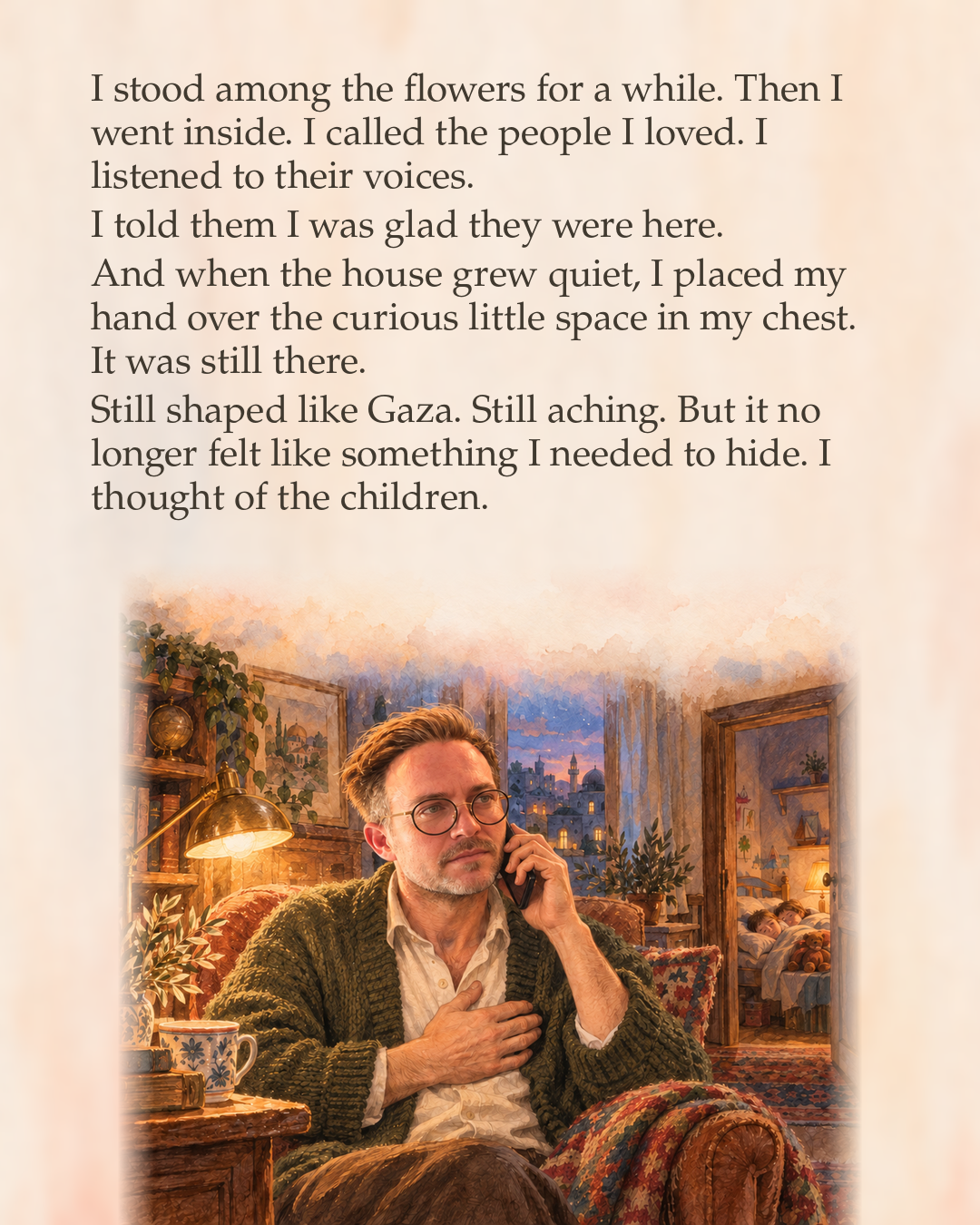
I stood among the flowers for a while.
Then I went inside.
I called the people I loved.
I listened to their voices.
I told them I was glad they were here.
And when the house grew quiet, I placed my hand over the curious little space in my chest.
It was still there.
Still shaped like Gaza.
Still aching.
But it no longer felt like something I needed to hide.
I thought of the children.
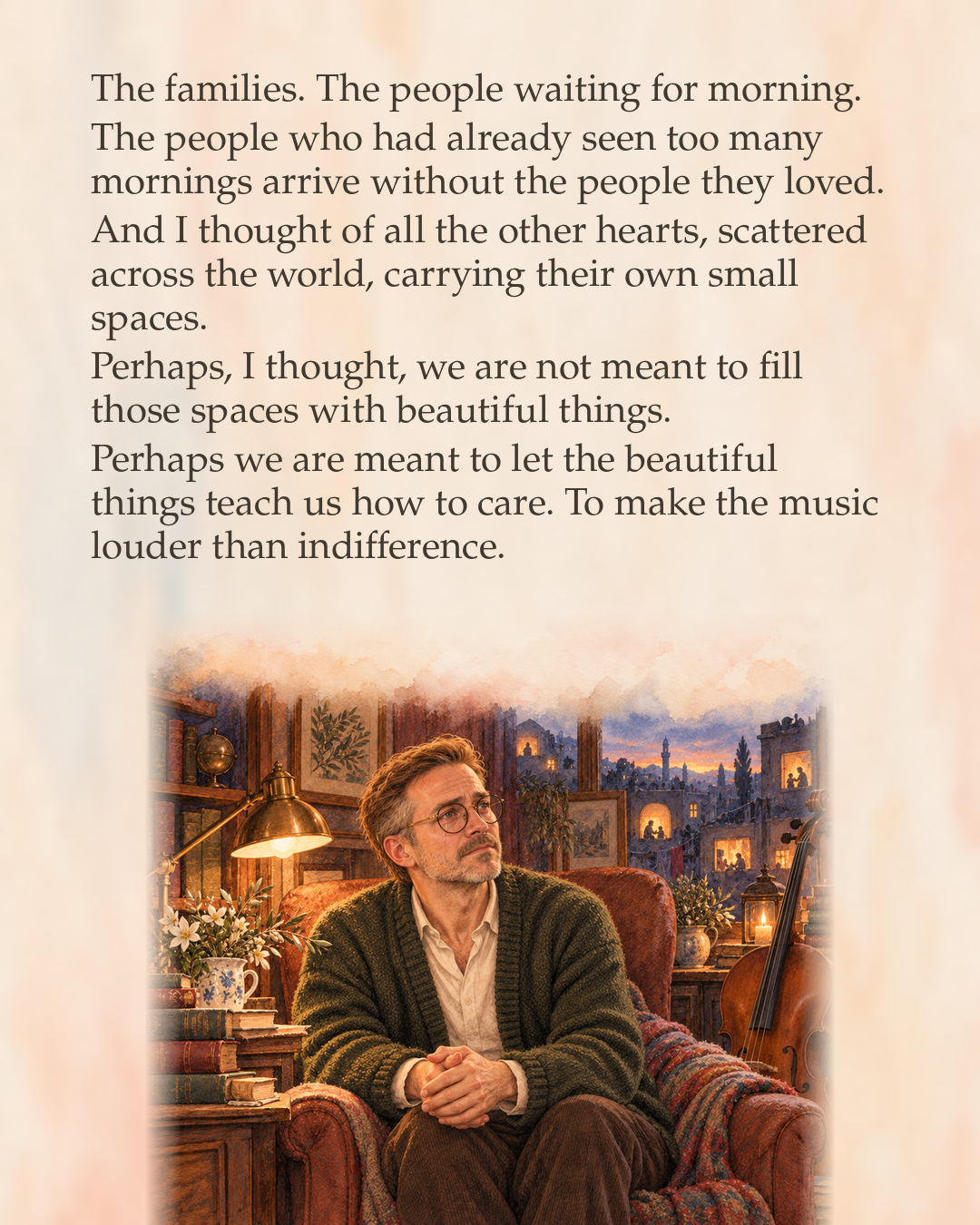
The families.
The people waiting for morning.
The people who had already seen too many mornings arrive without the people they loved.
And I thought of all the other hearts, scattered across the world, carrying their own small spaces.
Perhaps, I thought, we are not meant to fill those spaces with beautiful things.
Perhaps we are meant to let the beautiful things teach us how to care.
To make the music louder than indifference.
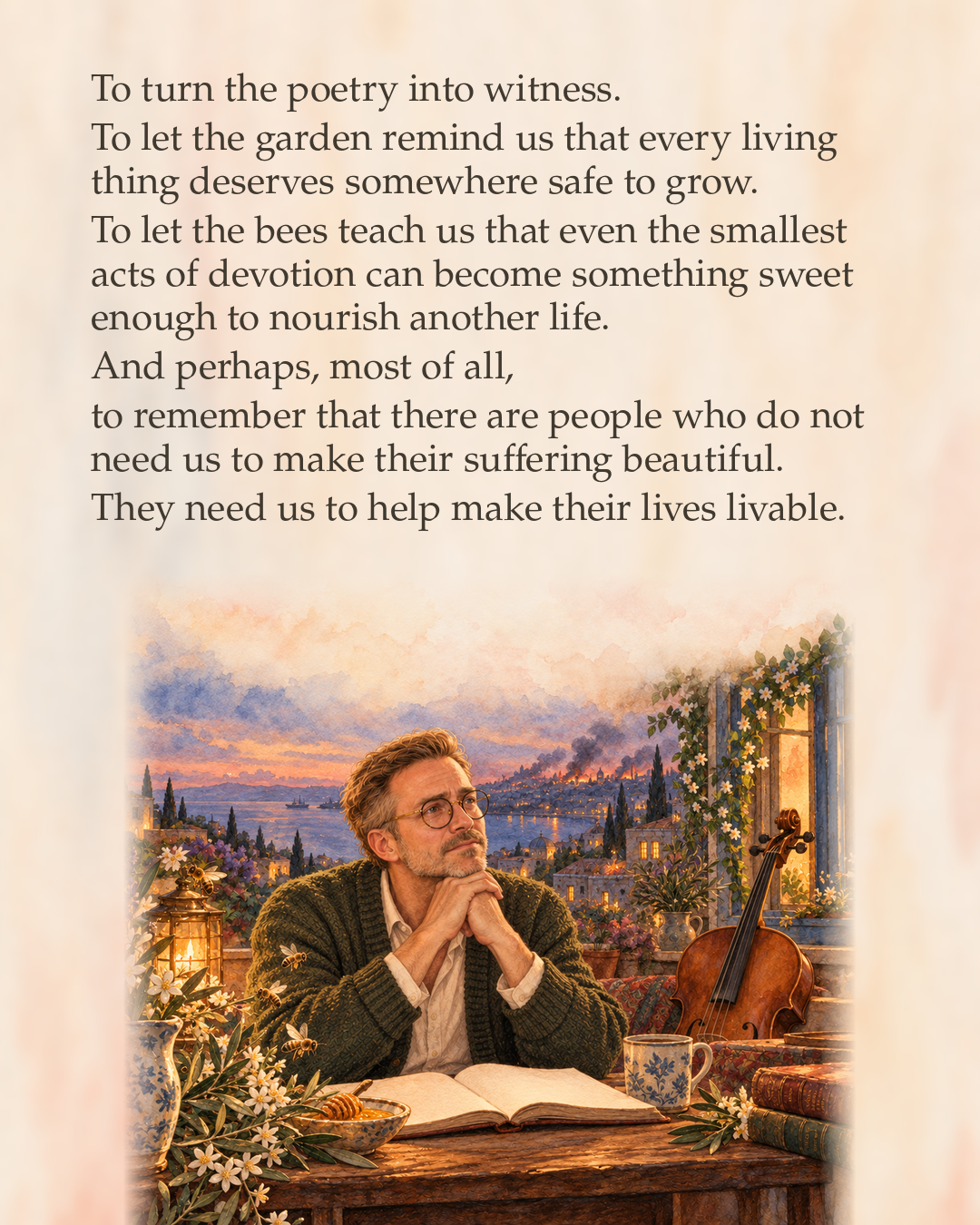
To turn the poetry into witness.
To let the garden remind us that every living thing deserves somewhere safe to grow.
To let the bees teach us that even the smallest acts of devotion can become something sweet enough to nourish another life.
And perhaps, most of all,
to remember that there are people who do not need us to make their suffering beautiful.
They need us to help make their lives livable.
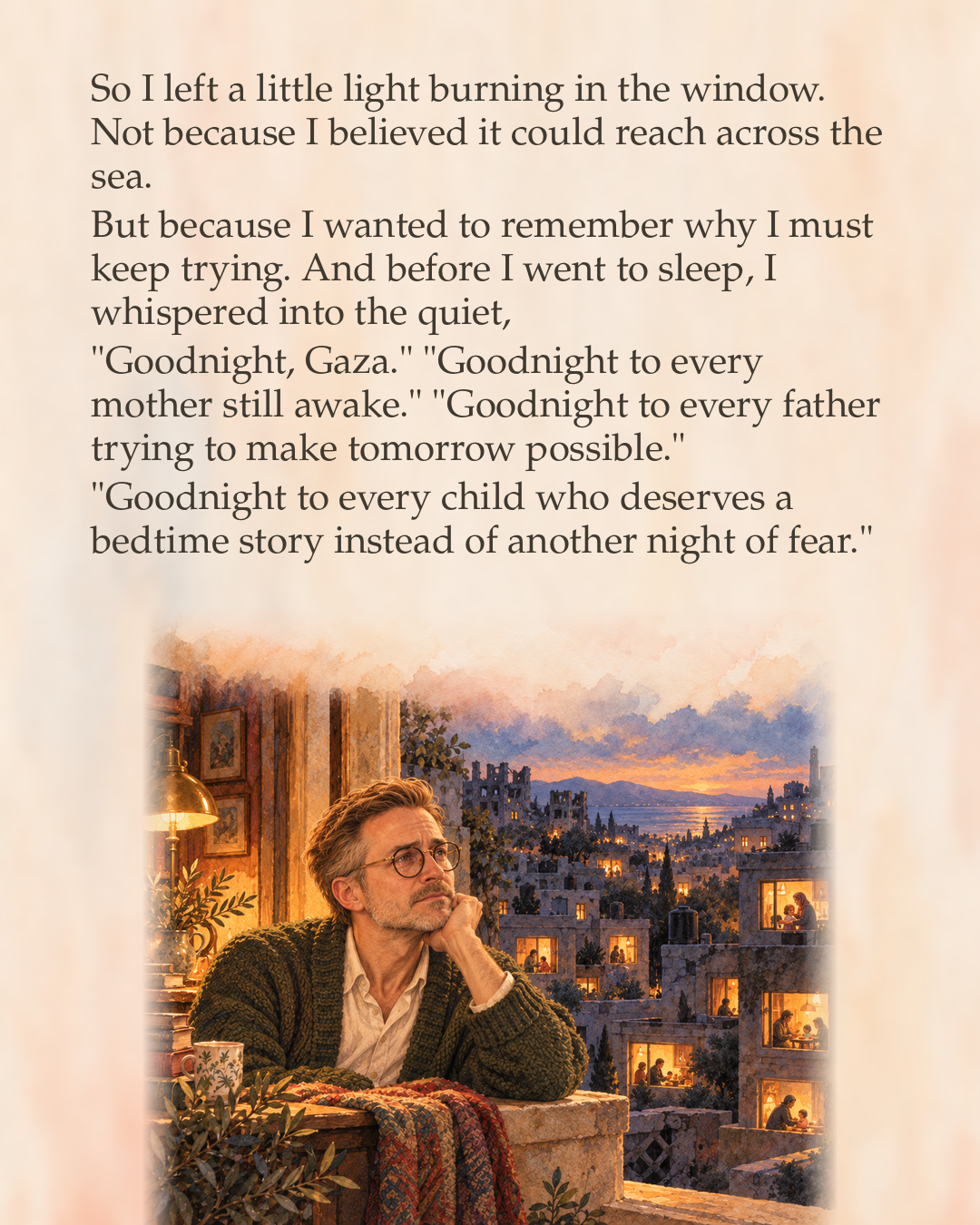
So I left a little light burning in the window.
Not because I believed it could reach across the sea.
But because I wanted to remember why I must keep trying.
And before I went to sleep, I whispered into the quiet,
"Goodnight, Gaza."
"Goodnight to every mother still awake."
"Goodnight to every father trying to make tomorrow possible."
"Goodnight to every child who deserves a bedtime story instead of another night of fear."
"Goodnight to the people whose names I know."
"And the thousands whose names I may never learn."
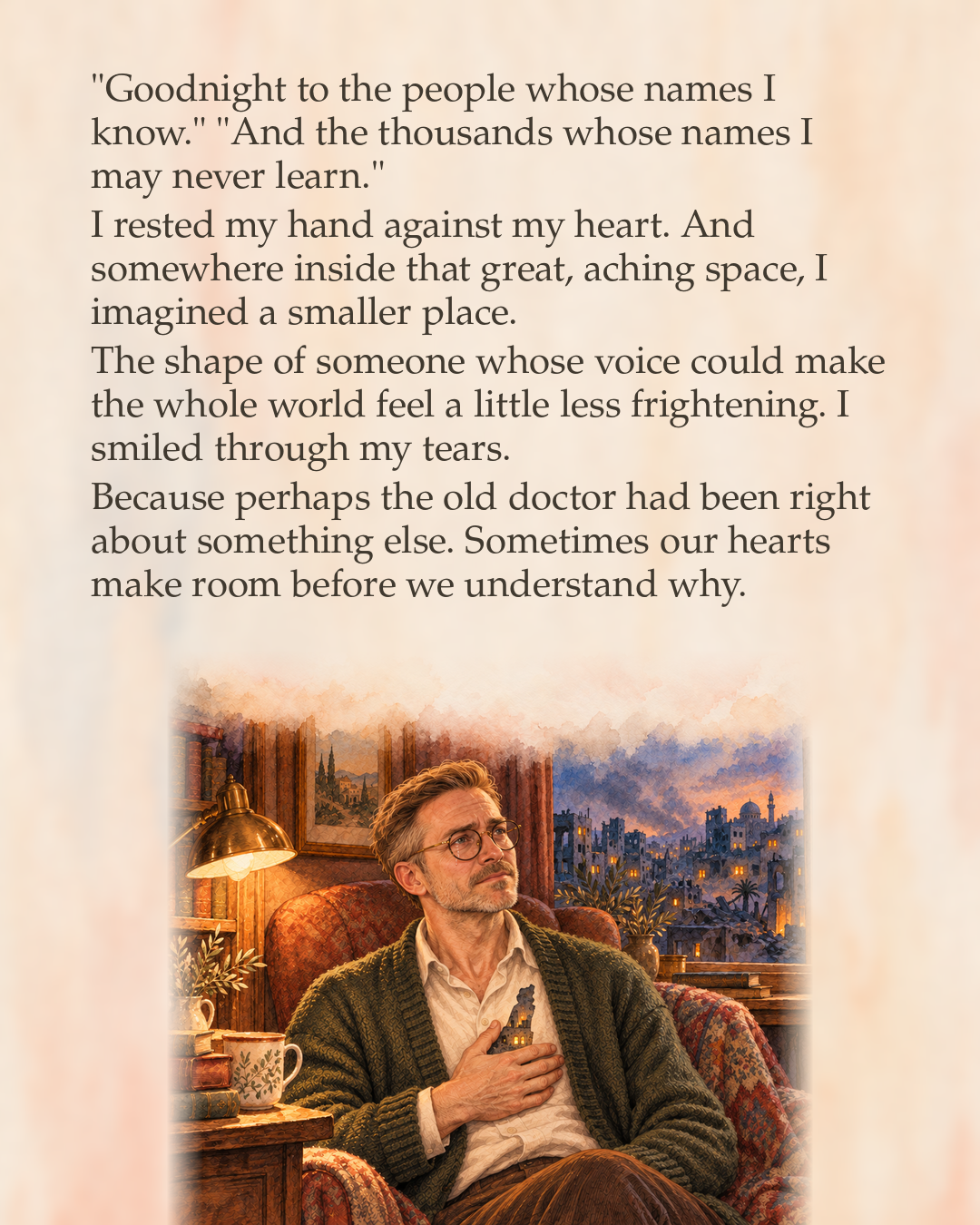
I rested my hand against my heart.
And somewhere inside that great, aching space,
I imagined a smaller place.
The shape of someone whose voice could make the whole world feel a little less frightening.
I smiled through my tears.
Because perhaps the old doctor had been right about something else.
Sometimes our hearts make room before we understand why.
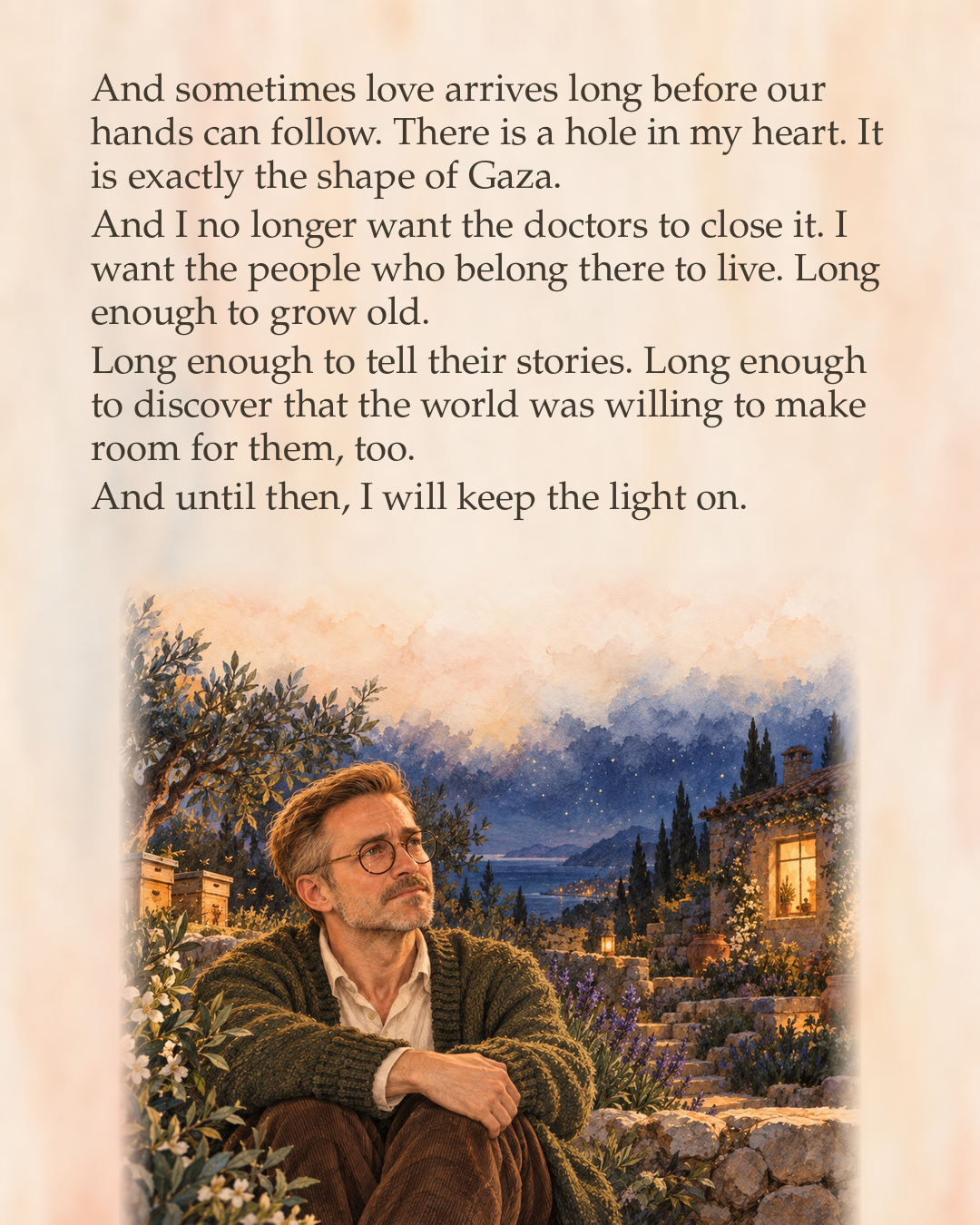
And sometimes love arrives long before our hands can follow.
There is a hole in my heart.
It is exactly the shape of Gaza.
And I no longer want the doctors to close it.
I want the people who belong there to live.
Long enough to grow old.
Long enough to tell their stories.
Long enough to discover that the world was willing to make room for them, too.
And until then,
I will keep the light on.

Let the Light Travel Further

If these words have touched something in your heart, consider helping us bring warmth, food, and essential support to a family in Gaza.

Carry the Light Further