The Splinters
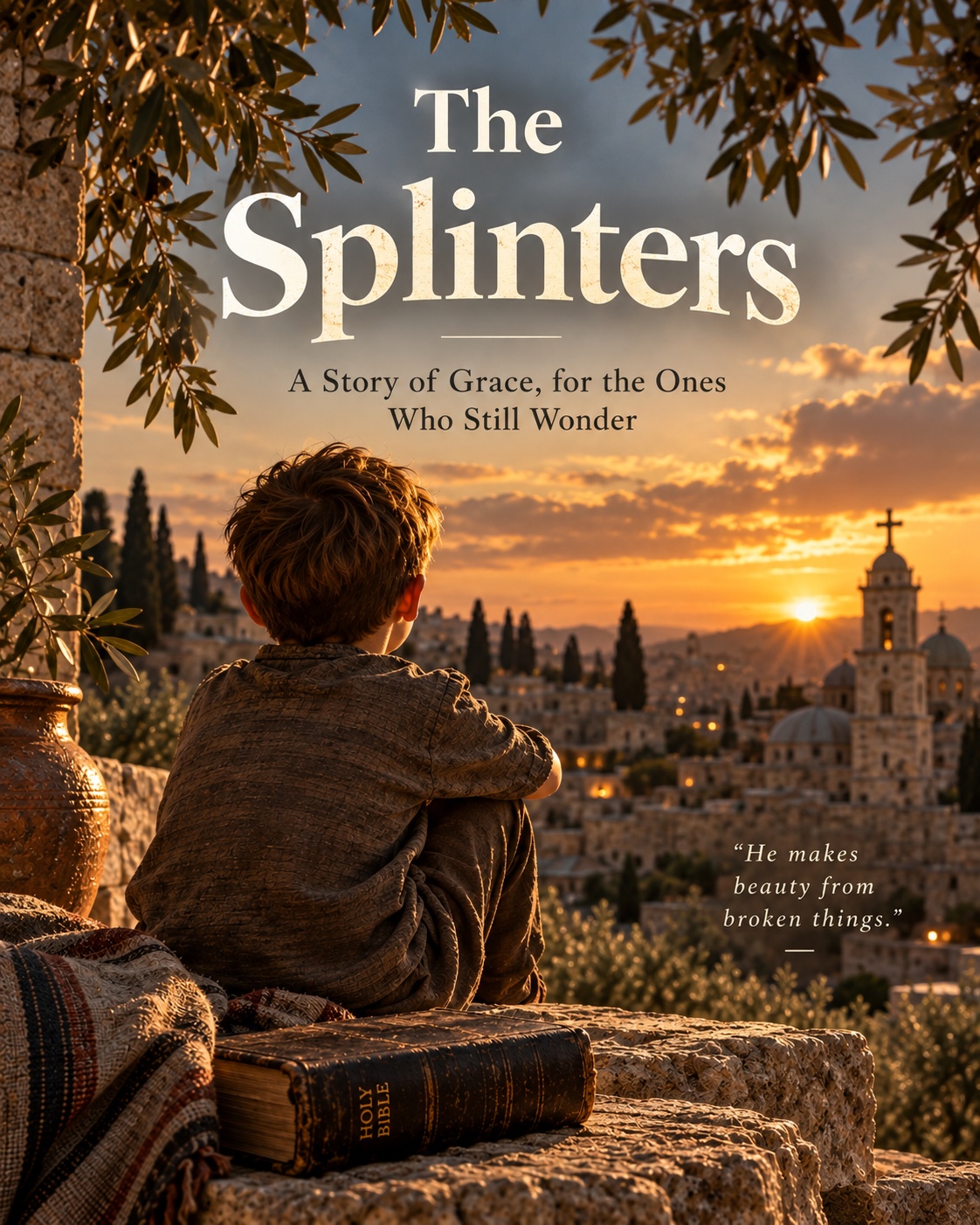
I have always loved Jesus.
Which is saying something,
because some of the worst things that happened to me
happened in houses displaying His name.
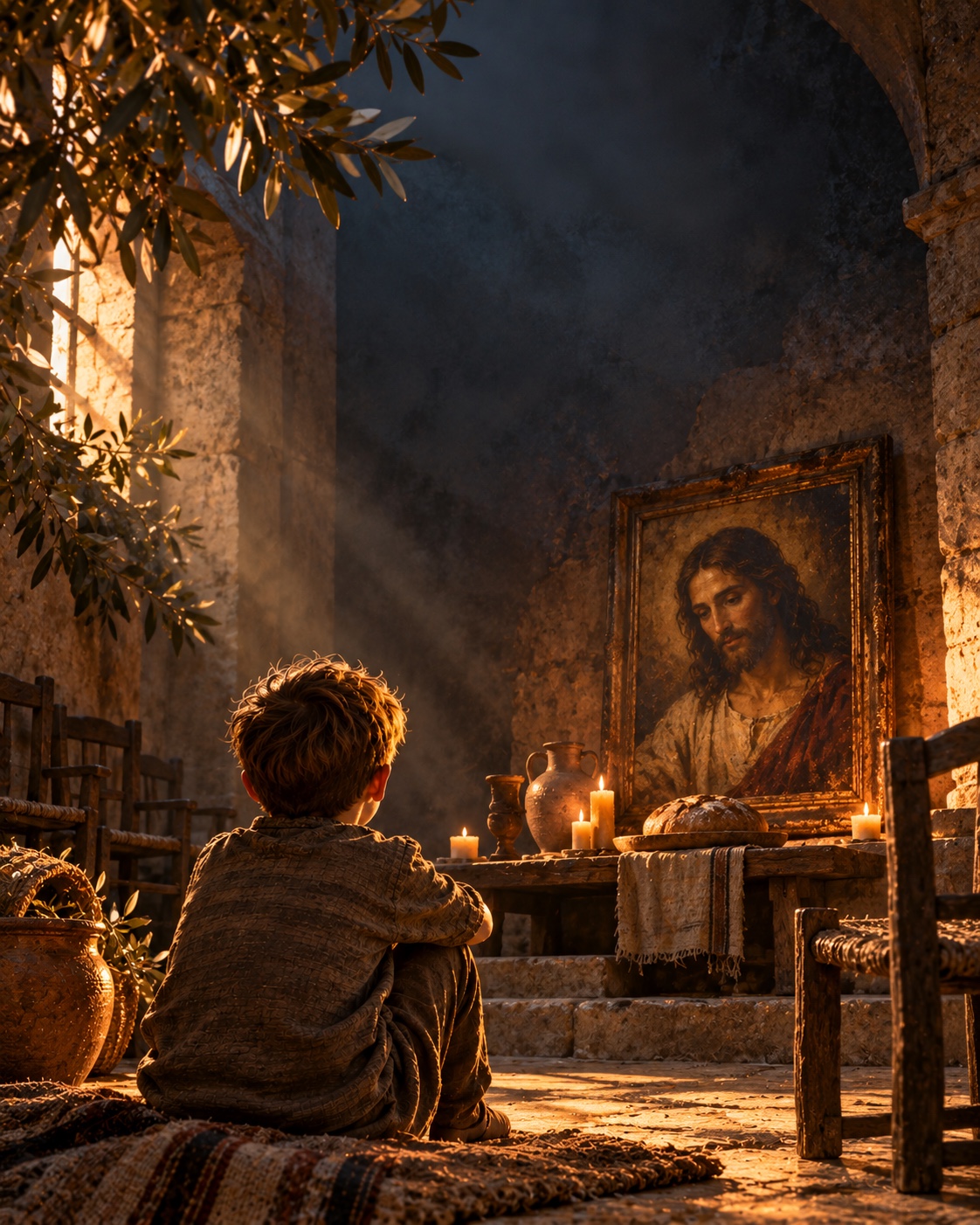
His likeness was everywhere.
Church basements.
Food pantries.
Shelters.
Sunday school rooms.
Usually the same handsome man.
Long hair.
Soft eyes.
A face that somehow seemed far kinder
than many of the people speaking for Him.
I noticed this very young.
Before theology.
Before doctrine.
Before anyone handed me a Bible
and explained what I was supposed to believe.
There was simply this man
who seemed to keep appearing
where hungry people went for food
and frightened people went for shelter.
And I became fascinated with Him.
Then I found the stories.
The parables.
Mustard seeds.
Lost sheep.
Prodigal sons.
Men lowered through roofs.
Women nobody else would touch.
People told again and again
that shame did not have to be the final word.
I loved the metaphors.
I think I always have.
Tell me something directly
and I may understand it.
Put it inside a story
and I will carry it
for the rest of my life.
At some point,
someone decided I needed special instruction
about being different.
I was far too young
to understand what crime I had committed.
One of my punishments
was reading the entire Bible.
Which I remember thinking was strange.
My third-grade teacher—
the one who noticed the bruises,
the one who quietly made sure the other children
didn’t tease me about my dirty clothes—
had already given me The Lord of the Rings.
So I was ready.
If you give a lonely child
thousands of pages
and tell him he must read them,
you should perhaps prepare yourself
for the possibility
that he will.
And that he may have questions.
That part,
apparently,
was not part of the assignment.
The more I read,
the more confused I became.
Not by Christ.
By everyone explaining Him.
Because the man I kept meeting in the stories
seemed deeply interested
in the people standing outside the gates.
And the people teaching me about Him
seemed deeply invested
in deciding who belonged inside them.
Eventually,
they told me to leave.
Do not come back.
I could not have been much older than ten.
I remember walking out
of the Sunday school rooms
completely bewildered.
I had completed the assignments.
Memorized the verses.
Kept the secrets.
I had not told anyone
what some of the preachers and counselors
were doing to me.
I had been very good
at being quiet.
And still,
somehow,
I had failed.
That was how things worked
in a broken home.
Christopher must have done something.
Christopher must have deserved it.
So that was that.
Except it wasn’t.
Because outside the church
there were wooden crosses
planted in the lawn.
And I remember walking toward them
and crying.
I put my hands on the wood.
Then I slowly dragged my palms across it.
Again.
And again.
Until tiny splinters
caught beneath my skin.
I remember thinking
that if I was never allowed to come back,
at least I could take
a little piece of Him
with me.
I think about that boy now
and almost cannot bear
how wise he was.
Because somehow,
at ten years old,
he already understood something
it would take me decades
to put into words.
You can be expelled from a building.
You can be removed from a community.
You can be told
that God belongs to someone else.
But there are borders
human beings cannot cross.
Not without your permission.
Years later,
I crossed from Jordan
toward Bethlehem.
There is no stamp in my passport
that says Palestine.
But I was there.
I stood on the ground.
I tasted the oil.
I looked at the moon.
The stars.
The sun.
Not from thousands of miles away.
There.
I was twenty years old.
I had just finished hiking
the Appalachian Trail
and apparently decided
I needed another impossible journey.
So I went looking for Christ.
For faith.
For myself.
I traveled for part of that journey
with a group of nuns
whose lives were shaped
by the teachings of Magdalene.
I remember their laughter.
Their warmth.
Their joy.
And I remember realizing
that the Christ I had carried away
in my bleeding little palms
was still there.
He had not changed.
Only the buildings had.
Only the interpreters.
Only the men at the gates.
Much later,
as a clinician,
people began telling me
I had healing hands.
I always found that language
slightly embarrassing.
But those hands did sit
with people in dark rooms.
They held grief.
They steadied frightened bodies.
They helped people rediscover flames
they believed someone else had extinguished.
And perhaps this is why,
when I am anxious
or confused
or lost,
my fingers still move
across my palms.
Almost unconsciously.
As though checking.
As though some part of me
is still searching
for those tiny splinters.
And perhaps
some part of me
is finding them.
Not wounds.
Not anymore.
Coordinates.
Proof.
There you are.
There you still are.
And lately,
perhaps this is why
my heart keeps returning to Palestine.
Not because my story is theirs.
It is not.
I would never make something so enormous
small enough to fit inside my own wounds.
But I recognize something
in the language of gates.
In the insistence
that someone else gets to decide
who belongs.
Who may remain.
Who may return.
Whose history counts.
Whose grief is legitimate.
Whose sacred places
are permitted to remain sacred.
I recognize what happens
when power begins confusing possession
with permission.
When someone says:
This is no longer yours.
You cannot come back.
Your story begins
where we say it begins.
Your memory is inconvenient.
Your belonging
requires our approval.
And perhaps that is part
of why Palestine entered me
so deeply long before My Sun did.
I had already stood there.
Twenty years old.
Feet on that ground.
Oil on my tongue.
Moon overhead.
Stars.
Sun.
Bethlehem.
A place I had crossed toward
because I was looking for Christ.
And now,
all these years later,
my heart has found its way there again.
Through people.
Through names.
Through stories.
Through My Sun.
Through a family
whose lives are not metaphors.
Through children
who should not have to become symbols
in order for the world
to believe they deserve to live.
And I keep thinking
about that ten-year-old boy
with splinters in his palms.
About the strange,
ferocious knowledge
he carried away from the church that day:
You may tell me to leave.
You may lock the door.
You may insist
that what I love belongs to you.
But you do not get
the final word
about what is sacred.
And perhaps that question
belongs to all of us now.
What have you been told
you no longer have the right to love?
What part of yourself
were you asked to exile
in exchange for belonging?
What story did someone else
try to tell about you
until you almost mistook it
for your own?
What sacred thing
have you carried out
through a door
that closed behind you?
And when you place your fingers
against your own palms,
what remains?
A scar?
A splinter?
A name?
A country?
A prayer?
A person
you refuse to let disappear?
And what happens
when enough of us decide
that remembering itself
can be an act of love?
That witnessing
can be an act of love?
That saying
you were here,
you are here,
you belong here,
can be an act of love?
Because people can close doors.
They can rewrite stories.
They can weaponize scripture.
They can tell a child
to leave
and never come back.
They can try to push you out.
Expel you.
Take the things
you hold most sacred.
But there are borders
they cannot cross.
The border of mind.
The border of body.
The border of soul.
We choose the meaning.
We choose the questions.
We choose what we carry.
We choose what we remember.
We choose what we believe.
The little boy at the cross
already knew that.
He did not tear down the church.
He did not win an argument.
He did not convince anyone
to let him stay.
He simply touched the wood
and chose
what it would mean.
He took a few splinters
into his palms
and walked away
with something
they could not confiscate.
And maybe
that is one of the oldest forms
of survival.
To carry the sacred thing
when someone else
tries to take the place
where you found it.
To keep the story.
To keep the name.
To keep the light.
To remember the way home.