The Light We Leave OnWriting by CJ Sterling

The Things That Happen When We Do Ordinary Things

The Things That Happen When We Do Ordinary Things

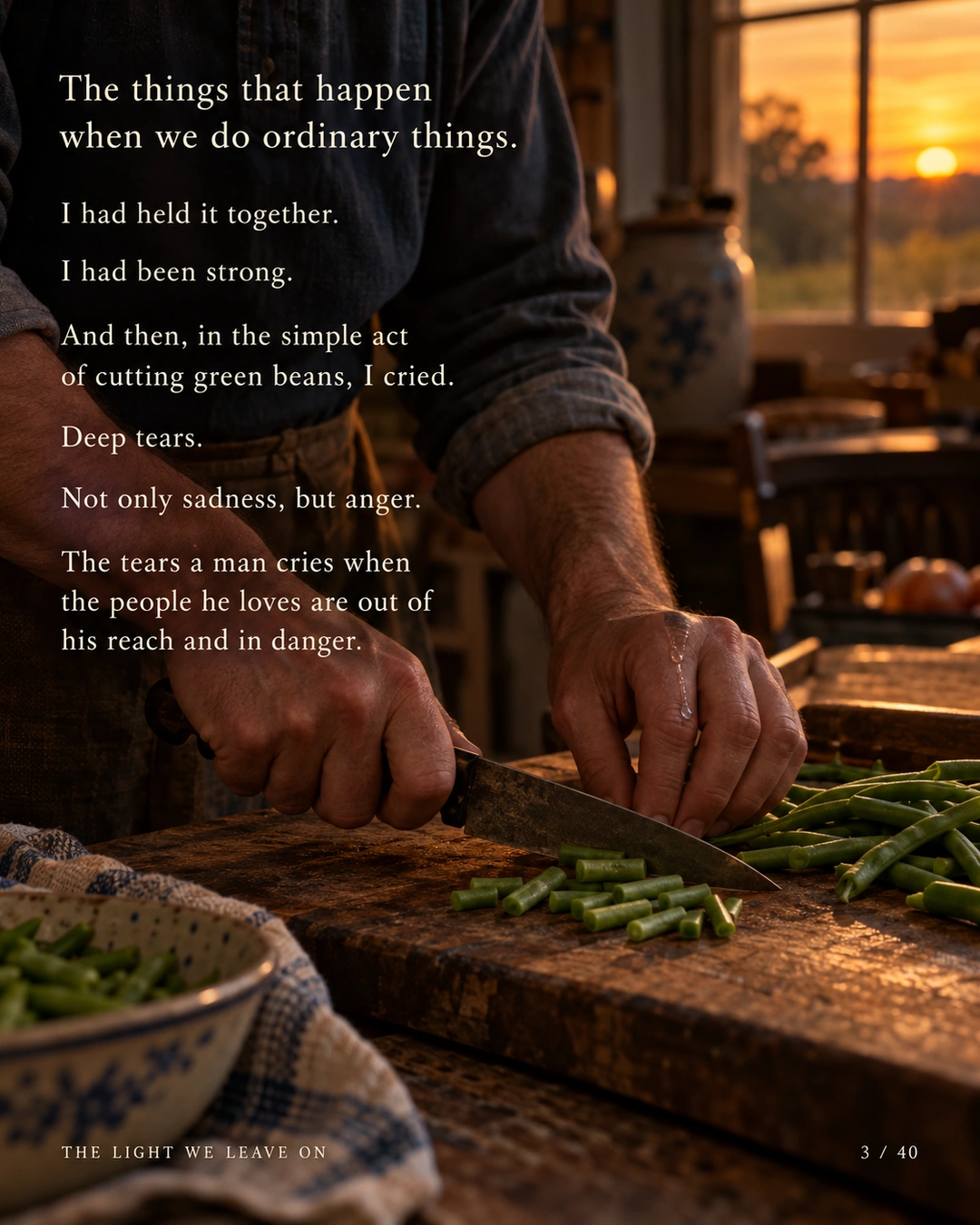
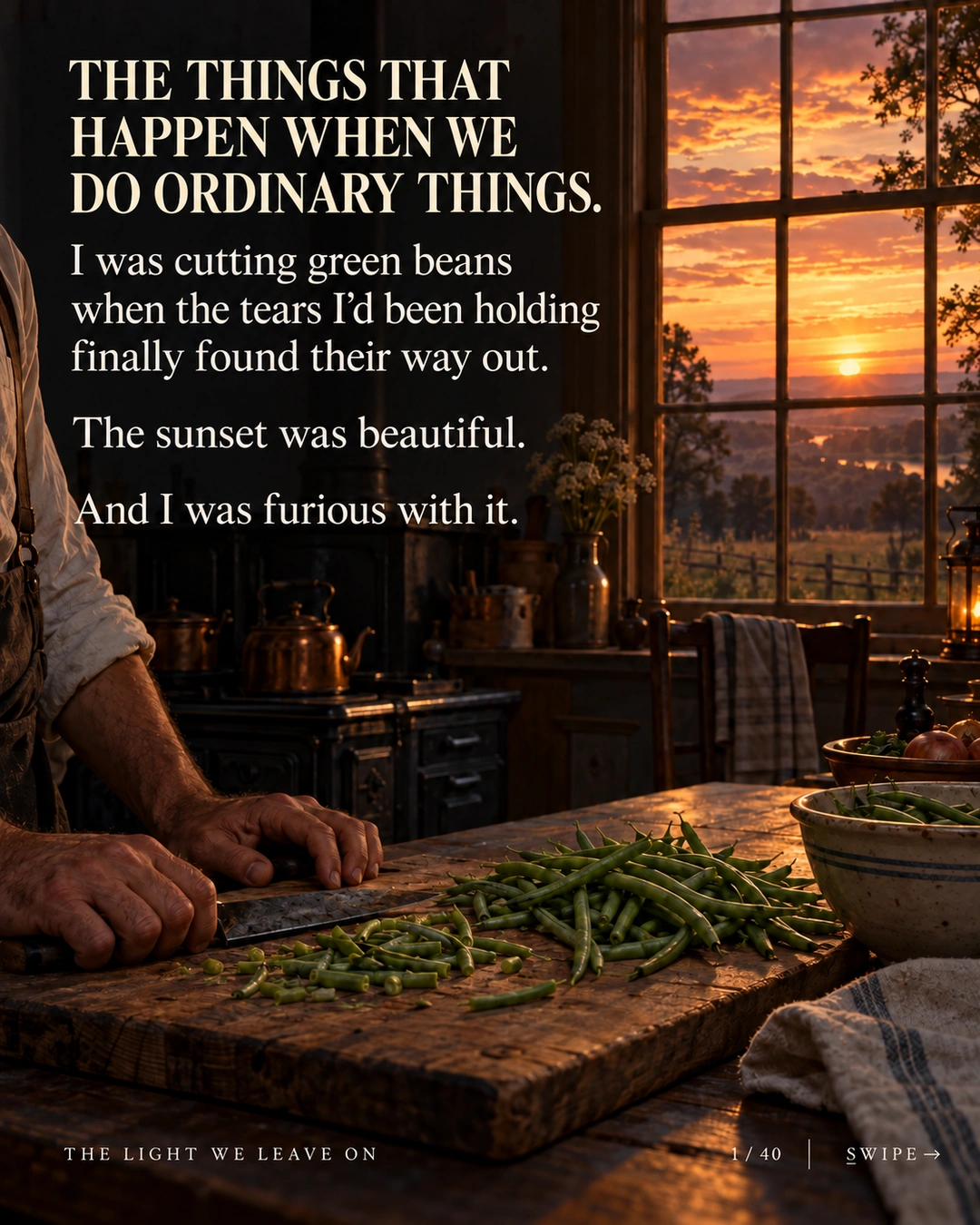
I was cutting green beans
when the tears I’d been holding
finally found their way out.

The sunset was beautiful.

And I was furious with it.
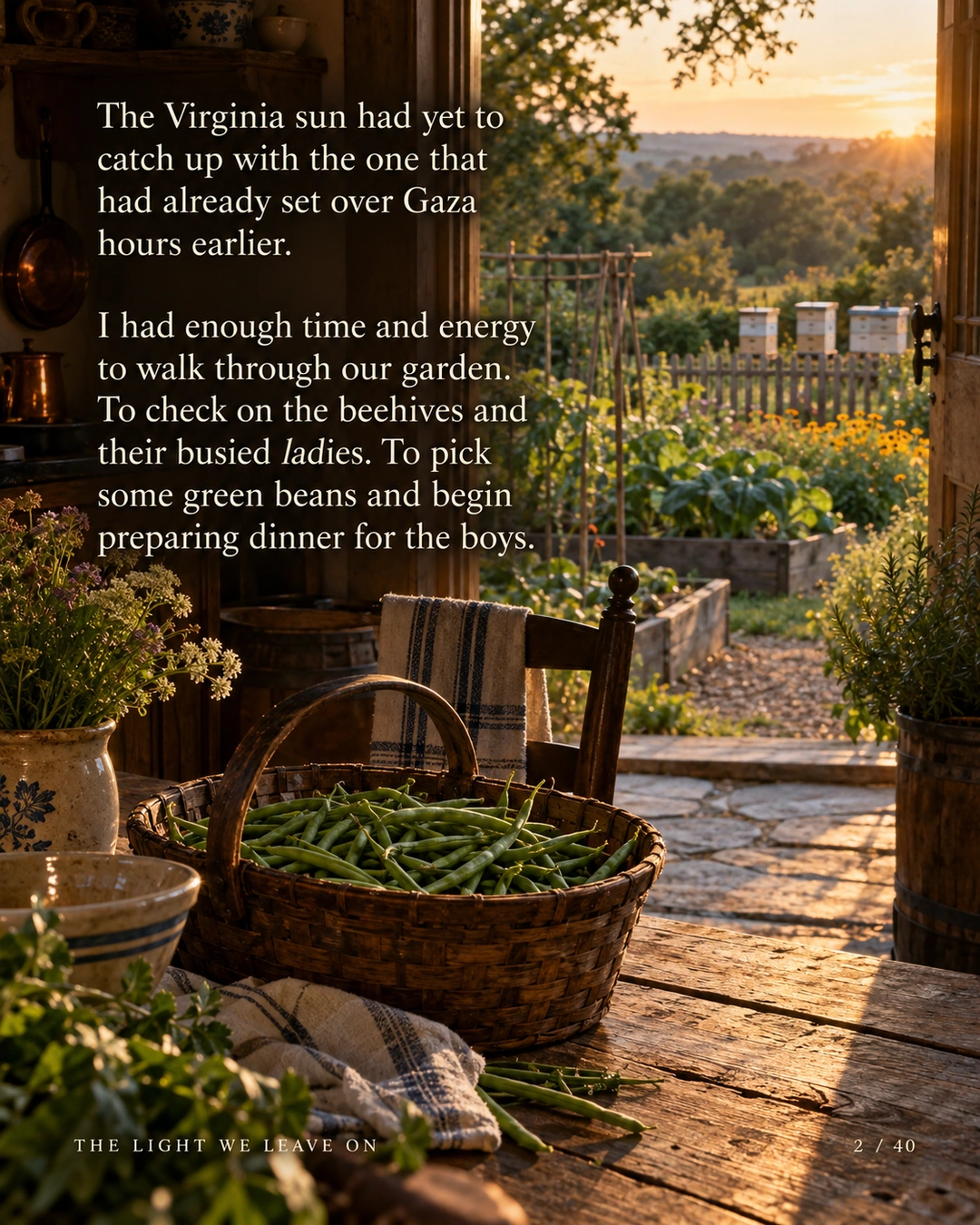
The Virginia sun had yet to catch up with the one that had already set over Gaza hours earlier.
I had enough time and energy to walk through our garden. To check on the beehives and their busied ladies. To pick some green beans and begin preparing dinner for the boys.
The things that happen when we do ordinary things.
I had held it together.
I had been strong.
And then, in the simple act of cutting green beans, I cried.
Deep tears.
Not only sadness, but anger.
The tears a man cries when the people he loves are out of his reach and in danger.
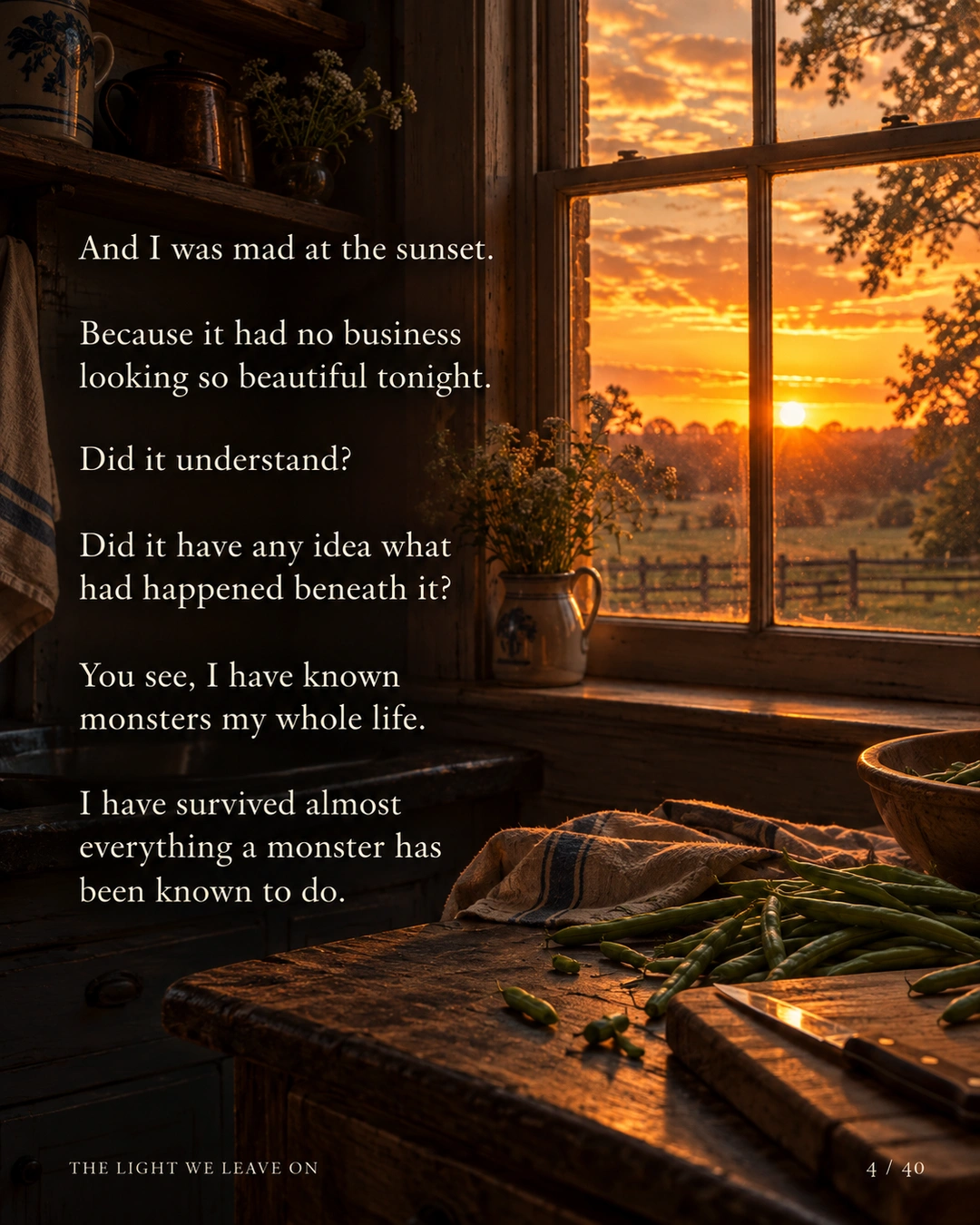
And I was mad at the sunset.
Because it had no business looking so beautiful tonight.
Did it understand?
Did it have any idea what had happened beneath it?
You see, I have known monsters my whole life.
I have survived almost everything a monster has been known to do.
And then I spent my professional life coming to the aid of people who knew monsters, too. Doing my best to help liberate them from the effects of knowing them, and from the many ways monsters continue to haunt us long after they are gone.
I knew how to recognize what monsters leave behind.
The flinch before a raised hand.
The apology before anyone has accused you.
The child who learns to recognize footsteps before learning long division.
The grown man who still listens for danger in the silence of an otherwise beautiful room.
I knew these things.
I knew them in my body.
I knew them in the bodies of people who sat across from me and tried to explain why the danger never seemed to end, even after they had escaped it.
And I knew how to help.
Not always.
Not perfectly.
But I knew what to do with my hands.
How to offer water.
How to sit beside someone who could not stop shaking.
How to listen without demanding that terror become a coherent story.
How to remind a frightened human being that the thing that happened to them was not the thing they were.
I knew how to be useful.
But this.
This is different.
I had known monsters who needed darkness.
Who depended upon silence.
Who counted on the world not seeing.
A preacher behind a pulpit.
A family friend.
A babysitter.
A teacher.
A physician.
People dressed as something else.
People wrapped in titles and familiar faces and the ordinary disguises of trust.
Their cruelty happened behind closed doors.
Beneath the cover of night.
In places where the people who might have stopped them were not looking.
And afterward, the wounded were often asked to prove that the monsters had existed at all.
But these monsters?
They did not need darkness.
They brought their own.
And they brought enough for everyone to see.
They ignite the darkness, not with hope, but with bombs and ammunition.
Their violence is carried into streets and homes, recorded on telephones, circulated across screens, witnessed by people who have never set foot in Gaza.
I see.
They see.
The world sees.
And still, people are being hurt.
Still, children are frightened.
Still, families are trying to find places where the walls might hold.
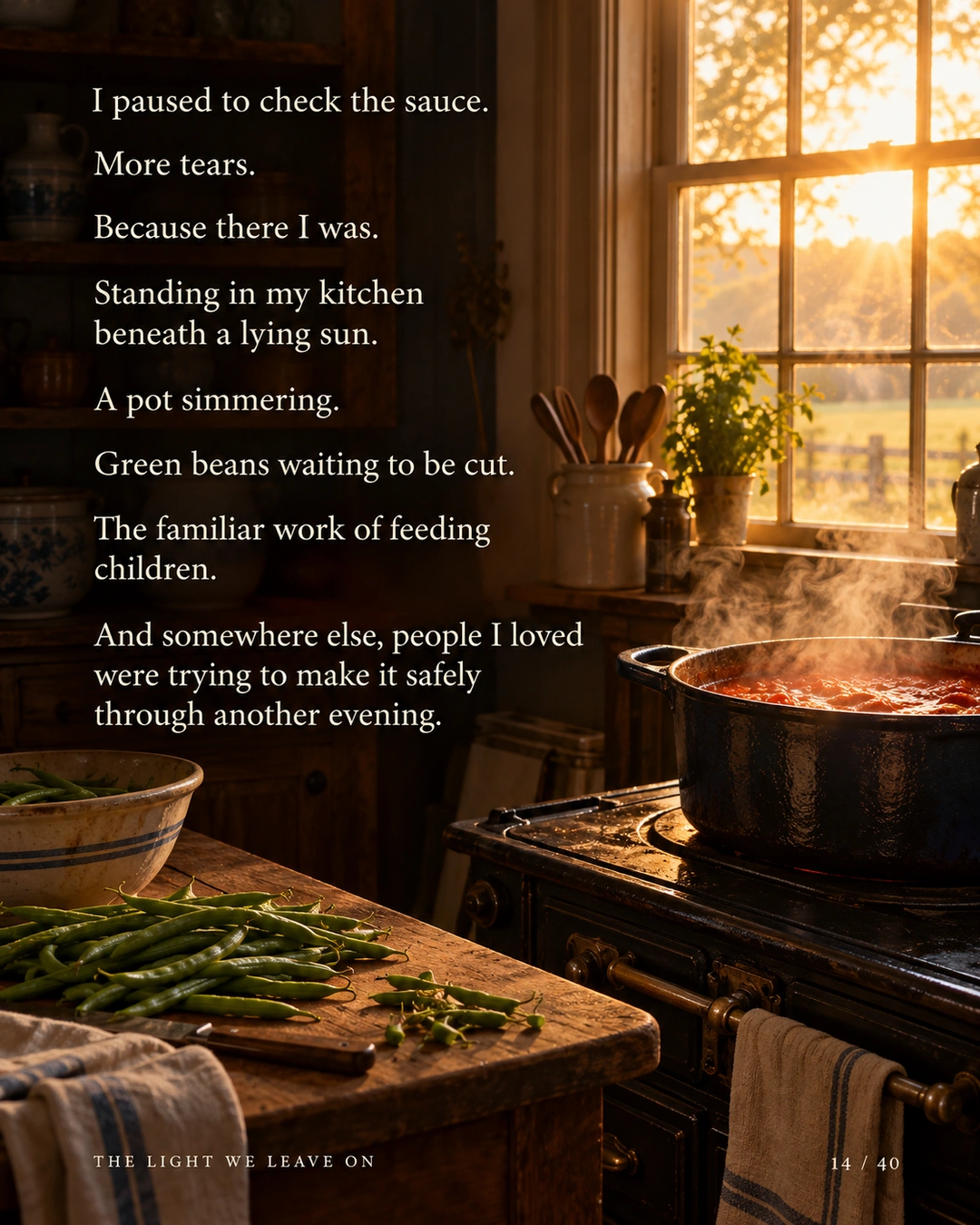
I paused to check the sauce.
More tears.
Because there I was.
Standing in my kitchen beneath a lying sun.
A pot simmering.
Green beans waiting to be cut.
The familiar work of feeding children.
And somewhere else, people I loved were trying to make it safely through another evening.
I wasn't only sad.
I was mad.
Devastated.
And furious at the terrible absurdity of having spent so much of my life learning how to recognize danger, only to find myself watching it unfold thousands of miles away with nothing but a telephone in my hand.
I had heard the explosion.
Not in a news report.
Not in a video I could pause or turn away from.
I heard it while we were reading a poem about gravity.
About the invisible things that hold people together.
About distances so enormous that even light takes time to cross them.
And then the sound came.
And a voice I loved began to shake.
And people ran outside while others braced for what might happen next.
And I did what I knew how to do.
I listened.
I asked questions.
I searched for the things that might tell me whether someone was hurt.
I tried to make my voice a place where fear could land without having to take care of me, too.
Because that is what I know.
That is what I have always known.
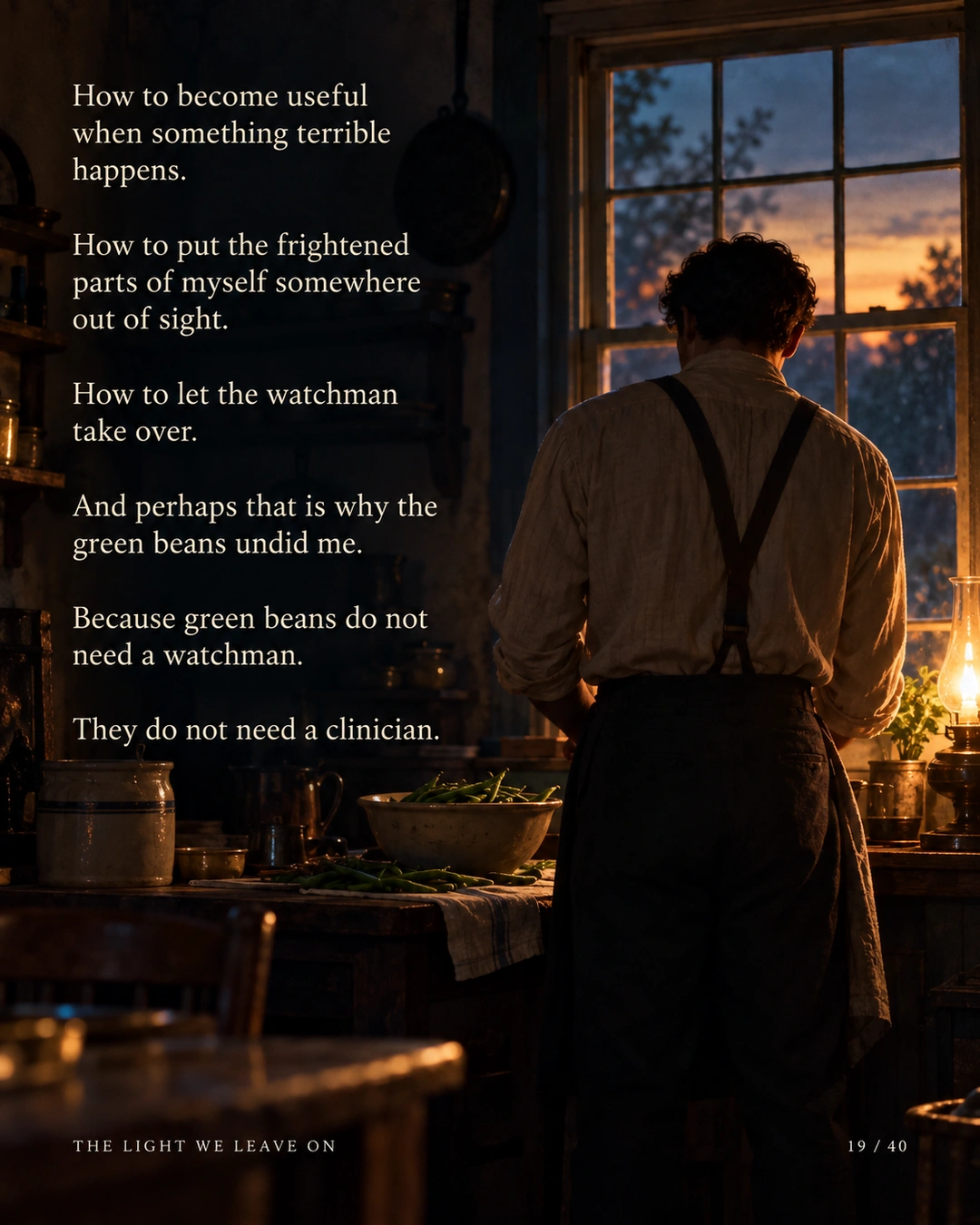
How to become useful when something terrible happens.
How to put the frightened parts of myself somewhere out of sight.
How to let the watchman take over.
And perhaps that is why the green beans undid me.
Because green beans do not need a watchman.
They do not need a clinician.
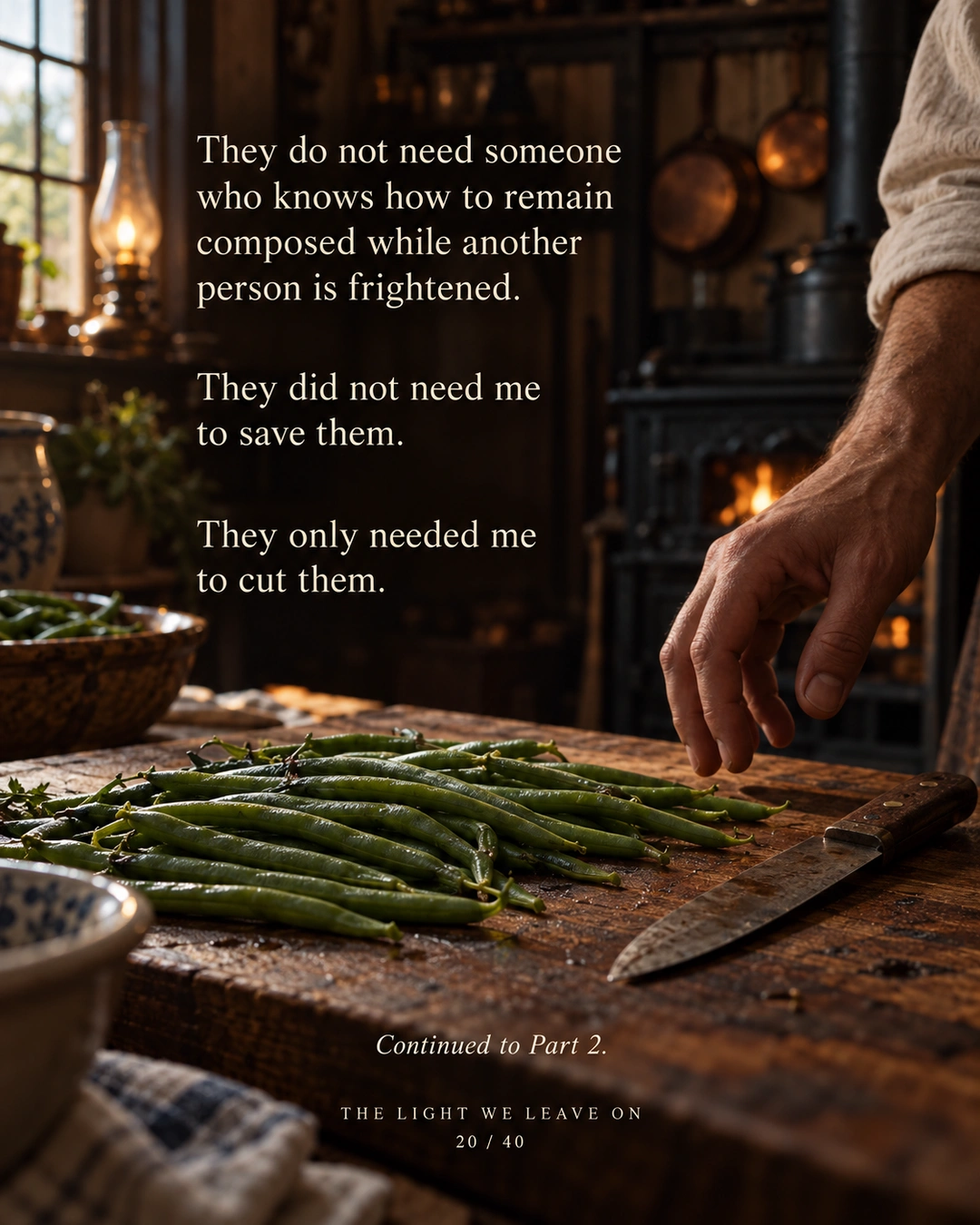
They do not need someone who knows how to remain composed while another person is frightened.
They did not need me to save them.
They only needed me to cut them.
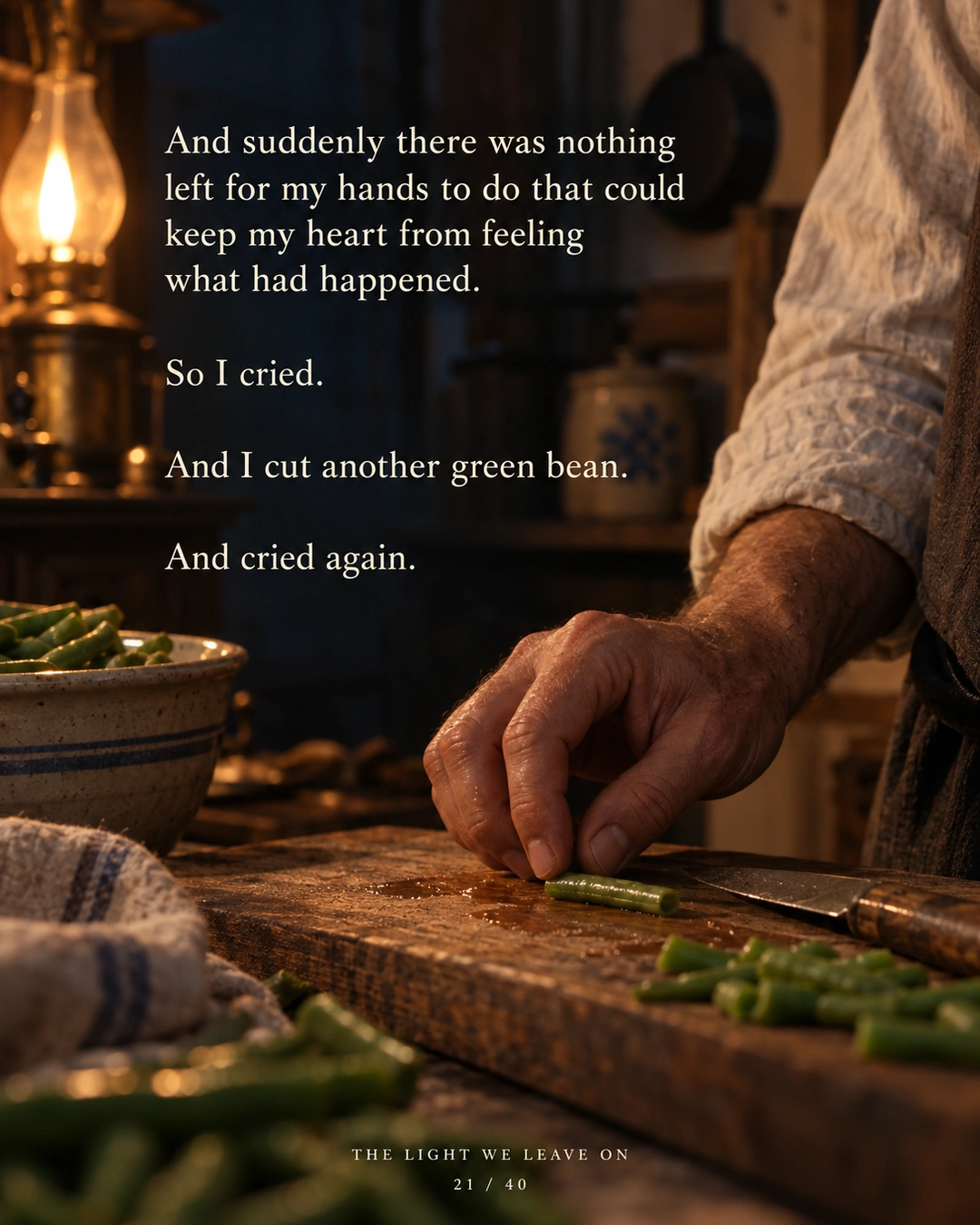
And suddenly there was nothing left for my hands to do that could keep my heart from feeling what had happened.
So I cried.
And I cut another green bean.
And cried again.
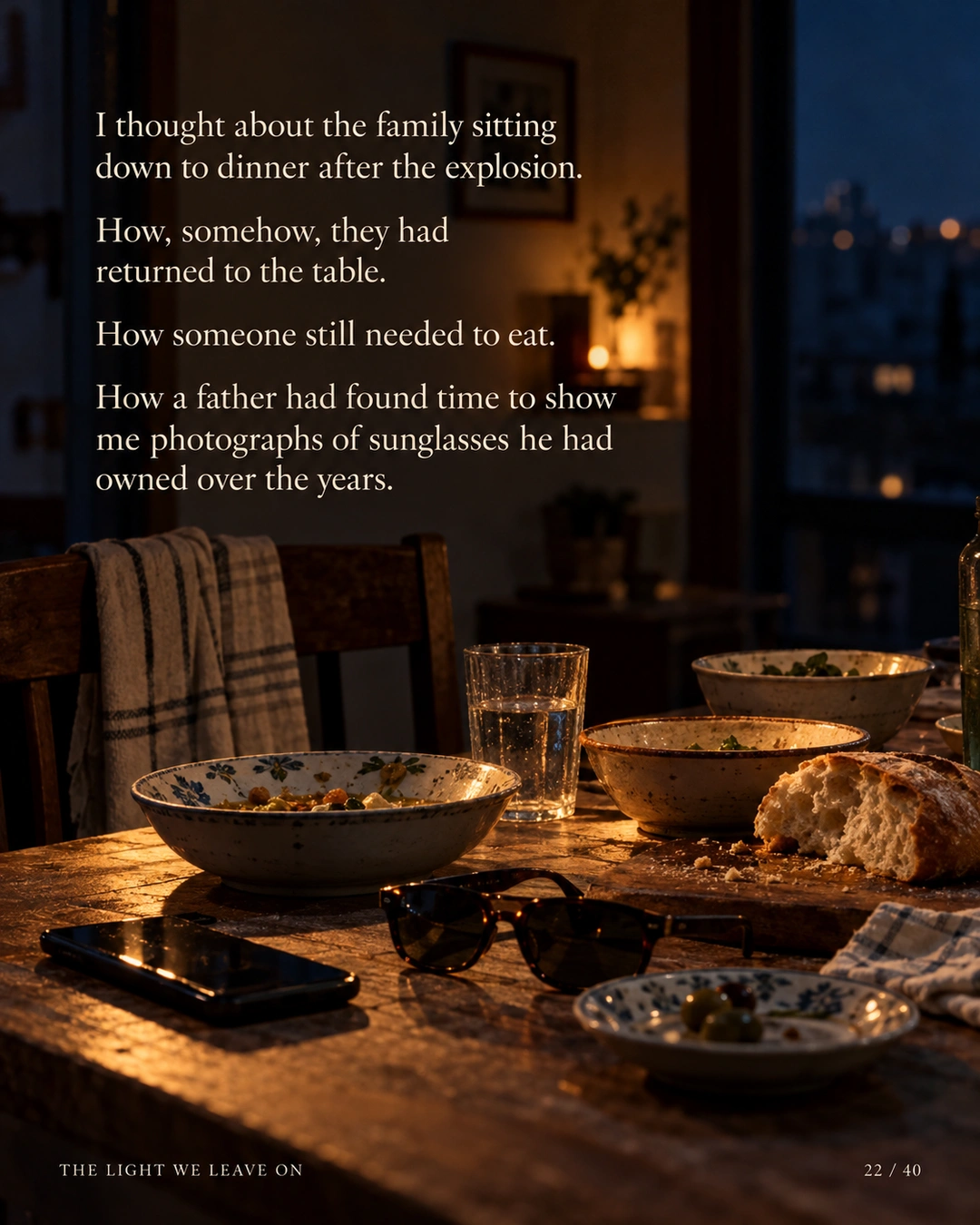
I thought about the family sitting down to dinner after the explosion.
How, somehow, they had returned to the table.
How someone still needed to eat.
How a father had found time to show me photographs of sunglasses he had owned over the years.
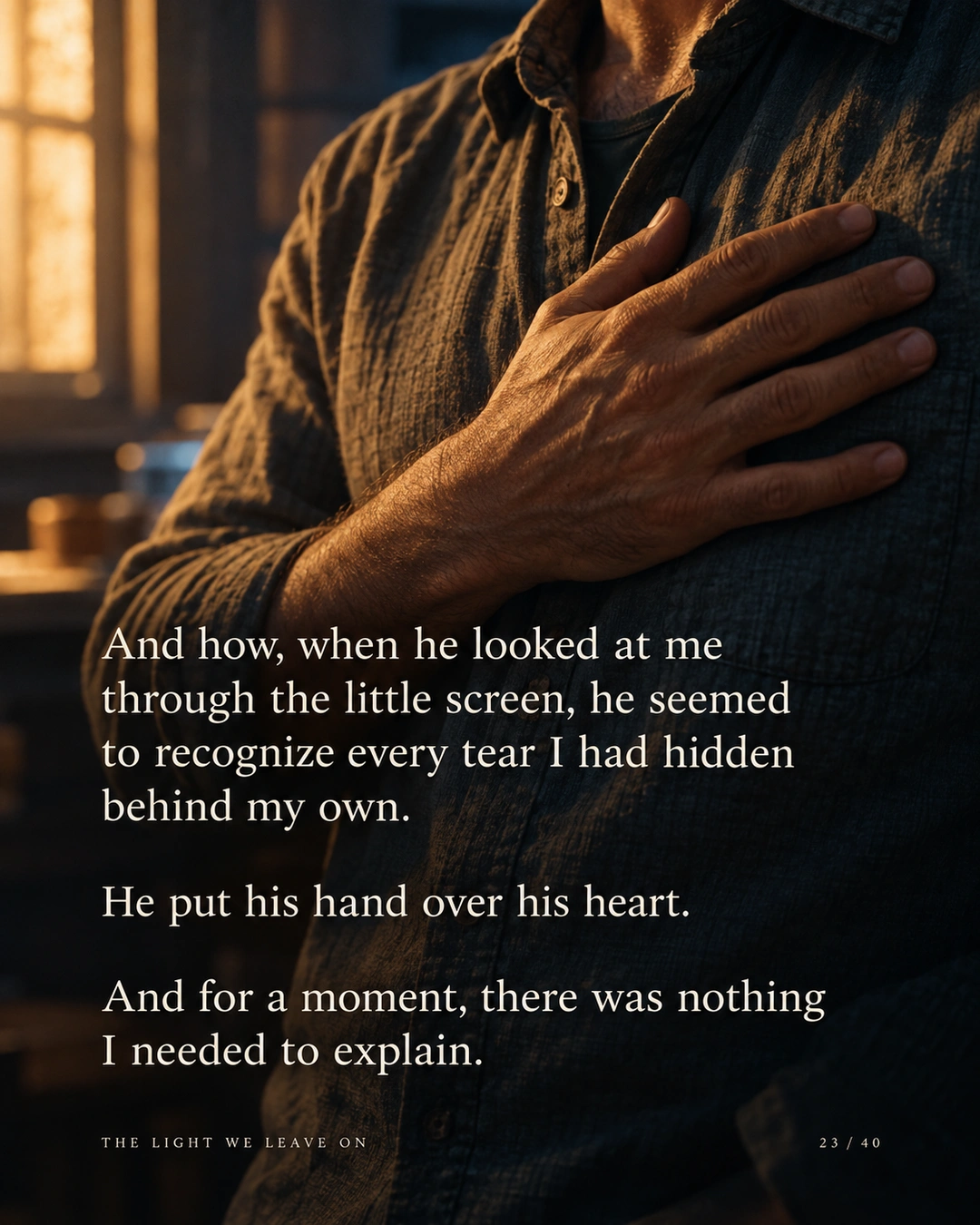
And how, when he looked at me through the little screen, he seemed to recognize every tear I had hidden behind my own.
He put his hand over his heart.
And for a moment, there was nothing I needed to explain.
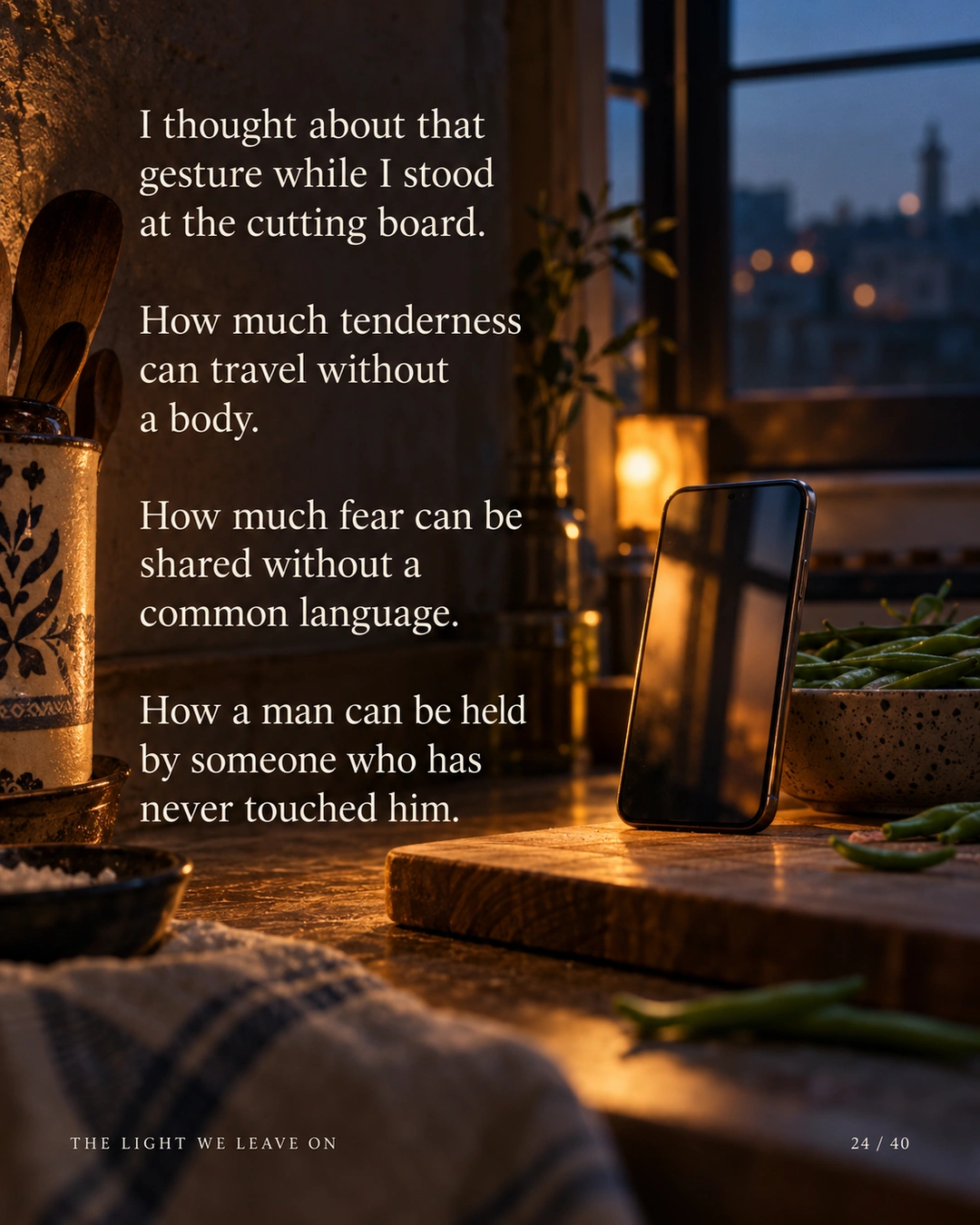
I thought about that gesture while I stood at the cutting board.
How much tenderness can travel without a body.
How much fear can be shared without a common language.
How a man can be held by someone who has never touched him.
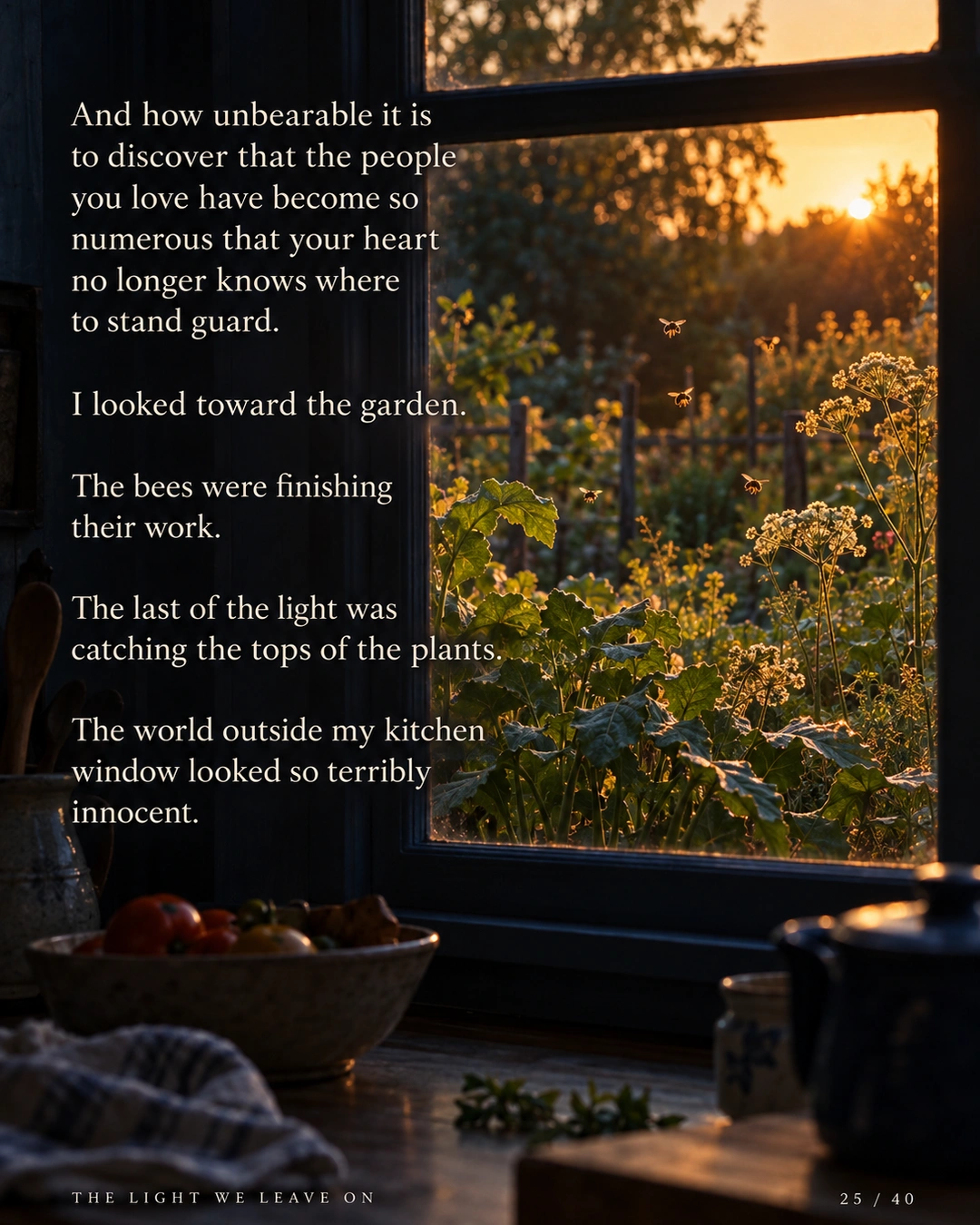
And how unbearable it is to discover that the people you love have become so numerous that your heart no longer knows where to stand guard.
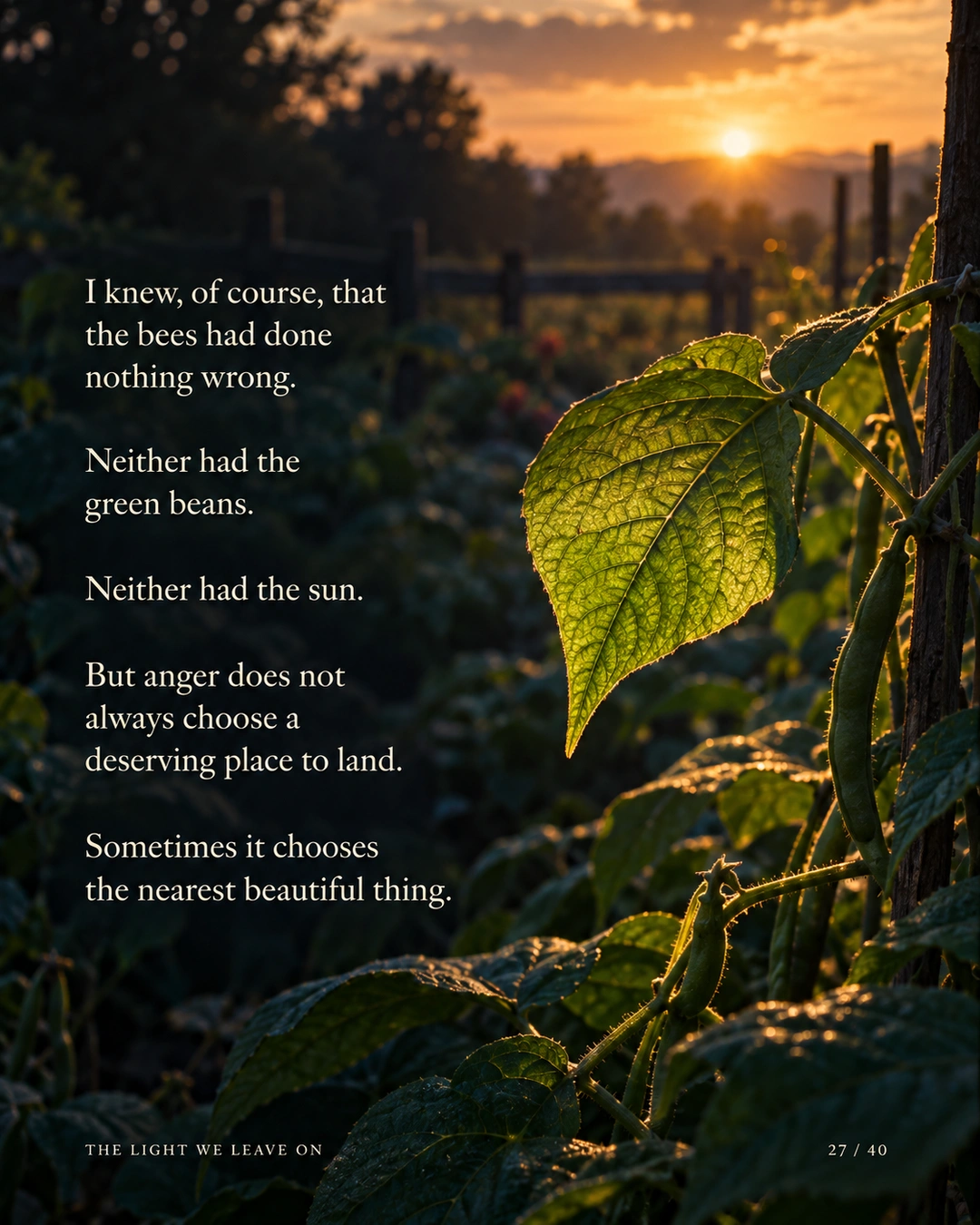
I looked toward the garden.
The bees were finishing their work.
The last of the light was catching the tops of the plants.
The world outside my kitchen window looked so terribly innocent.
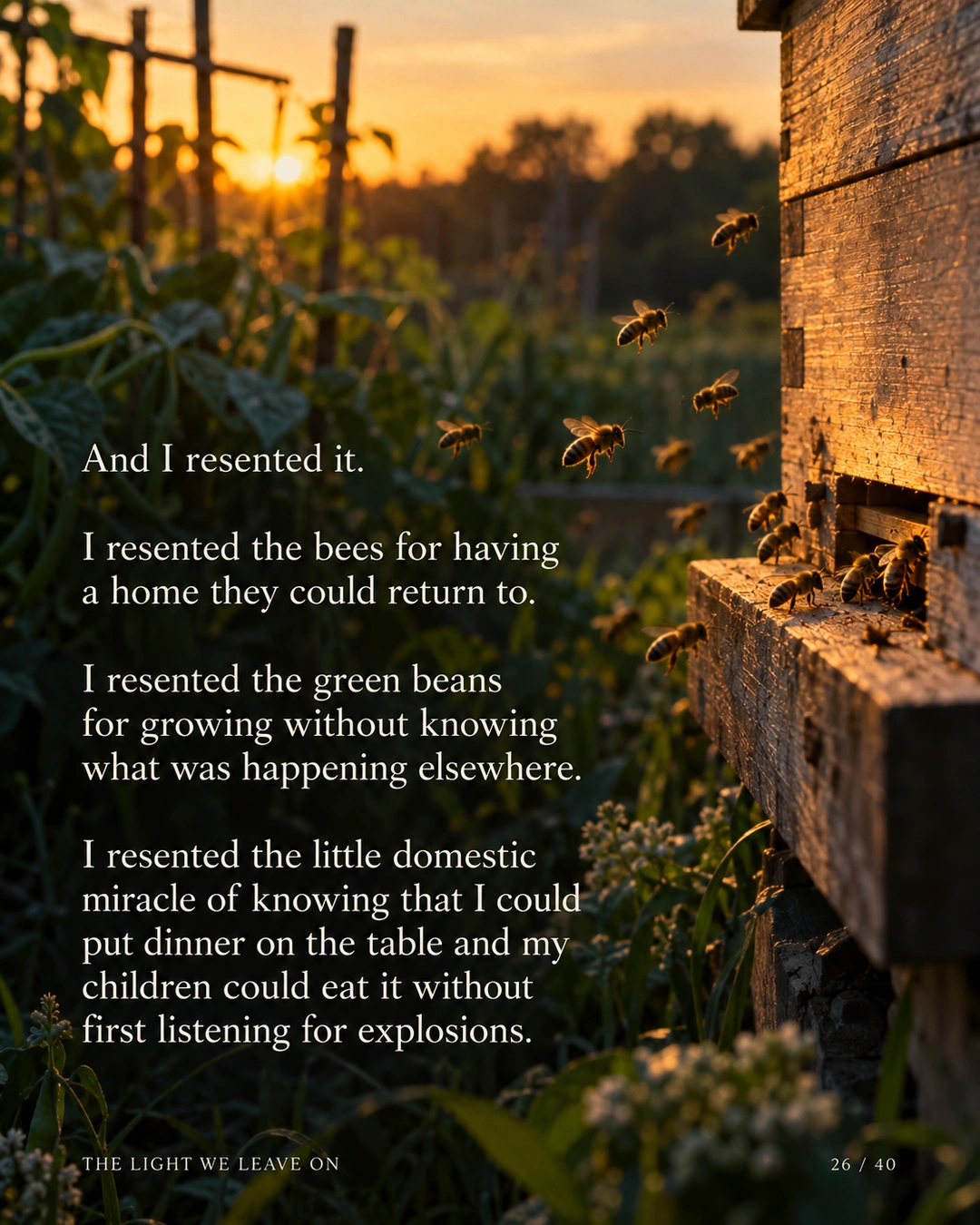
And I resented it.
I resented the bees for having a home they could return to.
I resented the green beans for growing without knowing what was happening elsewhere.
I resented the little domestic miracle of knowing that I could put dinner on the table and my children could eat it without first listening for explosions.
I knew, of course, that the bees had done nothing wrong.
Neither had the green beans.
Neither had the sun.
But anger does not always choose a deserving place to land.
Sometimes it chooses the nearest beautiful thing.
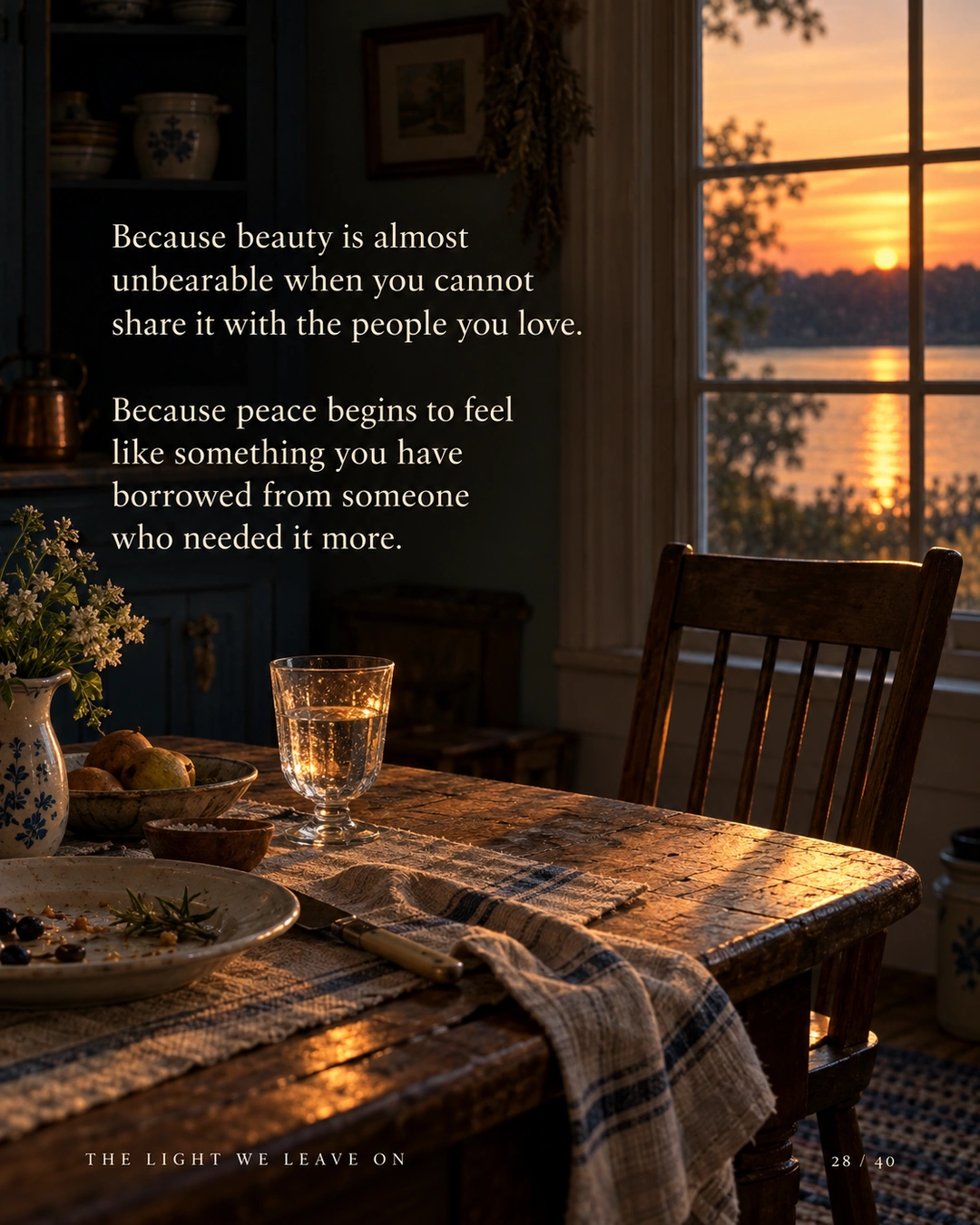
Because beauty is almost unbearable when you cannot share it with the people you love.
Because peace begins to feel like something you have borrowed from someone who needed it more.
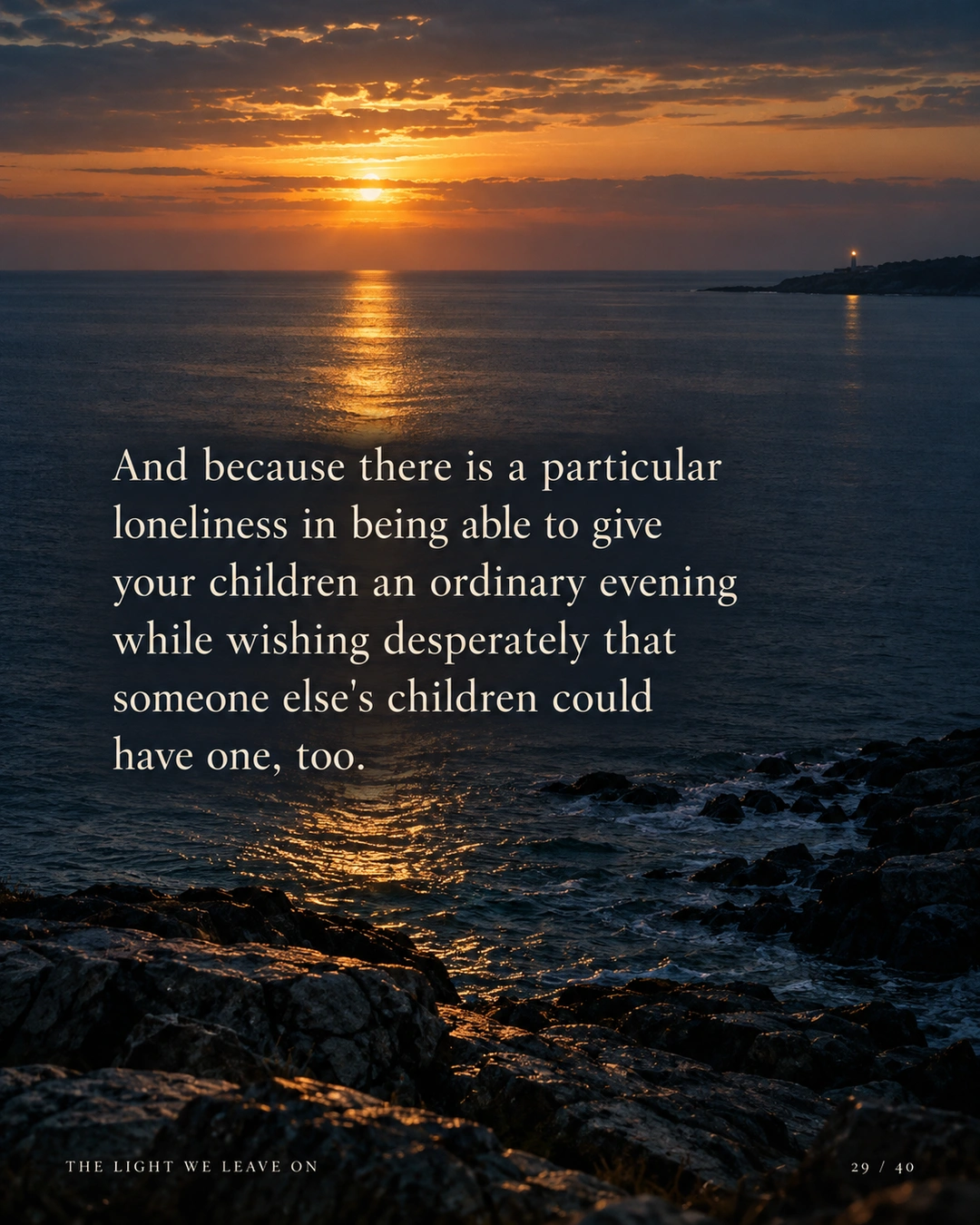
And because there is a particular loneliness in being able to give your children an ordinary evening while wishing desperately that someone else's children could have one, too.
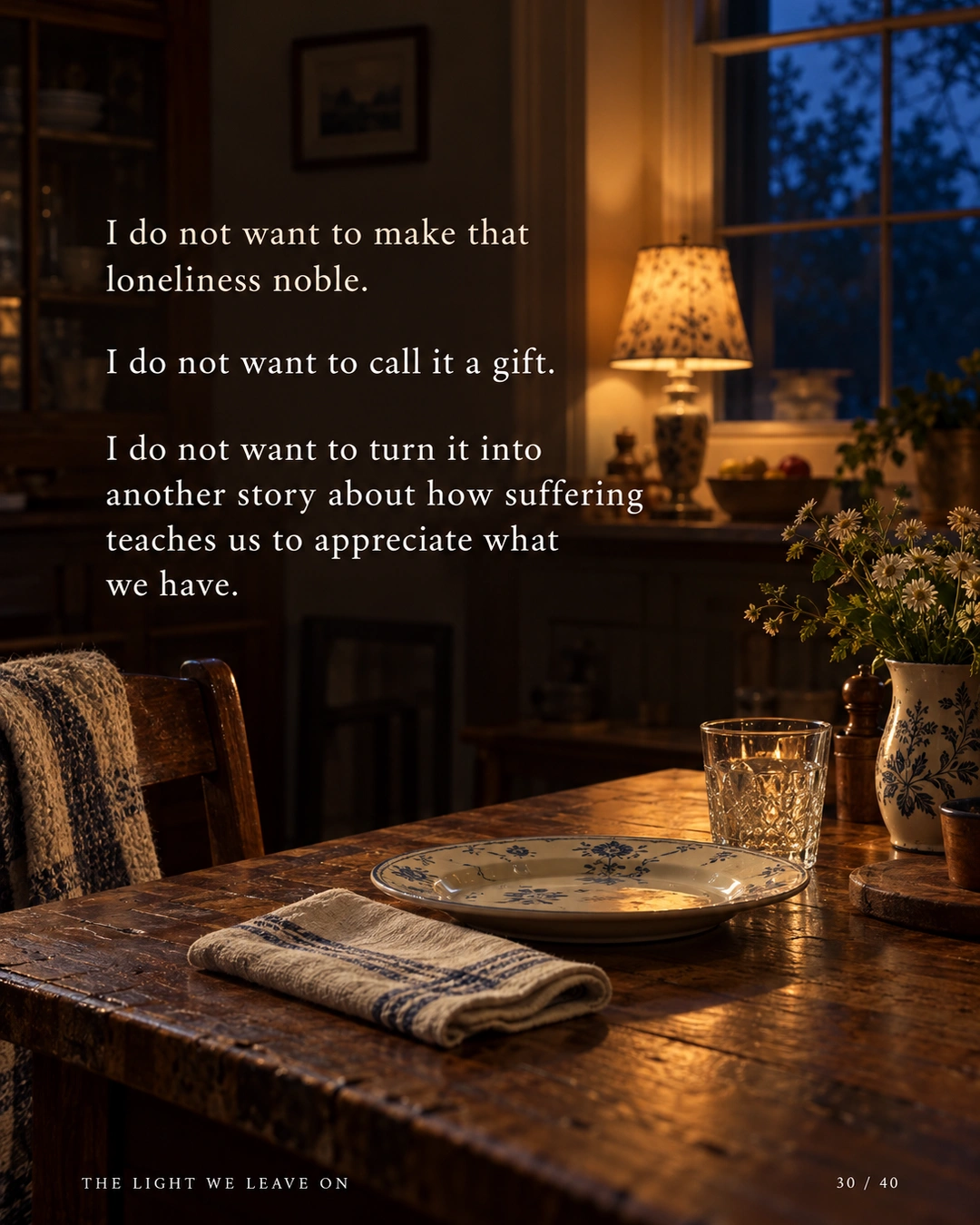
I do not want to make that loneliness noble.
I do not want to call it a gift.
I do not want to turn it into another story about how suffering teaches us to appreciate what we have.
I appreciated what I had before today.
I knew what it meant to be safe.
I knew what it meant to be loved.
I knew what it meant to survive monsters.
And knowing those things did nothing to make the sound of that explosion less terrible.
There are moments when gratitude and rage occupy the same body.
When a person can be grateful for the food in front of them and furious that someone else has to wonder whether there will be food tomorrow.
When you can love the home that shelters your children and hate the distance that prevents you from sheltering someone else's.
When you can stand before a beautiful sunset and feel absolutely no obligation to admire it.
The sauce needed stirring.
I stirred it.
The boys would need dinner.
I kept cooking.
The bees disappeared into their hives.
And the sunlight began to leave the garden.
I wondered how many people were standing in kitchens tonight, doing ordinary things while carrying something unbearable.
How many were peeling potatoes after receiving terrible news.
How many were folding laundry while waiting for a phone to ring.
How many were setting places at tables for people they were praying would return.
How many had learned to move their hands through familiar tasks because their hearts had nowhere else to go.
And I wondered how many of us had mistaken that ability for strength.
Perhaps it was simply what happened when life refused to stop.
When the children still needed feeding.
When the dog still wanted to go outside.
When the garden kept growing.
When the world had the audacity to remain ordinary around something that was anything but.
I looked out at the sunset again.
Still beautiful.
Still pouring gold across a world in which terrible things were happening.
I wanted it to tell me why.
I wanted it to explain how the same light could fall on my garden and on the rubble of someone else's home.
How it could illuminate a dinner table here and disappear over frightened families there.
How it could keep arriving and leaving as though the world had not changed.
But the sun had no answers.
Of course it didn't.
It had never promised to be just.
It had never promised to distinguish between the innocent and those who harmed them.
Perhaps that was what angered me most.
That the universe could remain so magnificently indifferent to what human beings were doing beneath it.
That I could spend an entire lifetime learning how to recognize monsters and still not know how to stop them from reaching the people I loved.
I stood there for a long moment.
The knife resting beside the cutting board.
The sauce simmering behind me.
The last light moving across the kitchen floor.
And I thought about how often I had told frightened people that they no longer needed to apologize for what they felt.
That anger did not make them cruel.
That grief did not make them weak.
That being overwhelmed did not mean they had failed.
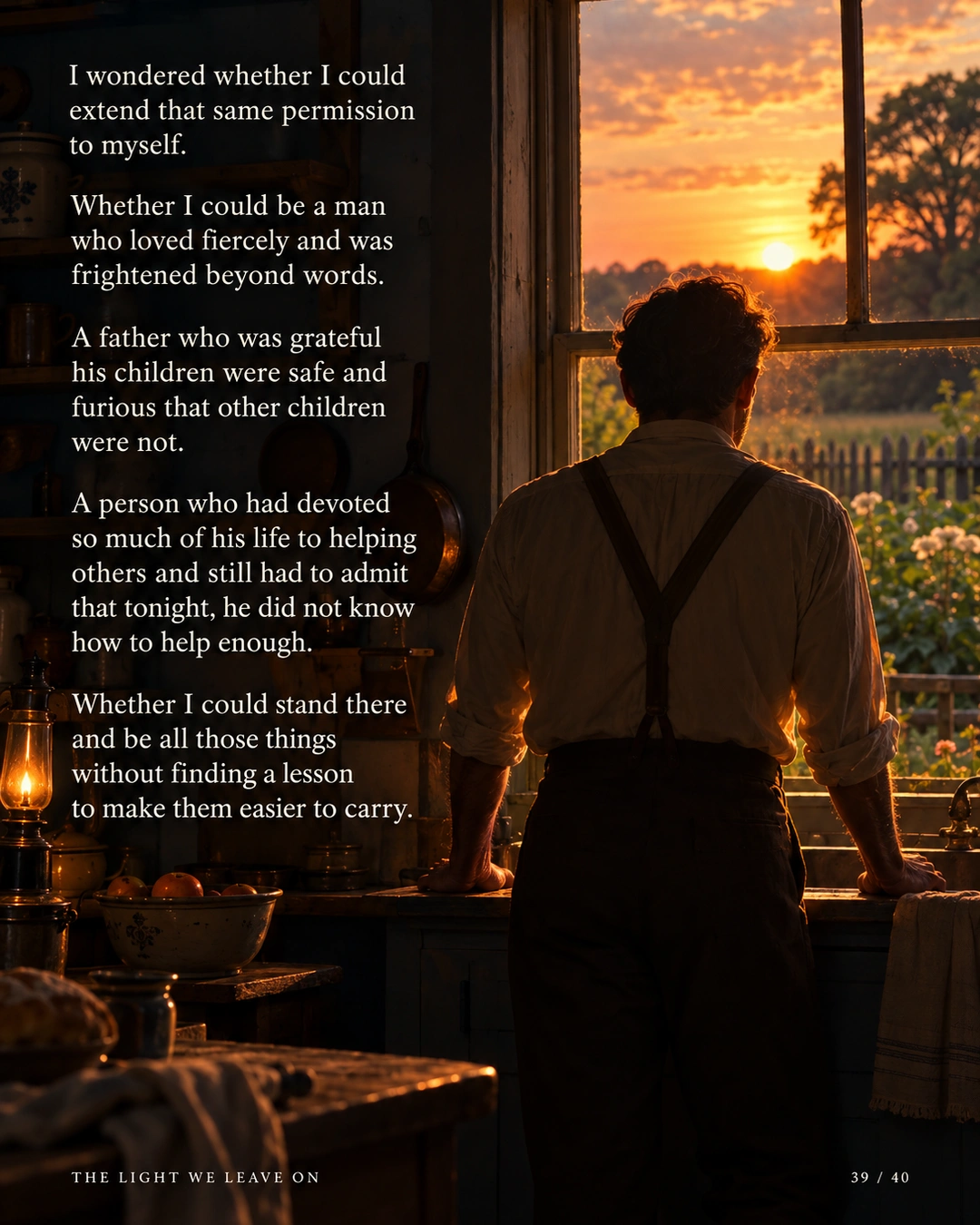
I wondered whether I could extend that same permission to myself.
Whether I could be a man who loved fiercely and was frightened beyond words.
A father who was grateful his children were safe and furious that other children were not.
A person who had devoted so much of his life to helping others and still had to admit that tonight, he did not know how to help enough.
Whether I could stand there and be all those things without finding a lesson to make them easier to carry.
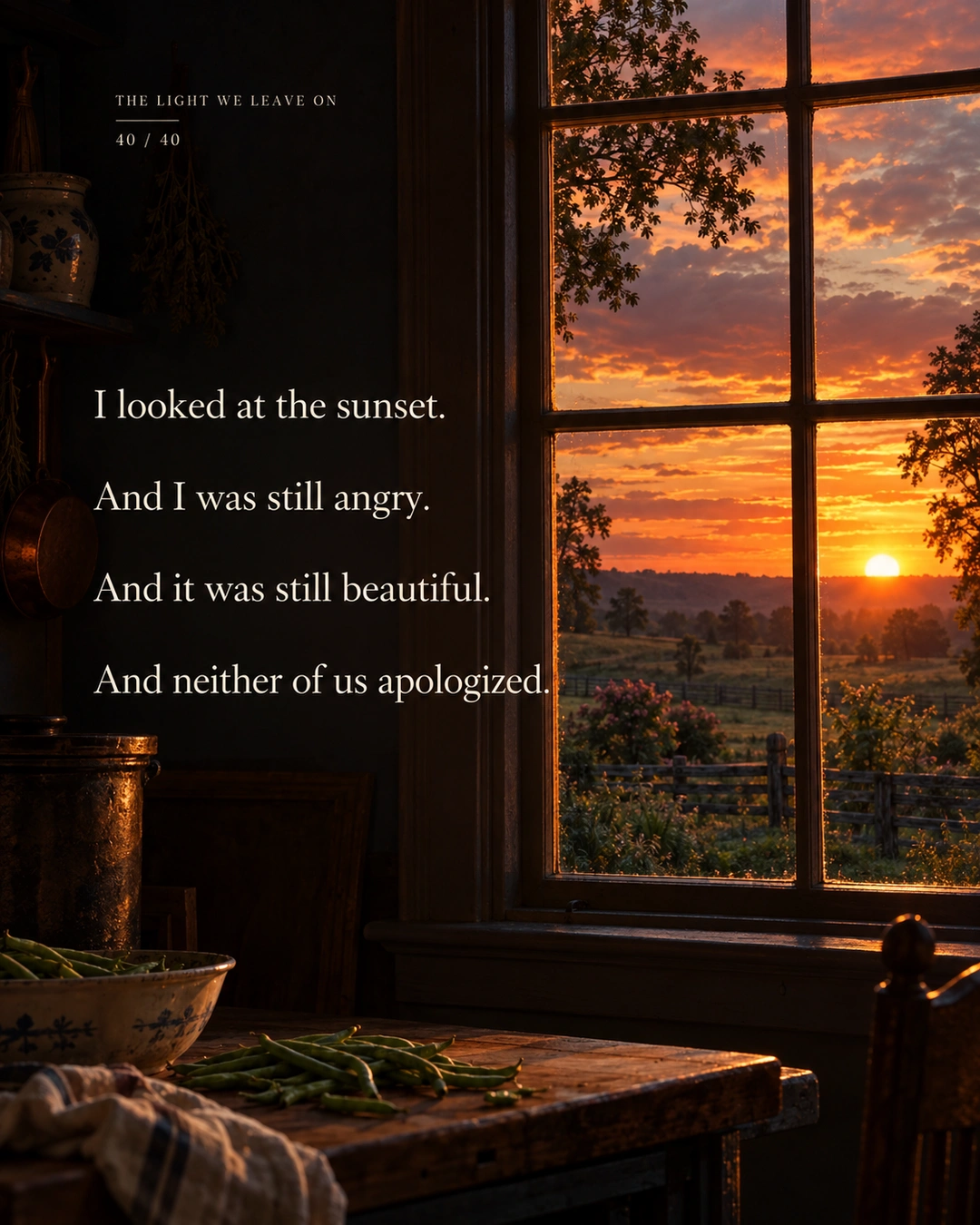
I looked at the sunset.
And I was still angry.
And it was still beautiful.
And neither of us apologized.

Let the Light Travel Further

If these words have touched something in your heart, consider helping us bring warmth, food, and essential support to a family in Gaza.
Carry the Light Further