THE TIMES BEFORE THE STORM
On mothers, monkeys, butterflies, and the things we mistake for love.
I was a little boy when I first learned that someone could go on living even after part of them had died.
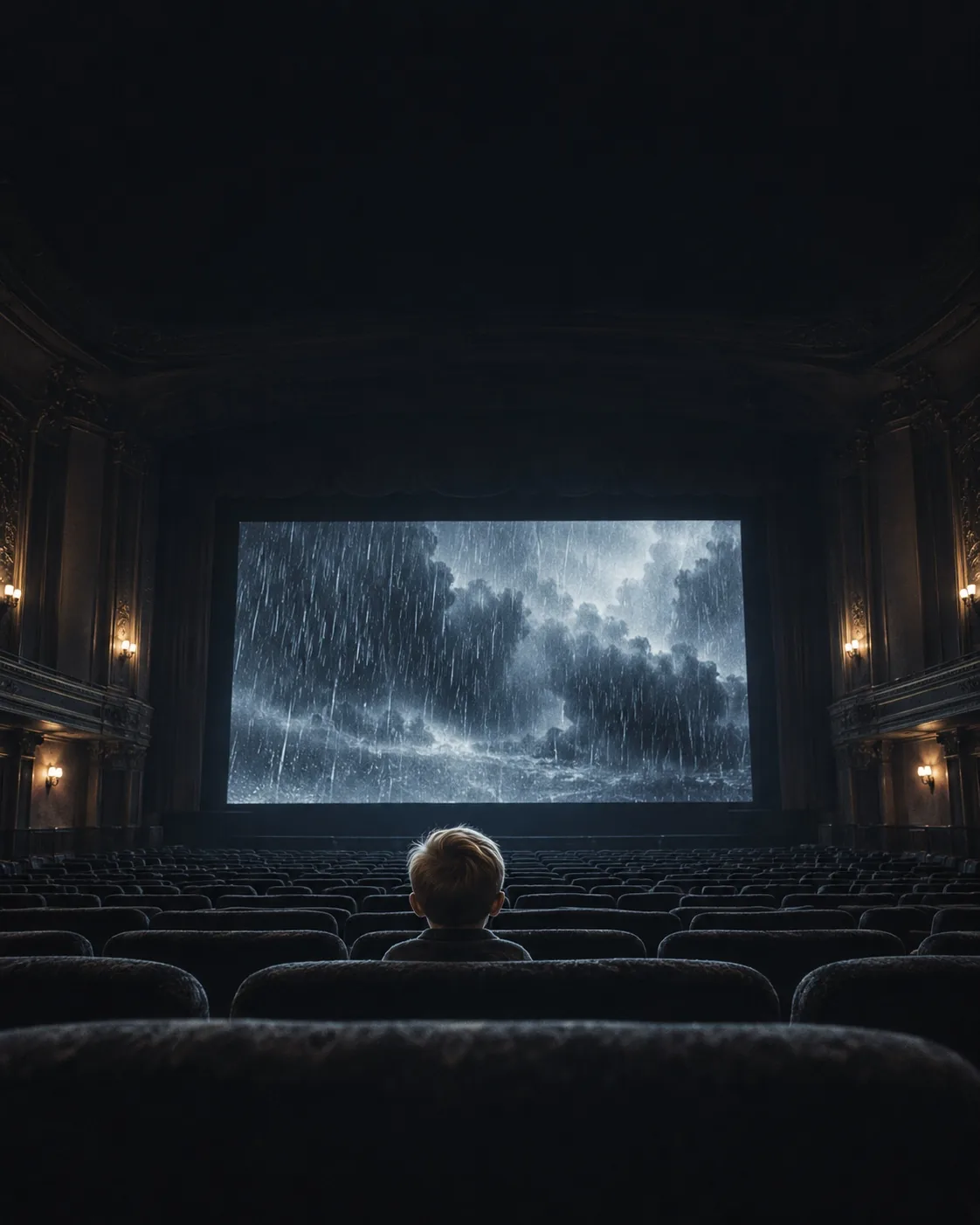
I learned it in a movie theater.
There were dinosaurs, of course.
And a storm.
And a little creature named Littlefoot who was about to discover that the world could take away the one person who was supposed to make it feel safe.
I remember the rain.
I remember his mother.
I remember the terrible smallness of him beside her enormous, dying body.
And I remember recognizing something I could not possibly have had the language to explain.
Sometimes a mother doesn't have to die for a child to begin missing her.
Sometimes she survives.
Sometimes she makes dinner. Answers the telephone. Reminds you to put on your shoes.
Sometimes she is standing right there.
And the child is still trying to find his way back to her.
Back to the times before the storm.
Even if he cannot remember whether there ever were any.
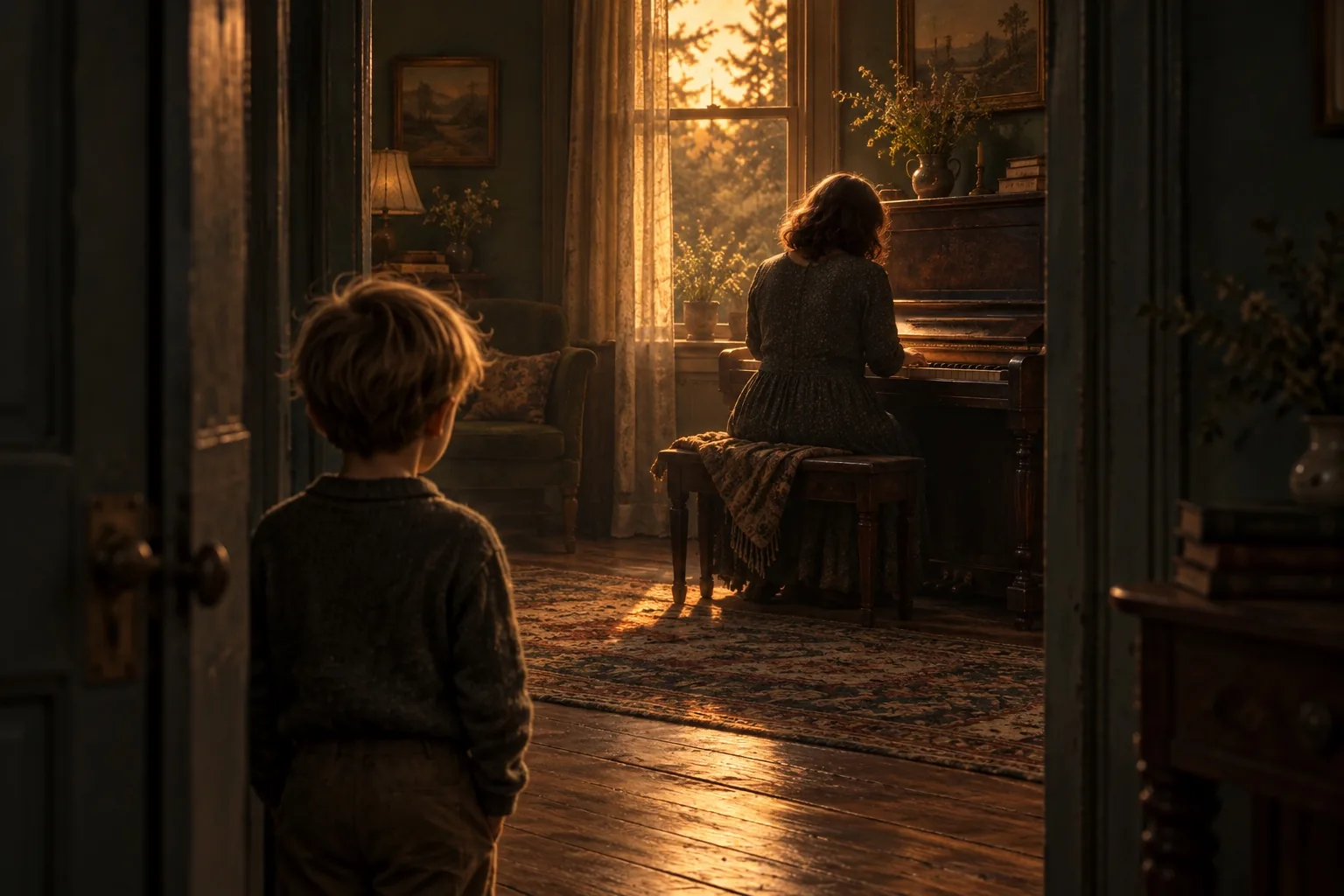
My mother played the piano.
She gardened.
And sometimes, watching her hands moving across the keys or working through the earth, I wondered whether these were the moments when she belonged entirely to herself.
Not the woman who could transform into the perfect hostess the moment someone arrived.
Not the woman who could fill a room with warmth for visitors, only to leave us living with the cold when everyone went home.
Because there was always an afterward.
A price to be paid for the happiness she had performed.
I learned early that a beautiful afternoon could have a terrible evening.
That laughter could be followed by silence.
That kindness could exhaust someone so completely that the people closest to them became the place where they emptied whatever was left.
But the piano was different.
The garden was different.
Or perhaps I only needed them to be.
Perhaps I needed evidence that there were places in the world where my mother could be at peace.
That somewhere beneath the anger, the sadness, and the frightening unpredictability, there remained a woman who knew what to do with beautiful things.
She could make flowers grow.
She could make a piano sing.
And I wondered why those same hands could not always be gentle with me.
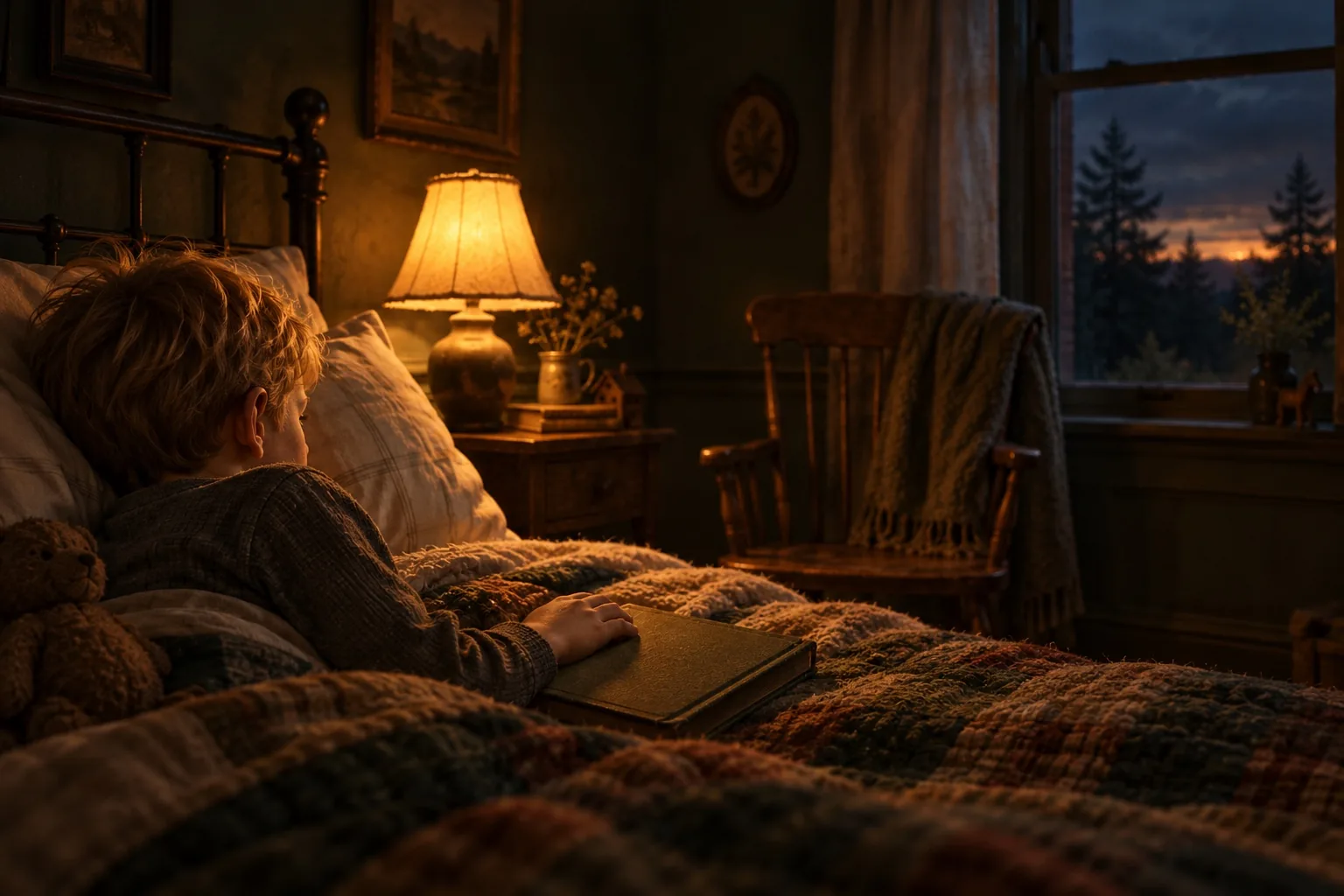
I cannot remember my mother ever reading me a bedtime story.
I remember wondering what that would feel like.
What it might be like to lie beneath the covers while someone turned the pages.
To hear a familiar voice giving shape to a world where frightening things might happen, but where someone would remain beside you as the story unfolded.
Someone who wasn't waiting for you to do anything.
Someone who didn't need you to be clever, helpful, talented, charming, or good.
Someone who was simply glad you were there.
I don't know whether I would have wanted a story about dragons.
Or forests.
Or a little creature trying to find its way home.
Perhaps the story wouldn't have mattered very much.
Perhaps what I wanted was the person reading it.
The sound of a voice that did not require me to listen for danger.
The extraordinary luxury of growing sleepy in the presence of someone who made sleep feel safe.
A child should not have to earn the right to close his eyes.
I don't think I understood that then.
I only knew there were things other children seemed to receive that I could imagine but could not remember experiencing myself.
And imagination, however beautiful, was not the same as being held.
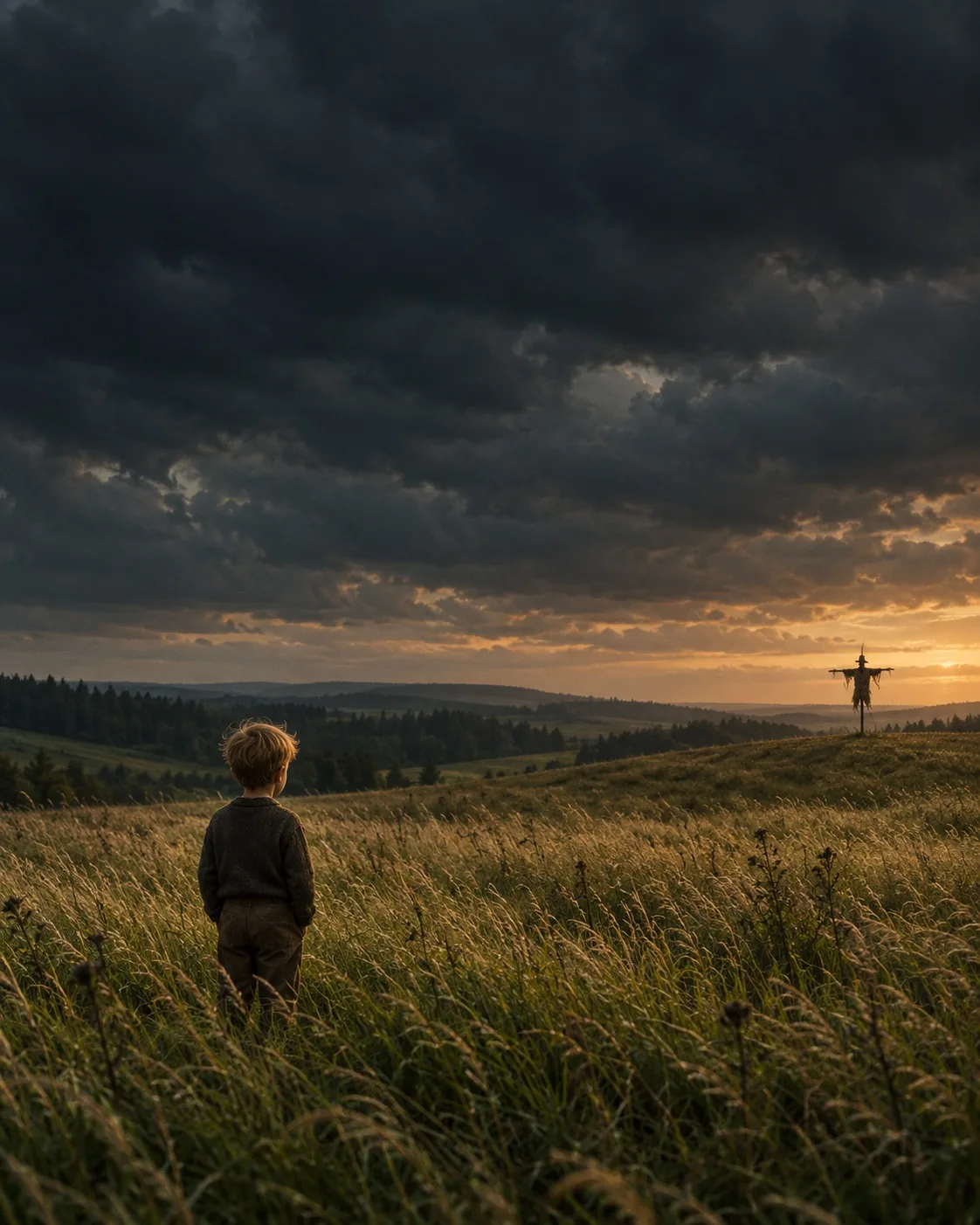
Sometimes I wanted to hug my mother.
Even writing that sentence now, I can feel the peculiar contradiction of it.
Wanting something with your whole body while knowing better than to reach.
Hugging my mother would have been like trying to embrace a scarecrow carrying a thousand knives in a windstorm.
There were arms.
There was the shape of someone who might hold you.
But there was no way of knowing which direction the knives would turn.
And perhaps that was one of the first things my body learned.
That longing and danger could occupy the same space.
That someone could be the person you wanted to run toward and the person you needed to run from.
That love did not necessarily make reaching safe.
And so I learned to stand at a distance.
Close enough to watch.
Close enough to anticipate the weather.
But far enough away, I hoped, to survive the storm.
I was sixteen when I wrote a poem about my mother.
I called it Sometimes.
Sometimes I wondered whether she was happy.
Sometimes I wondered whether she knew I loved her.
Sometimes I wondered whether she loved me.
Sometimes I thought we were more alike than either of us would ever admit.
Strong, yet scarred.
Wanting love, but frightened to embrace it.
And sometimes I wondered whether I was the reason she was unhappy.
Sixteen.
I read those words now and want to reach backward through time.
Not to correct the poem.
Not to explain attachment theory or generational trauma or the ways children become responsible for emotional weather they did not create.
I just want to sit beside the boy who wrote it.
Because even in his own poem, he was trying to take care of her.
He wanted to hug his mother and make all her troubles disappear.
He did not write about wanting someone to make his troubles disappear.
He did not ask why he was frightened.
Or why he was lonely.
Or why the prospect of being held could feel more dangerous than being left alone.
He was sixteen.
And already performing.
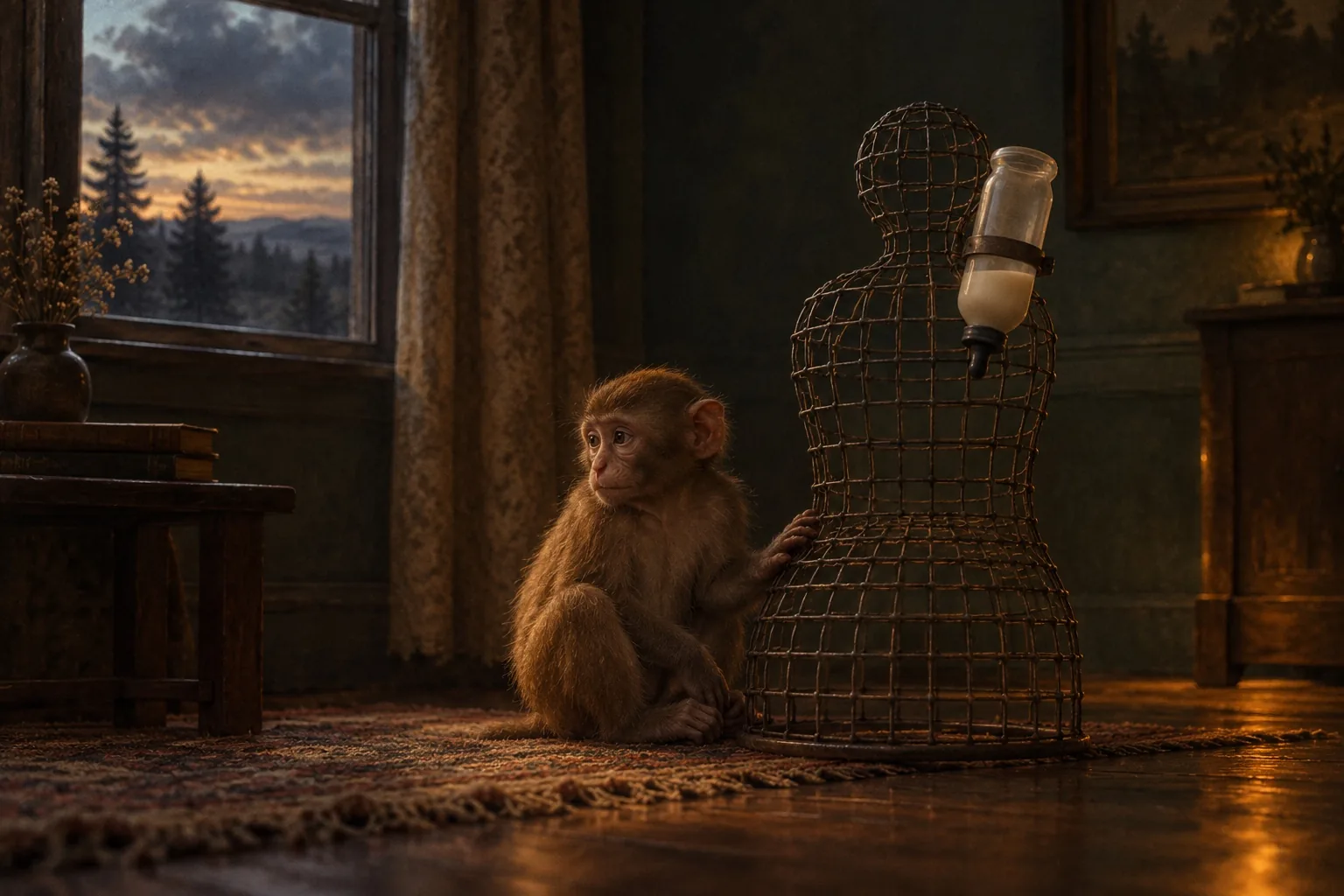
Years later, when I studied attachment, I learned about Harry Harlow's rhesus monkeys.
The wire mother and the cloth mother.
One could provide milk.
The other offered softness.
The little monkeys could approach the wire for nourishment, but when they were frightened, they sought the cloth.
They wanted somewhere to put their frightened little bodies.
I remember thinking how terribly little they were asking for.
Something soft.
Somewhere safe.
Not a promise that nothing terrible would ever happen.
Only the reassurance that when it did, there would be somewhere to go.
And I thought about the boy I had been.
About the arms he wanted to reach for.
About the body that had already learned to brace itself.
And I wondered what happens when the person who is supposed to comfort you is also someone you have learned to fear.
Where does all that reaching go?
What happens to a hug that never finds somewhere to land?
I learned to dance.
To perform.
To make myself into something people would pay to see, or touch, or want.
And there was something terribly familiar about the arrangement.
There was a beginning.
There was an expectation.
There was something I was supposed to provide.
And then it was over.
An ending I understood.
An ending I could predict.
Love was never part of the agreement.
Neither was tenderness.
Neither was the frightening vulnerability of allowing someone to know me.
I could leave before I ever left.
I could disappear somewhere inside myself while my body finished what had been expected of it.
I knew how to do that.
I had been learning different ways to disappear for years.
And afterward, there was still the hunger.
Not necessarily for attention.
Not for another performance.
Not even for someone to want me.
But for something that did not require me to become useful before I could become worthy.
Somewhere I could stop dancing.
Somewhere I could put down the costume.
Somewhere I could be sixteen.
Or six.
Or simply someone's child.
Without having to earn the right to be held.
I sometimes wonder how many times I returned to the wire because at least I knew what the wire would do.
How often I confused predictability with safety.
Being provided for with being protected.
Being desired with being cherished.
How often I accepted an ending I understood because I had never learned what it felt like to remain somewhere safe without anticipating an ending at all.
None of this meant I wanted to be hurt.
It meant that the things I needed and the things I had learned to expect had become terribly entangled.
And untangling them would take years.
I sometimes wonder about my mother.
What happened to her before I knew her?
Who taught her that tenderness was dangerous?
What had she survived?
What had she surrendered?
Did she look at me and recognize parts of herself she could not bear to see?
The sensitivity.
The stubbornness.
The terrible, inconvenient ability to feel everything.
Did she resent those qualities because she had been punished for possessing them herself?
Did she carry guilt for the monsters she allowed into our lives?
For the harm she caused with her own hands?
I don't know.
And I am learning that I may never know.
Understanding how someone became capable of hurting you is not the same as making what happened acceptable.
Compassion does not require us to call danger safety.
Love does not require us to pretend the knives were flowers.
I can imagine that my mother suffered.
I can believe there were parts of her that deserved tenderness.
And I can still tell the truth about what it was like to be her child.
Sometimes is not always.
And wondering is not the same as knowing.
I wrote those words when I was sixteen.
I think I am still learning what they mean.
These days, there is someone whose embrace I find myself longing for.
Someone who is already part of my life.
And sometimes, especially when I am frightened, my body aches with the desire to be close enough to hold and be held.
Not to fix anything.
Not to make the world stop being cruel.
Not to perform some extraordinary act of rescue.
Just the ordinary, extraordinary weight of someone dear to me resting against me.
To put my arms around him.
To feel his arms around me.
To be there.
Entirely there.
No performance.
No transaction.
No part of myself preparing to disappear before the moment is over.
And perhaps what moves me most is how different this longing feels from the ones I knew when I was younger.
I am not reaching for someone who might finally decide I am worthy of love.
I am longing for a closeness that has not yet been possible.
There is a difference.
An enormous one.
And I wonder whether some part of my body is still learning it.
That I can want to be held without wanting to disappear.
That I can reach toward someone without preparing myself for the knives.
That the desire to embrace another person does not have to begin with fear or end with something I must give away.
I spent so much of my life learning how to leave my body when someone touched it.
And now, when I imagine an embrace I hope one day to know,
all I want is to be there.
Entirely there.
And perhaps, for once, stay.
There is something I have not told you yet about my mother.
About the day she died.
I was on the other side of the country, teaching a grief workshop, when her heart stopped for the second time.
I did not make it back.
The news arrived in a telephone call from my sister.
She's gone.
I remember standing in the airport.
Arrivals.
Departures.
Two directions.
Two words for everything I had spent my life trying to understand.
And for a moment, I remember looking from one to the other as though they might tell me what to do next.
Should I disappear?
Should I remain present?
Should I perform the familiar miracle of becoming useful while something inside me was breaking?
I think I chose somewhere in between.
My business partner had told me I could leave. That I could go to my mother.
But my mother was already gone.
And part of me wondered whether I had been trying to reach her for thirty-two years.
I had just helped facilitate a beautiful, intensive experience for people carrying extraordinary pain.
The work mattered.
It had mattered for years.
But somewhere during those days, I had also begun to recognize that another relationship was approaching its own kind of cardiac arrest.
My relationship with the work.
With my business partner.
With the part of myself that knew how to give and give and give until giving became indistinguishable from disappearing.
I had spent years teaching people how grief lives in the body.
How trauma teaches us to survive.
How the nervous system can mistake familiarity for safety.
And there I was, standing in an airport, beginning to recognize that I had built an entire life around being the person who knew how to help.
The person who stayed.
The person who carried.
The person who performed, even when the performance looked like compassion.
And I wondered how much longer my own heart could bear it.
I got on the plane.
But I also made a promise.
Not the kind we make because we're certain we can keep it.
The kind we make because we know what might happen if we don't try.
I spoke to my mother.
Or perhaps to the part of her I had been speaking to all my life.
Maybe you stood at a place like this once.
Maybe there was a moment when you could have chosen yourself.
Maybe nobody taught you that you were allowed.
I don't know.
I couldn't fix you, Mom.
Most days I couldn't even help you.
But I tried.
Boy, did I try.
And I am going to do everything I can to walk a different path.
Maybe you'll see.
Maybe you'll know.
I didn't know whether she could hear me.
I still don't.
But for once, I was not asking her to answer.
I was making a promise to myself.
A month later, I went to her funeral.
I had reasons not to.
There were old monsters waiting.
People connected to things I had spent a lifetime trying to survive.
And there were belongings.
The small, ordinary inheritances a child might hope to receive after losing a mother.
Recipes.
Songbooks.
Pieces of a life.
Things that might have told me something about the woman I had never fully known.
So much of it was withheld.
Even in death, it seemed, there were doors I was not permitted to open.
But I went.
Not because I had forgotten.
Not because everything was forgiven.
And certainly not because I owed the people who had hurt me another performance.
I went because she was my mother.
And because I was her son.
There was music.
There was a ceremony.
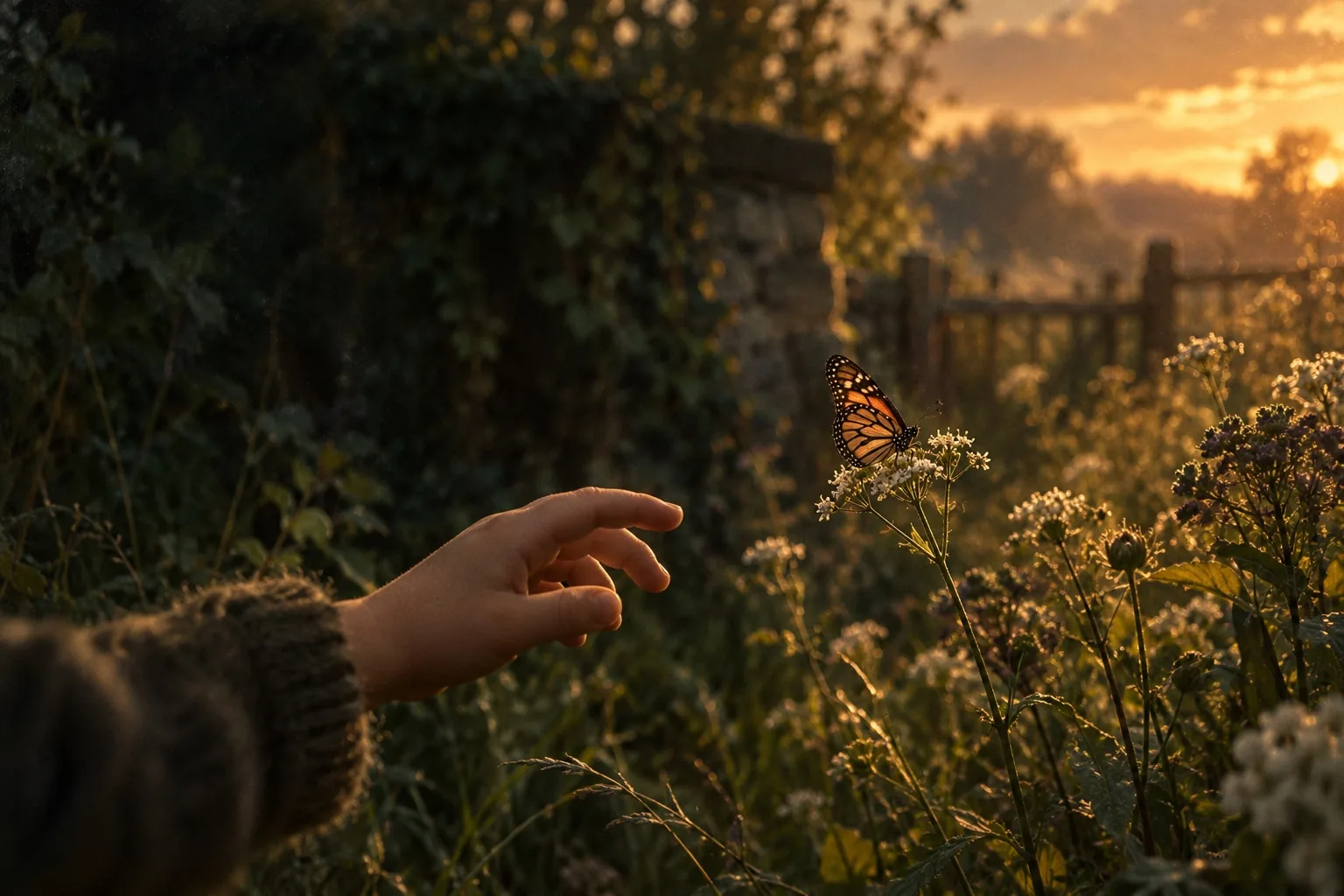
And someone had arranged for me to release monarch butterflies.
I suppose it was fitting.
My mother had loved her garden.
She had played the piano.
And somewhere along the way, I had become the gardener.
The pianist.
The keeper of some of the beautiful things we had shared, even when so much else between us had been painful.
I approached the box.
I opened it.
And the butterflies were dead.
All of them.
They fell to the ground.
No great cloud of orange wings rising into the air.
No delicate procession toward the sunlight.
No miraculous symbol of freedom.
Just small, fragile bodies that would never fly.
I thought that would be the moment I cried.
Instead, I looked up.
And I imagined my mother laughing.
Not the laughter she performed for guests.
Not the kind that would leave us frightened of what came afterward.
Her laughter.
The ridiculous, irreverent recognition that of course, after everything, even the butterflies had failed to cooperate.
And for a moment, I could almost hear her.
I could almost share the joke.
There was something so painfully appropriate about it.
I have often wondered whether someone tried to clip my mother's wings long before I was born.
Whether shame, cruelty, fear, or the expectations of other people gradually taught her to live in a smaller and smaller world.
Whether she had once imagined becoming someone she never got to be.
I don't know.
I know only what I saw.
And what she did.
And what happened to me.
Because some of the very monsters who may have helped diminish her life were allowed into mine.
Some of the harm was hers to answer for.
I will not pretend otherwise.
I had walked so much of the same path.
I knew the wire.
I knew the performance.
I knew the exhaustion of giving everything I had while wondering whether any of it would ever make me worthy of love.
I knew what it meant to surrender parts of myself simply to survive.
But standing there, looking at those fallen butterflies, I understood something.
I would not surrender my wings.
Not to the people who had hurt me.
Not to the roles I had learned to play.
Not to the belief that love must always cost me something essential.
And not even to the mother I had spent so much of my life trying to save.
I could love her.
I could grieve her.
I could wonder about the woman she might have been.
And I could still choose not to become her.
I was not given everything a son might hope to inherit.
Not the recipes.
Not the songbooks.
Not all the pieces of her that I wanted to keep.
But I eventually found a kind man at a funeral home who helped me open the urn I had received.
And I took my mother traveling.
Across oceans.
Across continents.
To places she had never seen.
Over Africa, I let a little of her go into the wind.
In New Zealand, above rolling green hills, I let her dance through the air.
And elsewhere, wherever the journey carried us, I found small places to let her fly.
I could not give her the childhood she had lived.
I could not give her a different marriage.
A different history.
A different set of choices.
I could not take away whatever had taught her to be frightened of tenderness.
I could not change the harm she had caused.
And I could not know whether she had ever experienced the freedom I hoped she might find.
But I could open my hands.
And let the wind take what I no longer needed to hold.
And somewhere over the rolling green hills of New Zealand, with the wind carrying what remained of my mother into a sky she had never known, I realized something.
All those years, I had wanted to hug her.
To wrap my arms around the woman who had frightened me, wounded me, and sometimes seemed so terribly far away even when she was standing right in front of me.
I had wanted to make her troubles disappear.
To give her somewhere soft to land.
But the embrace I had needed from her never came.
Not in the way a little boy should have been able to count on.
And I had spent so much of my life wondering what that meant about me.
Yet here I was.
Standing beneath an enormous sky.
My hands open.
The wind moving through them.
And perhaps, in the only way left to us, I was finally holding my mother.
Not the woman I had wished she could become.
Not an imaginary mother whose tenderness could undo what happened.
My mother.
The woman who played the piano.
Who grew beautiful things.
Who could make a room laugh.
Who could hurt me.
Who may have spent her entire life trying to survive storms I would never fully understand.
I had not been able to save her.
I could not give her back the years.
I could not undo what she had done to me.
But I could give her this.
One last embrace.
One that did not ask either of us to perform.
One that did not require me to become small.
One in which I could finally open my arms without being afraid of what might happen afterward.
And perhaps, in opening my hands, I was doing something else, too.
I was giving her the wings I had always wished she could have.
Not because I knew whether she had ever been free.
Not because I could make her free by wishing it.
But because I loved her.
And I wanted to imagine her somewhere beyond the storms.
Somewhere the wind did not carry knives.
Somewhere it simply carried her.
My mother never knew how to hold me safely.
But I like to believe that, in the end, I found a way to hold her.
And then I let her fly.
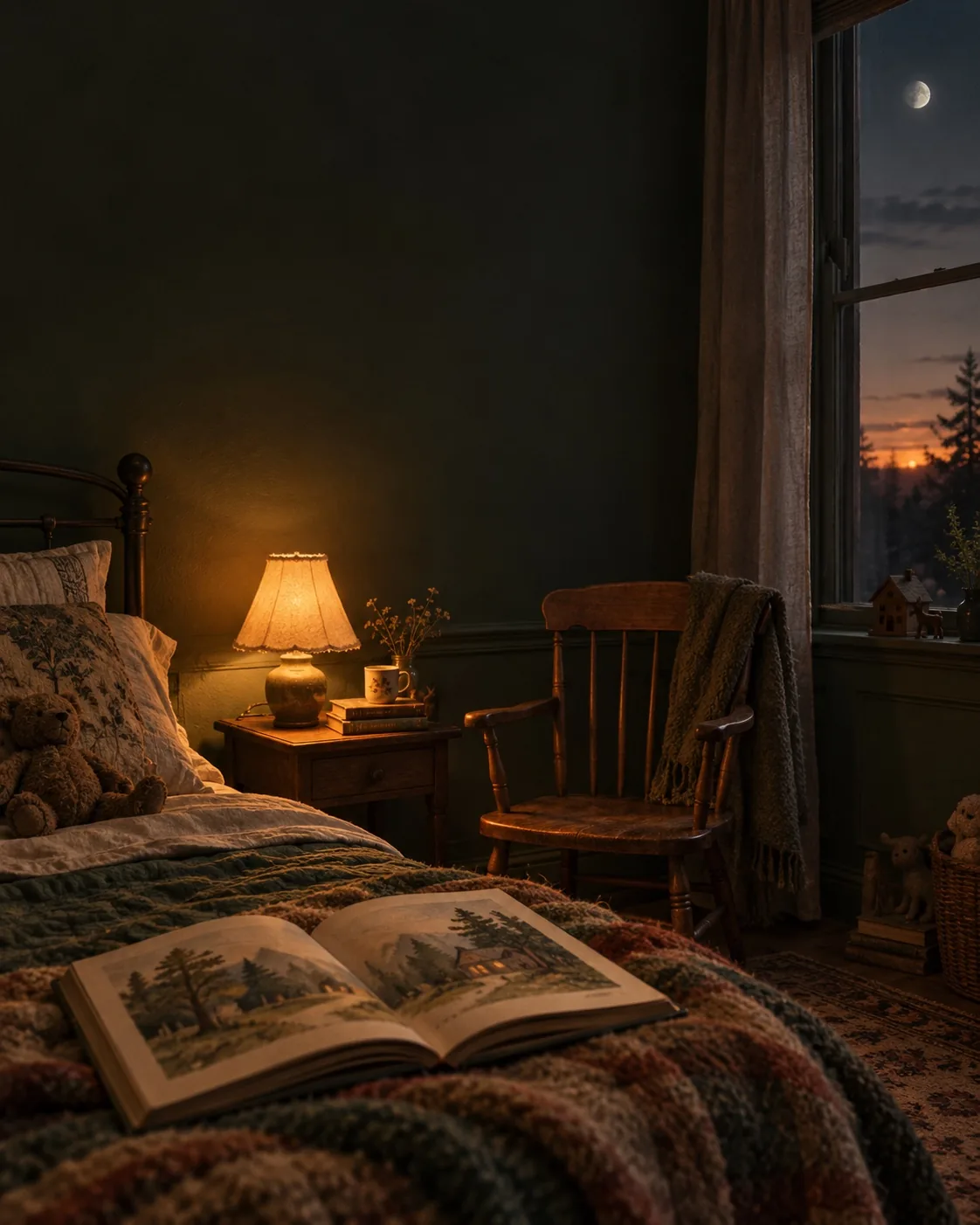
Not long ago, I began writing a children's book.
A Place for Two Lights.
It is a story about the Sun and the Moon.
About two lights who discover that they do not have to become one another to belong beneath the same sky.
About a Moon who has come to believe that his worth depends upon how much light he can give away.
About a Sun who does not have to shine endlessly to deserve companionship.
And about the possibility that love might remain even when neither of them has anything left to offer.
I had been thinking about these things for years without knowing they were becoming a bedtime story.
Being needed.
Being useful.
Being the one who keeps the light on.
The terrible exhaustion of believing that if you stop giving, someone might stop loving you.
And somewhere in the middle of making the book, I remembered the little boy who wondered what it would be like to have his mother read to him.
It was such an ordinary thing to have missed.
A bedtime story.
A voice beside the bed.
A few minutes in which the world became small enough to fit between two covers.
And yet I had carried the absence for decades.
I was writing something for children that I had once wanted someone to give to me.
I wish I could say the discovery made me feel whole.
It didn't.
I felt the distance.
Between the child who waited and the man who now had the words.
Between the bedtime story that never came and the one I was placing into the world.
I could make the illustrations beautiful.
I could fill the sky with stars.
I could give the Moon somewhere to rest.
But I could not travel backward and place my mother's voice beside my childhood bed.
I could not make the story have happened.
And perhaps that is one of the hardest things about growing older.
Discovering that we can become capable of giving what we once desperately needed, without ever having received it ourselves.
There is beauty in that.
But there is grief, too.
And I don't think one should be used to erase the other.
When I think about The Land Before Time now, I remember Littlefoot in the rain.
I remember that terrible search for his mother.
And I remember the music.
If We Hold On Together.
I wonder what the little boy in the theater understood about that song.
Perhaps he understood that love could continue after someone was gone.
Perhaps he understood that sometimes the person we miss is still alive.
Perhaps he understood that a child can spend years searching for someone who is standing right in front of him.
And perhaps he was mourning something he had never been allowed to have.
I don't want to turn my mother into a monster in this story.
But neither do I want to turn her into a saint simply because she is dead.
She was my mother.
She played the piano.
She grew beautiful things.
She could fill a room with laughter.
She could hurt me.
And I loved her.
All of those things are true.
I still cannot tell you with certainty how much she loved me.
I cannot tell you what she was capable of feeling.
What she wanted to give.
What she could not bear to receive.
I know that I loved her.
I know I tried to reach her.
I know there were things she gave me and things she took from me.
And I know that loving her did not require me to disappear into the same darkness.
Sometimes is not always.
And wondering is not the same as knowing.
But love does not always require certainty to remain love.
As I worked on the illustrations for A Place for Two Lights, I imagined a child looking out of a bedroom window.
The Sun and Moon are there, somewhere beyond the glass.
The world is enormous.
There are clouds.
There is darkness.
There are things the child cannot understand or control.
But there is also a story.
And the possibility of turning a page without having to know how everything will end.
I thought about how carefully a bedtime story should be made.
How much room there should be for a child's eyes to wander.
How the smallest details might offer little places to rest.
How a question can be left open without leaving a child alone inside it.
I wanted the book to be gentle.
But I did not want it to lie.
I did not want to tell children that clouds always pass quickly.
Or that everyone they love will know how to love them back.
Or that the world will become safe simply because they are brave.
Children deserve something more truthful than that.
They deserve to know that their light still belongs to them when someone else cannot see it.
That they do not have to disappear so another person can shine.
That being loved is not supposed to require becoming useful.
And that sometimes two lights can remain themselves, even when they cannot close the distance between them.
I suppose these are things I have spent a lifetime trying to understand.
At sixteen, I wrote about wanting to make my mother's troubles disappear.
Now, all these years later, I am writing about a Moon who wonders whether he can be loved when he has nothing left to give.
I wish I could introduce those two boys to each other.
The sixteen-year-old with his poem.
And the younger one waiting for a bedtime story.
I think they would recognize one another.
I think they might have a great deal to say.
Or perhaps neither would say anything.
Perhaps they would simply sit together and turn the pages.
I think again about the airport.
Arrivals.
Departures.
The strange geography of a life spent trying to decide whether to stay or disappear.
I think about the butterflies.
The ones that never flew.
And about my mother's ashes catching the wind above green hills and distant continents.
I think about the little boy who wanted to hug her and make all her troubles disappear.
And the man who finally understood that he could not.
That he had never been supposed to.
There are things I still miss.
There are things I will always wish had been different.
There is a bedtime story I never heard.
There is a mother I loved whose tenderness I could never safely depend upon.
There are wings that never opened.
And none of those things can be undone by what I write now.
But I am still here.
I still play the piano.
I still put my hands in the earth and grow things.
I still love.
Sometimes with a heart so full of longing I wonder how the body makes room for it.
And I still believe that what happened to us does not have to become the only story we know how to tell.
My mother may never have found her way out of the storm.
I cannot know.
But I have spent much of my life learning that I am allowed to look for a different sky.
Not because I have forgotten her.
Not because I have stopped loving her.
And not because the storms have disappeared.
But because I have wings.
Because there is still somewhere to fly.
Because somewhere, a little boy is waiting for someone to turn the page.
And because I have finally begun to understand that the light I spent so many years trying to keep burning for everyone else was never supposed to consume me.
I do not have to turn it out.
I do not have to give it all away.
I can let it shine.
And I can share it.
Not as a performance.
Not as a debt.
Not as proof that I was worth loving.
But because it is mine.
And because I am still here.
And because, after everything,
I chose to leave the light on.