The Witness and the Watchman
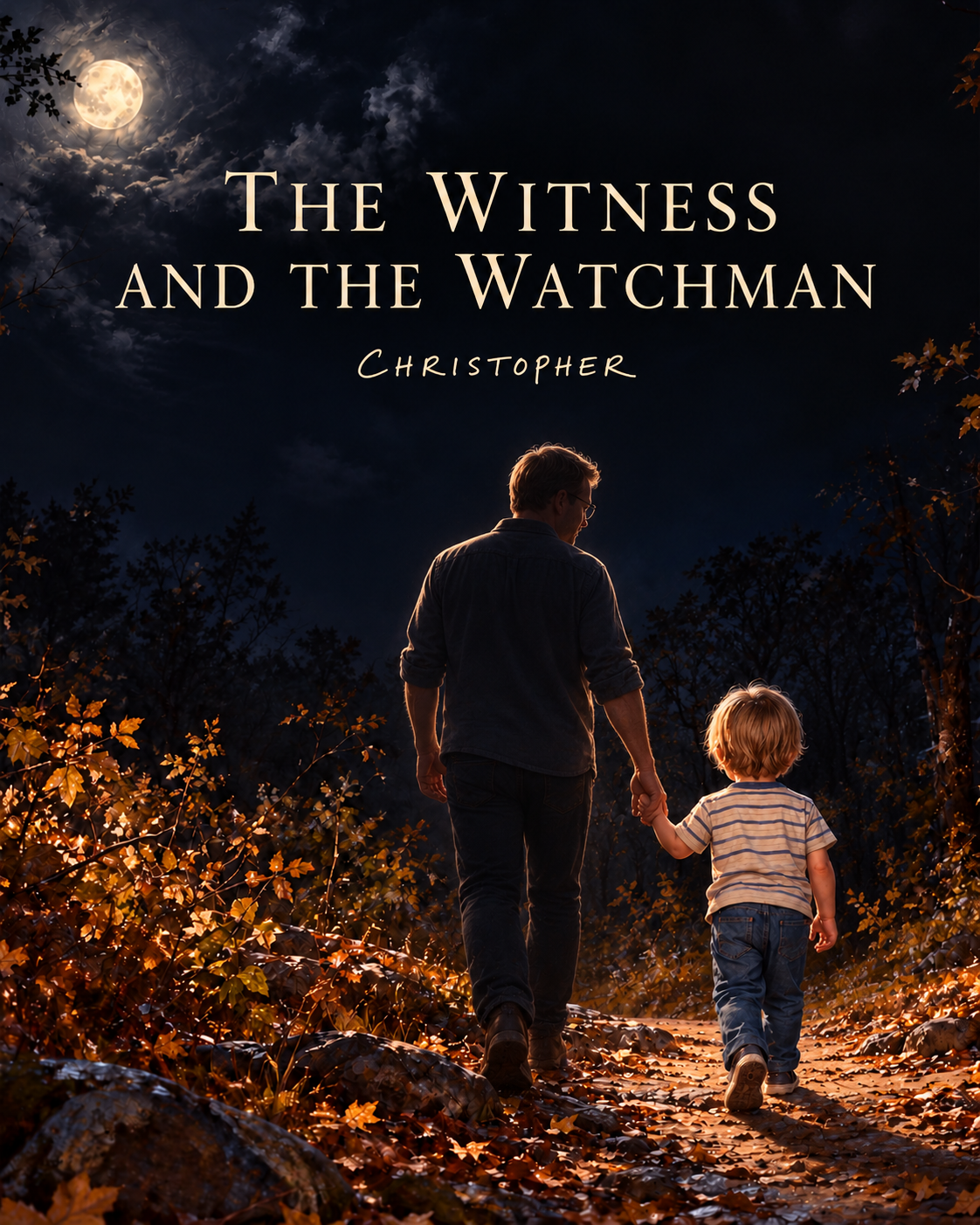
What if the part of you that notices everything is the part of you that never felt safe enough to stop looking?
On hypervigilance, intimacy, and learning to see without searching for the ending.
For most of my life, people have told me that I notice everything.
They meant it as a compliment.
And for a long time, I thought it was one.
I could recognize the smallest changes in someone’s expression.
A breath held half a second too long.
A smile that arrived before the eyes were ready for it.
That almost imperceptible movement of an eyebrow.
A silence that meant something different from the silence that came before.
I could sit in a room full of seventy-five people and notice the one person who had quietly disappeared inside themselves.
And for almost twenty years, this was part of my work.
I was a clinician.
A witness to the places people carried their suffering.
People told me they felt seen.
They told me they could share things with me they had never told another person.
Sometimes they said it felt as though I already knew their secrets before they had spoken them.
As though they were not telling their stories to someone for the first time.
And perhaps, in some small way, I did know something.
Not their secrets.
Not their stories.
But the shape of the effort it took to carry them.
The way a body can become very still when something inside it is trying not to move.
The way laughter sometimes arrives to protect a person from crying.
The way someone’s eyes can begin asking for help long before their mouth is willing to admit they need it.
I noticed.
I witnessed.
I reflected.
And sometimes, when invited, I helped people find their way toward something they had not yet known how to name.
I believed this was one of my gifts.
And I still do.
But recently, something occurred to me.
Something that, despite all those years of clinical practice, all the meditation, all the breathwork, all the studying of human behavior and the nervous system, had somehow escaped me.
I had spent a lifetime learning how to witness other people without judgment.
But I had not always known how to do that with the people I loved.
And certainly not with myself.
Because somewhere along the way, noticing had become something else.
Something older.
Something frightened.
Something that had been standing guard long before I ever learned to call myself a clinician.
I had a witness.
But I also had a watchman.
And for much of my life, I mistook them for the same person.
The watchman arrived early.
I cannot tell you exactly when.
Perhaps there was no single arrival.
Perhaps he was assembled slowly.
One disappointment at a time.
One frightening room.
One broken promise.
One moment when the expression on someone’s face changed and what followed taught me that I should have noticed sooner.
Children are extraordinary students of the environments in which they must survive.
They learn the sound of footsteps.
The difference between a door closing and a door being slammed.
The particular silence that precedes an argument.
The way a mother’s glance changes so subtly when she is allowing a monster in - on purpose.
The way a familiar voice changes when something dangerous is approaching.
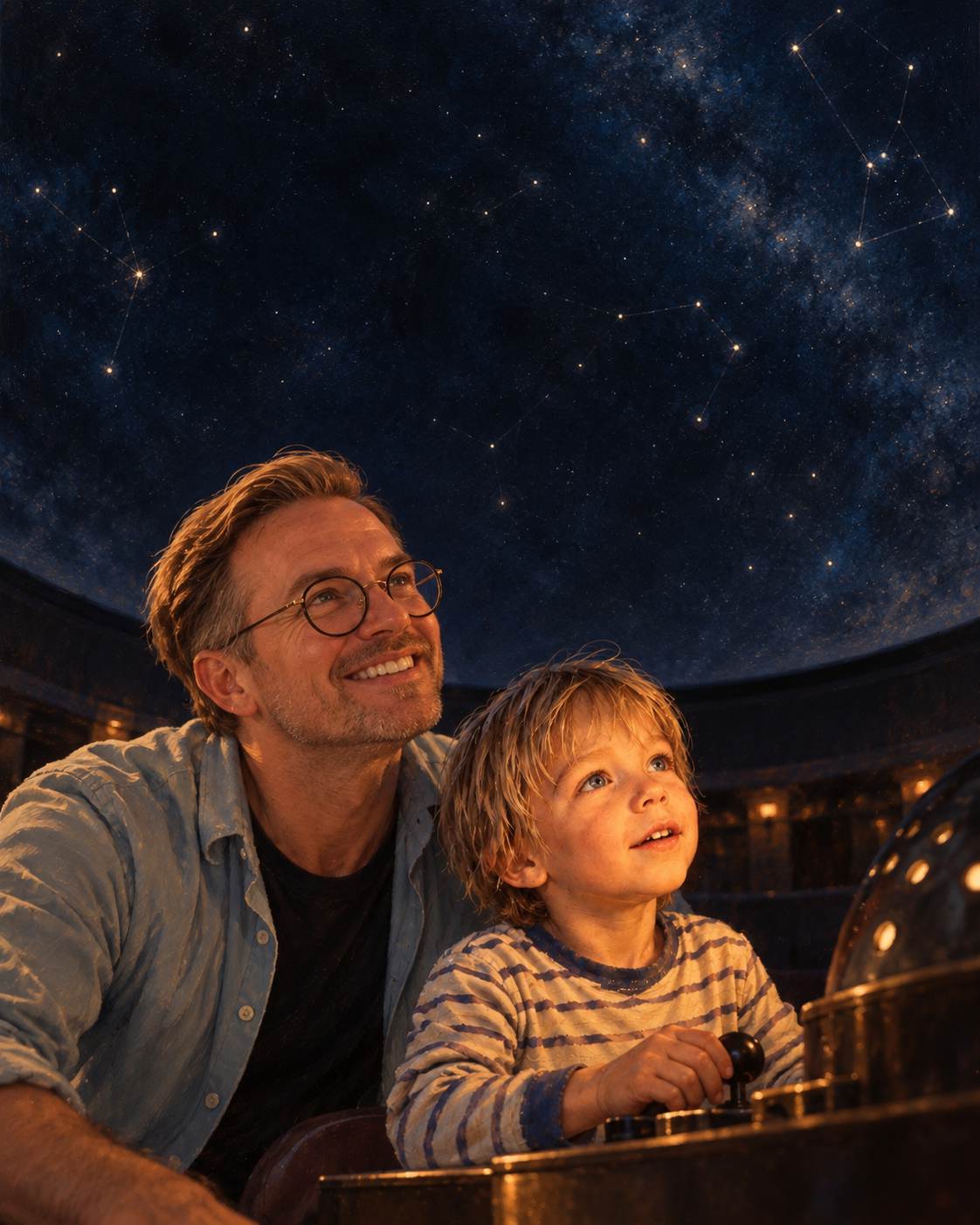
And sometimes, when enough uncertainty lives inside a home, a child begins studying the people around him the way ancestors study the sky.
Not because he is fascinated by weather.
Because he needs to know when the storm is coming.
I became very good at reading the sky.
By third grade I could run a planetarium program without notes or guide.
I learned to notice what other people missed.
To recognize patterns.
To anticipate changes.
To find the smallest clues that something was no longer safe.
And somewhere in all that careful watching, a belief began to take root.
If I could see what was coming, perhaps I could survive it.
Perhaps I could prevent it.
Perhaps I could prepare.
Perhaps I would never again be taken completely by surprise.
Of course, it never did work that way.
The storms still came.
People still left.
Promises still broke.
The world still changed without asking whether I was ready.
But the watchman did not interpret those experiences as evidence that he could rest.
He interpreted them as evidence that he needed to watch more carefully.
And so he did.
For years.
For decades.
Long after some of the original dangers were gone.
Long after the rooms had changed.
Long after the child had become a man.
The watchman remained.
Still listening for footsteps.
Still studying the weather.
Still searching for the moment the light might change.
There is something we do not always discuss about hypervigilance.
It does not necessarily look like fear.
Sometimes it looks like empathy.
Sometimes it looks like intuition.
Sometimes it looks like being extraordinarily perceptive.
Being the person who always notices when someone is upset.
The person who remembers every detail.
The person who senses the emotional temperature of a room before anyone else has even taken off their coat.
And sometimes these are genuine capacities.
Beautiful ones.
But a capacity can be both a gift and an adaptation.
We can become extraordinarily skilled at understanding other people partly because, at some earlier point in our lives, understanding them felt necessary for our survival.
And this is where things become complicated.
Because the witness and the watchman may use the very same eyes.
They may notice the very same movements.
They may recognize the very same patterns.
But they are not necessarily asking the same questions.
The witness asks:
What is happening here?
The watchman asks:
What is about to happen to me?
The witness is curious.
The watchman is preparing.
The witness allows a moment to reveal itself.
The watchman wants to know what the moment predicts.
And when we have lived through enough painful endings, the watchman can become particularly interested in the smallest signs that another one is approaching.
A delayed reply.
A different tone of voice.
A smile that feels less enthusiastic than yesterday.
A pause before someone says they love us.
A change in the way they hold our hand.
And suddenly we are no longer simply experiencing a relationship.
We are investigating it.
Looking for clues.
Comparing evidence.
Attempting to determine whether the person in front of us is beginning to leave.
I have often said that I read the last page of a book before beginning the first.
I used to think this was simply a peculiar habit.
But I wonder now whether it was also a small expression of something much larger.
An attempt to know the ending before becoming attached to the story.
And I did this in love, too.
Sometimes I was so busy reading the exits that I missed the room.
So busy anticipating the goodbye that I could not fully experience the hello.
So busy examining the possibility of abandonment that I struggled to remain present for the moments in which someone was still there.
I was not always listening to what love was saying.
Sometimes I was listening for when it might stop.
I want to be careful here in what I tell you and how you digest it.
Because there is a particular cruelty in telling people who have survived painful or deceptive relationships that they simply need to stop looking for danger.
Sometimes the danger was real.
Sometimes the inconsistencies mattered.
Sometimes the instincts we were encouraged to dismiss were trying to tell us something important.
And sometimes people really did lie.
Really did manipulate.
Really did make us question what we had seen, heard, remembered, and experienced.
I know something about that.
And I will not pretend that every frightened response is an irrational one.
Healing does not mean becoming less discerning.
It does not mean ignoring evidence.
It does not mean allowing someone to repeatedly hurt us while congratulating ourselves for remaining present.
There is no virtue in abandoning ourselves to prove that we are no longer afraid.
But I am beginning to understand that there is a difference between recognizing a warning and treating every uncertainty as one.
A difference between asking a necessary question and conducting an endless investigation.
A difference between remembering what happened and requiring the present to answer for every injury in the past.
Sometimes the watchman is right.
Sometimes there really is smoke.
But sometimes he smells the memory of a fire that has already gone out long before.
And I think healing involves learning how to tell the difference - or on the harder days - at least being open to their being a difference.
Not perfectly.
Not every time.
But with increasing kindness toward ourselves.
And with a willingness to consider that uncertainty, however uncomfortable, is not always an emergency.
Something has been changing in me recently.
Not all at once.
And certainly not without difficulty.
There have been frightening moments.
There have been questions without immediate answers.
There have been circumstances that, at other points in my life, might have sent me searching for the nearest exit.
Some of those circumstances deserved serious attention.
Some still do.
I do not want to romanticize staying.
But something about the way I am learning to remain present, both with another person and with myself, has begun to feel profoundly different.
And I discovered it, of all places, in a pair of eyebrows.
Someone I love has extraordinarily expressive eyes.
The kind that seem to tell stories their lips have not yet learned how to speak.
And when he becomes nervous, or frightened, or perhaps simply overwhelmed, something almost imperceptible happens.
His eyebrows become heavy.
Only for a fraction of a second.
Not quite a furrow.
There is hardly enough time to call it that.
And then they rise again.
I notice it.
Of course I notice.
I have spent my life noticing things like that.
But what struck me recently was not what I saw.
It was what I did not do with what I saw.
I did not immediately decide it meant something terrible.
I did not begin constructing a story about what he might be hiding.
I did not take a momentary expression and force it to become evidence of an impending loss.
Instead, I wondered.
Was he frightened?
Was he finding his way through something?
Was this some little practice of regulation he had developed without even realizing it?
Or was it simply his face doing what faces do?
I did not know.
And for once, not knowing did not feel like a failure.
I could simply notice.
I could remain curious.
I could care.
I could allow the moment to be what it was without requiring it to tell me what would happen next.
And something about that experience stopped me.
Because I realized that I was using the very same capacity I had spent decades cultivating.
But it was no longer being used primarily to protect me from an ending.
It was allowing me to inhabit the present.
I was not reading the last page.
I was finally inside the story.
And perhaps the most extraordinary part of this discovery is how it arrived.
Not through another examination of my childhood.
Not through another meditation retreat or trauma intensive.
Not through another clinical training, or another careful excavation of the ways I had learned to survive.
It arrived while I was writing a love poem.
Of all things.
A love poem about the smallest details of someone I adore.
Two little beauty marks.
A pair of impossibly expressive eyes.
Eyebrows that become heavy for a fraction of a second before rising again.
Hands that seem to dance when happiness becomes too large to remain inside his body.
And a smile I have come to recognize in all its ridiculous, beautiful stages.
I was not searching for evidence of danger.
I was not examining his expressions to determine whether something had changed between us.
I was simply noticing.
And delighting in what I noticed.
I was allowing his happiness to make me happy.
Allowing his tenderness to reach me.
Allowing myself to be moved without asking what the feeling might eventually cost.
And somewhere in the middle of writing about everything I loved in his face, I realized something about my own.
I had spent years learning how to recognize the smallest signs that something was wrong.
And then, almost without realizing it, I had begun noticing the smallest signs that something was beautiful.
The remarkable thing was that I had not acquired a new pair of eyes.
I had simply begun allowing them to look for something other than danger.
And perhaps even more importantly, I was no longer standing outside the experience, studying it.
I was inside it.
I was not merely witnessing another person’s emotional world.
I was allowing his world to touch mine.
To change me.
To delight me.
To make me laugh.
To make me cry.
To remind me that my sensitivity was never meant to serve only my survival and vocation.
It was also meant to serve my capacity for joy.
And for the first time, I began to understand something I had perhaps known intellectually for decades.
Presence is not merely the absence of vigilance.
It is the willingness to participate.
To give and to receive.
To notice beauty without demanding that it promise to remain.
To experience love without making ourselves responsible for predicting its ending.
And perhaps this is one of the quietest ways healing sometimes announces itself.
Not when we finally stop remembering what hurt us.
But when we discover that something beautiful has been happening right in front of us,
and for once,
we were there to see it.
There is another difference I have been considering.
In my clinical work, witnessing had a purpose.
I listened.
I reflected.
I helped people identify patterns, recognize emotions, and sometimes discover possibilities they had not considered.
There was tenderness in that work.
There was reverence.
But there was also a role.
I was there to help.
To hold a particular kind of space.
To offer something.
And I became very good at doing so.
Perhaps so good that I did not always recognize how easily the same orientation could follow me into my personal relationships.
Even in love, I could find myself trying to understand, regulate, anticipate, or repair.
As though every emotion required a response.
Every silence required interpretation.
Every difficulty required a solution.
And perhaps that is another way the watchman disguises himself.
Sometimes he does not stand at the door holding a weapon.
Sometimes he arrives carrying a first-aid kit.
He offers to help.
To fix.
To soothe.
To make certain no one becomes distressed enough to leave.
And because helping can be beautiful, we may not always recognize the fear quietly driving it.
But I am beginning to discover something else.
In intimacy, I do not always have to be the clinician.
I do not have to turn every observation into an intervention.
I do not have to help the person I love arrive somewhere.
Sometimes I can simply delight in him.
In the way his hands move when he is happy.
In the ridiculous little arguments that make us laugh.
In a smile that arrives in three different stages.
In two tiny moles that have become, for reasons I cannot entirely explain, among my favorite places in the universe.
I am allowed to be moved.
To be delighted.
To be ridiculous.
To be uncertain.
To be present without being useful.
The witness gets to be a participant.
And perhaps this has been one of the hardest things for me to learn.
That my presence can have value even when it is not doing anything.
That I do not have to earn my place in someone’s life by understanding every part of theirs.
That I can love without making myself responsible for every frightened thing another person carries.
And that I can allow myself to be loved without first becoming perfectly steady, perfectly wise, or perfectly healed.
I have spent a remarkable amount of my life studying presence.
Meditation.
Breathwork.
The nervous system.
The relationship between the body and the stories we tell ourselves.
I have studied in places where silence itself was treated as a teacher.
I have sat with people as they breathed through experiences that words could not yet hold.
I have taught others to return to the present.
To notice a sensation without becoming consumed by it.
To recognize a thought without treating it as a fact.
To allow an emotion to move without immediately needing to change it.
And I believed I understood mindfulness.
In many ways, I did.
But I am beginning to wonder whether there was a dimension of it I had not fully experienced in my own intimate life.
Because it is one thing to sit quietly and observe the movement of your thoughts.
It is another to remain present when the person you love becomes quiet and some old part of you begins whispering that silence means abandonment.
It is one thing to watch a difficult emotion rise and fall during meditation.
It is another to allow uncertainty inside a relationship without immediately seeking reassurance, evidence, or escape.
And it is one thing to teach someone that thoughts are not always facts.
It is quite another to remember that truth when your own frightened mind is presenting its predictions with the confidence of a courtroom witness.
There is a humility in this realization.
I have taught some of these things for years.
And still, I am learning.
Perhaps that is not a contradiction.
Perhaps it is simply what it means to be human.
Knowledge is not the same as embodiment.
Understanding a pattern does not necessarily dissolve it.
And sometimes a truth we have explained a thousand times does not become fully ours until life gives us an opportunity to experience it differently.
Not in a classroom.
Not on a meditation cushion.
Not during a clinical training.
But in the ordinary, terrifying, beautiful vulnerability of loving someone.
Of not knowing.
Of remaining.
Of breathing.
Of allowing the next moment to arrive without demanding that it justify the last.
And I wonder about you.
About the things you learned to notice before you were old enough to understand why you were noticing them.
Do you find yourself listening for changes in someone’s voice?
Searching for the meaning behind a silence?
Preparing for the goodbye before anyone has said they are leaving?
And when something beautiful finds its way into your life, can you allow yourself to receive it?
Or does some part of you immediately begin wondering how long it will stay?
I wonder what that part of you has been protecting.
How long it has been standing watch.
And what might happen if, instead of asking it to disappear, you invited it to sit beside you.
Just for a moment.
Just long enough to see what else is here.
I have been thinking about the watchman.
That younger part of me who learned to anticipate danger.
Who became so attentive to shifts in the emotional weather.
Who believed that vigilance was the price of survival.
I do not want to dismiss him.
And I certainly do not want to shame him.
He worked terribly hard.
There were times when noticing mattered.
There were times when preparing was necessary.
There were times when he may have helped me recognize something I truly needed to see.
He deserves my gratitude.
But I wonder whether he is tired.
I wonder whether he has spent so many years standing at the window that he has forgotten there are other things a window is for.
Not only to watch for approaching storms.
But to notice the light.
The trees.
The small birds gathering on the sill.
The ordinary miracle of a morning arriving without requiring anything from us.
And I wonder, too, about the little boy who stood behind him.
The one he was trying so desperately to protect.
The one who learned to become quiet when the room changed.
The one who wanted to run outside, to climb trees, to play in the rain, to be astonished by the world without first calculating what it might cost.
I wonder how often that little boy came to the window.
How often he stood beside the watchman and looked beyond the glass.
How often he saw something beautiful and wanted to go toward it.
Only to be told, gently perhaps, that they needed to wait.
That they needed to be careful.
That they needed to know what might happen first.
And perhaps this is another thing I am beginning to understand.
The watchman was not only trying to protect me from suffering.
He was trying to protect the little boy who had already suffered enough.
And in doing so, perhaps he sometimes protected him from experiences the little boy desperately needed.
Wonder.
Play.
Surprise.
To be Wild - again.
The delightful foolishness of loving someone so much that you become jealous of his fingers.
The freedom to laugh without checking whether the laughter will be followed by something terrible.
The possibility of receiving something beautiful without immediately calculating the price.
I do not blame the watchman for this.
How could I?
He was doing the best he knew how to do.
But I wonder whether he might be ready for a different kind of work.
Perhaps he does not need to be dismissed.
Perhaps I do not need to tell him that he was wrong.
Perhaps I can simply approach him.
Place a hand on his shoulder.
And say:
I know why you learned to watch.
I know what happened when you weren’t prepared.
I know how frightened you were of being surprised by pain again.
And I will not ask you to stop noticing.
But you do not have to turn every movement into a warning.
You do not have to make every silence a goodbye.
You do not have to find the ending before we are allowed to enjoy the beginning.
There will still be things worth questioning.
There will still be boundaries worth keeping.
There will still be moments when we need to leave.
And when those moments come, we can pay attention.
We can respond.
We can protect ourselves.
But we do not have to live every beautiful moment as though it is merely the interval before something terrible happens.
You have been standing guard for such a long time.
Come sit beside me.
There is something I want you to see.
And perhaps, when you are ready,
we can open the door.
Not because we know what waits on the other side.
Not because we have finally made the whole world safe.
But because the little boy has been waiting such a very long time to go outside.
And I think he would like to play.
And maybe this is where the witness and the watchman finally meet.
Not as enemies.
Not as competing parts of a fractured self.
But as two ways of looking at the same world.
One learned to recognize suffering.
The other learned to anticipate danger.
Both were trying, in their own ways, to keep something precious alive.
And perhaps healing is not the disappearance of either.
Perhaps it is the gradual discovery that they no longer need to do the same job.
That the watchman can alert us when something genuinely requires attention.
And the witness can help us remain open to the rest.
To affection.
To uncertainty.
To the possibility that someone else’s sadness is not our failure.
That someone else’s silence is not necessarily rejection.
That another person’s complicated internal world does not always require us to solve it.
And that love, however deeply felt, cannot be made safe through perfect prediction.
There is no amount of noticing that can guarantee we will never be hurt again.
No degree of emotional intelligence that can prevent every betrayal.
No sufficiently careful reading of another person’s face that will reveal every truth or protect us from every ending.
That is a difficult thing to accept.
Especially for those of us who learned, very early, that safety depended on knowing what was coming.
But perhaps freedom begins somewhere in that acceptance.
Not in becoming careless.
Not in becoming naive.
But in allowing ourselves to live without demanding impossible guarantees.
Because the alternative is a life spent standing at the door of every beautiful room, listening for the sound of someone leaving.
And I have spent enough of my life at doors.
I would like to come inside.
I would like to sit down.
I would like to hear the laughter without wondering how long it will last.
I would like to notice a change in someone’s eyes and allow myself to be curious before becoming afraid.
I would like to love without turning every tender moment into a test of whether tenderness will remain.
And when fear returns, as it sometimes will, I would like to make room for that, too.
I do not need to become fearless to be present.
I do not need to become less perceptive to become more peaceful.
And I do not need to know how the story ends to be fully alive inside it.
For most of my life, I believed my gift was that I could see what other people missed.
And perhaps it was.
Perhaps it still is.
But I am beginning to wonder whether the greater gift is learning that I do not always have to do something with what I see.
I can notice.
I can wonder.
I can remain.
I can be frightened.
And I can still allow the moment to be a moment rather than evidence of an ending.
Because I have spent enough of my life reading the last page first.
And there is a whole story happening here.
Right now.
One I would very much like to be alive for.
And somewhere beside me, I imagine the watchman finally lowering his eyes from the horizon.
Not because the world has become perfectly safe.
Not because the storms have stopped coming.
But because, for the first time in a very long time, he has noticed something other than the possibility of rain.
The witness is sitting beside him.
The light is coming through the window.
And for once,
neither of them
is looking for the door.