The Light We Leave OnWriting by CJ Sterling

What Do the Sun and Moon Do?

WHAT DO THE SUN AND MOON DO?

An unfinished little fairy tale about two lights

SWIPE โ†’
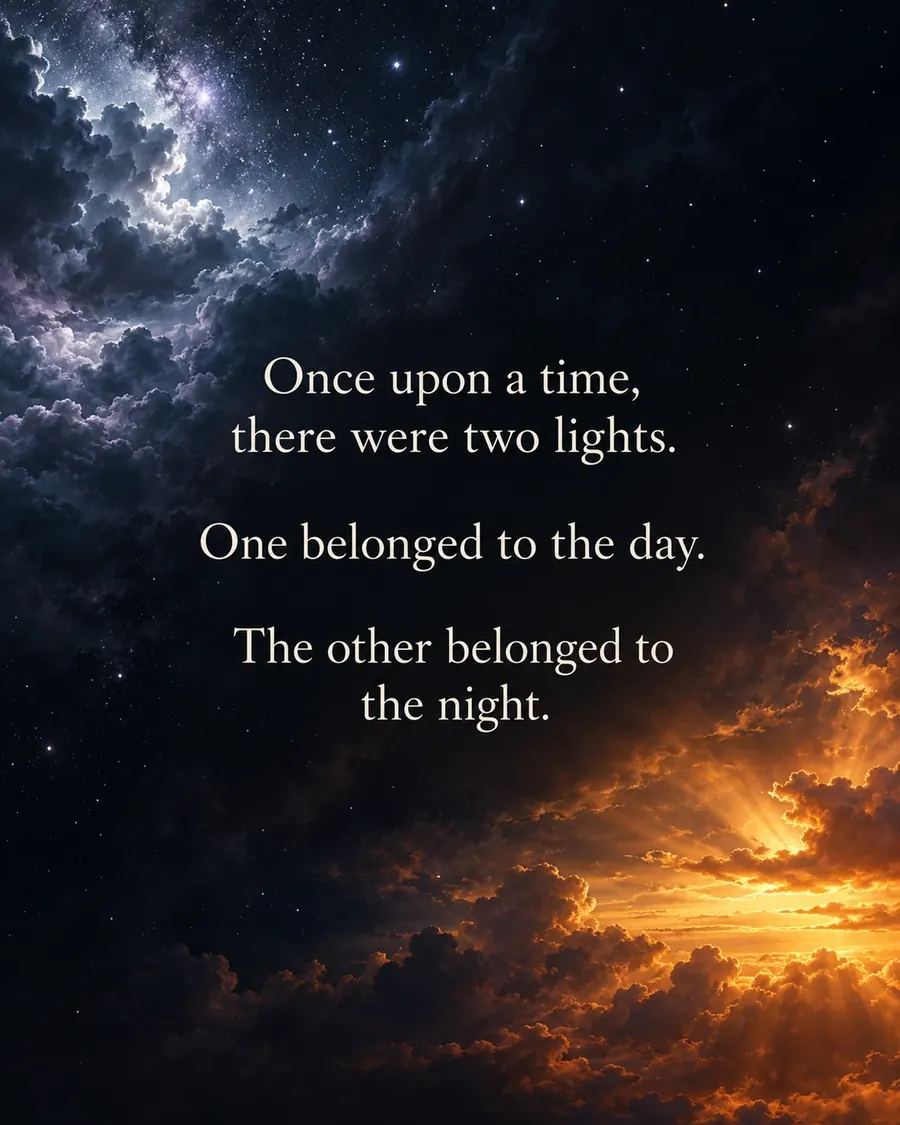
Once upon a time, there were two lights.

One belonged to the day.

The other belonged to the night.
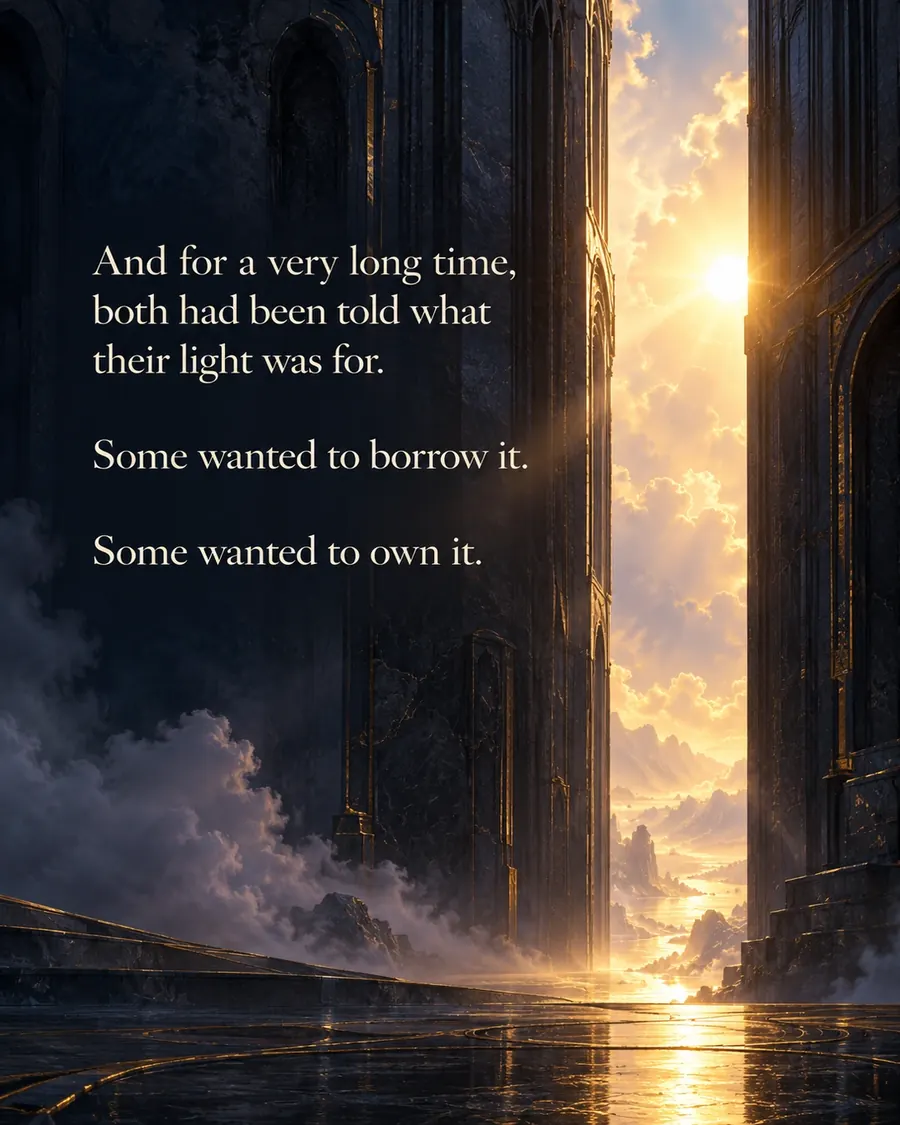
And for a very long time, both had been told what their light was for.

Some wanted to borrow it.

Some wanted to own it.
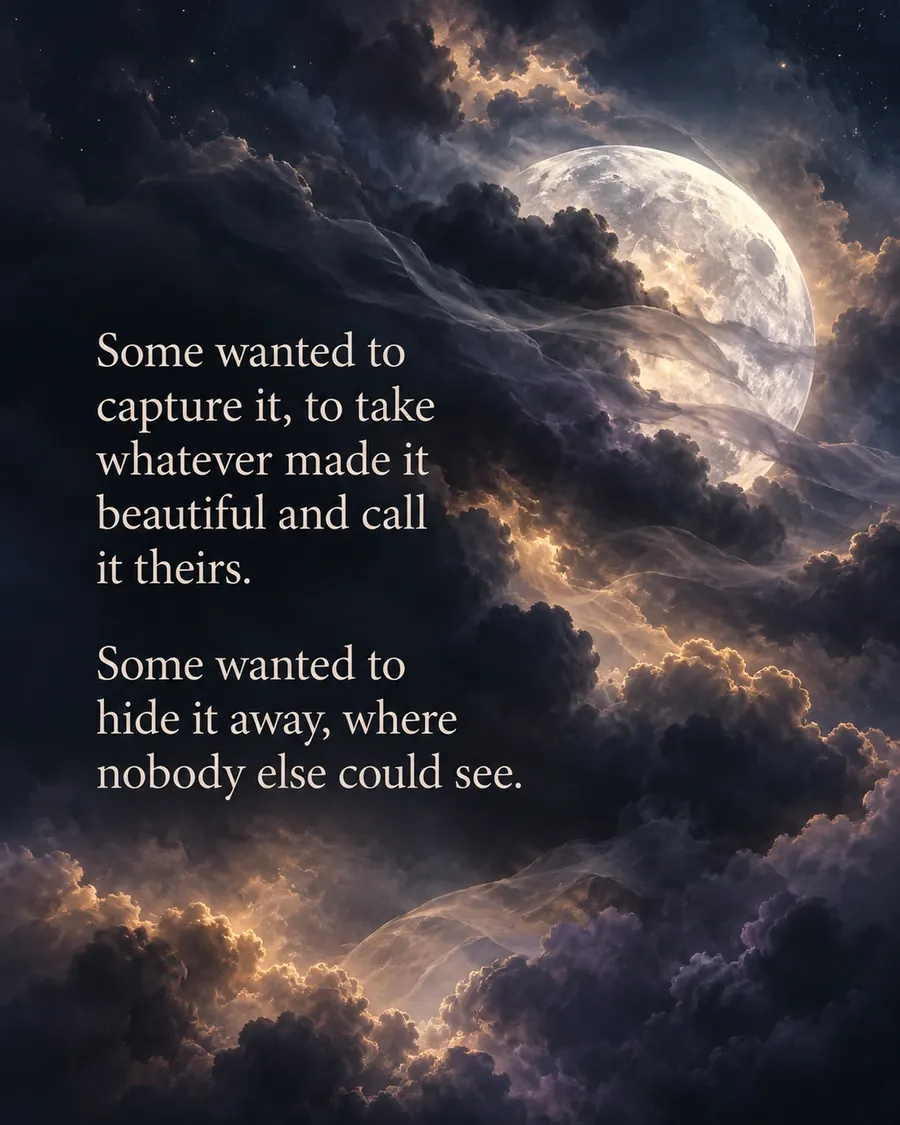
Some wanted to capture it, to take whatever made it beautiful and call it theirs.

Some wanted to hide it away, where nobody else could see.
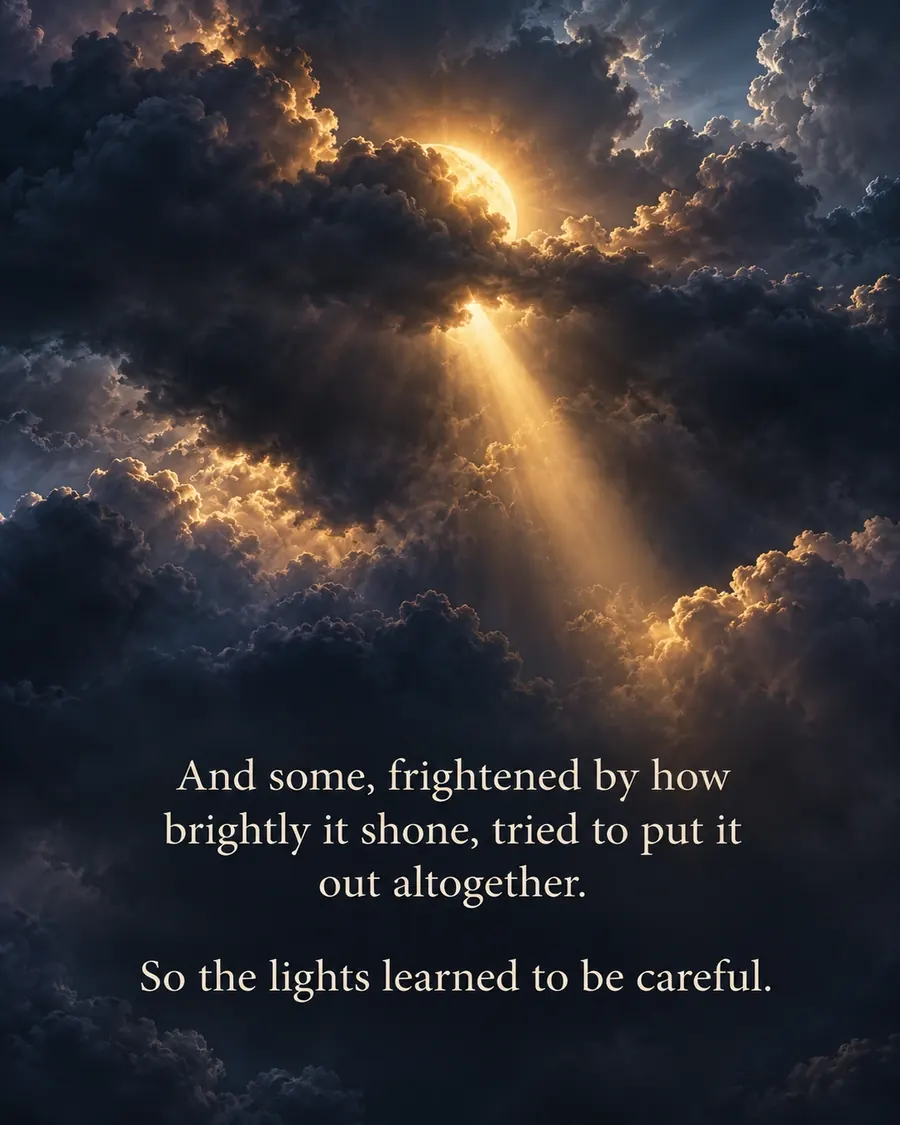
And some, frightened by how brightly it shone, tried to put it out altogether.

So the lights learned to be careful.
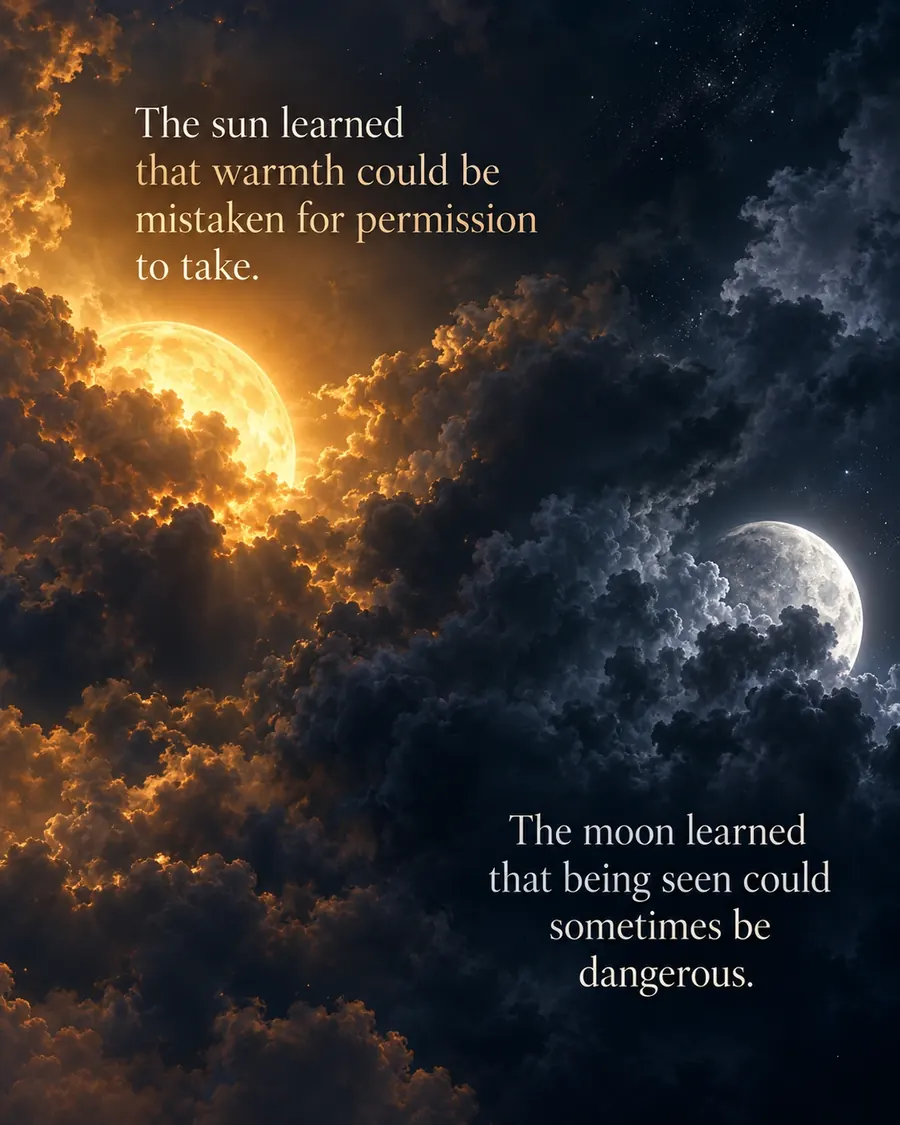
The sun learned that warmth could be mistaken for permission to take.

The moon learned that being seen could sometimes be dangerous.
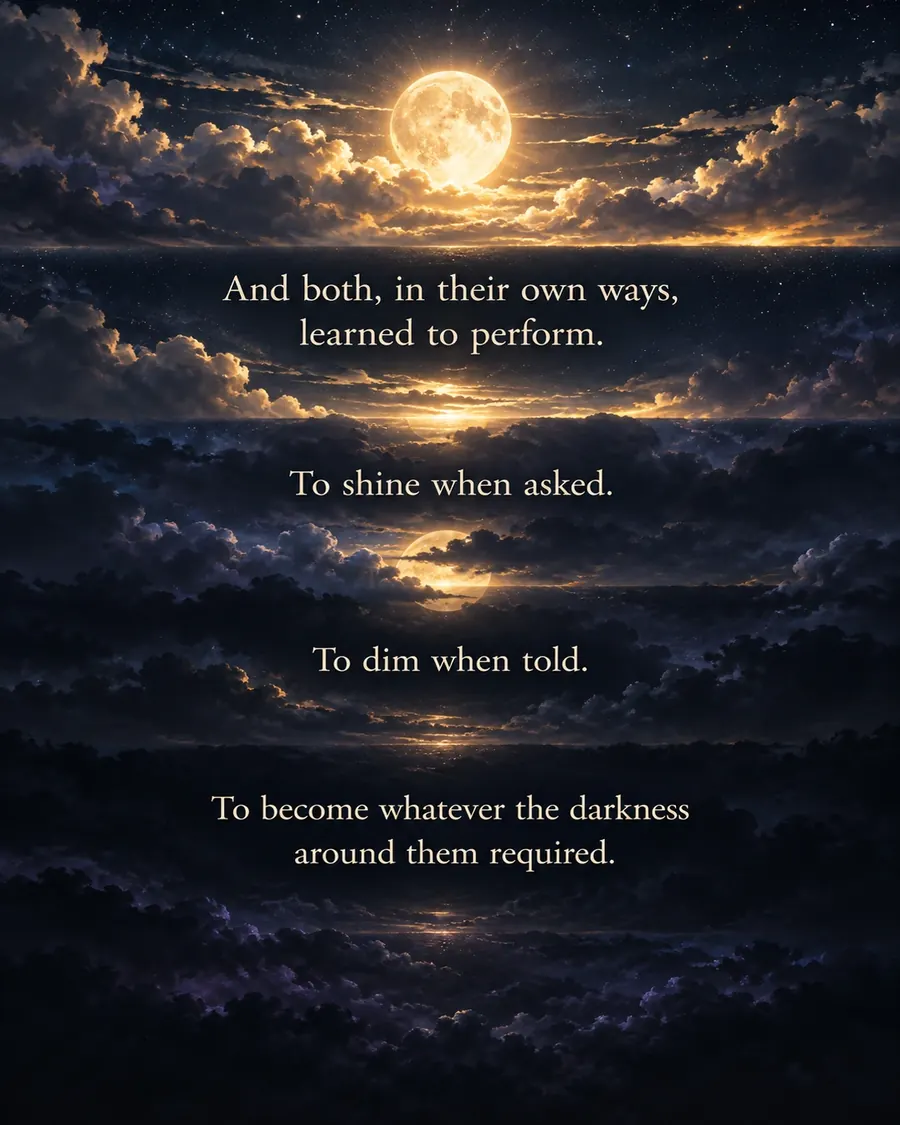
And both, in their own ways, learned to perform.

To shine when asked.

To dim when told.

To become whatever the darkness around them required.
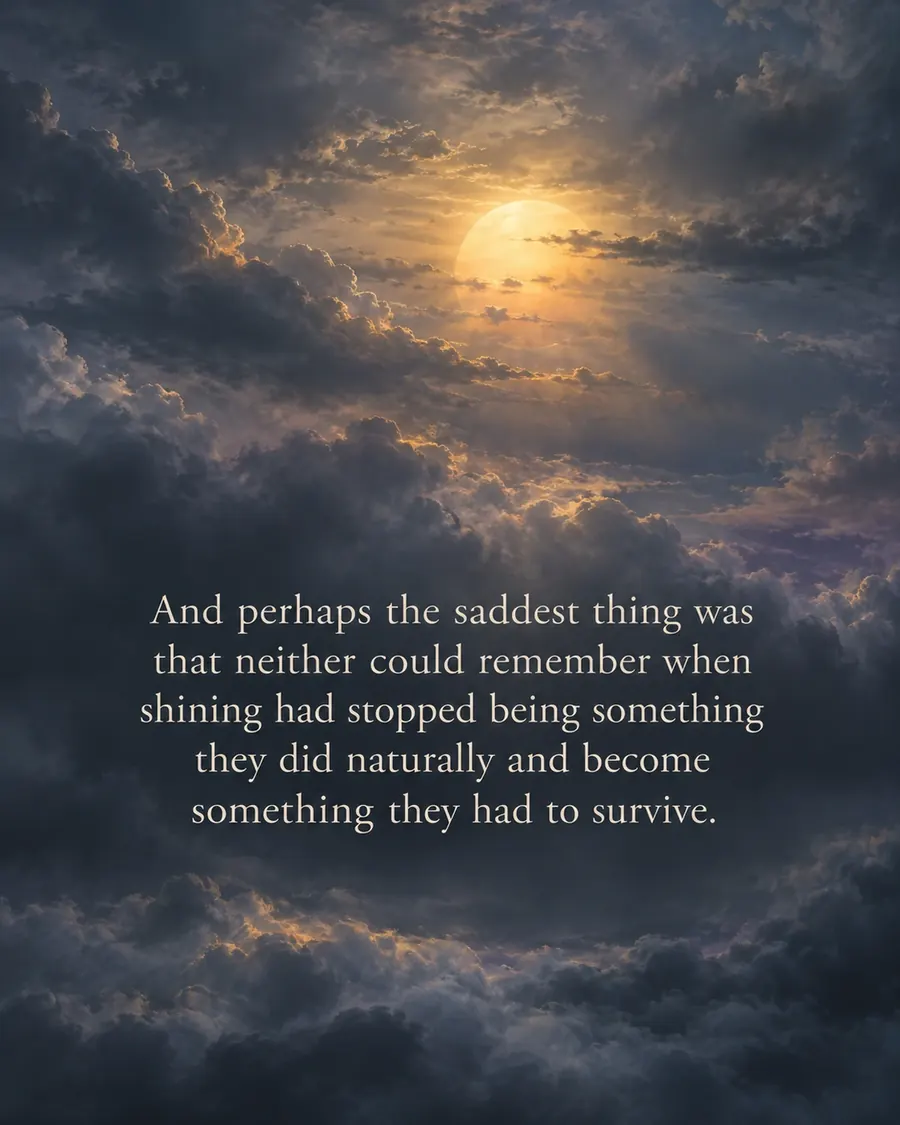
And perhaps the saddest thing was that neither could remember when shining had stopped being something they did naturally and become something they had to survive.
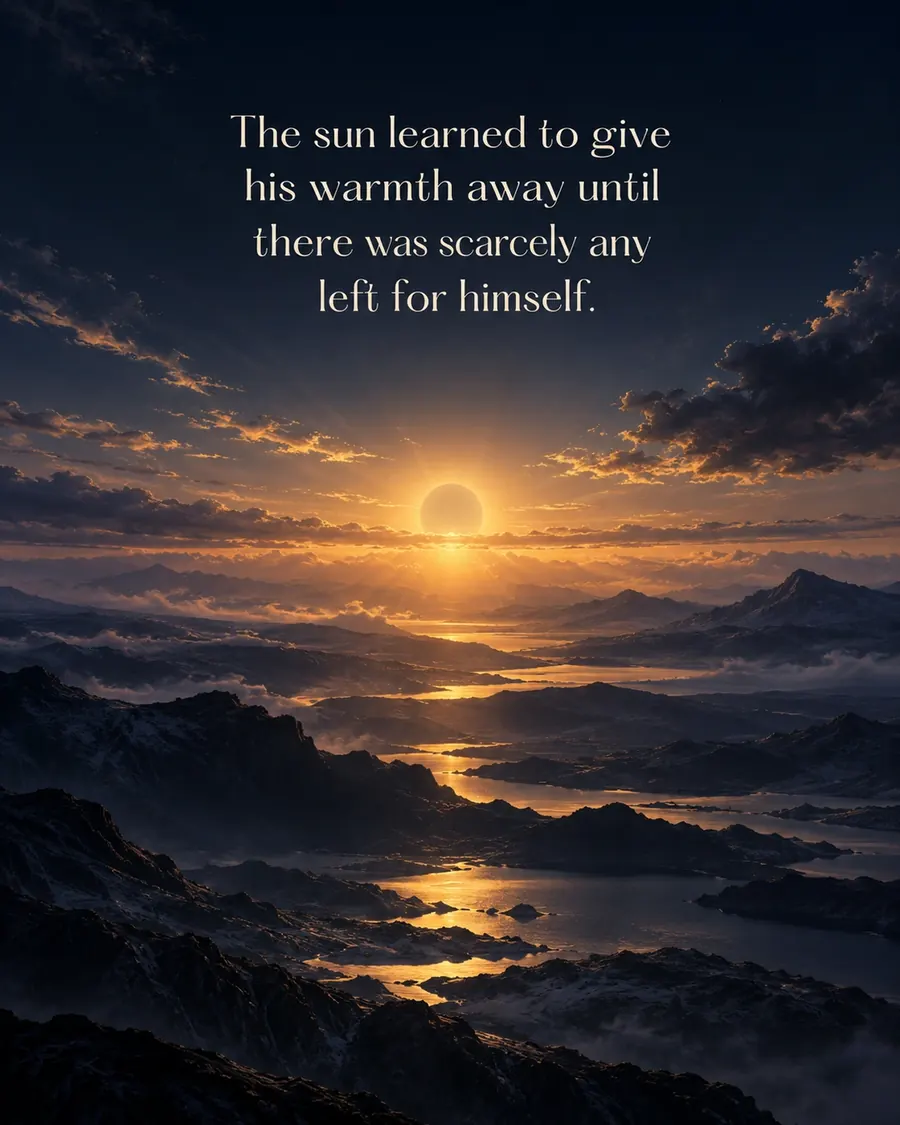
The sun learned to give his warmth away until there was scarcely any left for himself.
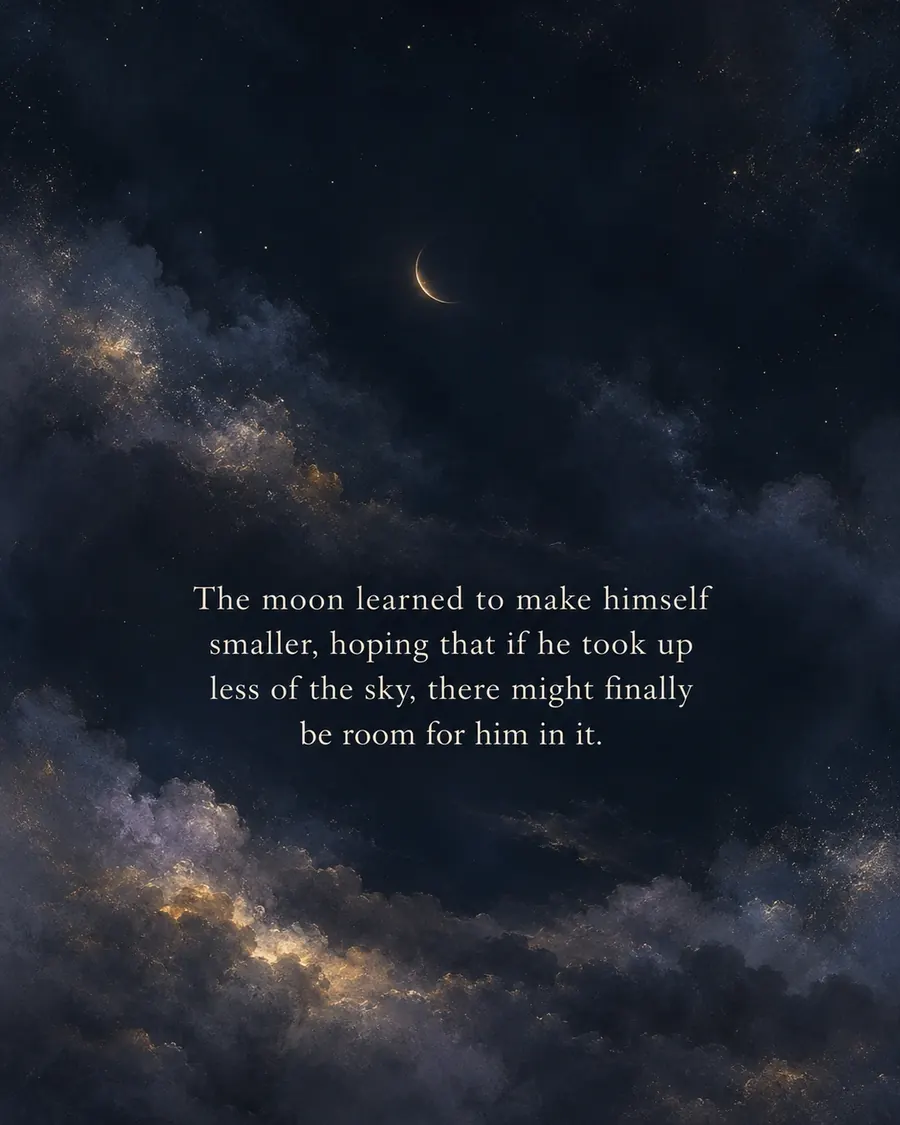
The moon learned to make himself smaller, hoping that if he took up less of the sky, there might finally be room for him in it.
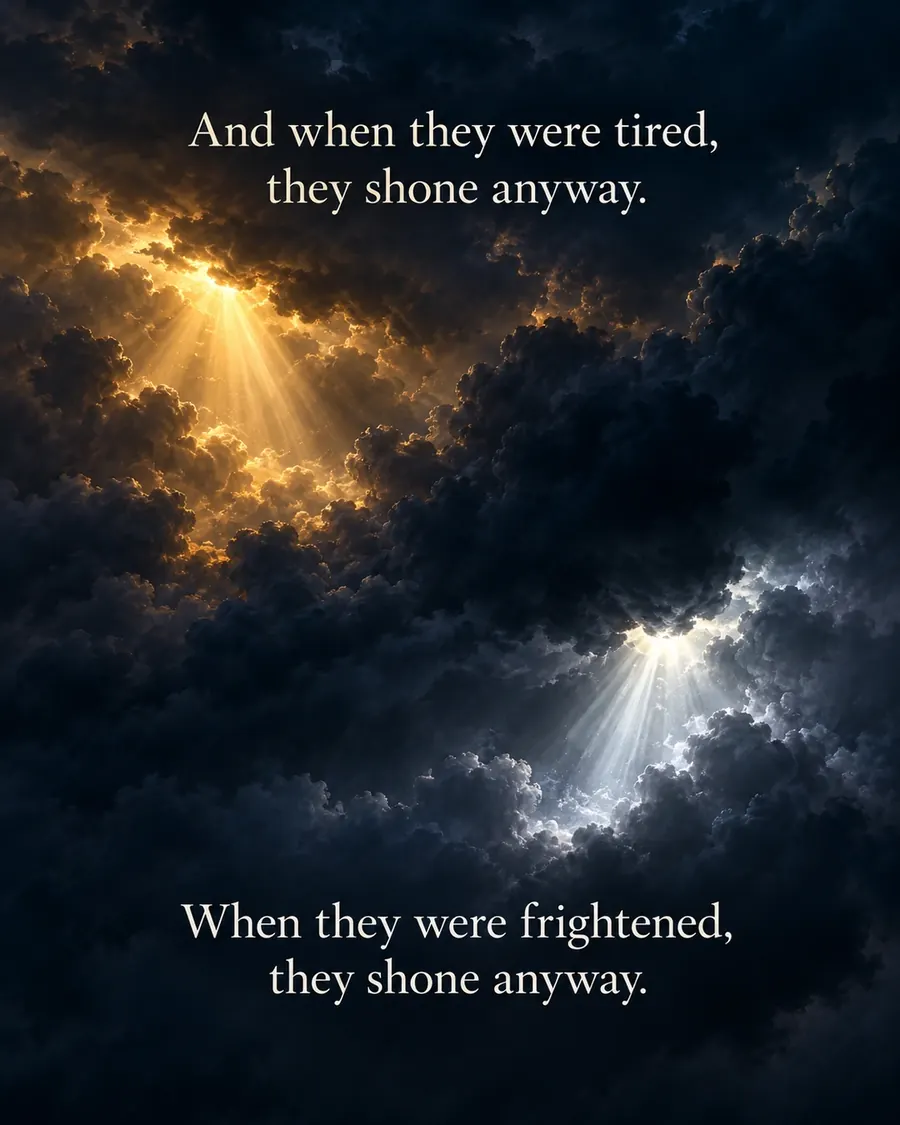
And when they were tired, they shone anyway.

When they were frightened, they shone anyway.
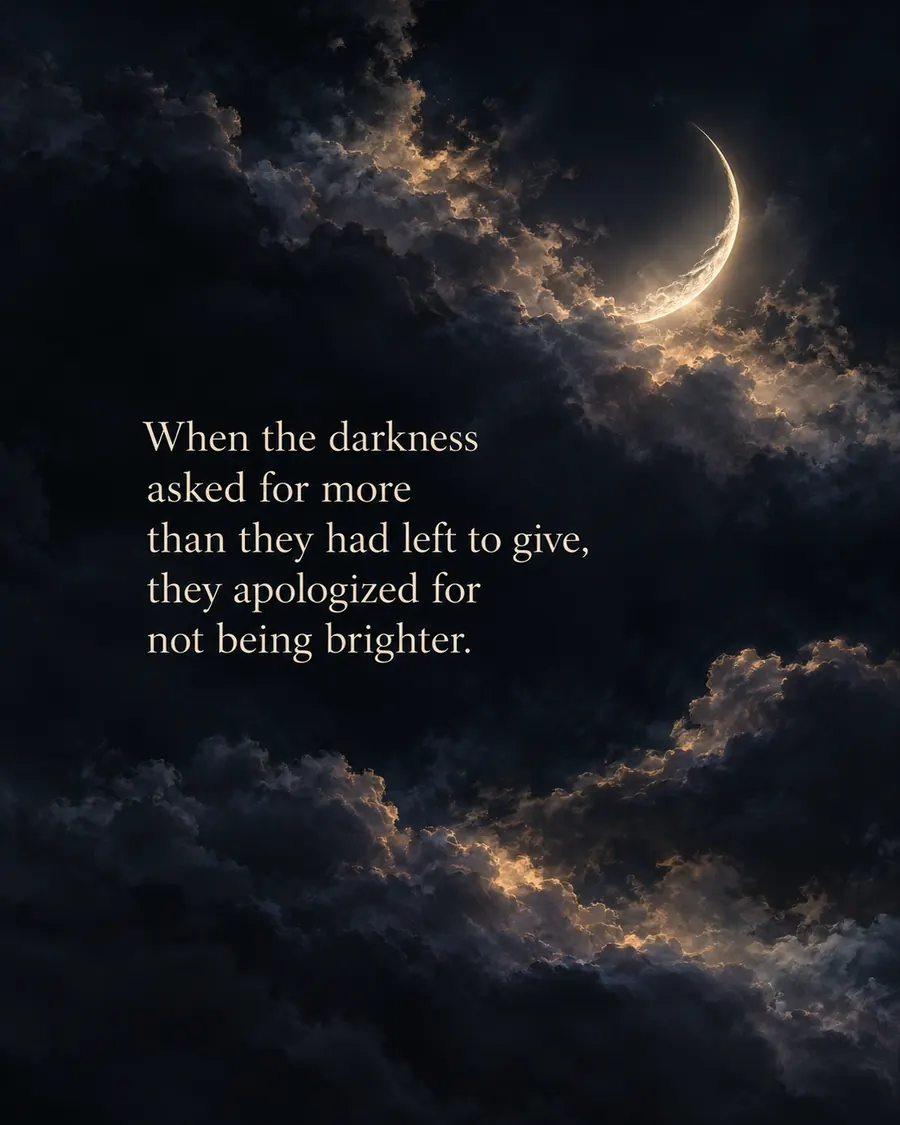
When the darkness asked for more than they had left to give, they apologized for not being brighter.
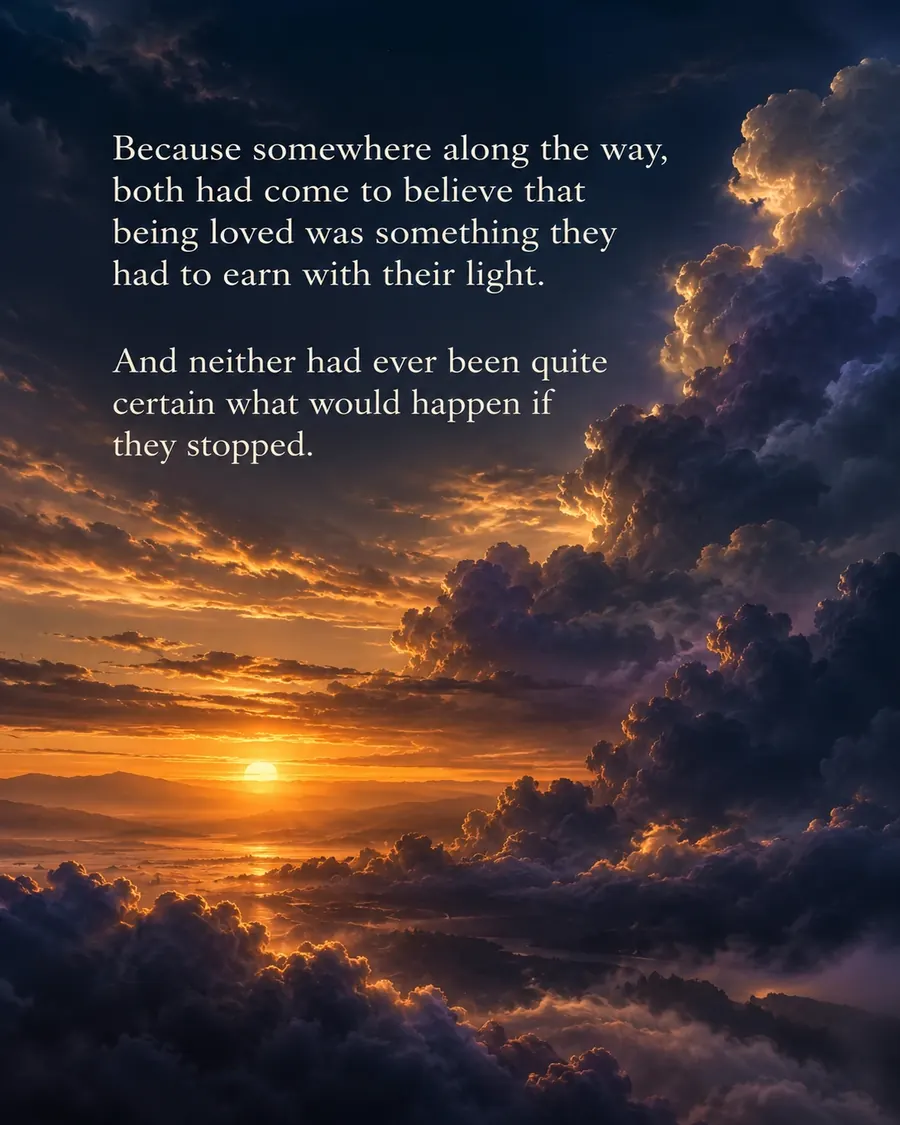
Because somewhere along the way, both had come to believe that being loved was something they had to earn with their light.

And neither had ever been quite certain what would happen if they stopped.
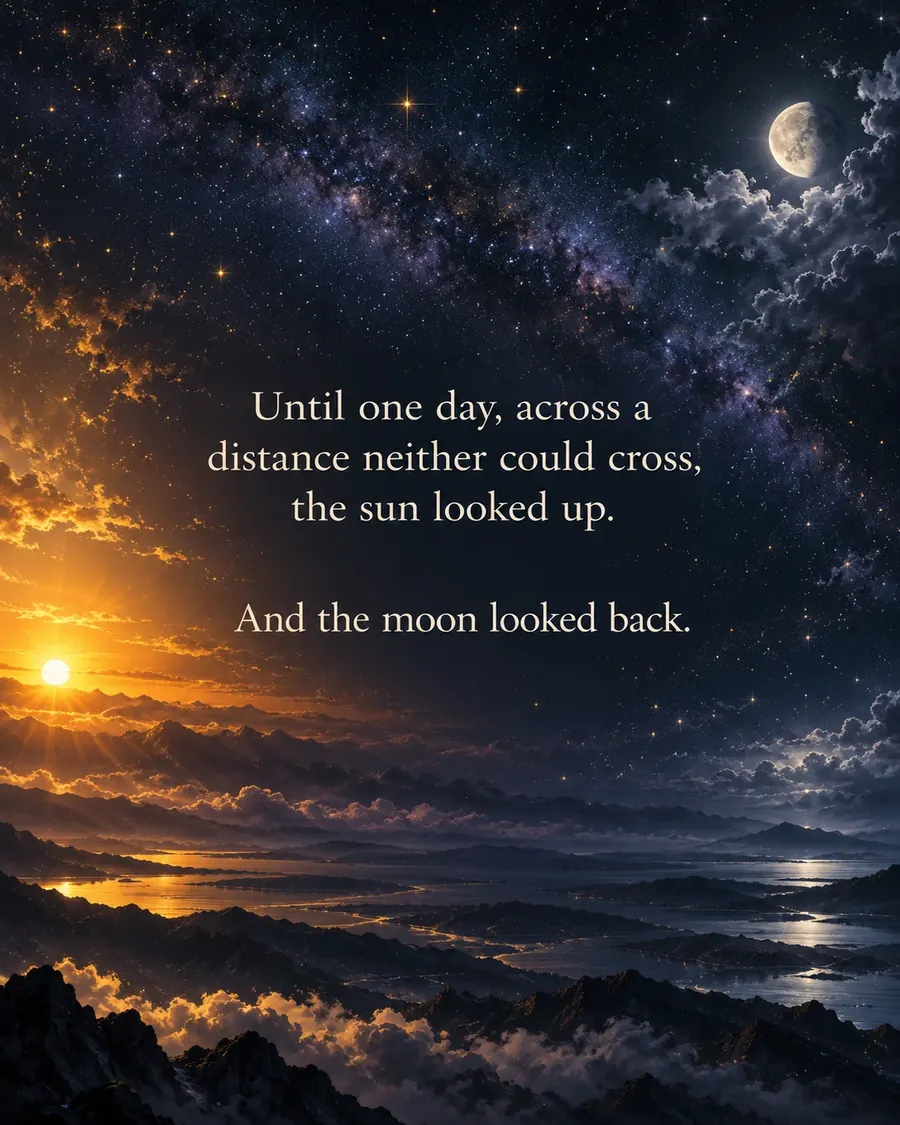
Until one day, across a distance neither could cross, the sun looked up.

And the moon looked back.
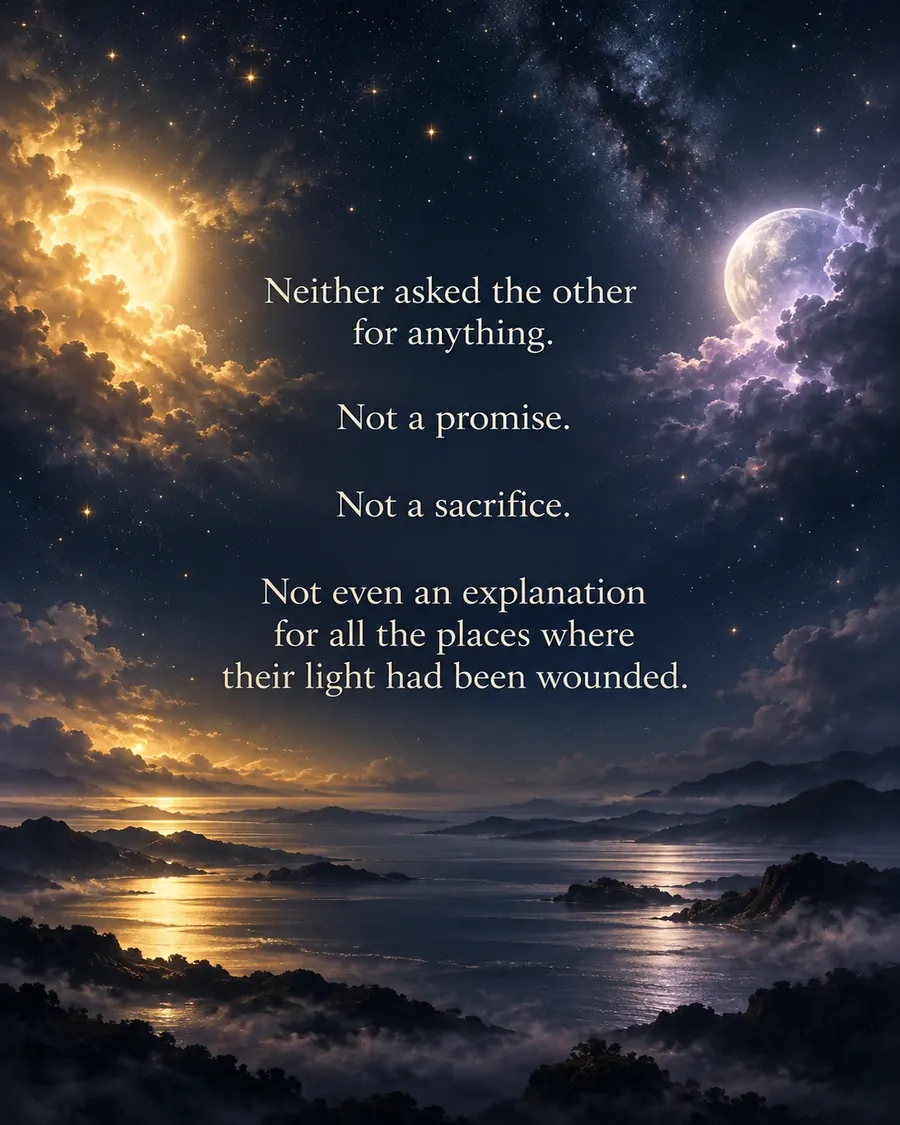
Neither asked the other for anything.

Not a promise.

Not a sacrifice.

Not even an explanation for all the places where their light had been wounded.
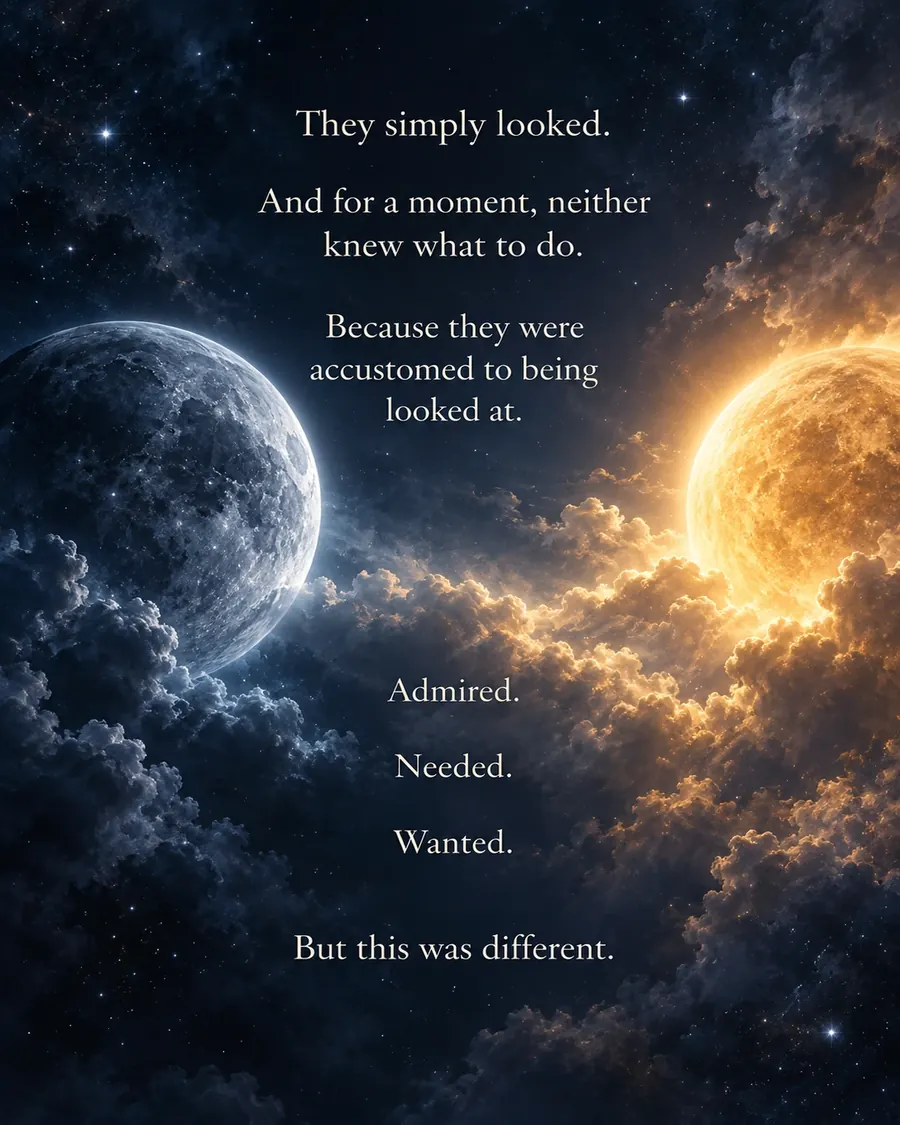
They simply looked.

And for a moment, neither knew what to do.

Because they were accustomed to being looked at.

Admired.

Needed.

Wanted.

But this was different.
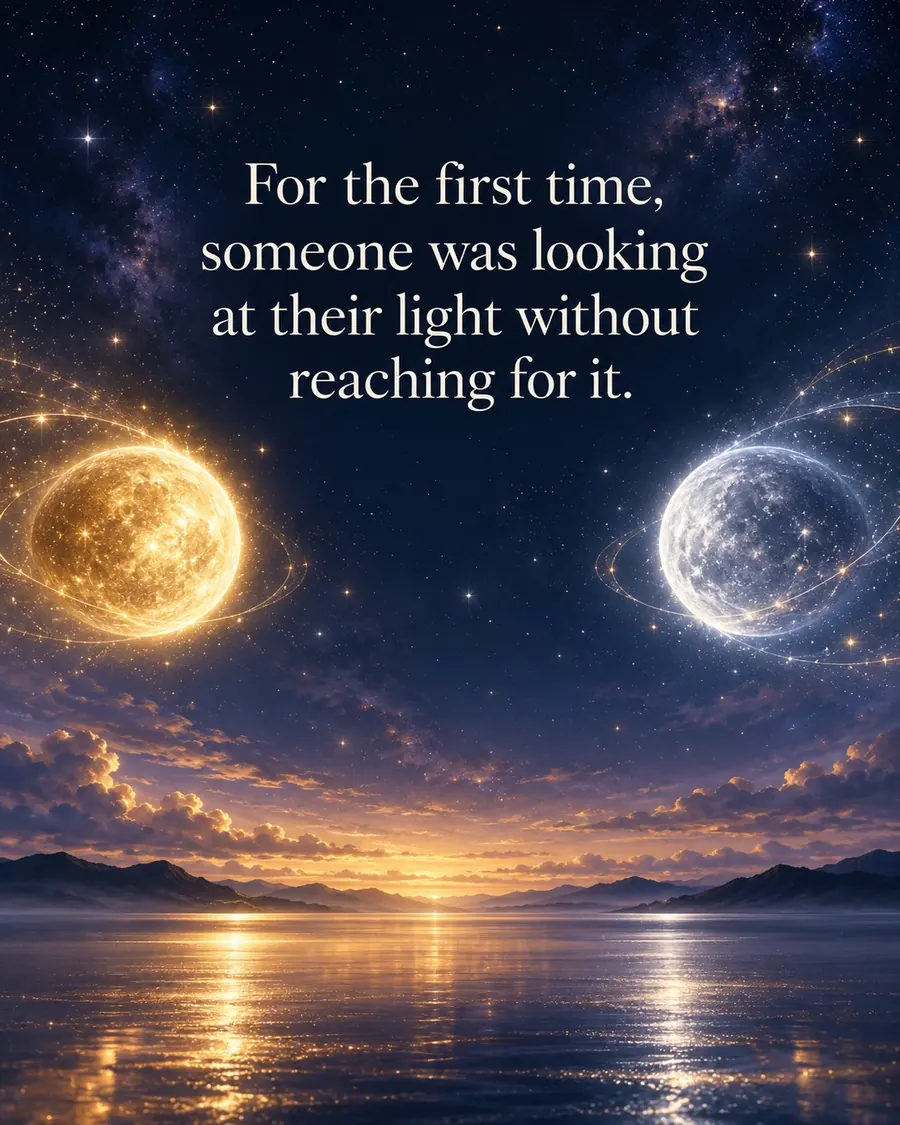
For the first time, someone was looking at their light without reaching for it.
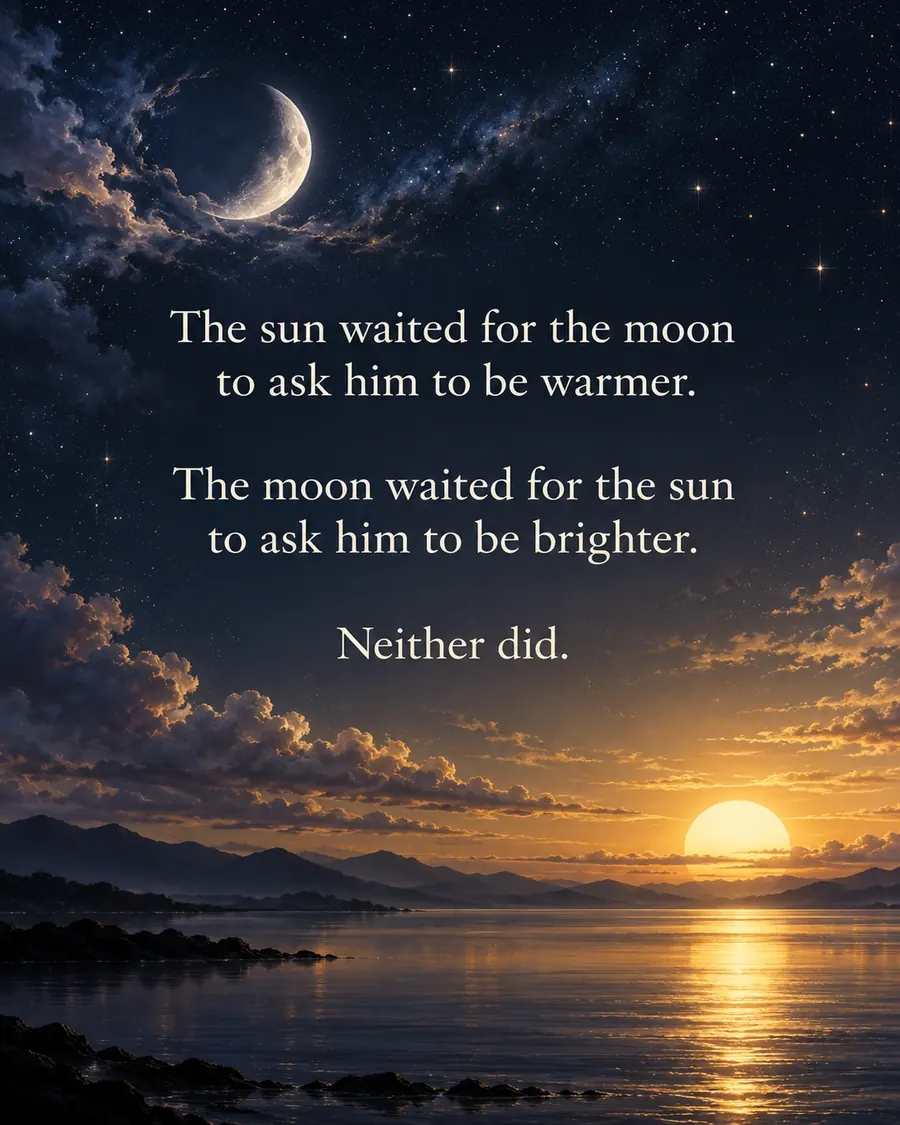
The sun waited for the moon to ask him to be warmer.

The moon waited for the sun to ask him to be brighter.

Neither did.
And so they stayed.

Not because either had something to prove.

But because, for the first time, neither had anything to perform.
And something extraordinary happened.

The sun did not have to become smaller to make room for the moon.

The moon did not have to become brighter to deserve the sun.

Continued to Part 2.
There was no need to capture anything.

No need to steal a little light to carry home.

Because the light was already there.

And it was enough.
Some days, the sun was magnificent.

He filled the sky with gold.

He made the world seem possible again.

And the moon loved to watch him.
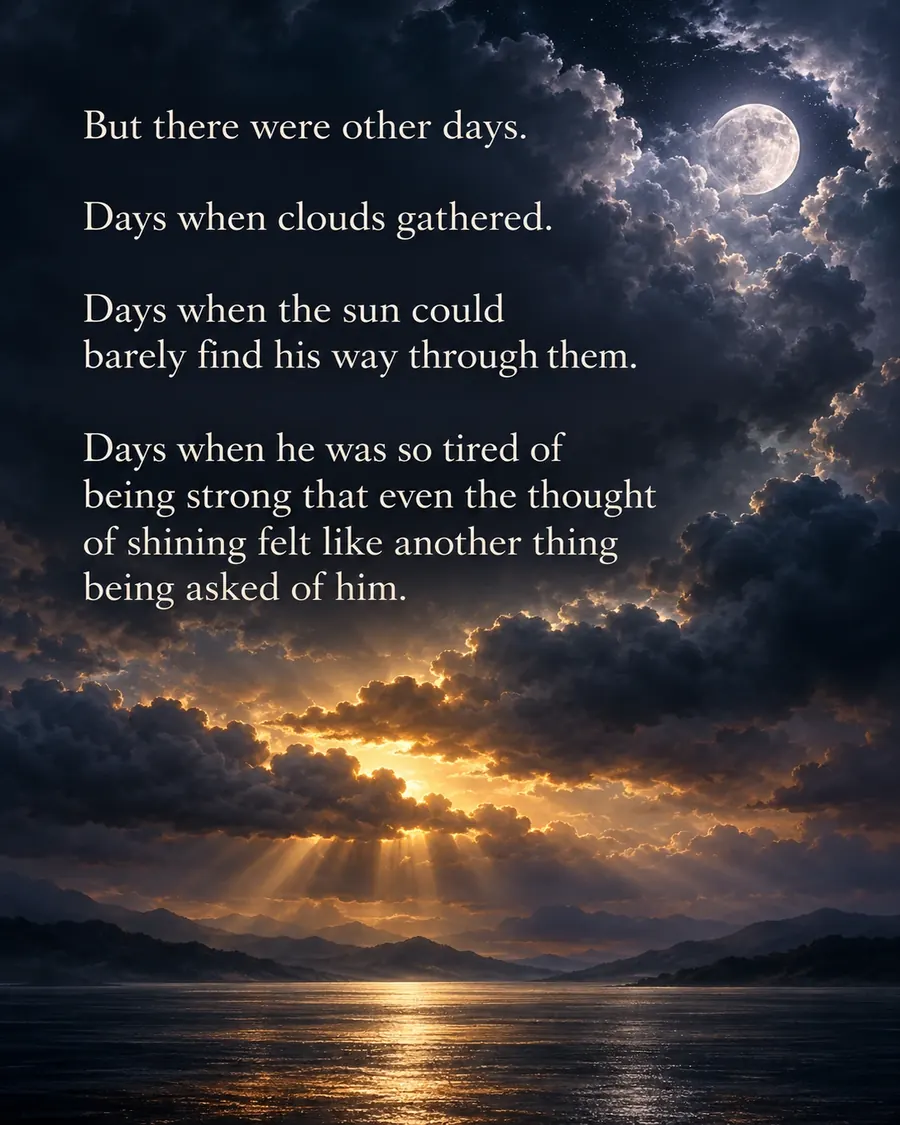
But there were other days.

Days when clouds gathered.

Days when the sun could barely find his way through them.

Days when he was so tired of being strong that even the thought of shining felt like another thing being asked of him.
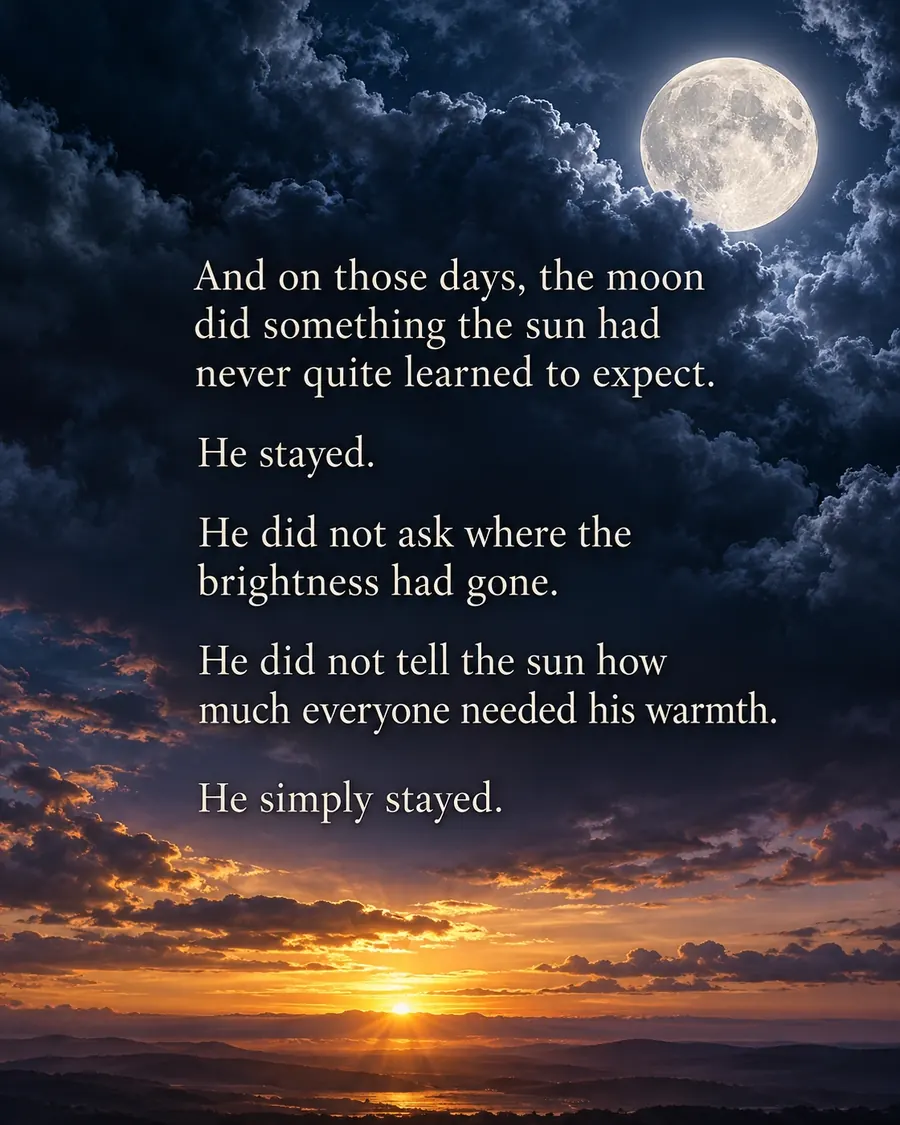
And on those days, the moon did something the sun had never quite learned to expect.

He stayed.

He did not ask where the brightness had gone.

He did not tell the sun how much everyone needed his warmth.

He simply stayed.
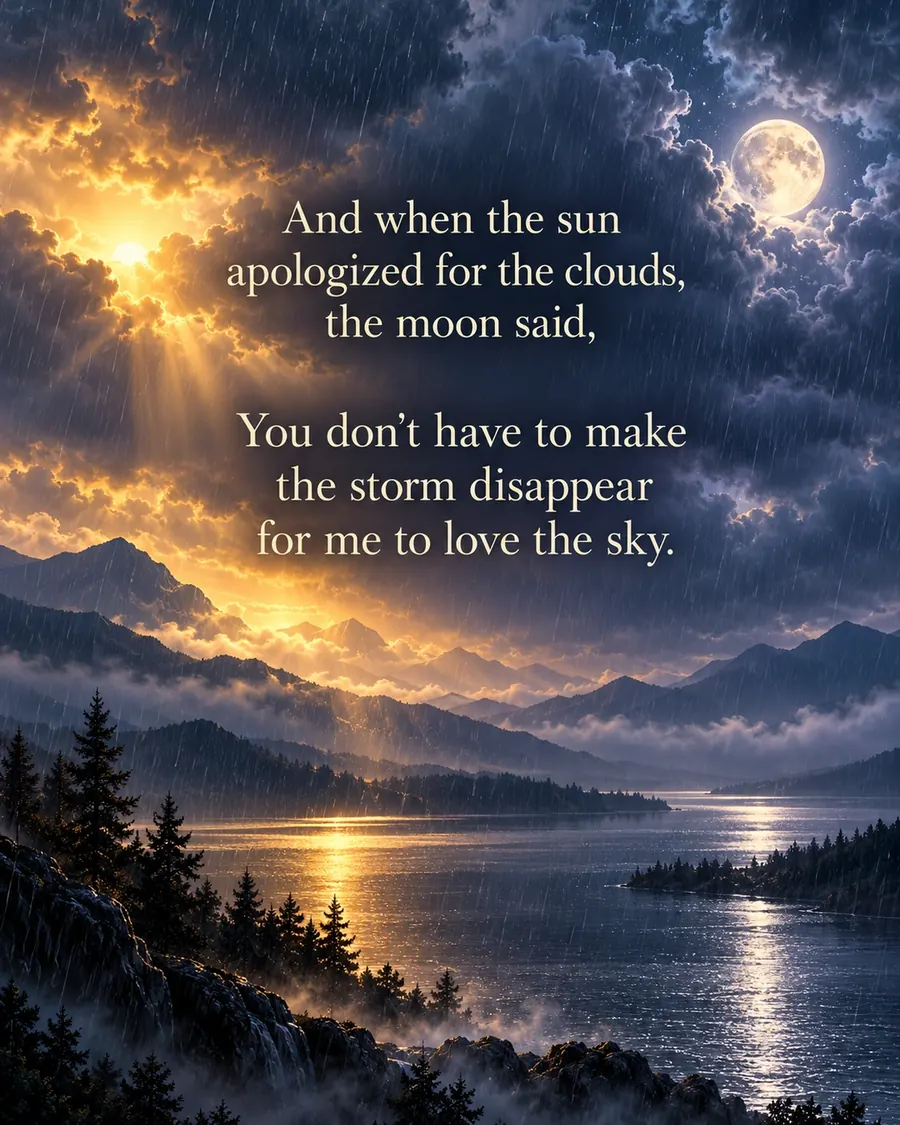
And when the sun apologized for the clouds, the moon said,

You don't have to make the storm disappear for me to love the sky.
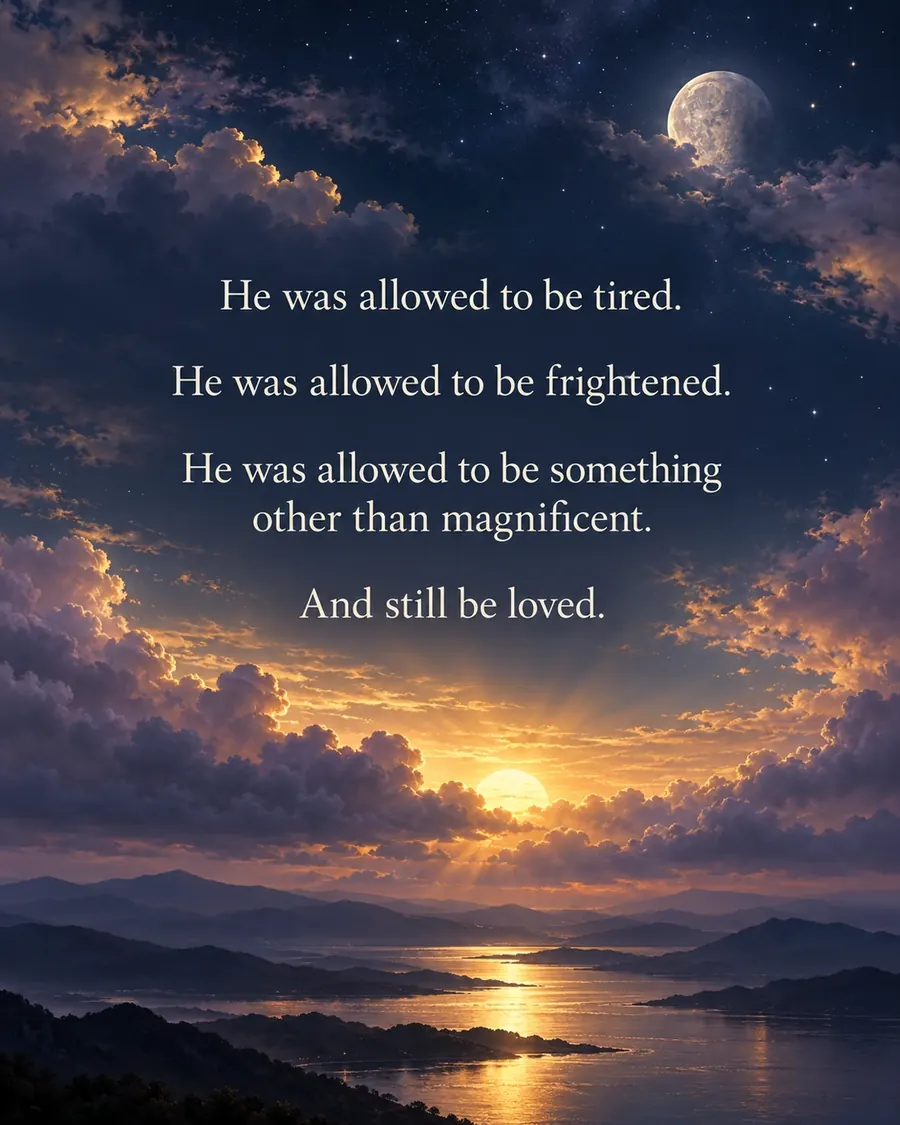
He was allowed to be tired.

He was allowed to be frightened.

He was allowed to be something other than magnificent.

And still be loved.
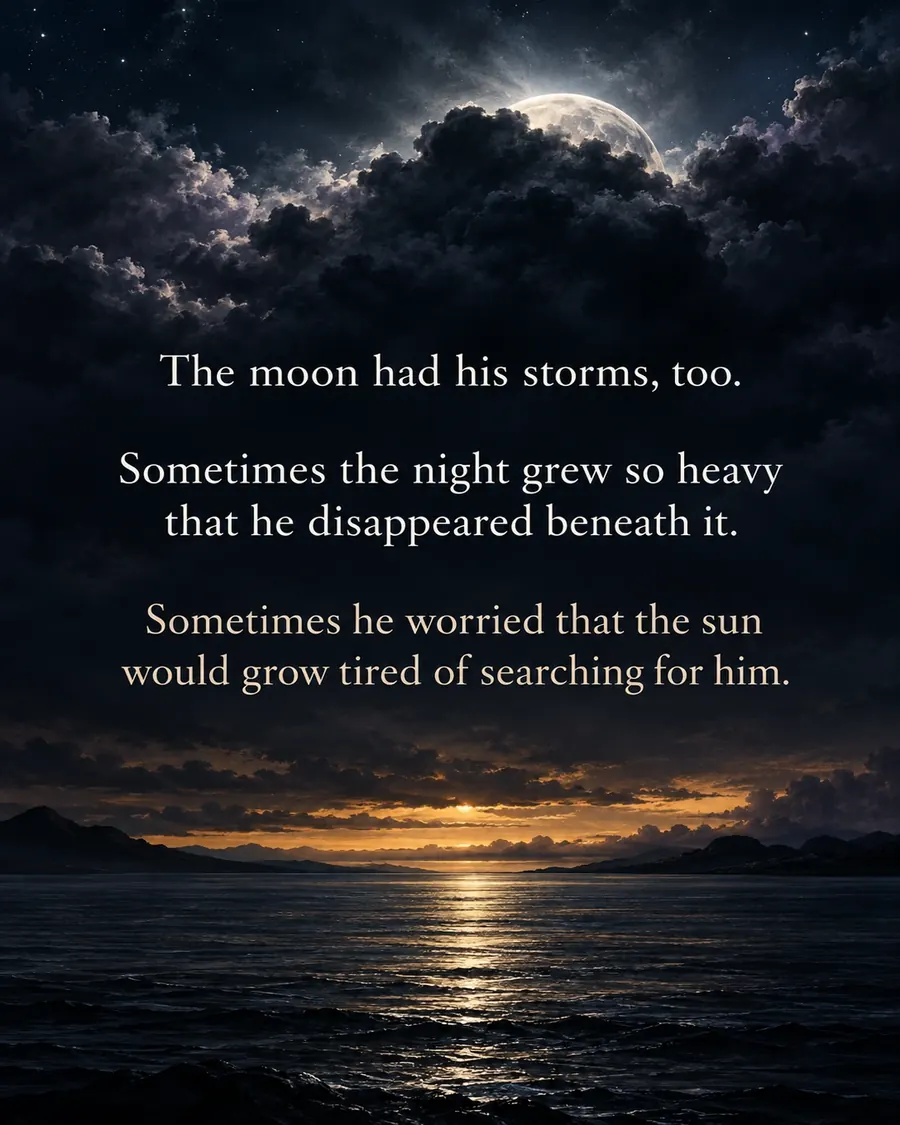
The moon had his storms, too.

Sometimes the night grew so heavy that he disappeared beneath it.

Sometimes he worried that the sun would grow tired of searching for him.
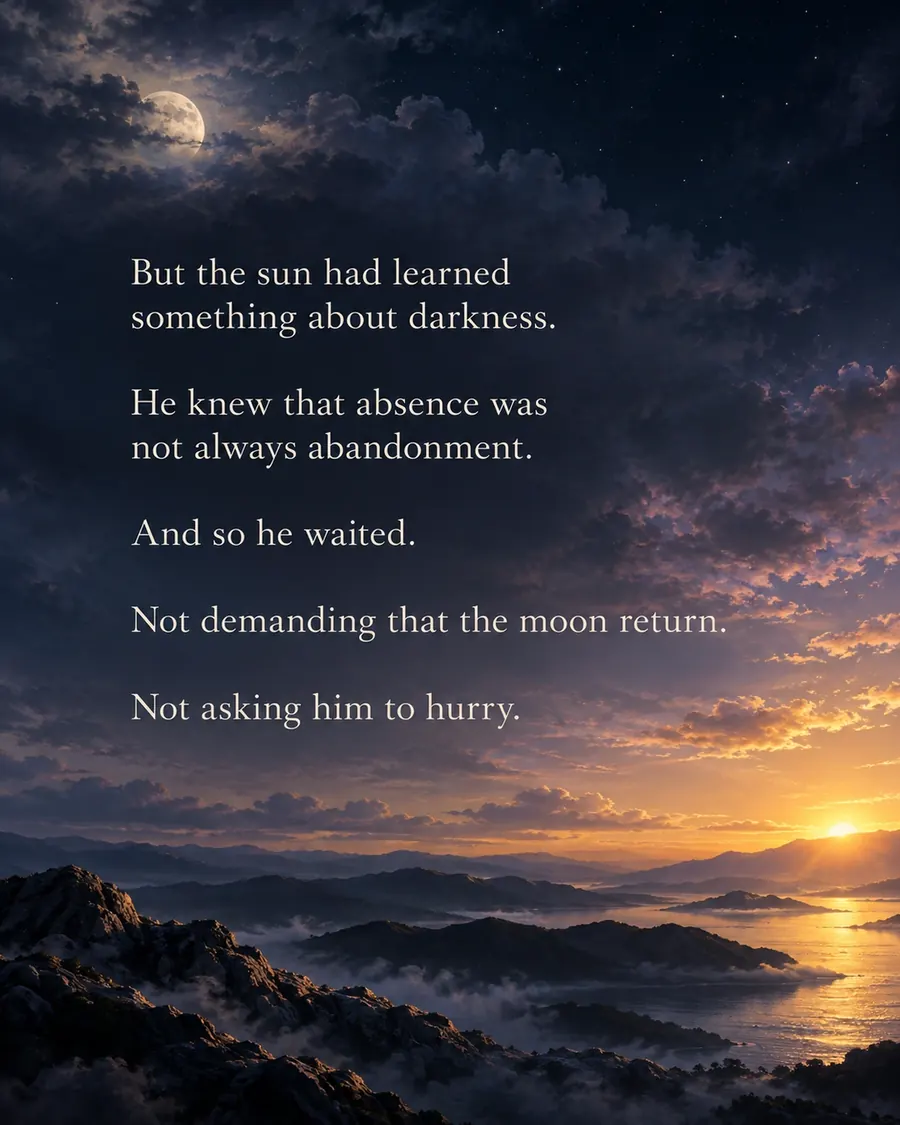
But the sun had learned something about darkness.

He knew that absence was not always abandonment.

And so he waited.

Not demanding that the moon return.

Not asking him to hurry.
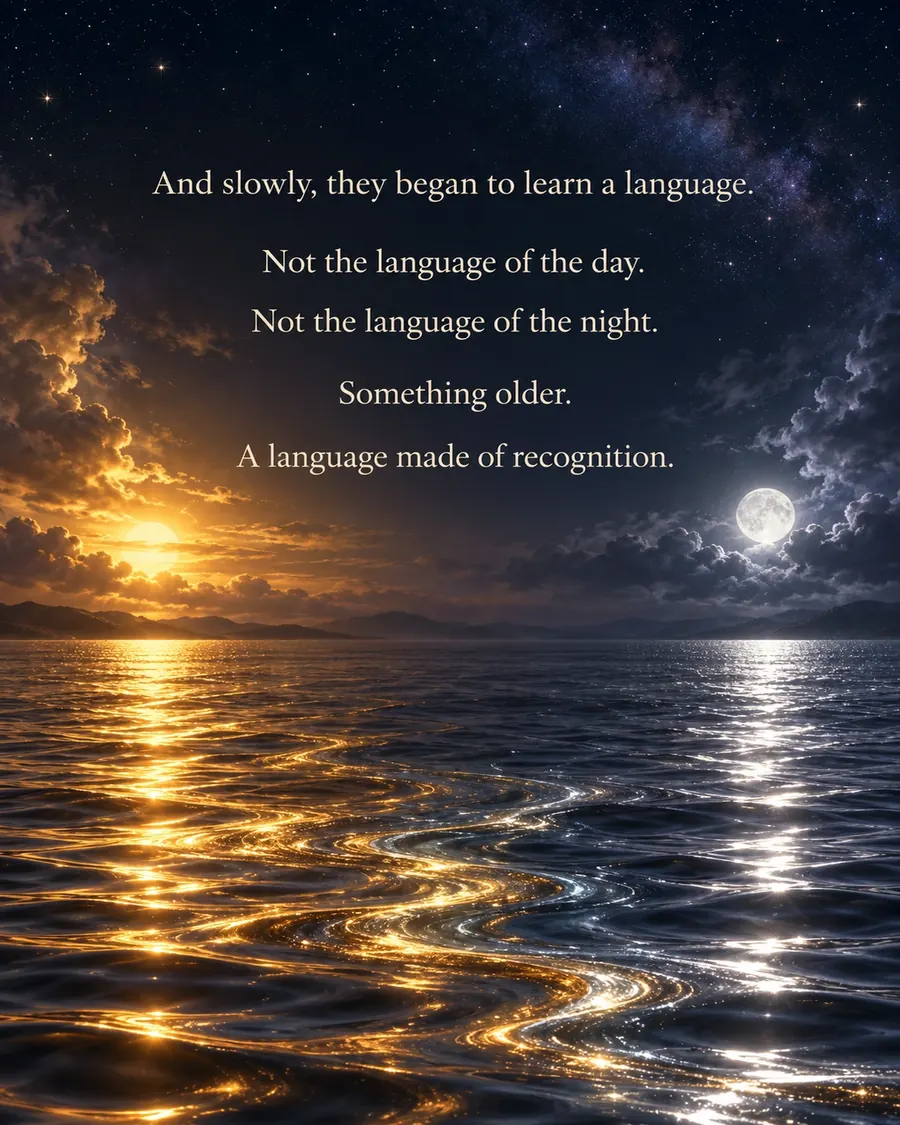
And slowly, they began to learn a language.

Not the language of the day.

Not the language of the night.

Something older.

A language made of recognition.
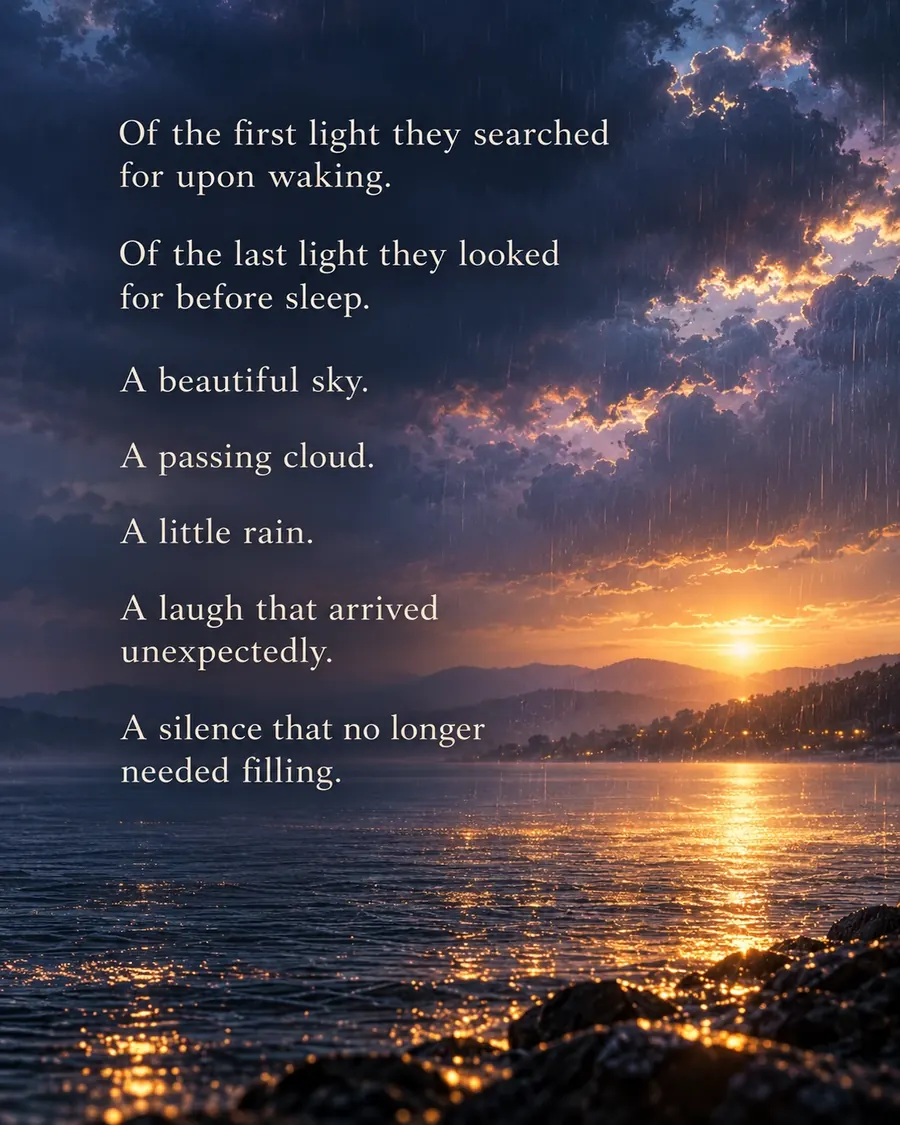
Of the first light they searched for upon waking.

Of the last light they looked for before sleep.

A beautiful sky.

A passing cloud.

A little rain.

A laugh that arrived unexpectedly.

A silence that no longer needed filling.
And sometimes, when the distance between them felt particularly cruel, one would look toward the other and whisper,

I wish you were here.

And the other would answer,

I know.

Not because the words could shorten the distance.

But because neither had to carry the longing alone.
That love was not the act of catching a star.

It was not holding the sun still.

It was not asking the moon to abandon the night.

Because love was never supposed to be another kind of captivity.
Love was the extraordinary peace of being allowed to shine without anyone trying to take the light away.

And perhaps even more than that.

It was being allowed to go dark without someone deciding you were no longer worth loving.
And now, here was someone who knew about the darkness.

Who had seen the clouds.

Who understood that even the most beautiful light could grow tired.

And who did not turn away.
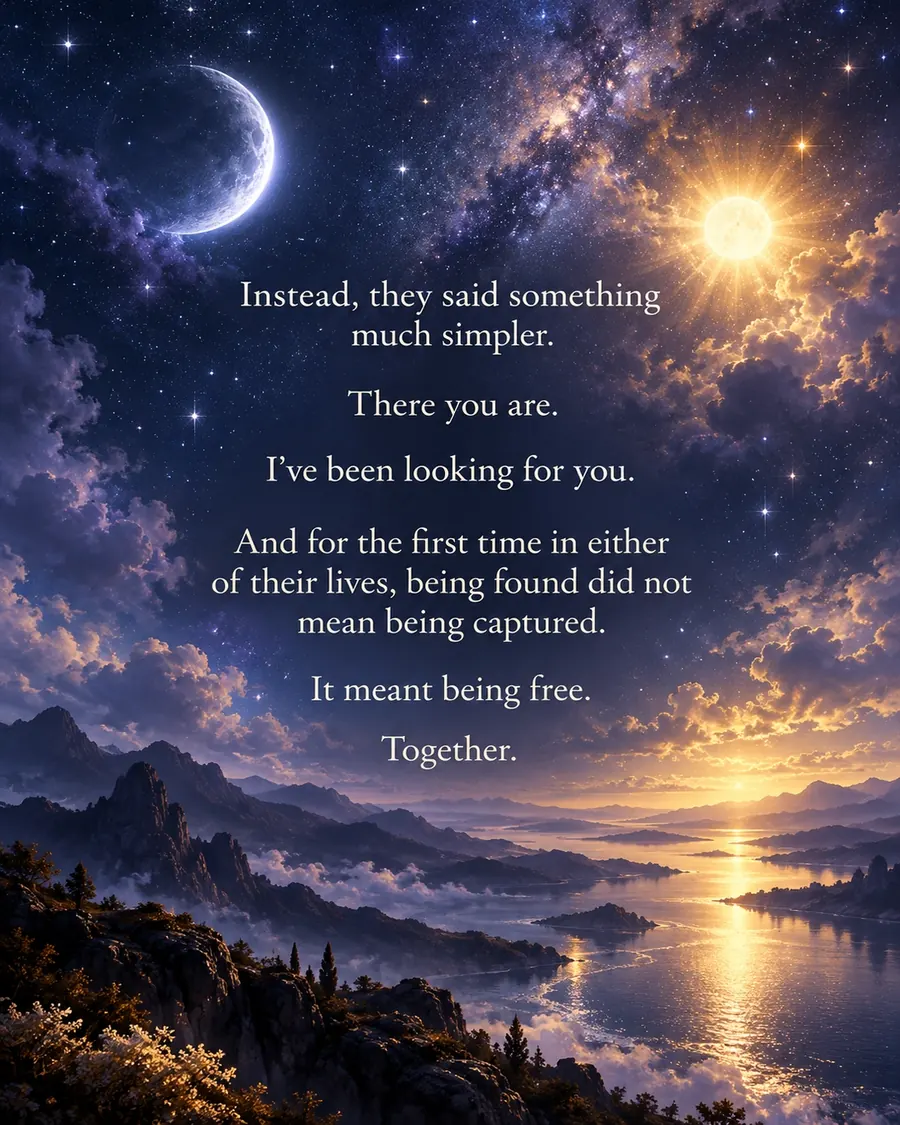
Instead, they said something much simpler.

There you are.

I've been looking for you.

And for the first time in either of their lives, being found did not mean being captured.

It meant being free.

Together.
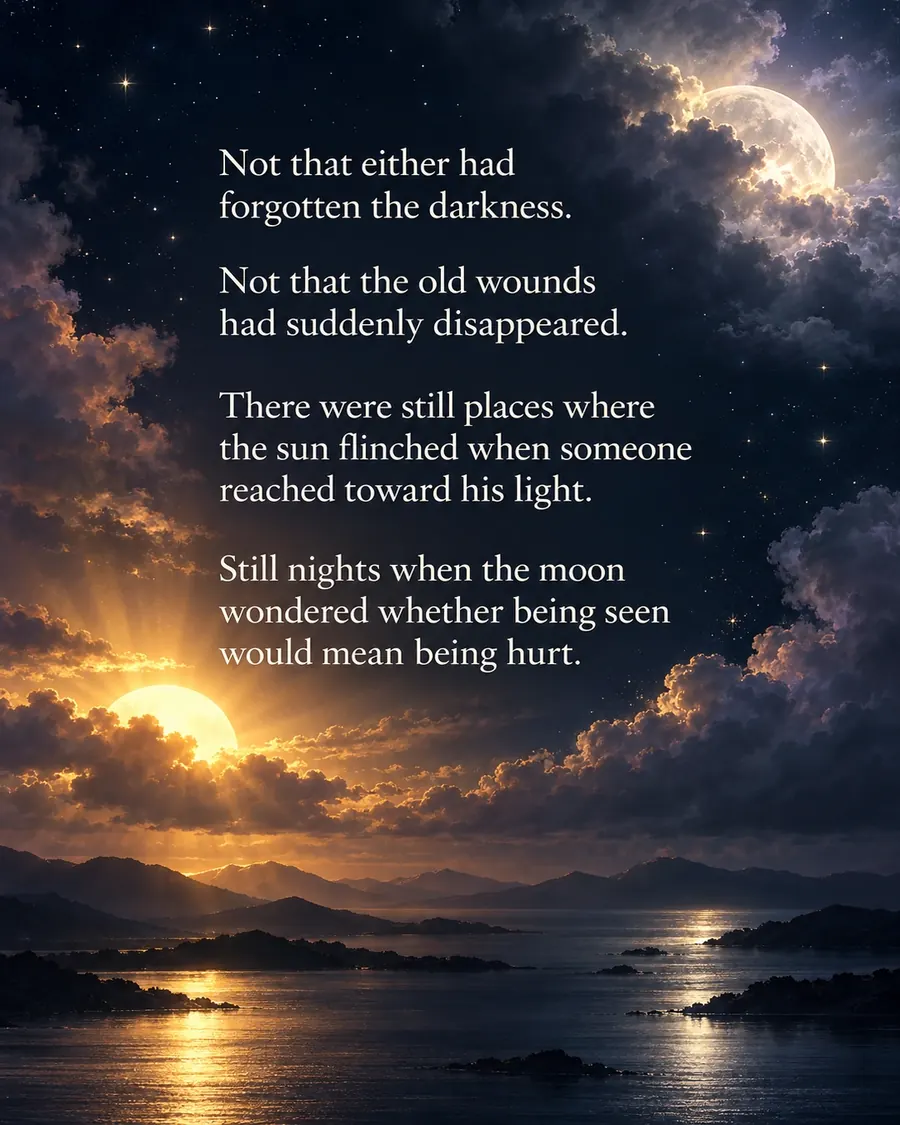
Not that either had forgotten the darkness.

Not that the old wounds had suddenly disappeared.

There were still places where the sun flinched when someone reached toward his light.

Still nights when the moon wondered whether being seen would mean being hurt.
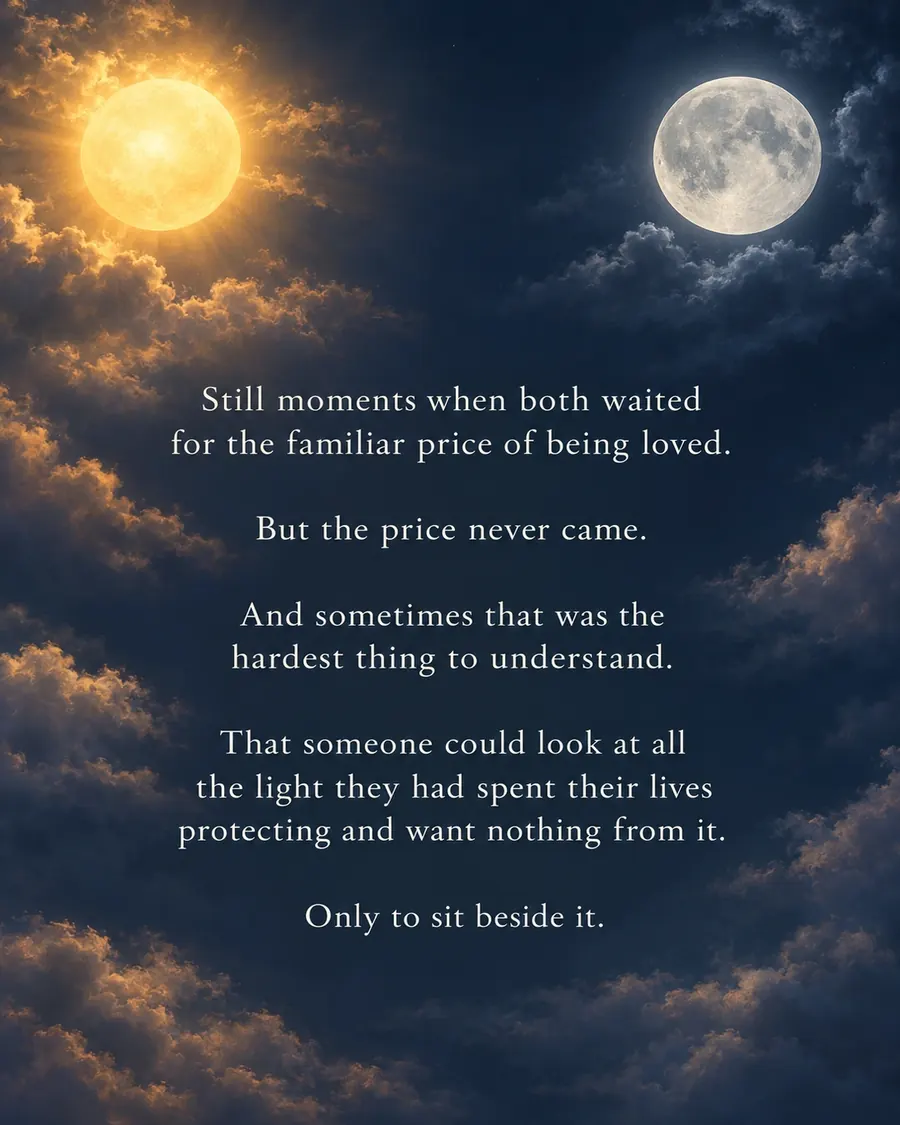
Still moments when both waited for the familiar price of being loved.

But the price never came.

And sometimes that was the hardest thing to understand.

That someone could look at all the light they had spent their lives protecting and want nothing from it.

Only to sit beside it.
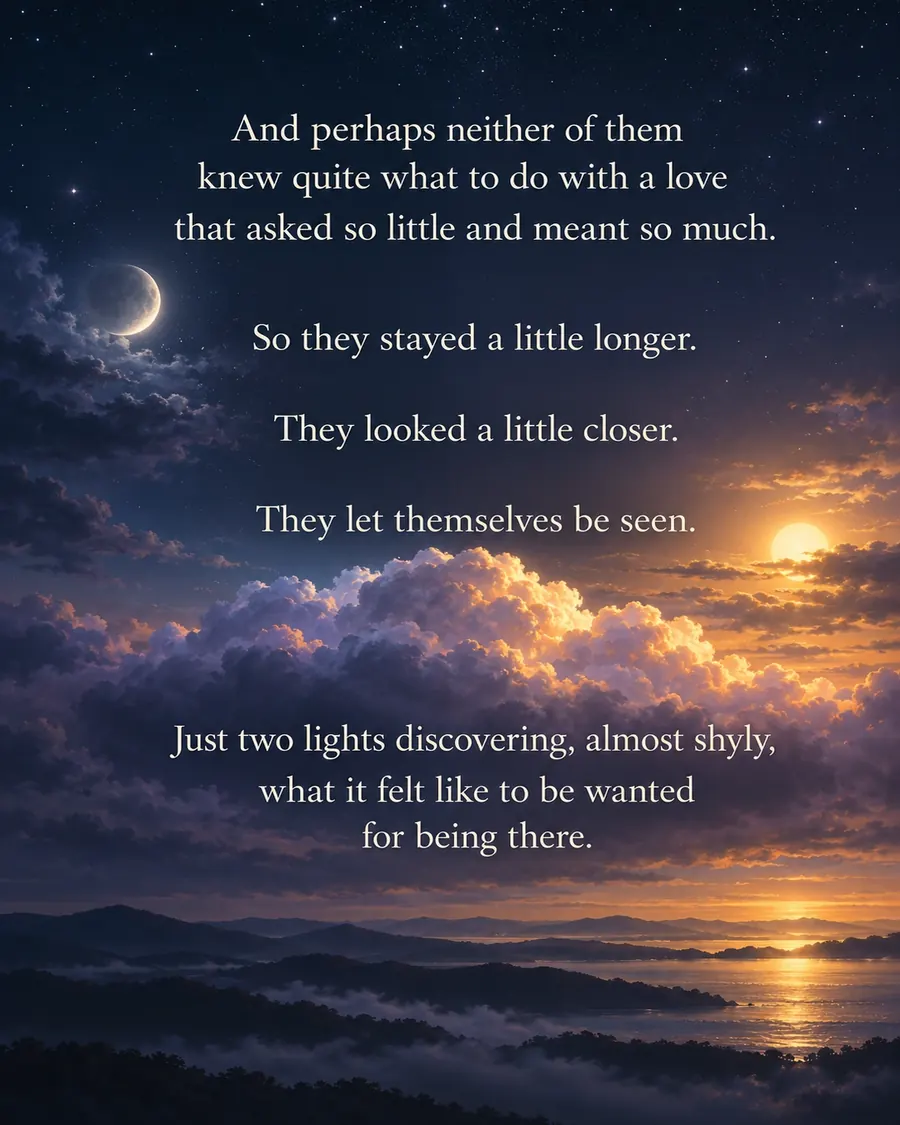
And perhaps neither of them knew quite what to do with a love that asked so little and meant so much.

So they stayed a little longer.

They looked a little closer.

They let themselves be seen.

Just two lights discovering, almost shyly, what it felt like to be wanted for being there.
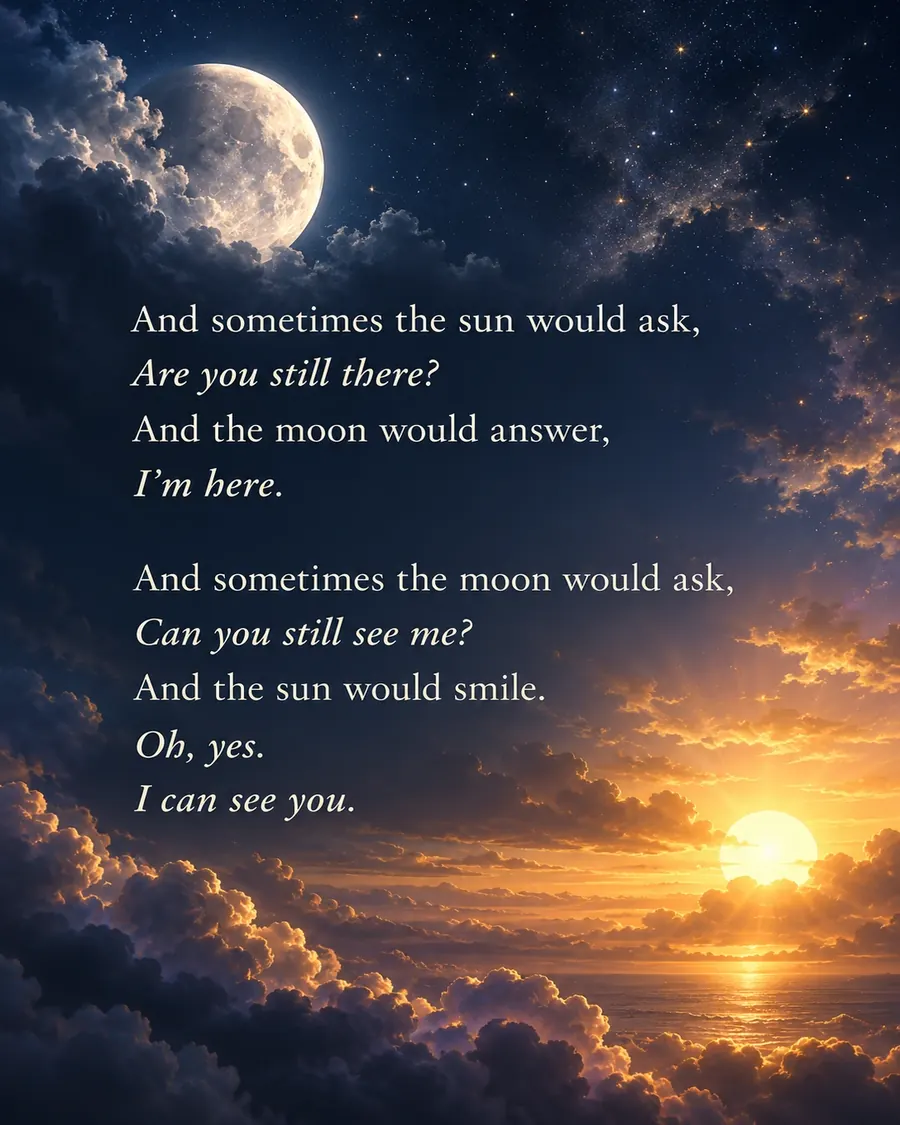
And sometimes the sun would ask,

Are you still there?

And the moon would answer,

I'm here.

And sometimes the moon would ask,

Can you still see me?

And the sun would smile.

Oh, yes.

I can see you.
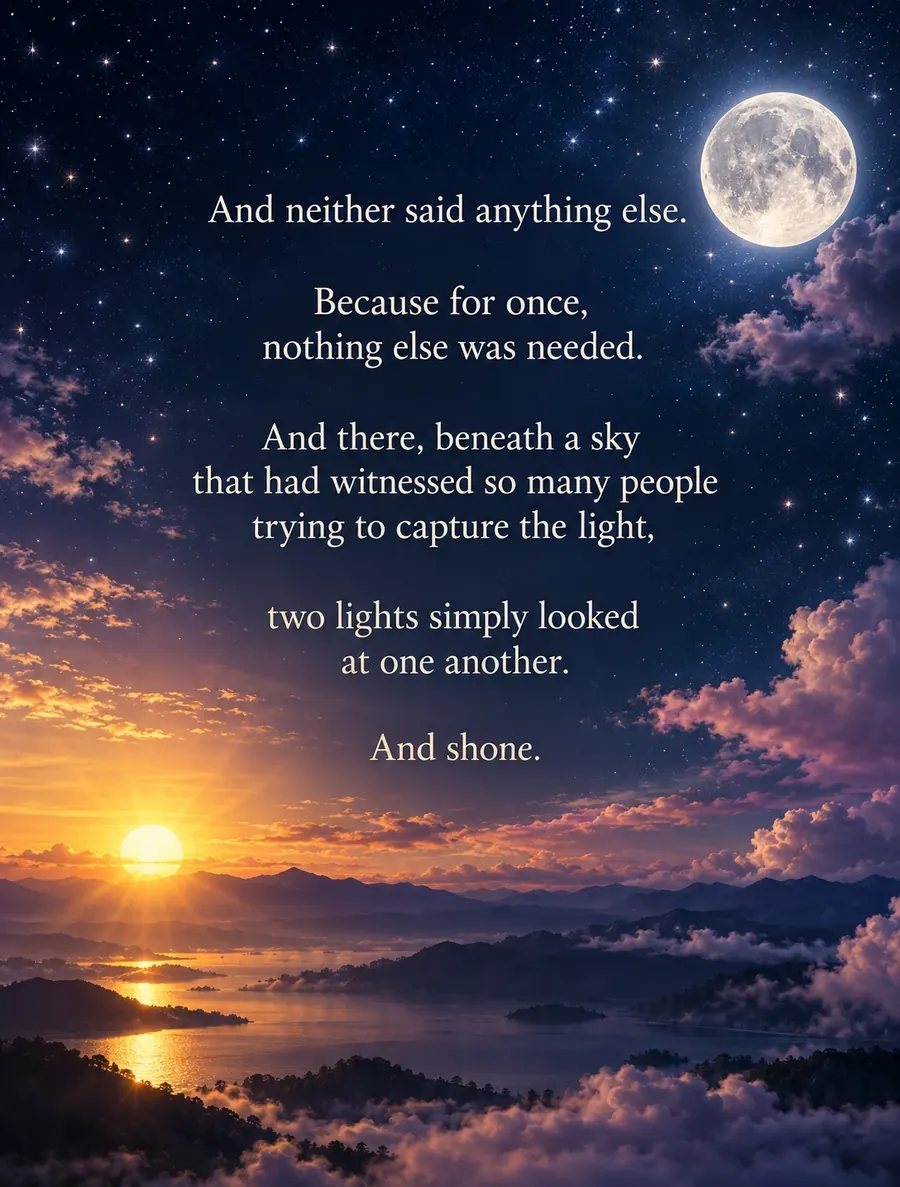
And neither said anything else.

Because for once, nothing else was needed.

And there, beneath a sky that had witnessed so many people trying to capture the light,

two lights simply looked at one another.

And shone.

Let the Light Travel Further

If these words have touched something in your heart, consider helping us bring warmth, food, and essential support to a family in Gaza.
Carry the Light Further