What We Grab
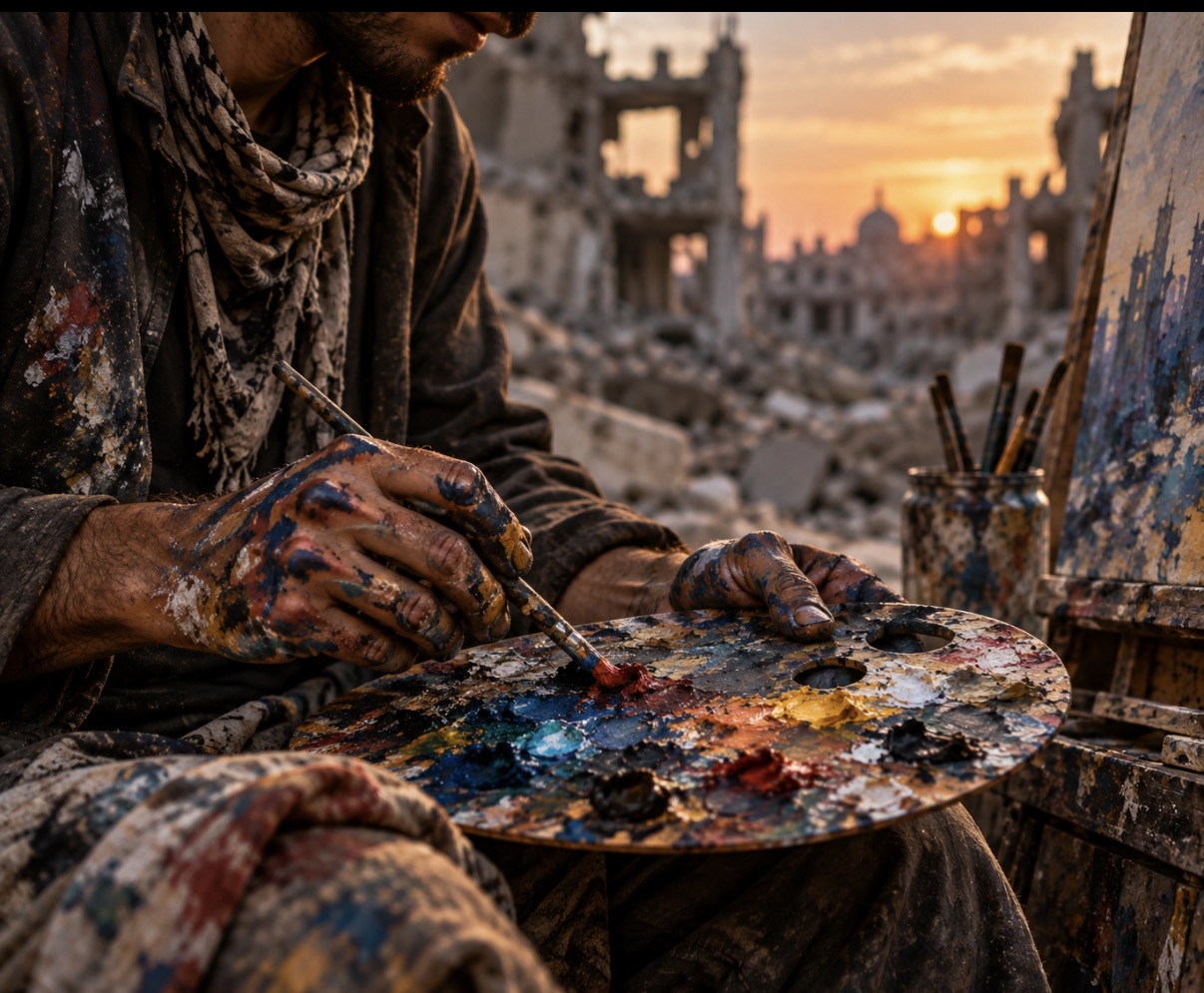
I have lost houses.
It is a strange sentence to write.
Perhaps because a house is supposed to be one of those nouns that stays where you put it.
A chair can be moved.
A photograph can be misplaced.
Keys disappear with almost supernatural regularity.
People and pets can die.
But a house?
A house is supposed to remain.
I learned otherwise.
And somewhere along the way I also learned something peculiar about loss:
when there isn’t enough time,
when the world suddenly reduces itself to what your hands can carry,
you discover what matters before your mind has time to lie about it.
What do you grab?
It is a question I have thought about more than most people probably should.
Maybe that is why Elizabeth Bishop’s One Art has followed me for so many years.
The art of losing isn’t hard to master.
Breath.
What a sentence.
Bishop begins almost playfully with keys and hours and places, teaching herself the choreography of disappearance as though enough practice might eventually make catastrophe ordinary.
Lose something small.
Then something larger.
Then larger still.
Practice.
Practice.
Practice.
Until perhaps the heart stops noticing.
Except, of course, it doesn’t.
That’s the trick inside the poem. And what she challenges us to do. Write it.
Loss never becomes an art because we become good at not caring.
We simply become frighteningly practiced at carrying what remains. Write it - create - like disaster.
I thought about that recently when a friend in Gaza told me about the day his home was bombed.
He is an artist.
A remarkable one actually.
He paints the way some people pray.
Not always literally.
Often in metaphor—raw, strange, beautiful, painful images that somehow hold things language cannot.
His paintings tell stories about Gaza.
About his people.
About humanity.
About what happens to human beings when the rest of the world becomes accustomed to seeing them as numbers.
And when his house was bombed, there was no carefully considered inventory.
No time to decide what might someday be valuable.
No boxes labeled KEEP.
There was simply that ancient human moment:
Go. NOW
And of everything he owned—
he grabbed his palette.
His paints.
I haven’t been able to stop thinking about that.
Because there is something almost unbearably human about what our hands choose before our minds can intervene.
A palette is not food.
A palette is not shelter.
A palette is not identification.
It cannot keep rain from your body or stop a bomb or rebuild a wall.
By every brutal mathematics of survival, it is unnecessary.
And yet—
his hand reached for color.
Of course it did.
Because perhaps survival has never been only about keeping the body alive.
Perhaps there are things we carry because they remind us why the body SHOULD remain alive at all.
A musician reaches for the instrument.
A writer reaches for the notebook and pen.
An artist reaches for his paint.
Not because art is more important than life.
Because sometimes art is how a human being insists that what is happening to life must be witnessed.
His palette survived because he carried it.
But perhaps something else happened in that moment too.
He carried the possibility of making something after.
Another painting.
Another witness.
Another piece of himself that destruction did not get to choose.
And what moves me even more is that his art isn’t merely preservation of himself.
Those colors become other people’s faces.
Other people’s grief.
Other people’s homes.
His people’s memory.
A language offered to strangers who may never stand where he stands or smell what remains after a building falls.
He ran from the destruction of his own home carrying the thing he uses to tell us about everyone else’s.
There is something sacred in that.
I hesitate to romanticize it.
There is nothing romantic about someone having to decide what part of their life can fit inside two hands.
A palette should be sitting beside an unfinished canvas in a house that still exists.
Its owner should be irritated because one color dried out.
He should be wondering whether the painting needs more blue.
He should not have to make his art portable enough to survive a bombing.
And perhaps that is exactly why the palette matters.
Not because suffering creates artists.
I don’t believe suffering deserves that much credit.
But because destruction encountered an artist—
and the artist remained an artist.
The house was lost.
The walls were lost.
Objects disappeared into that terrible expanding catalogue Bishop understood so well—
places,
names,
possessions,
worlds.
But somewhere among the rubble was a man holding a palette.
Color still clinging to it and his trembling hands.
Proof of something bombs have never been particularly good at understanding:
Human beings do not live by survival alone.
We make things.
We paint.
We write.
We sing.
We tell stories.
We turn pain into metaphor when ordinary language becomes too small.
We leave marks that say:
I was here.
We were here.
This happened.
Look.
Don’t forget. Never ever forget.
And perhaps that is why I keep returning to the question:
What would you grab?
Not what should you grab.
Not what is sensible.
What would your hands reach for in those few impossible seconds when an entire life suddenly has to decide what it cannot bear to leave behind?
I have lived through enough loss to know I cannot answer confidently.
I have also lived through enough loss to know that the answer might surprise me.
Maybe a photograph.
Maybe an instrument.
Maybe something completely ridiculous that would make no sense to anyone else.
Because sometimes the objects we save aren’t really objects.
They are coordinates.
Little pieces of matter pointing toward who we are when everything around us is changing.
A palette can be one of those.
Wood.
Plastic.
Pigment.
Nothing extraordinary.
Until a house is disappearing behind you
and your hand reaches for it.
Then it becomes something else.
Not simply:
This belongs to me.
But—
This is how I remember who I am.
And perhaps even:
This is how I will make sure you remember us.