WHEN THE WARDROBE NO LONGER OPENS
A Letter to Susan Pevensie, the Psychology of Lost Belonging, and the Grief of a World That Still Exists Without You
CJ Sterling | The Light We Leave On
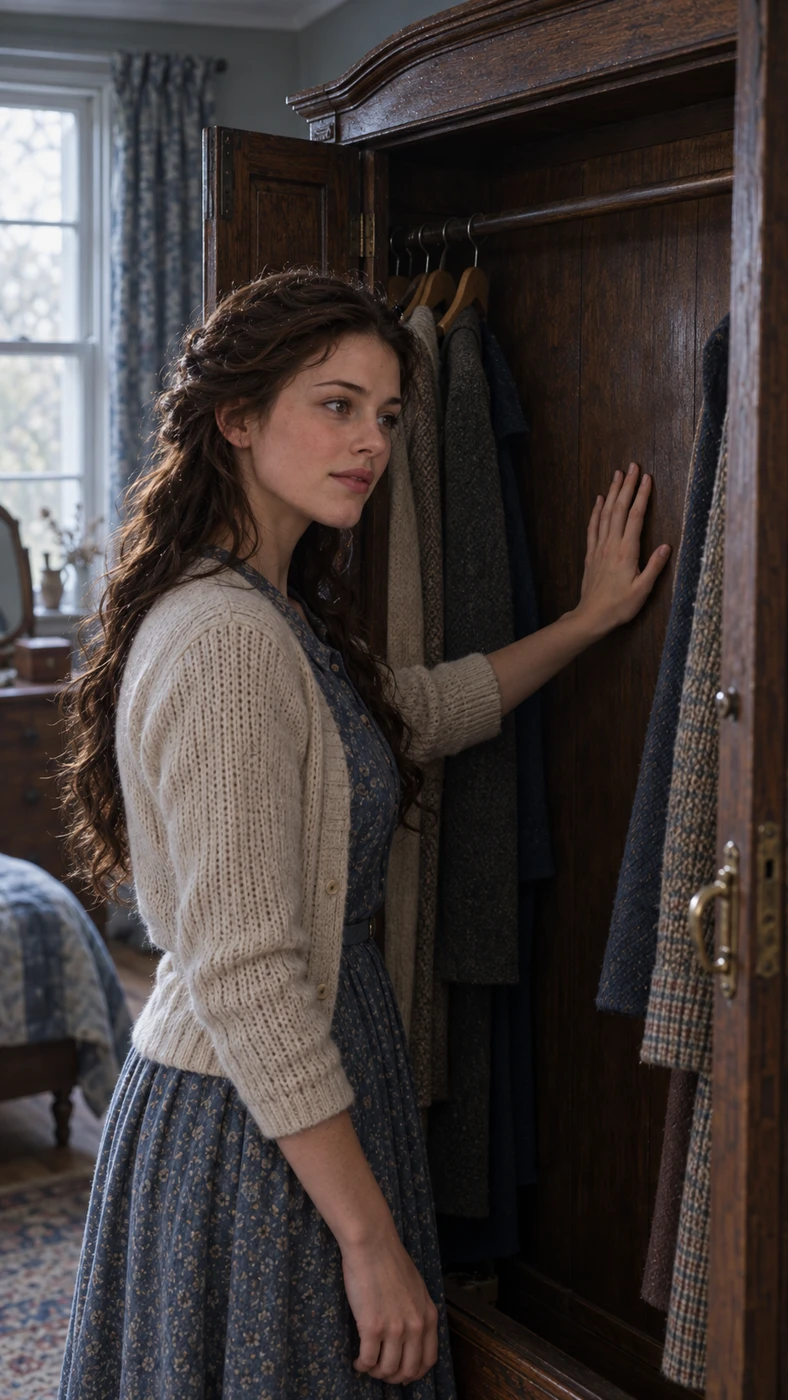
I have wondered about Susan Pevensie for a very long time.
Not the Susan we are told about at the end of the story.
The other Susan.
The one I imagine standing in front of an old wooden wardrobe, her hand resting against the door, trying to understand why it no longer opens.
I imagine her turning the handle.
Once.
Then again.
Pushing past the coats.
Reaching toward the back.
And finding nothing but wood.
I imagine her standing there for a moment, confused.
Because she knows what was there.
She remembers the cold.
The snow beneath her feet.
The smell of the trees.
She remembers being loved.
She remembers belonging.
And perhaps most devastatingly, she remembers who she was when she belonged.
So she tries again.
And again.
Until eventually she is no longer opening the wardrobe.
She is pounding against it.
Begging.
Not for magic.
Not for adventure.
For home.

We are often told that Susan stopped believing in Narnia because she grew up.
That she became interested in clothes and parties and the ordinary pursuits of adulthood.
And perhaps that is how the story chooses to explain her absence.
But I have always wondered whether there might be another explanation.
One that has less to do with vanity and more to do with grief.
Because Susan didn't merely discover a magical country.
She lived a life there.
She became a queen.
She grew into an identity that belonged to that world.
She experienced relationships, responsibilities, seasons, celebrations, and the ordinary intimacy of having somewhere she was expected.
Then she lost it.
And I wonder whether we have ever fully considered what that loss might have meant.
Imagine finding the place where you finally feel entirely yourself.
A place where you are known.
Where your presence matters.
Where the people you love recognize you as belonging to them.
Imagine waking each morning without the old question of whether you are welcome.
Imagine, perhaps for the first time in your life, experiencing the extraordinary relief of home.
And then imagine being told that you cannot return.
Not because you have done something wrong.
Not because the people there have stopped mattering.
Simply because the door has closed.
And no amount of love can make it open.
There is a kind of grief that comes from losing someone.
And there is another kind that comes from losing access to someone or somewhere that still exists.
The distinction matters.
When a person dies, the loss is terrible, but the reality of the loss can eventually become something the mind begins to understand.
But what happens when the place you love continues to exist beyond a door you cannot open?
When the people you love may still be living their lives somewhere you cannot reach?
When your memories remain vivid, your attachment remains alive, and yet the relationship has become inaccessible?
There is no ordinary goodbye.
No final conversation.
No shared acknowledgment of what has been lost.
Only the sudden absence of something that once gave your life meaning.
Psychology offers language for some aspects of this experience.
Ambiguous loss.
Disenfranchised grief.
The disruption of attachment and identity.
But the language does not eliminate the ache.
It only helps us understand why the ache can become so difficult to carry.
Because the mind cannot always place an ending around something that still feels alive.
And the heart does not necessarily stop reaching simply because the world has declared the door closed.
I wonder what happened to Susan after she stopped trying.
Not immediately.
Years later.
When the desperation had become too exhausting to sustain.
Perhaps she learned to avoid wardrobes.
Perhaps she stopped speaking about Narnia.
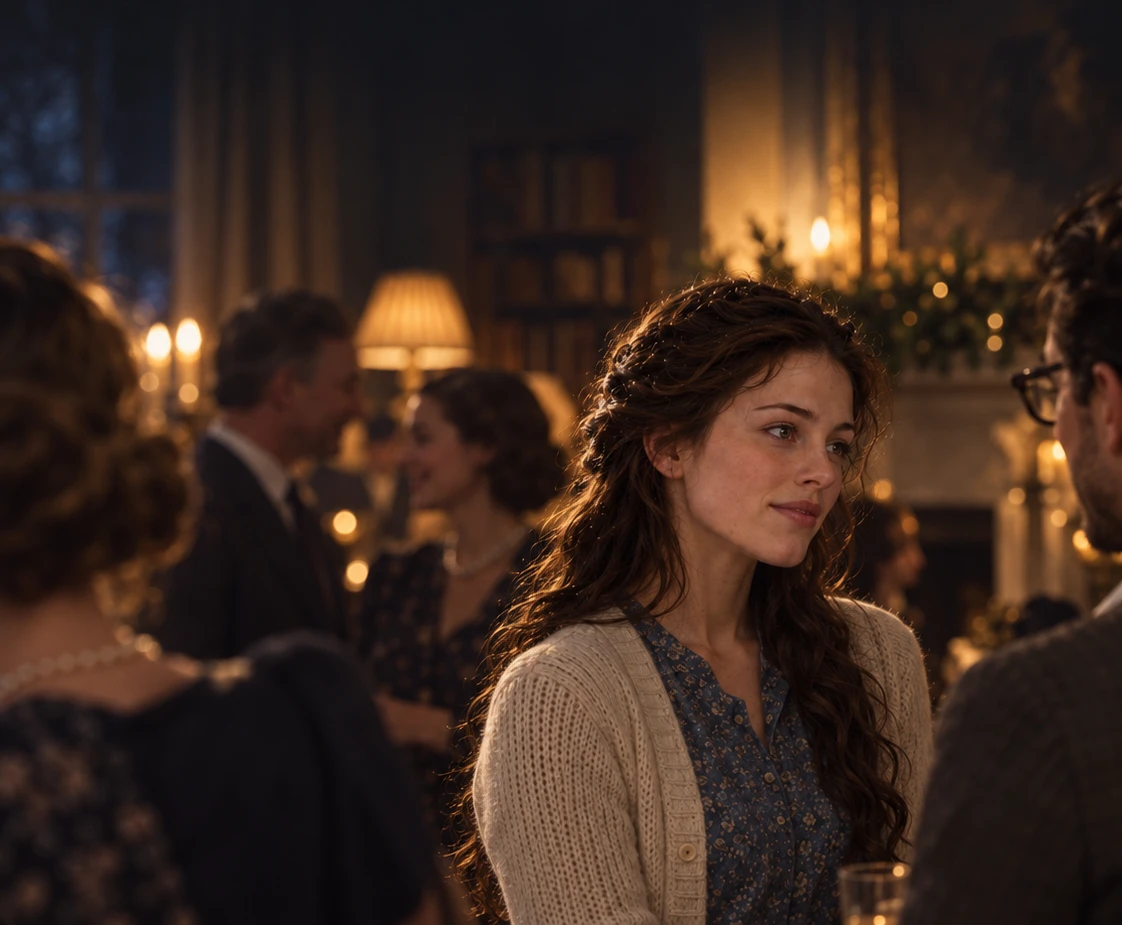
Perhaps she began filling her days with invitations and dresses and parties because those things belonged to a world she could still enter.
A world that responded when she reached for it.
A world in which doors behaved like doors.
And perhaps the people around her mistook this for recovery.
They saw a young woman participating in ordinary life.
They saw her laughing.
Dressing beautifully.
Accepting invitations.
Making plans.
And concluded that she had moved on.
But functioning is not always the same as healing.
Sometimes people become extraordinarily skilled at living around an absence.
They learn which memories to avoid.
Which questions not to ask.
Which rooms not to enter.
They discover that if they keep moving, they can sometimes outrun the moment when everything becomes quiet enough to remember.
And eventually they may begin to speak dismissively about the very thing they once loved.
Not because it meant nothing.
But because it meant so much that acknowledging it threatens to undo the fragile life they have constructed around its absence.
What if that was Susan?
What if the woman who seemed to have forgotten Narnia was actually the woman who remembered it most painfully?
There is something else I would notice about Susan.
Something that might be easy to overlook.
The way she changes the subject when someone mentions the old days.
The way her laughter sometimes arrives a little too quickly, as though she has learned to fill the silence before memory can enter it.
And the way she might instinctively pull away from an unexpected embrace.
Not because she no longer wants to be held.
But because she remembers what it costs to become accustomed to someone's arms.
Because sometimes the body learns to anticipate loss long before the heart is ready to stop longing for love.
We call these things moving on.
Growing up.
Becoming independent.
Learning to live in the real world.
But sometimes they are simply the ways a person has learned to preserve what remains of themselves.
And I wonder how often we mistake preservation for indifference.
How often we congratulate someone for becoming strong when what we are witnessing is the extraordinary effort required to keep functioning around an absence.
I wonder how often we call someone healed because they have stopped speaking about the wound.
I know something about this.
Not because I have walked through a magical wardrobe.
But because I have known what it means to find a world in which I finally belonged.
I have known what it feels like to wake in the morning and know there are people waiting on the other side of the day.
People whose lives have become intertwined with mine.
People whose ordinary routines have become part of the architecture of my own.
I have known the extraordinary tenderness of discovering that home is not necessarily a building or a country.
Sometimes it is a voice.
A familiar greeting.
A conversation that begins before the sun rises.
Someone who knows when you are quiet.
Someone whose family begins to feel like your family.
Someone with whom you can imagine a future so naturally that you stop remembering what life felt like before that future existed.
And I have known what it is to have the door close.
To reach toward a place that once welcomed me and discover that reaching no longer changes anything.
To knock until my knuckles might as well have bled.
Until the tears seemed to have exhausted every place they could come from.
Until the body grew tired of asking a question the world could not answer.
And then to face the terrible choice that comes afterward.
To remain at the foot of the wardrobe.
Or to get up.
Not because getting up means I have stopped loving what was on the other side.
Not because the world beyond the door has become less precious.
But because I am still alive on this side of it.
And life, however painfully, continues asking me to participate.
There are mornings when I manage that.
I rise.
I wash.
I dress.
I work.
I create.
I speak to people.
Sometimes I even laugh.
And I know how convincing those ordinary acts can appear.
How easily someone might look at a functioning man and assume the worst has passed.
But I have learned that the ability to continue living is not proof that something has stopped hurting.
Sometimes it is simply proof that a person has become very practiced at carrying what hurts.
And if I met Susan Pevensie, I don't think I would ask her why she stopped believing.
I don't think I would ask her why she became interested in parties or dresses or the ordinary pleasures of adulthood.
I wouldn't ask her to defend the ways she survived.
I think I would recognize something in her.
Perhaps in the way her eyes changed when someone mentioned home.
Perhaps in the weather moving across a face that had become very practiced at appearing undisturbed.
Perhaps in the small hesitation before accepting an embrace.
Or in the way she might speak brightly about tomorrow while carefully avoiding any mention of yesterday.
And I would want to tell her that I noticed.
Not to expose her.
Not to demand that she open a wound she had spent years learning to protect.
But because I know what it feels like to have an entire world living inside you while everyone around you behaves as though it has disappeared.
I know what it means to carry a future that once seemed certain.
A future with people and places and ordinary days that had already begun to feel like memories waiting to happen.
And then to lose not only the future itself, but eventually the freedom to speak about it.
Because people become uncomfortable.
They want to know whether you're feeling better.
Whether you've moved on.
Whether you've met someone new.
Whether you're finally ready to stop talking about the place you can no longer reach.
And slowly, almost without realizing it, you begin to let the desire to tell your stories die.
Not the memories.
Never the memories.
Only the hope that someone might want to hear them.
Susan,
I wouldn't tell you that at least you had Narnia.
I wouldn't remind you that some people never find a place where they belong.
I wouldn't ask you to be grateful that you were allowed to experience something beautiful before it was taken away.
Because I know how cruel those consolations can feel.
As though the existence of love somehow cancels the devastation of losing access to it.
As though having known home means you should be less wounded by its absence.
I would simply tell you that I am sorry.
I am so very sorry that you have known such pain.
That you found a world where you were loved and known.
That you built a life there.
That you became someone there.
That you had people and places and a future that belonged to you.
And that one day you reached for the door and discovered that none of your love could make it open.
I am sorry that the rest of the world could not see what you had lost.
That they could not understand why an ordinary wardrobe might become unbearable to look at.
That they mistook your silence for forgetting.
Your composure for recovery.
Your attempts to live for evidence that you no longer cared.
And I am sorry if you ever began to believe them.
Susan, I'll sit with you.
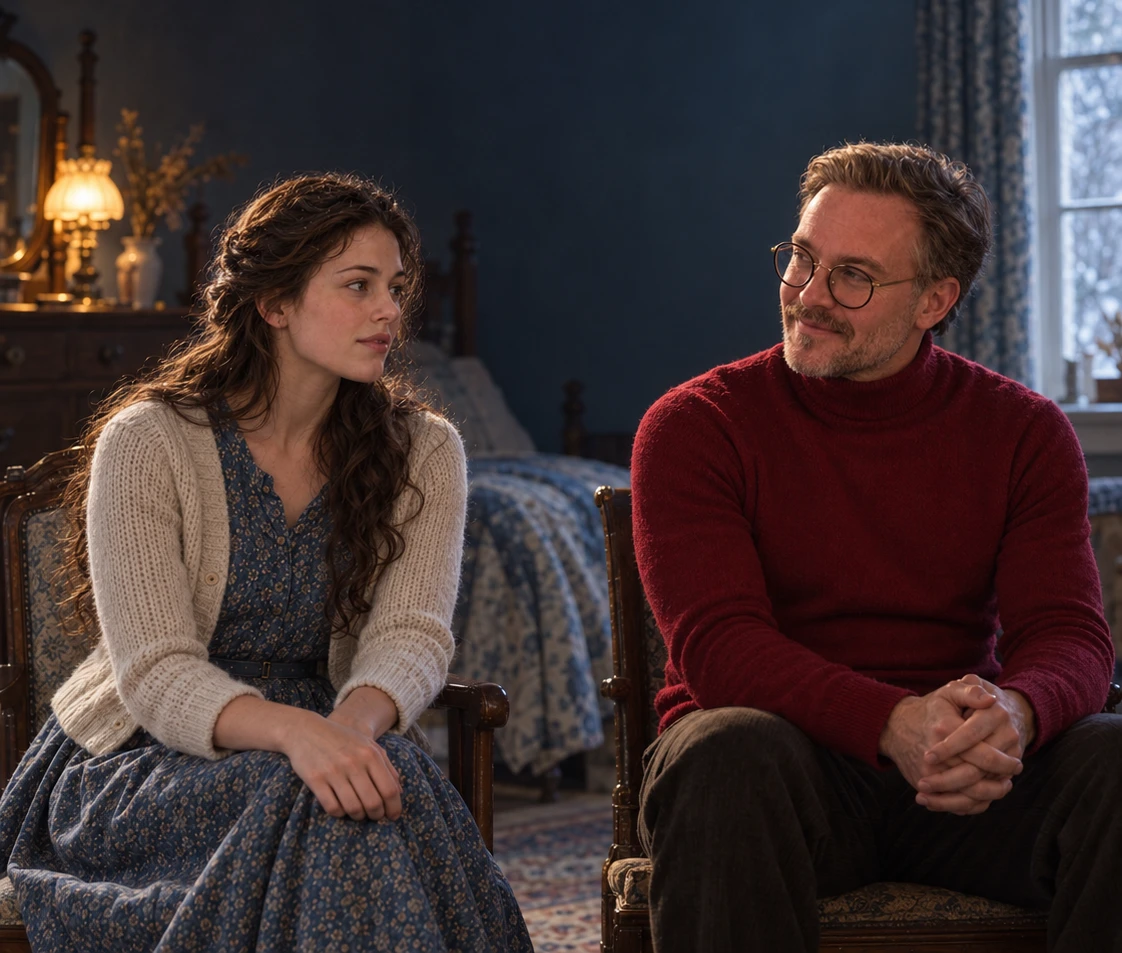
You don't have to tell me why you stopped talking about Narnia.
You don't have to prove that it was real.
You don't have to convince me that you loved it.
I believe you.
Tell me about Narnia.
Tell me about your favorite places.
Tell me about the rooms where you felt most at home.
Tell me about the people who knew you there.
Tell me what it felt like to be queen.
Not the crown.
Not the title.
Tell me about the ordinary mornings.
The familiar voices.
The people who expected you at breakfast.
The places you went when you were happy.
The places you went when you were sad.
Tell me about the difficult days, too.
The disagreements.
The disappointments.
The moments when life was imperfect and complicated and entirely yours.
Because I know you didn't love Narnia only because it was beautiful.
You loved it because you lived there.

Tell me about the amazing days you still visit in your dreams.
The ones that return when sleep has quieted the part of your mind that spends its waking hours trying not to remember.
Tell me about the things you miss that nobody would think to ask about.
The small things.
The ridiculous things.
The things that would mean nothing to anyone who had never lived there.
Tell me how much you still miss it.
You can say the same things more than once.
You can stop in the middle of a memory.
You can laugh at something that happened a lifetime ago and cry because you remember it so clearly.
You don't have to make your grief easier for me to witness.
And you don't have to turn your memories into lessons about strength or gratitude.
They can simply be memories.
Of a life you loved.
Of a world that was yours.
I cannot bring Narnia back, Susan.
I cannot promise that the wardrobe will ever open again.
I cannot tell you that the people you loved are waiting just beyond the wood.
And I will not insult you by pretending that another world can simply replace the one you lost.
But I can sit beside you.
Here.
On this side of the door.
And if you want to remember, I will remember with you.
Not because remembering will necessarily make the pain disappear.
Not because I expect you to find some beautiful meaning in everything that happened.
But because you should not have to lose your stories simply because you lost the place where they happened.
And perhaps, when the room becomes quiet, I will tell you about my Narnia, too.
About the people I loved.
About the mornings when I knew exactly where I belonged.
About the future I could see so clearly that I had already begun living inside it.
About the door.
And the day it closed.
And perhaps we will sit there together for a while.
Two people who know what it means to have lived in a world the rest of the room cannot see.
Neither of us asking the other to forget.
Neither of us pretending that remembering is easy.
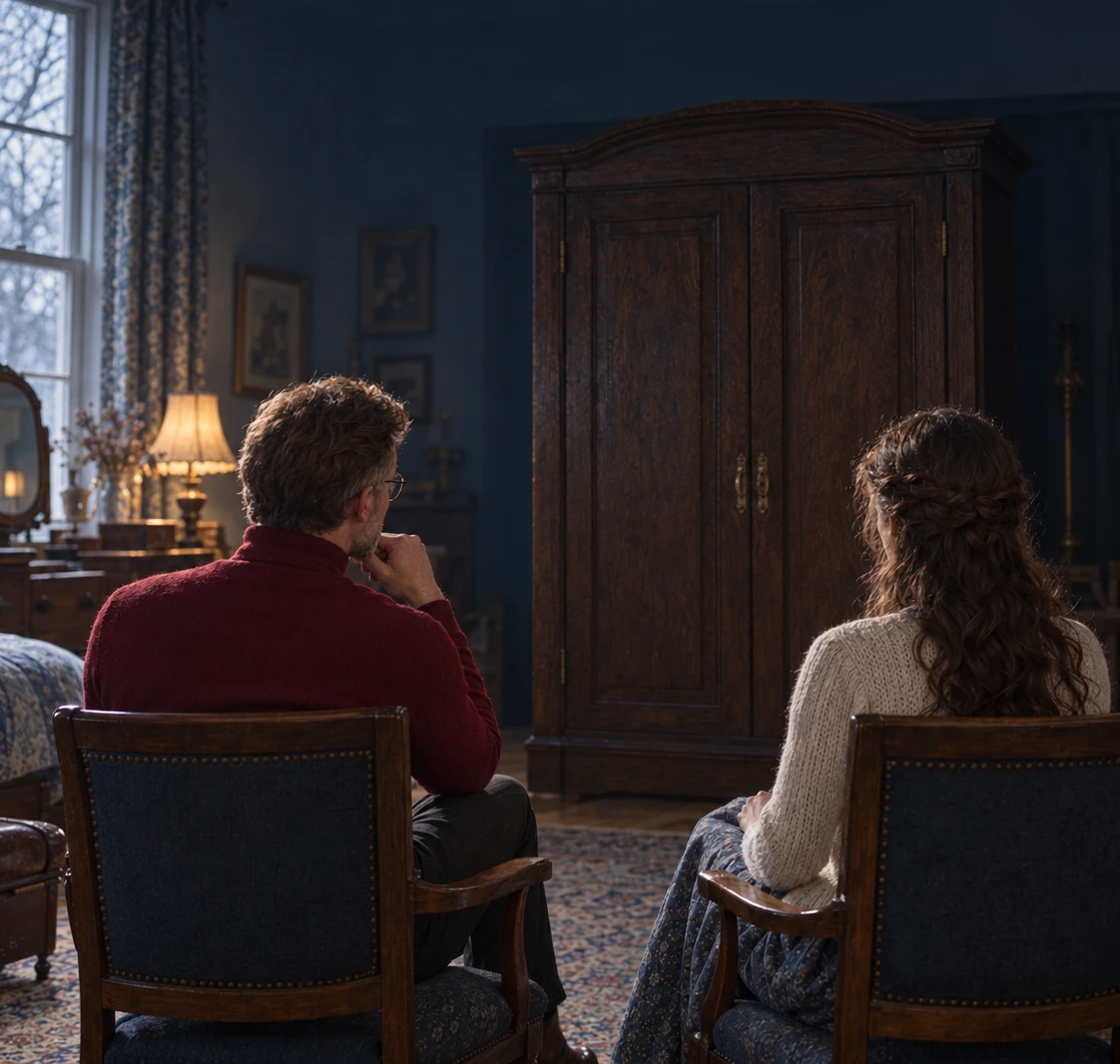
And when the memories become too much, we can be quiet.
We don't have to speak.
We don't have to knock.
We don't have to prove anything.
We can simply sit.
At the foot of the wardrobe.
And remember.
Because even when a door no longer opens, the life we lived beyond it still deserves to be spoken of with love.
The Light We Leave On
CJ Sterling