WHEN TINKER BELL CANNOT FLY
On the exhausting work of believing
When I was little,
I believed in magic.
Not the kind that made things disappear.
I was already learning
that things could disappear
without anyone waving a wand.
People.
Safety.
The ordinary assurances
that children are supposed
to inherit without questioning.
No.
I believed in a different kind of magic.
The kind that allowed
a frightened little boy
to lie awake in the darkness
and imagine
that somewhere,
somehow,
there was still something beautiful
waiting to be found.
I believed in second stars.
In fairy dust.
In wishing upon things
that were impossibly far away.
And I believed in Tinker Bell.
Especially that extraordinary moment
when the smallest light
begins to fade.
When believing
is no longer enough
to make her wings work.
And everyone is asked
to clap.
To believe.
To believe harder.
To give whatever they have left
to the possibility
that she might fly again.
As a child,
I thought that was beautiful.
As an adult,
I find myself wondering
about something
the story never really addressed.
What happens
when the people clapping
are exhausted, too?
What happens
when their hands hurt?
When they have been believing
for so long
that belief itself
has begun to feel
like something
they can no longer carry?
And what happens
when Tinker Bell
simply cannot fly?
Even when everyone
loves her enough
to wish that she could?
I spent fifteen years
sitting across from people
who were trying
to survive things
they had once believed
would destroy them.
There were stories
that could barely be spoken.
Grief that had no language.
Bodies that had learned
to anticipate danger
long after the danger
was supposed to have passed.
And people who had become
so accustomed to disappointment
that hope itself
felt threatening.
I understood them.
More than I often said.
And somewhere
between the science
and the suffering,
I became fascinated
by belief.
Not as a substitute
for reality.
But as one of the ways
human beings experience it.
There is a peculiar word
we sometimes use
when discussing the relationship
between expectation
and the body.
Placebo.
People often hear that word
and think it means imaginary.
As though a change
in someone's experience
must be less real
because expectation
played some part in it.
But I have never found
the human mind
quite so easy
to dismiss.
I have seen people
discover capacities
they had stopped believing
they possessed.
I have watched
the possibility of tomorrow
become meaningful again
to someone
who could scarcely imagine
surviving the afternoon.
And I have learned
that there are things
a person can know
with tremendous intellectual certainty
that their frightened body
has not yet learned
how to believe.
Of course,
belief has limits.
It does not replace food.
It does not replace medicine.
It cannot make danger
less dangerous
simply because
we wish it away.
But I have never believed
that understanding
the limits of something
requires us
to deny its beauty.
I understand
what happens
when a frightened person
hears a familiar voice.
And still,
I believe there is magic
in being told,
I'm here.
Today,
someone I love
was having a difficult time.
There are days
when the world asks
more of a human being
than any human being
should be required to give.
Days when exhaustion
becomes something deeper
than tiredness.
When the body
begins to tell the story
the mouth
has been trying
so desperately
not to speak.
I could see it.
The trembling.
The tenderness.
The way even ordinary moments
seemed to require
an extraordinary amount
of courage.
And the part of me
that spent so many years
as a clinician
recognized what I was witnessing.
The watchman in me
recognized something else.
He noticed
how much of the suffering
had nothing to do
with what was happening
inside the person.
How much belonged
to circumstances
no amount of tenderness
could make acceptable.
And the part of me
that loves—
Oh.
That part.
That part wanted
to reach through the distance
and gather every frightened piece
into my arms.
Not to repair anything.
Not to make the sadness disappear.
Just to hold.
To make somewhere
for the trembling
to finally stop
having to explain itself.
But distance
is a peculiar kind
of helplessness.
Especially when the world
has become so unpredictable
that even the ordinary privilege
of remaining connected
cannot be trusted.
Sometimes,
the most intimate thing
two people can offer
one another
is their presence.
And sometimes,
even that
is interrupted.
I have spent much of my life
being the person
who remembers
where the light switch is.
I learned young.
On.
Off.
On.
I needed to know
that darkness
wasn't necessarily permanent.
That something could disappear
and still return.
And over the years,
I became quite skilled
at reminding other people
of the same possibility.
I learned how to stand
beside another person's storm
without demanding
that the clouds disappear.
I learned how to recognize
the smallest signs
of a returning sunrise.
I learned how to say,
I know you cannot see the road.
But I can see a little farther.
And for now,
perhaps you can borrow
some of what I see.
There were years
when I believed
I was handing out matches
from a box
that would eventually become empty.
And there were years
when I was terribly afraid
that it already had.
But lately,
I've begun to understand
something different.
Sometimes light
is not a possession
we surrender.
Sometimes it is something
we discover
between us.
A flame held near another flame.
A small warmth
that makes it possible
to remember
what warmth feels like.
Not one person
saving another.
Not one person
responsible
for keeping the entire sky illuminated.
Just two people
making room
for one another's light.
Even when one
has become very faint.
Today,
I watched a light eclipse.
More than once.
And I want to tell you
what I did.
Because once upon a time,
I might have believed
that love required me
to make the darkness stop.
To find the right words.
To summon the right smile.
To make the frightened person
feel better
so that I could know
I had done enough.
But that is not
what love asked of me today.
I did not try
to make the light shine.
I did not ask it
to become brighter.
I did not mistake
its exhaustion
for a failure
to be beautiful.
I stayed.
And I offered
the same amount of love
that had been there
when the laughter came easily.
The same tenderness.
The same belief
in the extraordinary life
that still deserves
to be lived.
And when there was room,
I spoke about tomorrow.
Not in grand declarations.
Not in promises
I have no power to guarantee.
But in little pictures.
Ordinary mornings.
Coffee.
Sunlight through a window.
The wonderful possibility
of having nothing urgent
to be afraid of.
The kind of future
that would sound
almost disappointingly ordinary
to someone
who has never had to wonder
whether ordinary life
would be permitted.
And for a little while,
something softened.
Not everything.
Not the circumstances.
Not the terrible uncertainty
waiting beyond the conversation.
But there was room
for another feeling.
A little warmth
beside the fear.
And I realized
that perhaps this
was what I had been trying
to understand
about belief
all these years.
Believing is a verb.
I have written
those words before.
I believed them
when I wrote them.
I believe them still.
But today,
I discovered
how much that verb
can ask of a person.
Because sometimes
believing
is not a beautiful feeling.
Sometimes it does not
come with certainty.
Sometimes there is
no rush of inspiration.
No sudden lifting
of the heart.
No fairy dust.
Sometimes believing
is emotionally exhausting.
Sometimes it feels
like running
with lungs
that have already
begun to burn.
Sometimes the wings
are so terribly tired
that even remembering
how to fly
feels impossible.
And still—
there is the choice
to keep making room
for tomorrow.
Not because tomorrow
has promised us anything.
But because the people
we love
deserve to know
that we can still imagine
them living inside it.
And because
on the days
when someone cannot
carry their own hope,
perhaps we can hold
a little of it
beside them.
Not forever.
Not as an obligation.
Not as proof
that our love
will be powerful enough
to change the world.
But as an offering.
Here.
I know today is frightening.
I know you are tired.
I know you cannot see
what I am seeing.
But I have saved
a little picture
of tomorrow for you.
Would you like
to look at it with me?
And I need
to tell the truth
about something else.
Today,
my own light
grew faint.
I could feel it.
Not because
I stopped loving.
Not because
I stopped believing.
But because
there is a particular
kind of exhaustion
that comes
from loving someone
through circumstances
you cannot change.
The heart
keeps reaching.
The mind
keeps watching.
The body
keeps listening
for the smallest
change in the weather.
And somewhere
between the watchfulness
and the tenderness,
an old phrase
came back to me.
Emotional cardio.
I used to say it
all the time
in the rooms
where we did
the difficult work
of healing.
So often, in fact,
that at one point
we even had T-shirts.
The people I worked with
loved that phrase.
And I think
I understand why.
Because it named
something
we were all discovering.
That healing
is not always
a beautiful revelation.
Sometimes
it is practice.
Repetition.
The courage
to try again
when the last attempt
was exhausting.
The willingness
to keep showing up
for a life
you are still learning
how to believe
you deserve.
Not because
the pain is imaginary.
Not because
the work is easy.
But because
some of the most
extraordinary changes
in a human life
begin with the smallest,
most difficult
acts of participation.
We called it
emotional cardio.
And we practiced.
Together.
Sometimes
the work was exhausting.
Sometimes
it was beautiful.
And sometimes,
the most important thing
we could do
was recognize
how much effort
it had taken
simply to begin.
And today,
all these years later,
I found myself
reaching for those words
again.
Not as a clinician
explaining a concept.
Not as someone
trying to help
another person
find their courage.
But as a human being
whose own heart
was becoming tired.
And I almost laughed.
Because there it was.
The language
we had carried
through so many
difficult afternoons.
Returning to me
when I needed it.
Emotional cardio.
Not a new discovery.
An old practice.
One I had spent
a lifetime learning.
And one I was
still learning
how to live.
Sometimes,
that practice
is a kind of endurance.
Not the heroic kind
people applaud.
The quiet kind.
The kind nobody sees.
The kind that happens
when you are alone
after the conversation ends
and the room
has become very still.
When you are frightened.
When you are tired.
When you know
the darkness is real.
And nevertheless,
you refuse
to let it become
the only thing
you are willing
to believe in.
Which brings me
back to Tinker Bell.
I think,
if I could return
to that story now,
I would change
one small thing.
I would still clap.
Of course I would.
I have spent
my whole life
clapping for little lights
that were trying
desperately
not to go out.
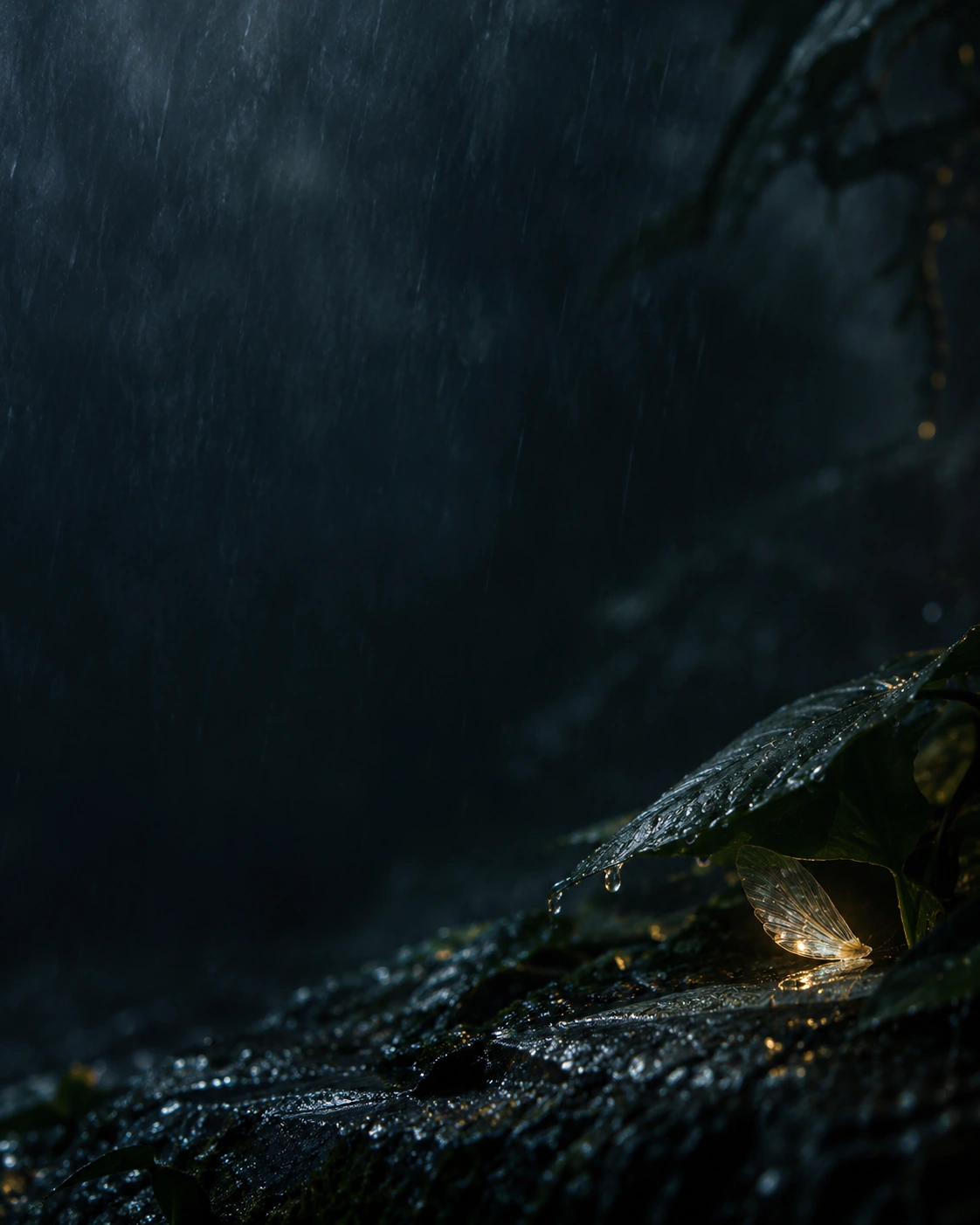
But if she could not fly,
I would stop.
Not because
I had stopped believing.
But because
I would finally understand
that perhaps
she did not need
another person
asking her
to lift herself
into the sky.
Perhaps
she needed
somewhere gentle
to land.
A hand.
A shoulder.
A quiet place
where being loved
did not depend
on being luminous.
And perhaps
the real magic
would not be
watching her
begin to fly again.
Perhaps
it would be
watching her
finally rest.
Without fear
that anyone
would love her less.
I wonder
how many of us
have mistaken
our exhaustion
for the loss
of our faith.
How many
have looked
at our trembling hands
and decided
we must no longer
believe strongly enough.
How many
have been told
to keep hoping
when what we needed
was someone
to sit beside us
and say,
You can rest.
I'll remember
what the sky looks like
for a little while.
And I wonder
what might happen
if we stopped
requiring hope
to feel hopeful.
If we allowed belief
to be quiet.
If we understood
that courage
does not always
look like standing.
Sometimes
it looks like
remaining tender.
Sometimes
it looks like
speaking of tomorrow
without pretending
today is anything
other than difficult.
And sometimes
it looks like
letting someone
love you
when your own wings
have become
too tired to move.
I don't know
what tomorrow brings.
I have spent
a lifetime
trying to read
the last page first.
But I am learning
to leave some pages
unopened.
I know
there will be days
when the sky is dark.
I know
there will be moments
when the people
I love
cannot find
their own light.
And I know
there will be evenings
when mine
is scarcely visible.
But perhaps
that is not
the end of belief.
Perhaps
that is where
its gentlest form
begins.
Not in the certainty
that we will never
be afraid.
Not in the promise
that every wish
will come true.
But in the willingness
to sit beside
another human being
beneath an enormous,
uncertain sky
and say,
I see the darkness.
I know.
You don't have
to pretend
it isn't there.
And I am still here.
I still believe
there is more
of your story
worth living.
And until
you can imagine it
again,
there is room
for that dream
beside me.
So perhaps
the question
is not whether
we still believe
in magic.
Perhaps
the question is:
What do we do
when the magic
becomes difficult
to feel?
Can we remain
beside someone
without asking them
to become brighter?
Can we love
without making
their hopefulness
a condition
of our own tenderness?
And when
our own wings
grow tired—
will we allow
ourselves
to be held
with the same gentleness
we have spent
our lives
offering others?
Tonight,
I am thinking
about a little boy
who once lay awake
in the darkness,
making enormous wishes
upon distant stars.
He did not know
what would become
of his life.
He did not know
how often
the lights
would go out.
But he kept
reaching for the switch.
On.
Off.
On.
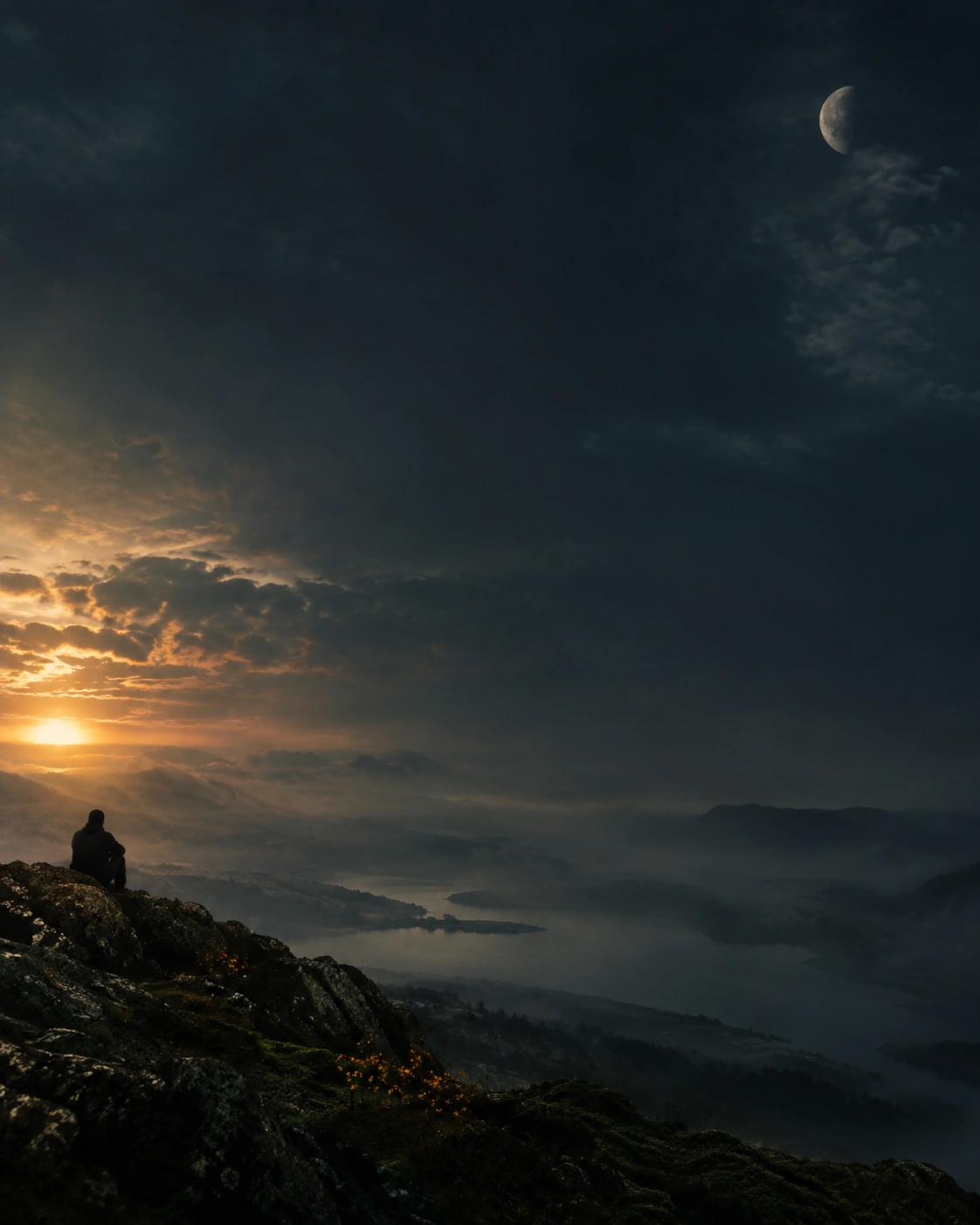
And somehow,
after everything,
he grew into
someone who still
looks toward the sky.
Someone who still
believes
that even the smallest light
is worth finding.
Someone who has learned
that the Sun
does not stop
being the Sun
when clouds
move across his face.
And the Moon
does not stop
belonging to the sky
because the night
has become
terribly long.
So tonight,
I will not demand
that Tinker Bell
fly.
I will make
a place for her
to rest.
I will let
my own wings
be tired, too.
And when
the darkness comes,
as it sometimes does,
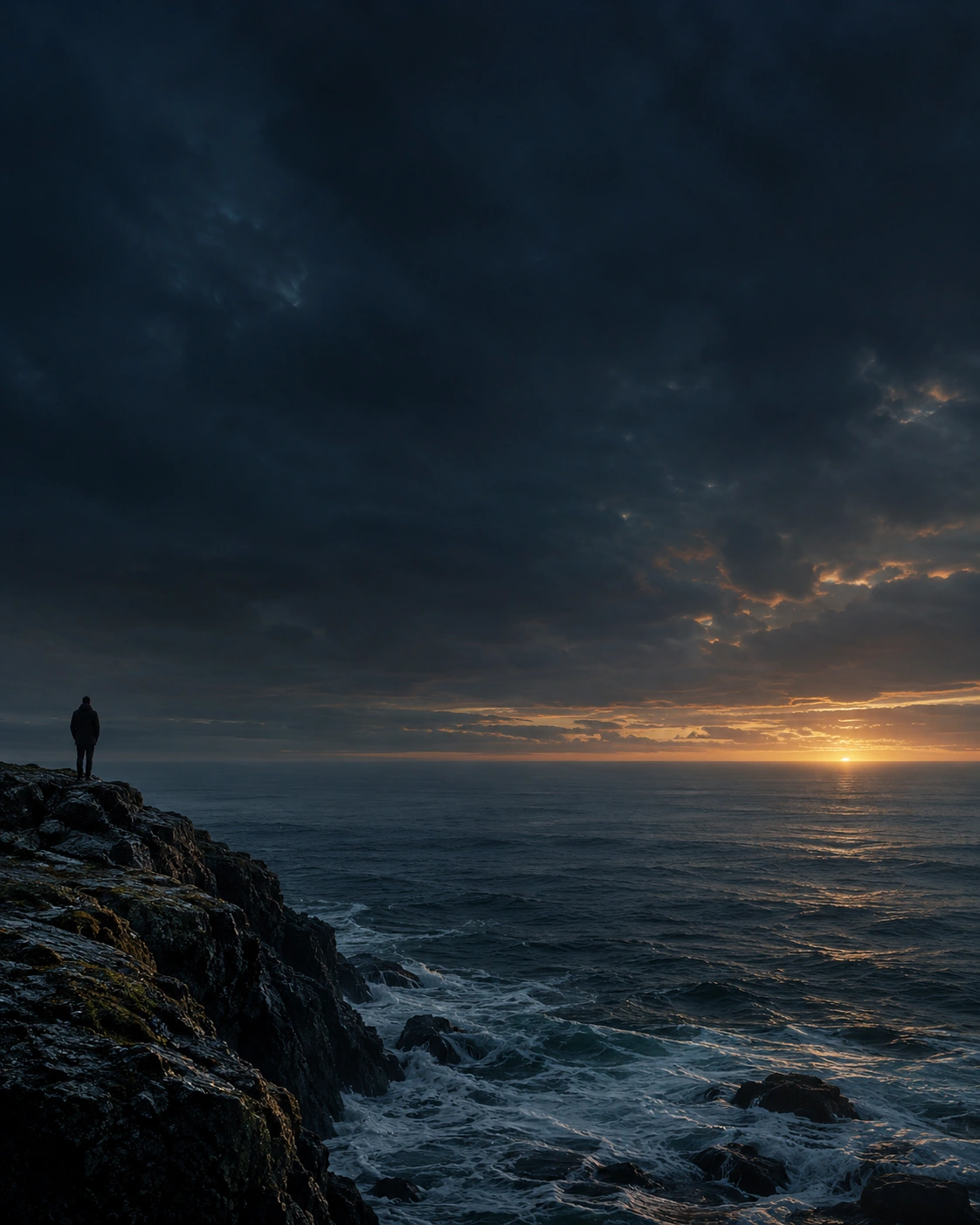
I will remember
that believing
was never a promise
that the night
could not hurt us.
Sometimes
it was simply
the extraordinary decision
to leave a little room
for the possibility
of morning.
And to love
one another
while we wait.
We are still here.
And we are still looking up.