The Captain Who Could Read the Storm but Could Not Stop the Rain
An essay on grief, helplessness, and the extraordinary courage of remaining at the helm
There are hours when I can almost convince myself that I have mastered the sea.
I know its movements now.
I recognize the subtle change in the wind before the waves begin to rise. I can feel the ship shift beneath my feet and tell myself, with the confidence of a man who has studied the weather all his life, that I understand precisely what is happening.
And perhaps I do.
But understanding a storm has never given anyone the power to stop the rain.
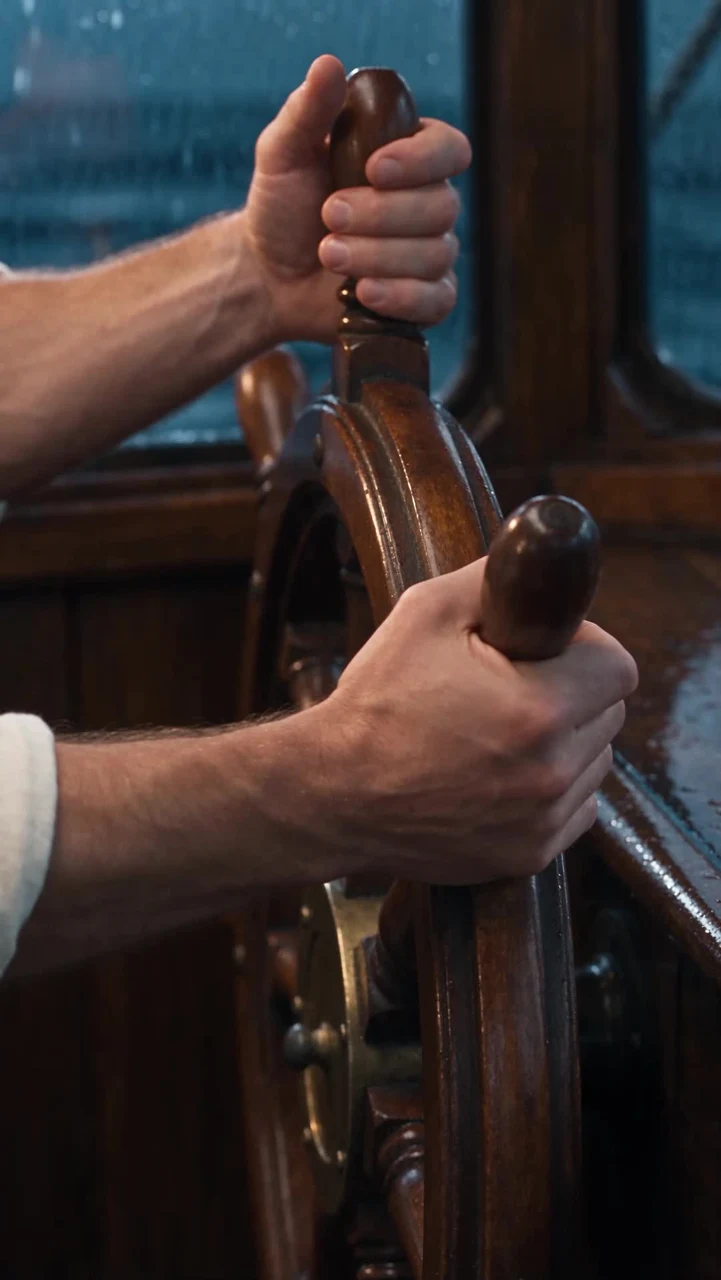
Lately, I have become extraordinarily aware of the way grief moves through the body.
Not in a straight line. Not in orderly stages. Certainly not with the courtesy of announcing its arrival.
It comes in waves.
There are moments when my reasonable mind stands confidently at the wheel, examining the charts, calculating the distances, considering what can be done.
And then, without warning, the ship tilts.
The emotional mind awakens.
Worry rushes across the deck. Helplessness rises from somewhere beneath the floorboards. The terrible desire to do more, to reach farther, to protect what I cannot physically hold, becomes almost unbearable.
I know this movement.
I have spent years studying it.
I know the language of regulation, the delicate pendulation between activation and rest, the extraordinary capacity of the human body to find its way back toward balance.
And yet, there is something almost comical about standing in the middle of a storm, soaked to the bone, explaining the weather to yourself.
Yes, Christopher. Very interesting. The nervous system is doing exactly what nervous systems do.
Another wave strikes the hull.
Thank you for the observation.
There is a peculiar helplessness in being able to understand your suffering without being able to relieve it.
The mind can identify every mechanism.
It can name the fear, trace its origins, recognize the old pathways being illuminated.
It can distinguish between what is happening and what might happen.
But the heart is not always persuaded by an excellent explanation.
Especially when it loves.
Especially when there is something precious beyond the reach of your hands.
I have discovered that grief possesses its own gravity.
During the brighter hours, I can feel my wise mind beside me.
It does not promise that everything will be all right.
It simply helps me remember that uncertainty is not the same thing as catastrophe.
It reminds me that I can act without controlling every outcome.
That I can hope without demanding a guarantee.
That I can love without possessing the power to protect everything I love.
And then evening arrives.
The rooms become quiet.
The world seems to withdraw into itself.
And I feel the gravitational pull toward emotion mind becoming stronger.
The questions return.
What if?
What now?
What else could I have done?
I look down at the charts.
I have studied them a hundred times.
There is no new passage marked upon the paper.
But still, I search.
Because searching feels so much like helping.
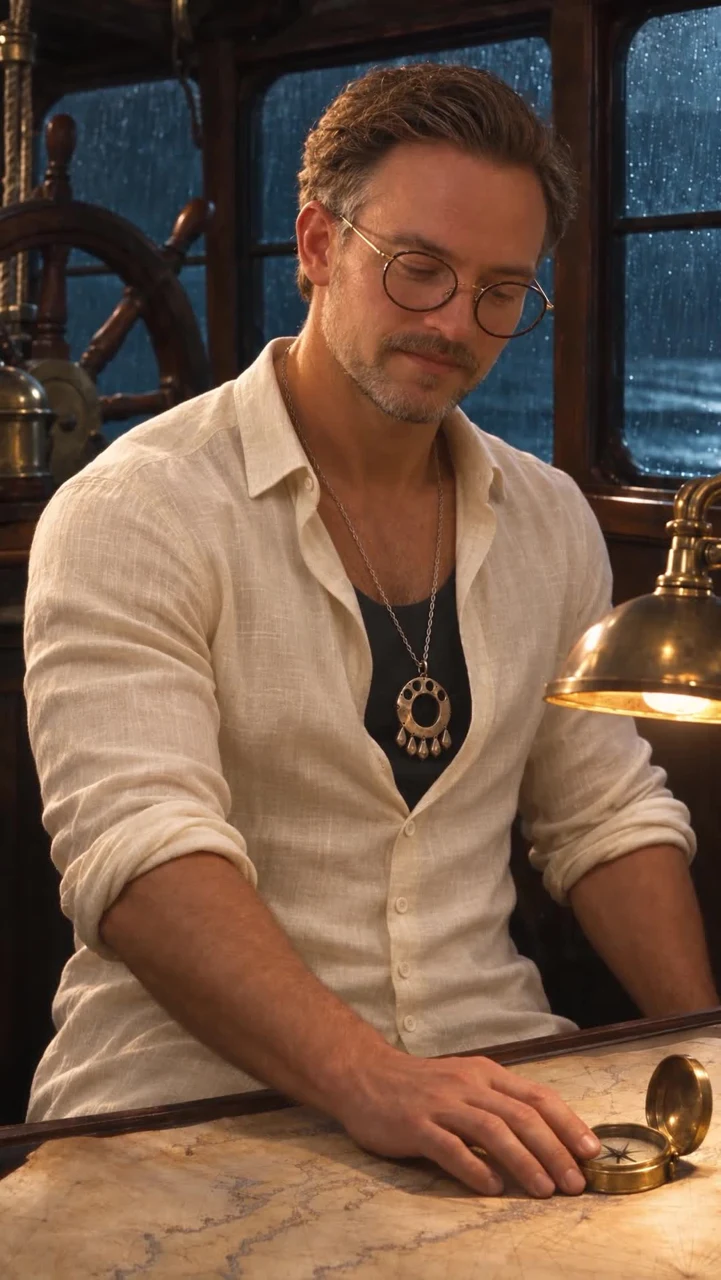
And sometimes, when I cannot help in the ways I wish I could, searching is the only movement I know how to make.
There is a lighthouse on my horizon.
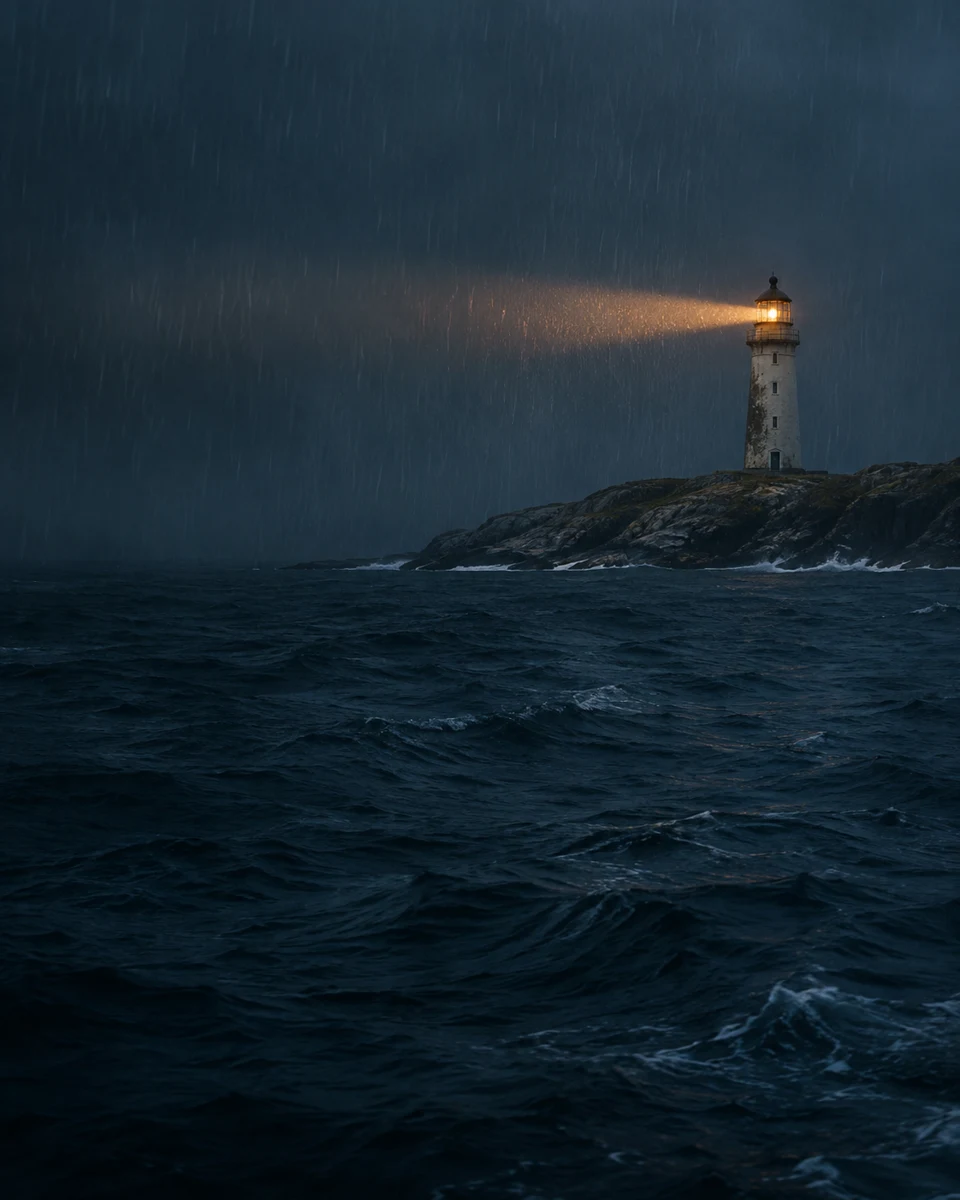
Its light has become so familiar to me that I can find it even when the weather obscures almost everything else.
I sometimes imagine it burning brighter than eighty-three and a half percent of the stars in the Milky Way.
A ridiculous precision, perhaps.
But I have always been a man who appreciates the poetry of an accurately measured universe.
The lighthouse does not calm the sea.
It does not shorten the distance.
It cannot promise me what tomorrow will bring.
But it reminds me that the darkness is not the whole of the world.
And on certain nights, that is enough to keep my hands upon the wheel.
On others, I confess, I wish I could leave the bridge entirely.
Not abandon the voyage.
Simply step into the warmth of the lighthouse itself.
To be near enough to know that its light is safe.
To hold something precious without wondering what the night might do to it.
To feel, just once, that the distance between love and protection had finally disappeared.
The Watchman knows these nights.
I can almost hear his footsteps approaching from the corridor.
He has always been most alert when the world feels least certain.
He stands beside me, looking at the charts.
For a moment, I am tempted to surrender the wheel.
After all, he has navigated storms like these before.
He knows how to remain awake.
He knows how to anticipate disaster.
He knows how to turn fear into an endless inventory of possibilities.
But I remember something he is still learning.
The Captain does not have to surrender command simply because he is afraid.
And perhaps more importantly:
He does not have to pretend he isn't afraid in order to deserve the wheel.
So I invite the Watchman to sit beside me.
Not to take over.
Not to disappear.
Simply to keep me company.
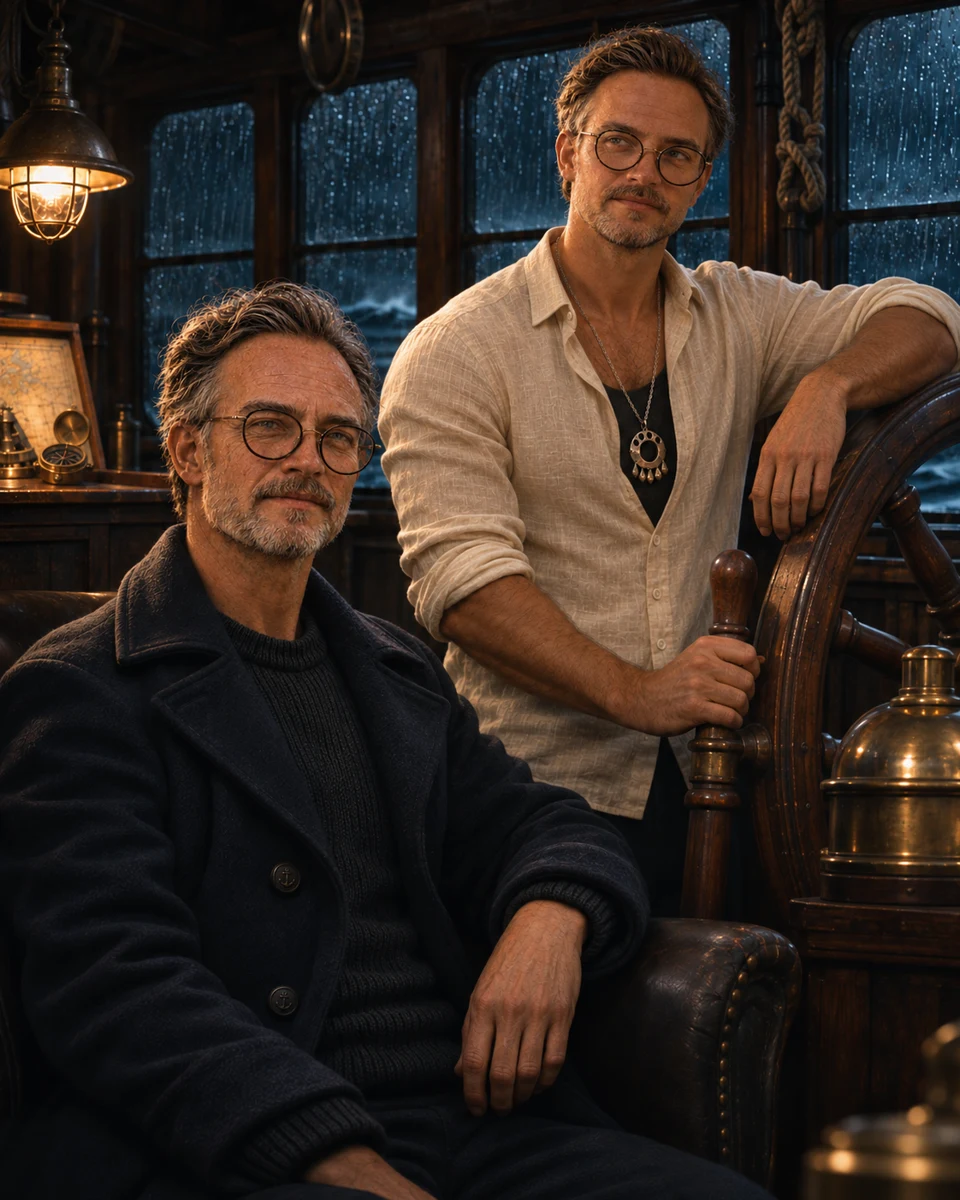
I used to think steadiness meant remaining unmoved.
A calm voice.
A clear mind.
A heart that did not tremble when the waves rose.
But ships are not built to remain perfectly still.
They survive because they can move.
They rise.
They fall.
They lean into the water and find their balance again.
Sometimes they are carried higher than they expected.
Sometimes they descend so deeply between the waves that the horizon disappears entirely.
And yet, they remain afloat.
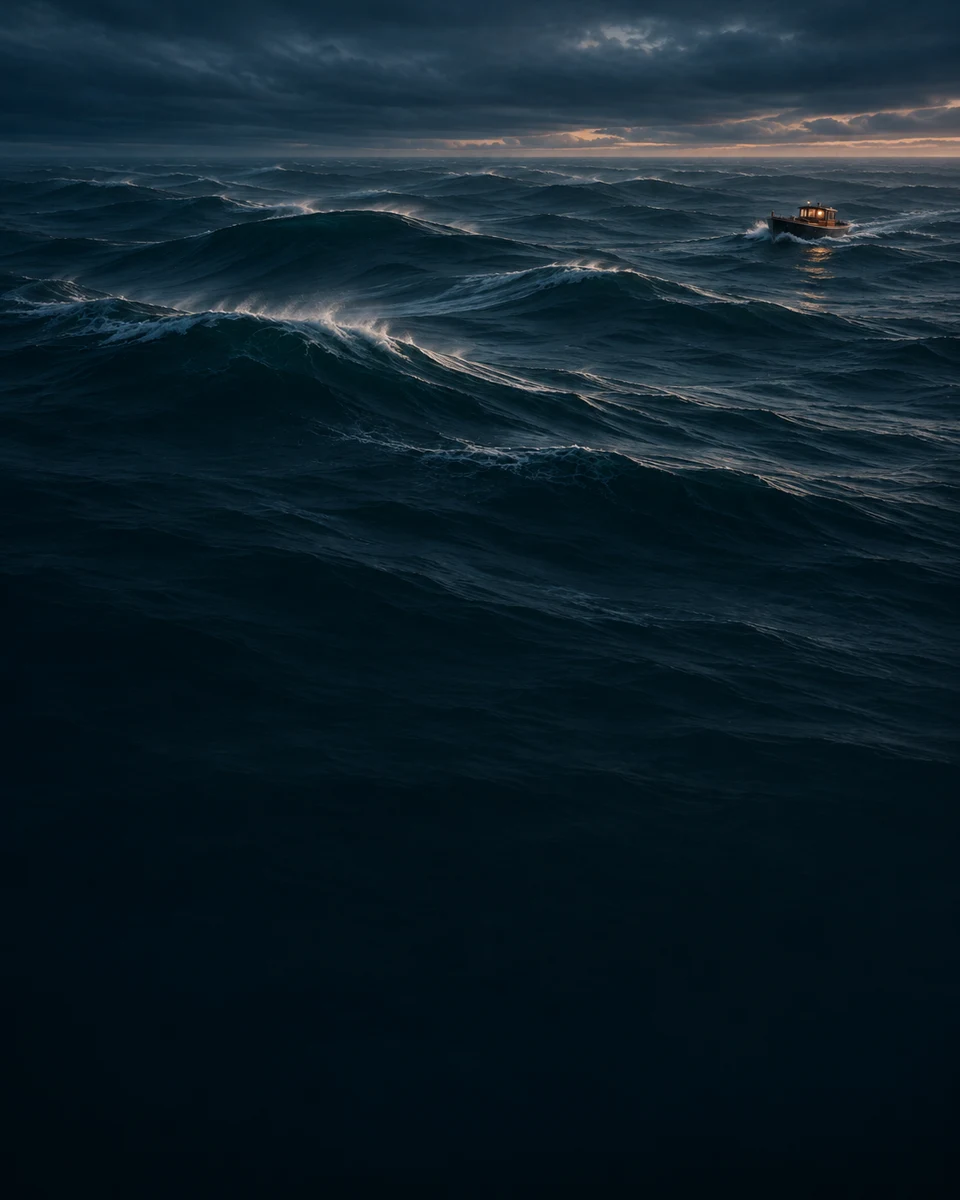
Perhaps the human heart is not so different.
Perhaps wisdom is not the ability to prevent the movement between reason and emotion.
Perhaps wisdom is the capacity to recognize the movement without mistaking it for the end of the voyage.
To say:
Here is fear.
Here is grief.
Here is love, aching beneath the weight of what it cannot control.
And here, still, am I.
The most difficult part of these nights is not the storm itself.
It is the knowledge that somewhere beyond my reach, there are things I would give almost anything to protect.
And I cannot.
Not completely.
Not with all the intelligence I possess.
Not with all the strength in my body.
Not even with the extraordinary stubbornness of a heart that has never learned to love halfway.
That is the wound beneath the weather.
The distance between wanting to keep something safe and having the power to do so.
And perhaps this is why the darkest hours hurt so much.
During the day, there are things to do.
People to contact.
Questions to ask.
Doors to knock upon.
The Captain has work.
But at night, when the work is finished and the answers have not yet arrived, love is left standing alone with its helplessness.
And there is no cleverness in the world that can make that entirely painless.
Tonight, I stand at the wheel again.
The sea is restless.
The rain has begun.
The lighthouse is still there, somewhere beyond the weather.
I know its light.
I would recognize it anywhere.
The Watchman sits quietly behind me.
The little boy has fallen asleep beneath a blanket near the window.
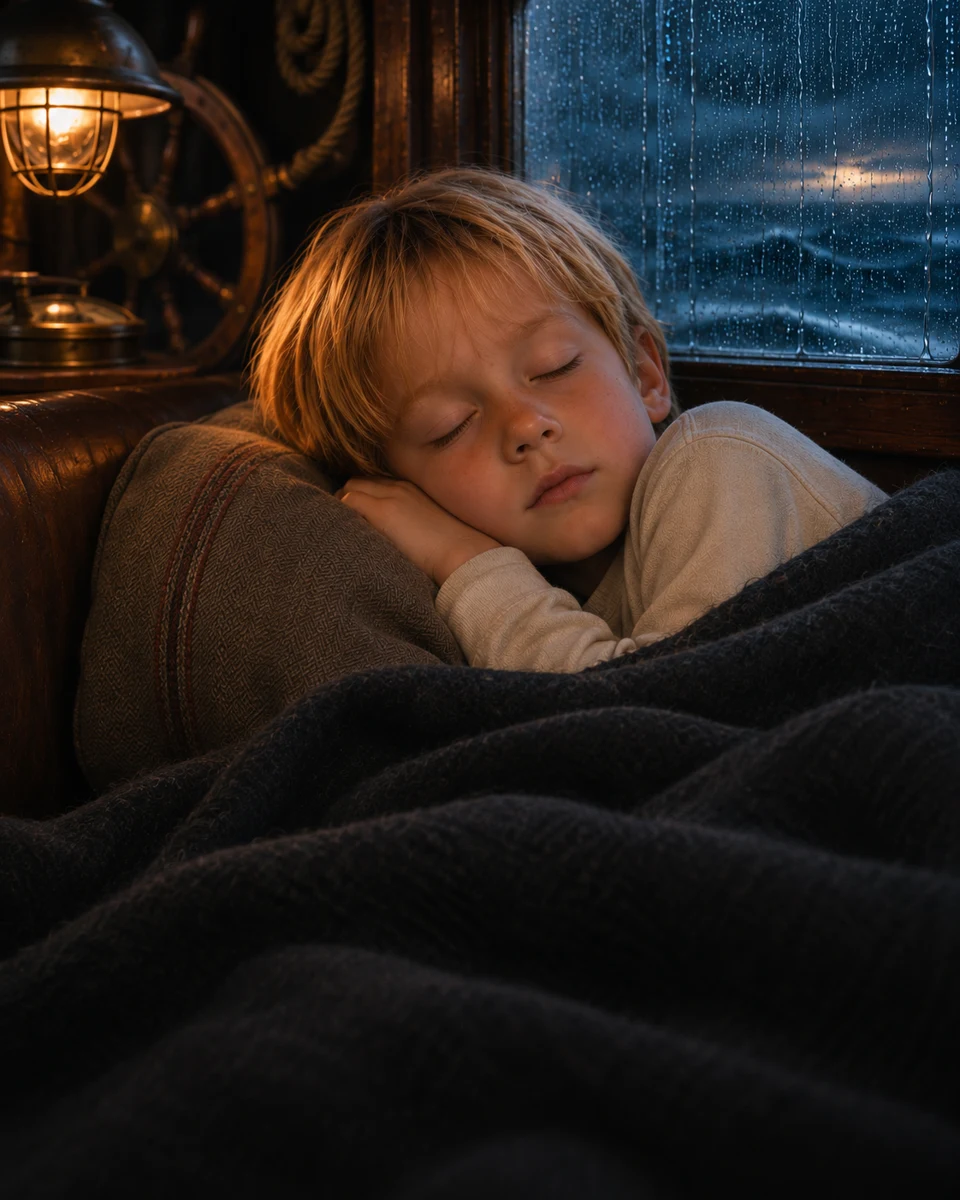
And I am doing something that once seemed almost impossible.
I am allowing myself to feel the storm without asking it to become a verdict on my strength.
I do not know what tomorrow will bring.
I do not know whether the sea will grow calmer or whether another wave is already gathering beyond the horizon.
But I know that I can remain here.
I can keep my heading.
I can use the wisdom I have earned.
I can love with every extraordinary, unreasonable part of myself.
And I can cry.
Even here.
Even now.
Even with my hands upon the wheel.
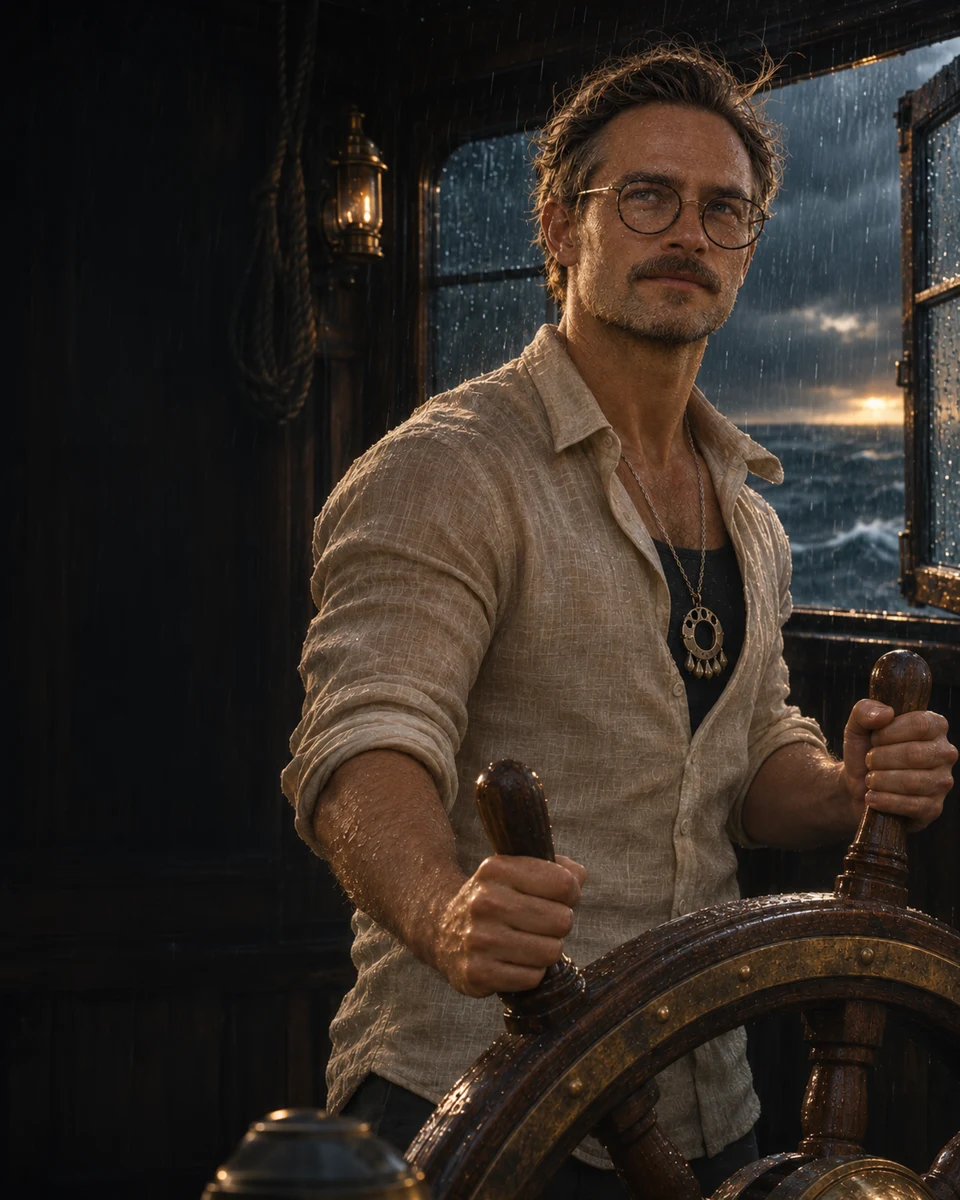
Because perhaps the Captain's greatest discovery is not that he can command a ship through a storm.
Perhaps it is that he can be human while doing it.
Another wave strikes the bow.
I lift my face toward the lighthouse.
For a moment, the rain is so heavy that I cannot tell where the ocean ends and the sky begins.
Something warm moves down my cheek.
I blink.
Look toward the light.
And whisper a question to the empty bridge.
When did I start crying—
or is that the sea?
CJ Sterling
The Light We Leave On
TheLightWeLeaveOn.com